“Cloth Sanitary Pads” Challenge Menstrual Taboos; A Taiwanese Girl Becomes the Most Beautiful Sight in Nepal
Reported by You T-Ru / Taipei
“One morning, a little girl wakes up to find a red stain on her pants, only to be immediately taken by her family to a cowshed or a thatched hut for isolation—because that drop of red blood discharged from her body is considered impure and unclean by the people of Nepal.” This is a shared memory among women in Nepal, a country at the foot of the Himalayas known as the “Land of the Gods.” For girls, their first encounter with “menstruation” is a series of confusion and helplessness.
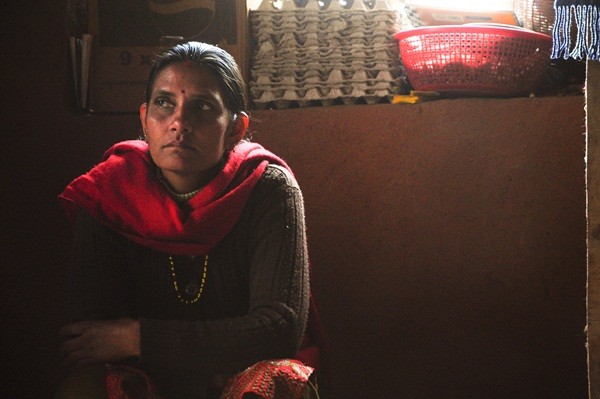
▲ The first encounter with “menstruation” is a series of confusion and helplessness for girls. (Photo provided by Lin Xiu?)
“This is a story I heard firsthand from an elderly Nepali woman.” Lin Nianci, founder of the “Cotton Joy Workshop,” is the first Taiwanese girl to enter Nepali communities to focus on “menstruation” and also the pioneer in bringing correct “menstrual” concepts to Nepali villages. Moreover, Lin Nianci initiated the production of eco-friendly and hygienic “cloth sanitary pads.” Her arrival brought about a series of disruptions and changes.
Since starting her NGO work in 2009, Lin Nianci frequently traveled to Nepal, interacting with locals. One day, while sitting under a bodhi tree discussing work with the village chief, she suddenly realized, “Why haven’t I heard any female perspectives in two weeks here?” That desire to “hear women’s voices” began brewing in her mind. “I started talking to women about the challenges and shortcomings in their lives, and was shocked to find many girls saying that getting their period made them feel ‘difficult.’”
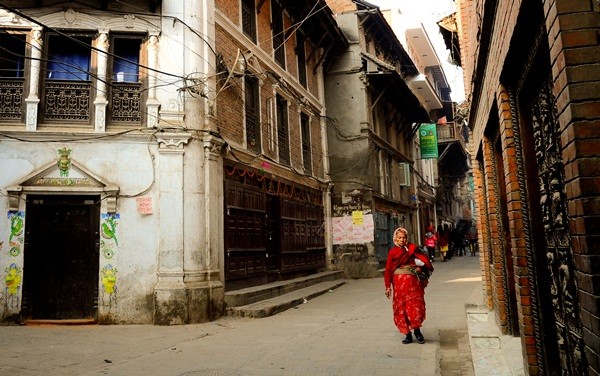
▲ %Zhi Zhi Shan said: “When I got my period, I felt very uneasy. It was hard to find a clean place, and I found that getting my period made me feel ‘difficult.’” (Photo provided by Lin Xiu?)
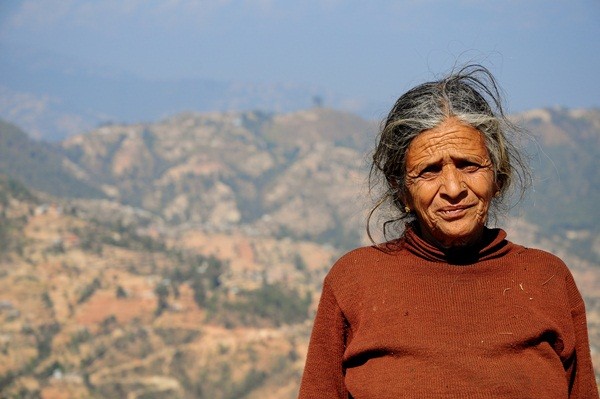
The “difficult” described by Nepali women sounded like an alarm bell to Lin Nianci. “After speaking with more women, I discovered there were many taboos and outdated customs.” In Nepal, when women menstruate, they are not only forbidden from having intercourse with their husbands but are also taken to thatched huts or cowsheds in the village to isolate themselves while waiting for the “impure blood” to leave their bodies. Winters in Nepal are not only cold but also home to roaming wildlife. Furthermore, about 80% of women in Nepal currently use old saris or pieces of cloth as menstrual pads, which, due to poor hygiene and cleaning practices, have led to numerous gynecological illnesses.
After discovering the needs of Nepali women, Lin Nianci began using her NGO platform to establish workshops that teach women about menstrual hygiene. These workshops help women understand their own bodies and accept “that little red spot.” Through these sessions, Lin Nianci also gained deeper insight into local women's daily habits. She further realized that the topic of “menstruation” was completely taboo—whether among teenage girls or school students, most knew almost nothing about their periods.
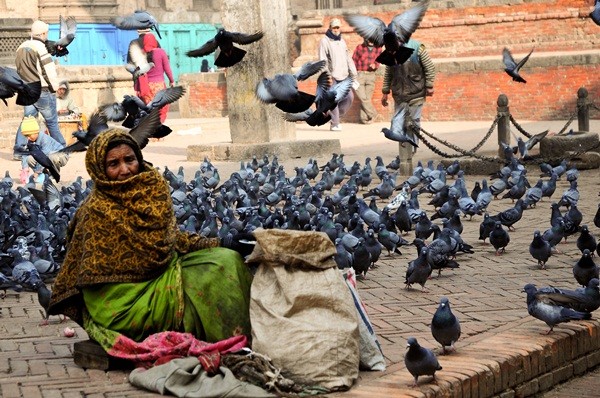
▲ Currently, about 80% of women in Nepal use old saris or cloths as menstrual pads, leading to many gynecological diseases due to inadequate cleaning and poor sanitation. (Photo provided by Lin Xiu?)
In 2010, during a trip to South India with her boyfriend, Lin Nianci bought her first “cloth sanitary pad” at a grocery store in the Auroville eco-village in South India. “The first time I encountered this product, I thought it was such a cool invention—unbelievable yet practical.” This led Lin Nianci to consider introducing eco-friendly, reusable cloth sanitary pads to Nepal, so that Nepalis could also have access to clean and comfortable menstrual products.
As she began introducing cloth sanitary pads to Nepali villages, Lin Nianci listened to local women’s voices through her NGO work while also letting them try out the product, hoping to improve hygiene practices. In 2012, she quit her NGO job and lived in Nepal with her boyfriend for nearly six months to prepare for the “Little Red Dot Project” she had long envisioned. In Nepal, she established the “Cotton Joy Workshop,” providing a space for locals to connect. She also hired two women to handcraft cloth sanitary pads using fabrics from the Nepali market, selling them locally for 30 to 40 Taiwanese dollars per piece.
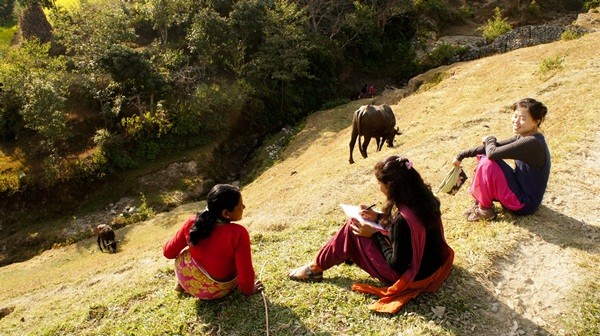
▲ Lin Nianci (first from the right) begins trying to introduce cloth sanitary pads to Nepali villages. (Photo provided by Lin Xiu?)
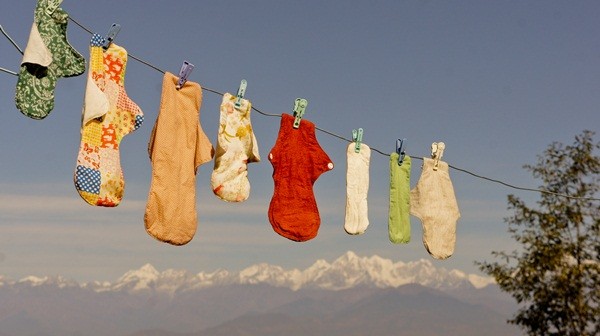
▲ After washing and drying, cloth sanitary pads can be reused, making them more environmentally friendly than disposable pads. (Photo provided by Lin Xiu?)
“After using cloth sanitary pads, I realized that conventional pads are actually made from petrochemical byproducts—primarily plastic, as is the waterproof lining. Plus, there’s the bleaching agent that makes them pure white. Is all of this really okay? As Taiwanese people, who arguably have more progressive views than locals in Nepal, do we understand the harm caused by the products we use?”
A single cloth sanitary pad sold locally for around 1 to 2 USD contains five layers—one layer with tightly woven fabric and extremely small gaps, and the other four made of regular cotton cloth. “To be honest, it’s not even cost-effective, which is why we also sell cloth sanitary pads in Taiwan—to help support the local community.” The cloth sanitary pads sold in Taiwan start at 200 Taiwanese dollars per piece. Lin Nianci says that every pad purchased in Taiwan donates one pad to a person in Nepal, allowing them to buy it at an “affordable” price.
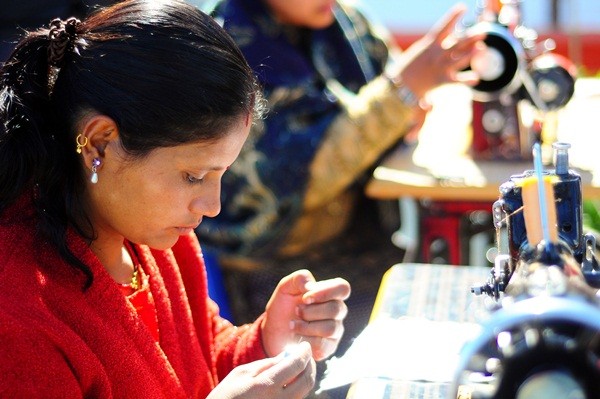
▲ The inside of a cloth sanitary pad has five layers, including one tightly woven layer with minimal gaps. (Photo provided by Lin Xiu?)
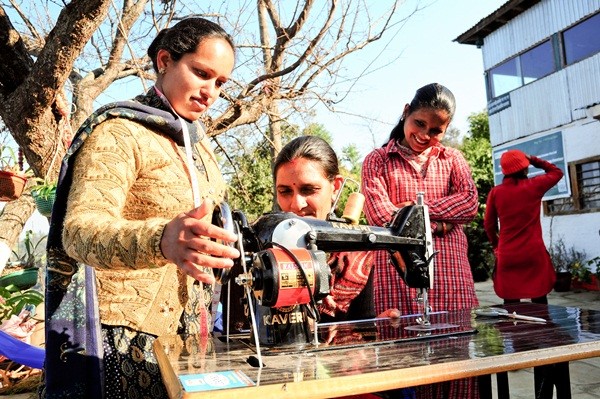
▲ Lin Nianci established the workshop in Nepal, providing a space for locals to connect and hiring women to craft pads from market fabrics, selling them for $1–2 USD each. (Photo provided by Lin Xiu?)
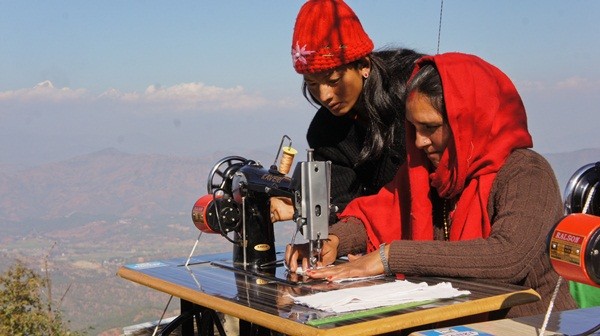
“We tested many different colors and patterns of fabric. Once, while selling in the market, a young girl who hadn’t even gotten her first period yet came by. She looked at the pads over and over again, and we ended up giving her one. The look in her eyes told me she was looking forward to getting her period, to the moment she could use a cloth sanitary pad.” Along the way, Lin Nianci went from someone who didn’t know how to use a sewing machine to someone who designed patterns, cut fabric, and handmade the pads—earning the smiles of many more women who felt fulfilled and hopeful about their own bodies.
“We should treat our bodies in better ways.” Lin Nianci said firmly. Now, she has even more dreams she wants to realize, and the “Little Red Dot” project is gradually expanding, being exhibited across Taiwan in the form of displays and lectures. Beyond just Nepali women, it encourages more Taiwanese women to adopt a sustainable mindset in treating the most precious “little red dot” that visits their bodies once a month.
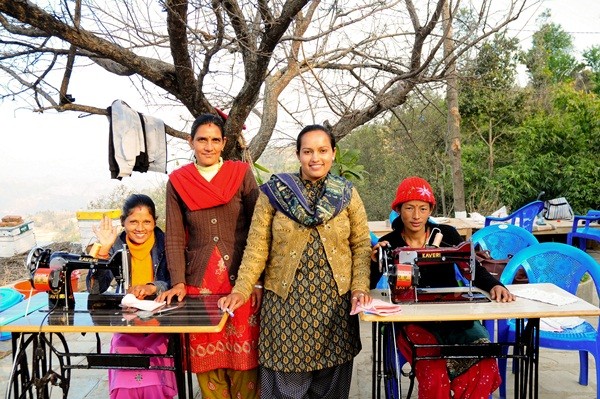
▲ From someone who didn’t know how to sew, Lin Nianci learned to design patterns, cut fabric, and make cloth sanitary pads—bringing smiles to many women who felt fulfilled and positive about their bodies. (Photo provided by Lin Xiu?)
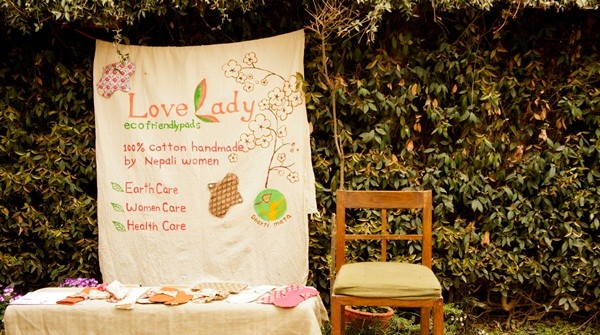
▲ Buying a cloth sanitary pad in Taiwan means donating one to a woman in Nepal. (Photo provided by Lin Xiu?)
Reporter’s Postscript:
Nianci is a girl who takes life and her thoughts very seriously. When I said, “I want to use cloth sanitary pads too,” she sat across from me and smiled, telling me to treat my body in the most comfortable and acceptable way possible, and then to think about making a bit more of a difference for the environment. During my interview with Lin Nianci, I saw a Taiwanese girl’s love and deep connection to her land, as well as her care for the environment. Through her eyes, I also saw the satisfied smiles of women in a distant land. I was deeply moved, which is why I titled this piece “Taiwanese Girl Becomes the Most Beautiful Sight in Nepal,” because more and more young Taiwanese are courageously venturing to the other side of the world—not just to chase their dreams of exploration, but also to carry beliefs about their homeland.
Share
This article is published by HowToTrip. Sharing and reposting are welcome — please credit the source.
Article URL: https://www.howtotrip.net/views-28745
Related Articles
- Shaoxing's "Grandpa Gourd" hangs the gourds back up: "If there are too many people, we'll interact less — just take a quick look from afar"
- Chinese authorities announce "reciprocal adjustment" to Japan visa fees — single-entry visa jumps from 2,250 to 16,750 yen!
- The "health stones" carried by a traveler were found to have radiation levels exceeding safety limits by a thousand times, potentially endangering fellow passengers on the same flight. Customs issues warning!
- Shenzhen Airport Issues Late-Night Notice: Unidentified Aerial Object Detected, Causing Widespread Flight Delays!
- “They only said it cost money after I opened the box and washed it!” 200g of grapes sold for 60 yuan on a high-speed train—12306 responds!
- Can't buy an airline ticket? Denied exit? Blocked from boarding? A large number of Chinese tourists have mysteriously become "discredited individuals"
- Adverse weather and economic fluctuations impact Colombia's coffee market
- Beach bathing area responds to 2 yuan/30 seconds fee for freshwater foot rinsing: Clearly priced!
- Taking off with an improperly closed cabin door? Wing malfunction? Multiple flights made emergency returns mid-journey!
- Experience the gifts of nature! A countdown of the world’s ten most stunning coastlines