A Must-Visit in Korea: Suncheon Bay, One of the World’s Five Coastal Wetlands & a Favorite MV Filming Spot
Reported by You t / Special Feature
What can you do in Korea besides shopping? Recommended by the Korea Tourism Organization,Suncheon Bay, one of the world’s five coastal wetlands,boasts breathtaking natural scenery that leaves lasting memories. If you visit during sunset, with a cool breeze from the Dongcheon River and a colorful natural landscape before your eyes, it can truly soothe the soul. The gardens representing different countries within the park are exquisitely designed, each showcasing distinct national characteristics—like the Dutch garden, filled with colorful tulips and a famous windmill.
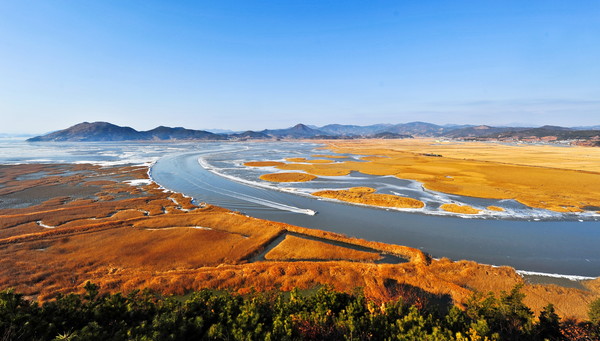
▲ Suncheon Bay, one of the world’s five coastal wetlands, features natural scenery that leaves a lasting impression. (Photo / Provided by Korea Tourism Organization)
To prevent further urban sprawl and permanently preserve this area, which is registered under the Ramsar Convention, Korea recently hosted its first-ever “2013 Suncheonman International Garden Expo.” Held from now until October 20 in Suncheon City, South Jeolla Province, the expo is themed “The Garden of the Earth – Suncheon Bay,” marking Korea’s first international garden exposition. There are also several filming spots within Suncheon Bay that have been used for dramas and MVs, making them worth visiting.
Huang Hong-sheng, known as “Super Sensation,” who was invited to be the Taiwan region’s honorary spokesperson for the 2013 Suncheonman International Garden Expo, shot his promotional photos and the MV for “Super Sensation—Murakami’s Cat” at the venue. Taiwanese travelers visiting the expo may even hear Huang’s “Murakami’s Cat” playing in the park.
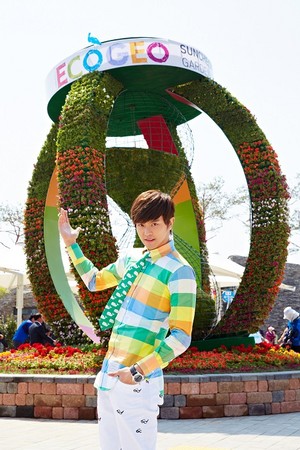
▲Huang Hong-sheng, Taiwan region’s honorary spokesperson for the 2013 Suncheonman International Garden Expo. (Photo / Provided by Korea Tourism Organization)
Suncheon Bay Natural Eco-Park (Reed Field Area)
The reed fields of Suncheon Bay span across Jangan-dong, Daedae-dong, and Haeryang-myeon’s Jungseong-ri, Haesang-ri, and Seonghak areas, covering a total area of 150,000 pyeong. Starting from the confluence of the Dongcheon River, which runs through Suncheon City, and the Isacheon Stream in Isha-myeon, Seo-gu, to the river mouth—about 3 kilometers—the area is covered with reeds. These are not sparse, ordinary reed fields but densely packed ones that grow taller than a person, making it the largest reed field in Korea. The seeds of the reeds shimmer with silver and golden hues in the sunlight, creating a spectacular view. When the wind blows, the reeds sway uniformly, resembling ocean waves—truly beautiful.
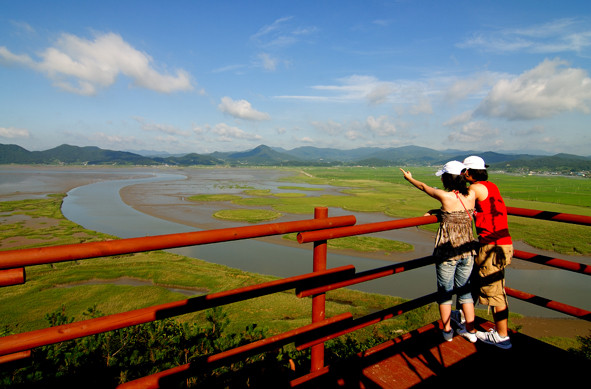
▲ The reed fields of Suncheon Bay span across Jangan-dong, Daedae-dong, and Haeryang-myeon’s Jungseong-ri, Haesang-ri, and Seonghak areas, covering a total area of 150,000 pyeong. (Photo / Provided by Korea Tourism Organization)
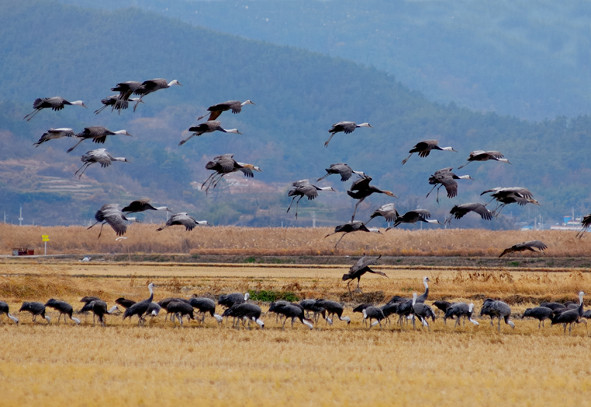
▲ Suncheon Bay Natural Eco-Park is a habitat for internationally rare migratory birds such as black-faced spoonbills, grey herons, and egrets. (Photo / Provided by Korea Tourism Organization)
Centered around the boat dock, Daedae-dong has the widest expanse of reed fields. The vast mudflats of Sangnae-ri and Wawon Village in Haeryang-myeon serve as the stage for the best sunset views, attracting many visitors and photographers. The Suncheon Bay area isn’t just home to lush reed fields. Although it may appear to be an endless sea of reeds from afar, closer inspection reveals clusters of other plants like silvergrass and aster. Additionally, the estuarine reed fields host patches of seven-leaf flower communities. This is also where internationally rare birds like black-faced spoonbills, grey herons, and egrets stop over. Aside from these rare species, about 140 bird species—including sandpipers, mallards, and wild geese—winter and breed here.
Nagan Eupseong Folk Village
Once part of the Mahan territory during the Three Kingdoms period, the Paekje-era Paji Fortress, and the foundation of the Goryeo-era Nagan County, it now preserves the complete form of a Joseon-era fortress town, including city walls, government offices, residential quarters, military facilities, shrines, and museums. It is one of Korea’s designated historic sites.
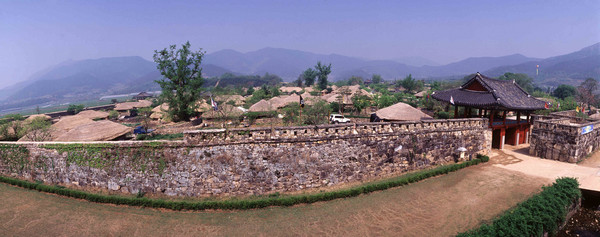
▲ This is one of Korea’s designated historic sites where the fortress town remains fully intact. (Photo / Provided by Korea Tourism Organization)
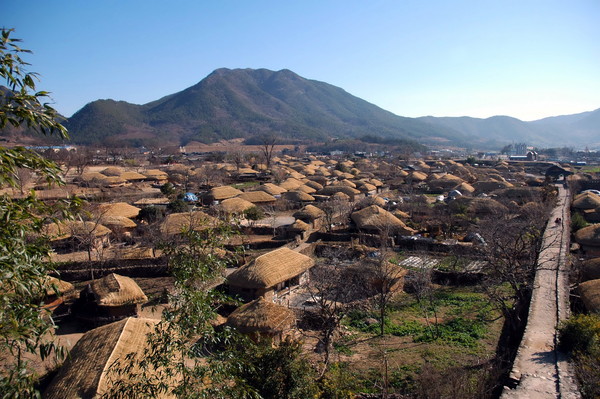
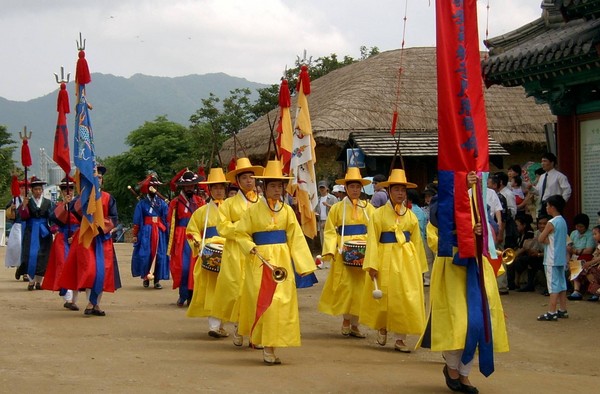
▲ Most of the area retains the look of villages once inhabited by commoners, with the air carrying the scent and warmth of ancestors. (Photo / Provided by Korea Tourism Organization)
Starting from the East Gate, passing through the West and South Gates into the town, you’re immediately immersed in the atmosphere of historical drama sets (like those used in “Tears of the Dragon” and “The Great King Geunchogo”). Unlike display-oriented villages like Yongin or Jeju Folk Villages, or the aristocratic-style Hanok village of Andong Hahoe, this area mostly preserves the appearance of villages where commoners once lived, with the air filled with the essence and familiarity of ancestors. Here, you’ll find southern-style houses with distinctive eaves, kitchens, earthen walls, tiled roofs, and soy sauce jars on stone steps. The low, rounded stone walls between neighbors are gentle and harmonize with pumpkin vines—evoking childhood memories of hide-and-seek and playful jumps.
Suncheon Songgwangsa Temple
Located at the northern foot of Chogyesan Mountain, Songgwangsa Temple is known as one of Korea’s Three Jewel Temples, along with Haeinsa Temple (the Relic Jewel) in Hapcheon and Tongdosa Temple (the Buddha Jewel) in Yangsan. It originated in the late Silla period, founded by Zen Master Hyerin. When Queen Seondeok built the nine-story wooden pagoda, she designated this place as the Nine Story Pagoda Monastery. Later, it became known as the Sangwonsa Monastery, and when King Munmu held a Buddhist service here, it gained fame as the “Monastery of Blessings.” It was also where the Joseon Dynasty produced six National Preceptors.

▲ This temple boasts a rich cultural heritage, with approximately 80 buildings in the complex. (Photo / Provided by Korea Tourism Organization)

This is a temple with numerous wooden cultural assets, with about 80 structures in the entire area. These include the National Preceptor Hall, which houses portraits of 16 National Preceptors, as well as 13 national treasures such as the Lower Guest Hall, the Medicine Buddha Hall, and the Youngsan Hall, 17 national cultural assets including the natural monument Twin Trunk Tree, and 10 local cultural assets like the reliquary of National Preceptor CJijeong—totaling 27 cultural properties. The main hall, Daeungjeon, is centrally located with the Monk Treasure Hall and Earth Store Hall on either side, exuding solemnity. Each hall is fragrant with incense, while the subtle sounds of wooden fish and scripture chanting reflect the devotion of the monks continuing the ancient traditions.
Suncheon Seonamsa Temple
Seonamsa Temple is located on the eastern foothills of Chogyesan Mountain, with the renowned monk treasure temple Songgwangsa situated on the western mountainside. Founded in 529 AD by Monk Ado, it was later established in its current form by National Preceptor Doseon in the 9th year of King Heongang’s reign, one of the Nine Mountain Schools of Seon Buddhism, on this site. Surrounded by centuries-old dense forests of oak, wintergreen, maple, and chestnut trees, the temple is especially famous for its autumn foliage. In front of the temple is the arched Seungseon Bridge (Treasure No. 400), built on a natural solid rock foundation with a dragon sculpture at the center that gives off a mystical vibe. The three-story stone pagodas on both sides of Daeungjeon (Treasure No. 395) are also very eye-catching. It is one of the temples that preserves the most traditional temple culture.

▲ The area surrounding the temple features centuries-old dense forests of oak, maple, chestnut, and other trees. (Photo / Provided by Korea Tourism Organization)
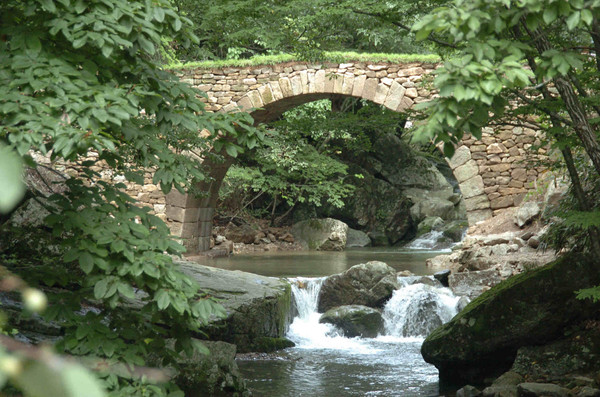

▲ The area is especially famous for its autumn foliage. (Photo / Provided by Korea Tourism Organization)
In addition to seven national treasures, the temple also has 12 local cultural assets including the majestic Daeungjeon Hall, the Pagoda of the Eight Scenes, the Round Enlightenment Hall, a bronze incense burner, and the One Pillar Gate. Hiking up the mountain trail outside the main temple grounds, you’ll find a huge cliff-carved Buddha statue, 17 meters high and 2 meters wide. Moreover, the 800-year-old tradition of a self-sustaining tea garden, the Chogyesan Mountain hiking trail from Songgwangsa to Seonamsa, crystal-clear streams, dense woodlands, and beautiful autumn foliage all add to the charm. Nearby, like in Jirisan and Baekunsan, there are wild yew trees, and you can taste spring water around the time of the Awakening of Insects each year.
[Related Travel Agency Tours]
He Yuan Travel Agency’s “Garden Expo – South Jeolla Pilgrimage VS. Geoje Gupo Hot Springs 5-Day Tour” starting from NT$17,900; Cola Tourism’s “KHH Gunsan Suncheon Garden Expo ~ Korean Culture, Lotte World, Korean Sauna, Wedding Show 5-Day Tour” starting from NT$21,900; Leofoo Travel Service’s “2013 Suncheon International Garden Expo 'Shinsegae Department Store' Pumun Tourist Site 'Ms. Smile Show' 5-Day Tour” starting from NT$17,500; EasyGo Travel’s “World Garden Expo Railway Biking, Fresh Fruit Picking, Shopping 5-Day Tour” starting from NT$13,400; EVA Air’s “2013 Suncheon Bay World Garden Expo in Korea, Seaside Rail Bike, Fresh Fruit Picking, Damyang Bamboo Green Garden, Seafood Market, Shopping 5-Day Tour” starting from NT$14,900.
【South Korea Travel Information】
● Population: Approximately 50 million people
● Geographic Location: Latitude 33–43°N (including North Korea) / Longitude 124–131°E
● Climate: South Korea has four distinct seasons and a temperate climate, offering the chance to enjoy changing seasonal landscapes — one of the greatest joys of travel.
● Time Difference: One hour ahead of Taiwan
● Exchange Rate: Approximately 1 New Taiwan Dollar = 37.743 South Korean Won
● Visa: Taiwanese passport holders can stay for up to 90 days for tourism without a visa
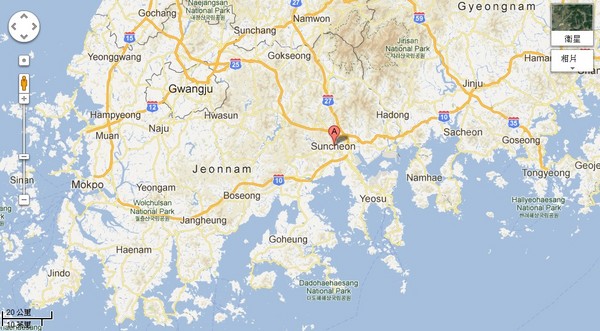
▲ Map of the location of Suncheon Bay in South Korea. (Image / Google Maps)
▲ The music video for “The Cat in the Village” filmed at Suncheon Bay. (Video / From YouTube, please excuse if removed)
Share
This article is published by HowToTrip. Sharing and reposting are welcome — please credit the source.
Article URL: https://www.howtotrip.net/views-28428
Related Articles
- Shaoxing's "Grandpa Gourd" hangs the gourds back up: "If there are too many people, we'll interact less — just take a quick look from afar"
- Chinese authorities announce "reciprocal adjustment" to Japan visa fees — single-entry visa jumps from 2,250 to 16,750 yen!
- The "health stones" carried by a traveler were found to have radiation levels exceeding safety limits by a thousand times, potentially endangering fellow passengers on the same flight. Customs issues warning!
- Shenzhen Airport Issues Late-Night Notice: Unidentified Aerial Object Detected, Causing Widespread Flight Delays!
- “They only said it cost money after I opened the box and washed it!” 200g of grapes sold for 60 yuan on a high-speed train—12306 responds!
- Can't buy an airline ticket? Denied exit? Blocked from boarding? A large number of Chinese tourists have mysteriously become "discredited individuals"
- Adverse weather and economic fluctuations impact Colombia's coffee market
- Beach bathing area responds to 2 yuan/30 seconds fee for freshwater foot rinsing: Clearly priced!
- Taking off with an improperly closed cabin door? Wing malfunction? Multiple flights made emergency returns mid-journey!
- Experience the gifts of nature! A countdown of the world’s ten most stunning coastlines