【On-the-Ground Report】Has Nepal Really Turned into Ruins After the Earthquake?
Text & Photos: E Cat
In April this year,Nepalwas struck by an 8.1-magnitude earthquake, instantly turning thissacred land of Hindus and Buddhists into a scene of devastation. The capital cityA sacred site for both Muslims and Buddhists was instantly reduced to ruins. Among them, the capital city near the epicenter...Kathmandu,located near the epicenter, bore the brunt of the disaster. The tremor not only caused over ten thousand casualties, but also severely damaged 14 key ancient structures in the area to varying degrees, which was truly heartbreaking. I had previously visited Kathmandu and found that comprehensive renovation work was already underway. Although the government estimates that it will take at least 5 to 8 years to complete the restoration, seeing the people united in their efforts to preserve their culture and religion was deeply moving.
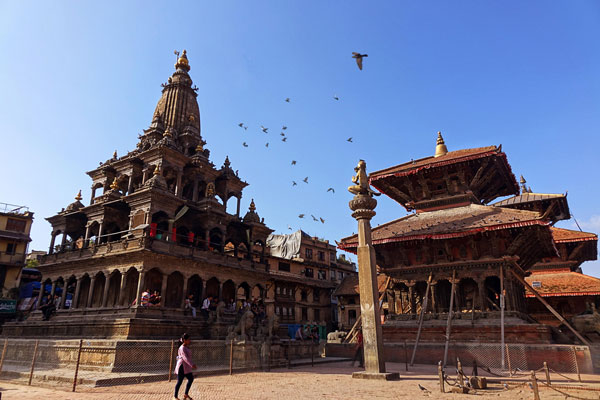
?/p>
KathmanduList of Damaged Buildings
Partially collapsed: Hanuman Dhoka Palace (Old Royal Palace), Swayambhunath Stupa (Monkey Temple), Boudhanath Stupa, Fasidega Temple, Shiva Temple, Yoganarendra Malla’s Pillar
Completely collapsed: Kashtamandap (Independence Shrine), Maju Deval Temple, Trailokya Mohan Narayan Temple, Narayan Vishnu Temple, Bhimsen Tower (Dharahara Tower), Vastala Durga Temple, Char Narayan Temple, Hari Shankar Temple
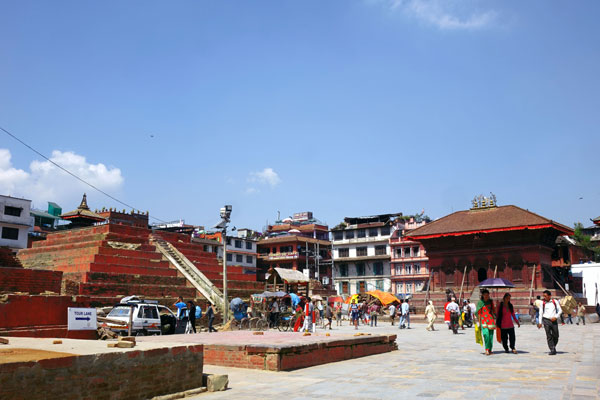 Locatedin the Old Royal Palace Square,Maju Deval Templenowonly has its red brick base remaining

The earthquake causedbricks from the towers of the Old Royal Palace to peel off,and artisans are busy restoring them
The reason the damage from this earthquake was so severe is mainly because most of the ancient buildings were constructed primarily with brick and stone. While these materials can withstand strong pressure, they lack flexibility and are highly susceptible to collapse when subjected to the unpredictable forces of an earthquake. In addition,Kathmanduis home to many cultural heritage sites that are over a thousand years old, whose foundations have grown increasingly fragile over time. Coupled with a limited number of skilled conservation professionals in the region, this led to what can only be described as a “heritage disaster.”
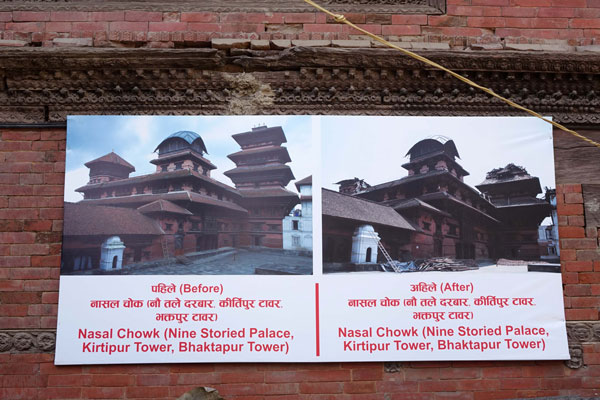
You might think: “Most of the major heritage sites are destroyed — doesKathmandustill have any tourism value?”
I believe the answer is yes. For instance, during my recent visit to Kathmandu, I often encountered artisans working on rebuilding the ancient structures. Right there on the construction sites, they were crafting intricate wooden carvings to adorn temples and palaces. They would later reassemble the disassembled bricks and timber back at the original locations. Witnessing their delicate and masterful craftsmanship was truly eye-opening. Moreover, due to the earthquake, more locals have been visiting major temples to pray and offer scriptures, creating an even more vibrant religious atmosphere. For photography enthusiasts, it's easy to capture some truly stunning shots.
As forNepalWhat other attractions are worth visiting? Check out Fever Travel's top 10NepalFeatured attractions!!
http://www.dcfever.com/travel/sightseeing.php?id=1013
Share
This article is published by HowToTrip. Sharing and reposting are welcome — please credit the source.
Article URL: https://www.howtotrip.net/views-28184
Related Articles
- Shaoxing's "Grandpa Gourd" hangs the gourds back up: "If there are too many people, we'll interact less — just take a quick look from afar"
- Chinese authorities announce "reciprocal adjustment" to Japan visa fees — single-entry visa jumps from 2,250 to 16,750 yen!
- The "health stones" carried by a traveler were found to have radiation levels exceeding safety limits by a thousand times, potentially endangering fellow passengers on the same flight. Customs issues warning!
- Shenzhen Airport Issues Late-Night Notice: Unidentified Aerial Object Detected, Causing Widespread Flight Delays!
- “They only said it cost money after I opened the box and washed it!” 200g of grapes sold for 60 yuan on a high-speed train—12306 responds!
- Can't buy an airline ticket? Denied exit? Blocked from boarding? A large number of Chinese tourists have mysteriously become "discredited individuals"
- Adverse weather and economic fluctuations impact Colombia's coffee market
- Beach bathing area responds to 2 yuan/30 seconds fee for freshwater foot rinsing: Clearly priced!
- Taking off with an improperly closed cabin door? Wing malfunction? Multiple flights made emergency returns mid-journey!
- Experience the gifts of nature! A countdown of the world’s ten most stunning coastlines