“Borax is harmful to health” — This century-old handmade rice noodle shop in Toucheng insists on all-natural ingredients

▲ A seemingly ordinary bowl of rice noodles reflects a commitment to food safety. (Photo / Reporter Chen Zi-Yin)
Reporter Chen Zi-Yin / Special Report
On a hot summer day, a bowl of chilled rice noodle ice cools you right down. This rice noodle shop near Toucheng Railway Station in Yilan has been in business for 68 years. Aside from being a long-established eatery, the owner is especially committed to food safety — nothing sold here contains preservatives, and borax is strictly avoided. The shop has developed a natural alternative, ensuring customers can eat with peace of mind.
As soon as customers walk in, shop owner Xiao Fenghuang enthusiastically introduces the rice noodles, alkaline noodles, and other offerings on the counter. Speaking about her confidence in her products, she explained, “Making alkaline noodles usually involves using borax to maintain the chewy texture, extend shelf life, and reduce costs, so it’s widely used. But my husband and I learned that borax accumulates in the body after consumption and is harmful to health. Once we understood that, we knew we could never use such a substance, so we were determined to find a natural substitute.”
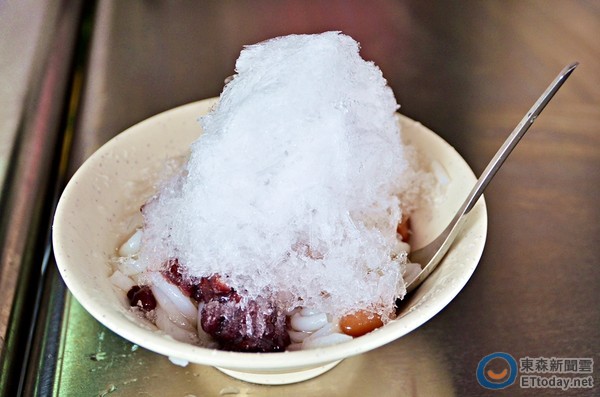
▲ A refreshing bowl of chilled rice noodles on a hot summer day is incredibly cooling. (Photo / Reporter Chen Zi-Yin)
It was this simple idea that led Xiao Fenghuang and her chemist husband to spend a year and eight months experimenting with various ingredients. Reflecting on the tough process, Xiao couldn’t help but sigh, “Back then, it was just constant trial and error. We’d throw out failed batches, and natural ingredients were more expensive. We almost gave up. But my husband encouraged me, saying if we quit then, everything would have been for nothing.” In the end, they found the solution — mung bean paste. By combining glutinous rice flour with mung bean paste, they created a natural version of rice noodles. However, even after discovering mung bean paste, getting the ratio right was essential to achieve the perfect taste and texture.
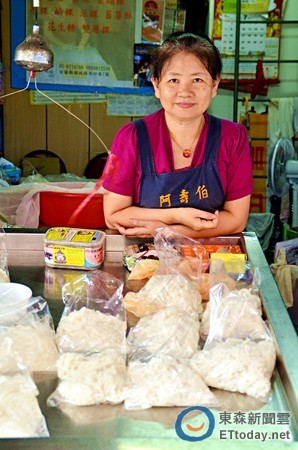
▲ The friendly shop owner endured many challenges while developing natural food products. (Photo / Reporter Chen Zi-Yin)
Xiao Fenghuang’s husband said that in the beginning, they still faced some challenges. For example, natural rice noodles turn yellow more easily at room temperature compared to those with borax, so they must be refrigerated and can’t be kept too long. Customers often doubted whether the products were fresh. Fortunately, as their reputation grew over time, customers gradually learned to tell the difference in natural rice noodles.
A seemingly ordinary bowl of traditional, handmade rice noodles uses old, unhusked glutinous rice that has been refrigerated for two years, combined with Xiao Fenghuang’s natural production method to create delicious noodles. She also shared how to distinguish between handmade and machine-made rice noodles: “It’s simple. Noodles that are short and have pointed ends on both sides are usually handmade. Machine-made ones are neat and don’t have pointed tips.”
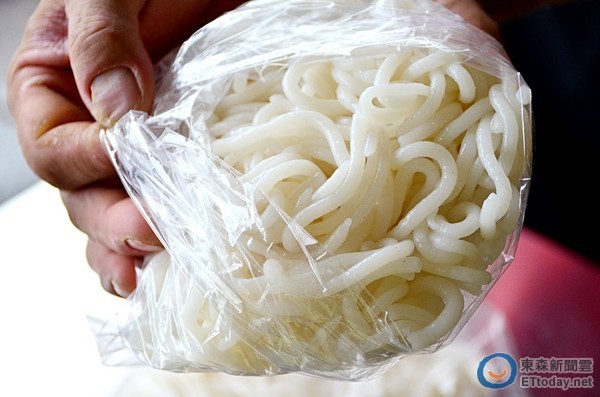
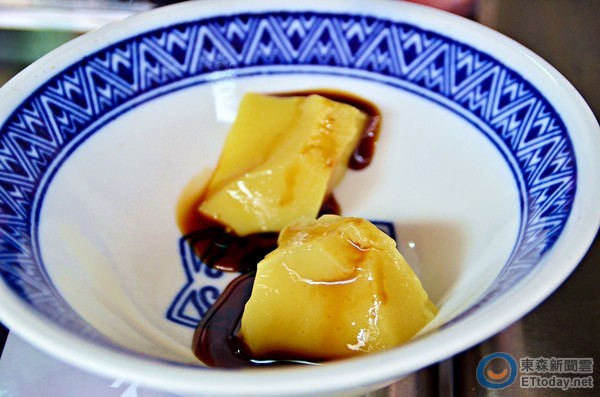
▲ Handmade rice noodles are instantly distinguishable from machine-made ones; the alkaline noodles are also a testament to the shop’s commitment, made from naturally sourced alkali that gives them a unique, authentic flavor. (Photo / Reporter Chen Zi-Yin)
The original small shop in Toucheng Market often has customers waiting in line during summer holidays due to limited space. To address this, Xiao Fenghuang and her husband opened another, larger and newer shop nearby, closer to the railway station. When it gets too crowded, customers are directed to the new location, where their son and daughter-in-law serve them, sparing guests from waiting in the sweltering heat.
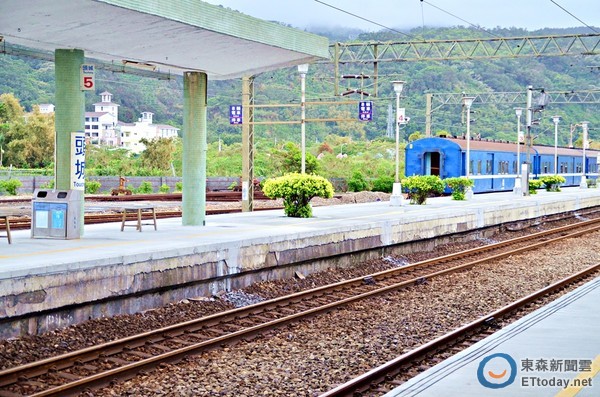
▲ The new branch of Ashoubor Rice Noodles is right across from Toucheng Railway Station in Yilan. (Photo / Reporter Chen Zi-Yin)
[Ashoubor Traditional Handmade Food Shop]
Address: No. 1, Lane 4, Kai Lan Road, Toucheng Township, Yilan County
Phone: (03) 977-4788
Business Hours: 6:00 AM to 1:00 PM
% View on Map
Share
This article is published by HowToTrip. Sharing and reposting are welcome — please credit the source.
Article URL: https://www.howtotrip.net/views-26915
Related Articles
- Shaoxing's "Grandpa Gourd" hangs the gourds back up: "If there are too many people, we'll interact less — just take a quick look from afar"
- Chinese authorities announce "reciprocal adjustment" to Japan visa fees — single-entry visa jumps from 2,250 to 16,750 yen!
- The "health stones" carried by a traveler were found to have radiation levels exceeding safety limits by a thousand times, potentially endangering fellow passengers on the same flight. Customs issues warning!
- Shenzhen Airport Issues Late-Night Notice: Unidentified Aerial Object Detected, Causing Widespread Flight Delays!
- “They only said it cost money after I opened the box and washed it!” 200g of grapes sold for 60 yuan on a high-speed train—12306 responds!
- Can't buy an airline ticket? Denied exit? Blocked from boarding? A large number of Chinese tourists have mysteriously become "discredited individuals"
- Adverse weather and economic fluctuations impact Colombia's coffee market
- Beach bathing area responds to 2 yuan/30 seconds fee for freshwater foot rinsing: Clearly priced!
- Taking off with an improperly closed cabin door? Wing malfunction? Multiple flights made emergency returns mid-journey!
- Experience the gifts of nature! A countdown of the world’s ten most stunning coastlines