Eating crabs in autumn? Don’t forget Taiwan’s sweet and delicious Wanli Crab
Photos and text /sya
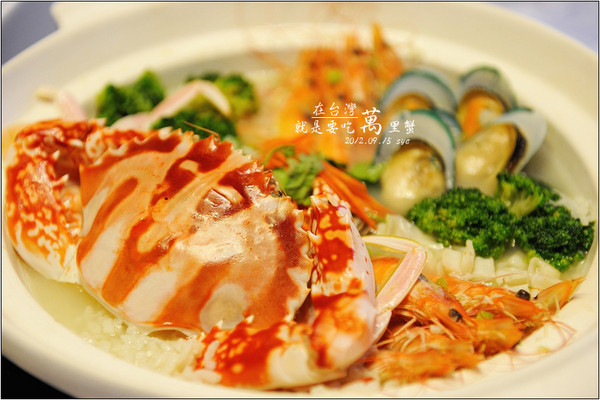
When autumn comes and thoughts turn to plump, juicy crabs, many people’s first reaction is Yangcheng Lake hairy crabs, Hokkaido king crabs, or San Francisco Dungeness crabs — but they often forget that Taiwan has its own “Wanli Crab,” known for its rich texture and sweet flavor. The New Taipei City Government hopes to use the “Wanli Crab” brand to promote local Taiwanese cuisine, reminding everyone that you don’t have to travel far to enjoy high-quality, wild-caught sea crabs — you can find them right here in Wanli.
Wanli is located near Taiwan’s largest crab fishing ground, the Northwest Fishing Ground, and the surrounding area has become a hub for Taiwan’s crab fishing industry. Each year, over 80% of Taiwan’s sea crabs are caught by nearly 50 crab fishing boats based in Wanli District. The so-called Northwest Fishing Ground refers to the waters off the coast of New Taipei City, east of 120°40′ E longitude and south of 26° N latitude. The four major fishing harbors in Wanli District (Yehliu Fishing Harbor, Dongao Fishing Harbor, Guhou Fishing Harbor, and Wanli Fishing Harbor) have become the largest distribution centers for sea crabs in Taiwan, with the main species being flower crabs, three-spot crabs, and stone crabs.
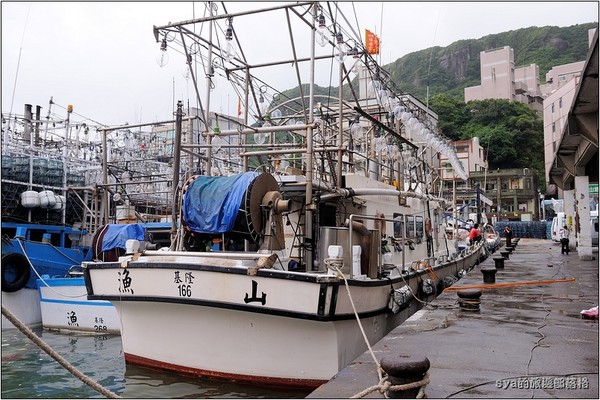
▲ This is a fishing boat used to catch squid and fish, surrounded by a ring of bright lights.
The Northwest Fishing Ground attracts large numbers of crabs for several reasons. Firstly, the area features a sandy seabed about 90 meters deep, and secondly, it is where cold and warm ocean currents (the Kuroshio Current branch and the China Coastal Current) converge. As the Kuroshio Current passes southern Taiwan, it splits into two branches — the main current flows along Taiwan’s east coast northward toward Japan, while the branch enters the Taiwan Strait to the west.
The branch current continues northward and meets the southward-moving China Coastal Current in northwestern Taiwan. The interaction between these cold and warm currents creates strong vertical water convection in the area, allowing nutrient salts from the seabed to rise to the surface and nourish algae, which in turn supports a thriving marine ecosystem. Since crabs feed mainly on algae, aquatic plants, and organic debris, they find an abundant food source here — making it an ideal area for reproduction and growth.

▲ Crab fishing boats carry numerous crab traps. Each boat typically carries more than five sets of traps, with each set containing about 360 individual traps. After reaching the crab-rich waters, the baited traps are lowered into the sea one after another.
The method of catching Wanli Crabs differs from the “trawling” or “purse seining” methods commonly used in the U.S. and Japan — instead, crab traps are used to lure the crabs. This approach is less invasive and helps preserve the marine ecosystem. Additionally, smaller juvenile crabs are sorted out during the catch to support sustainable fishing practices. In Yehliu Fishing Harbor, there are two common types of fishing boats: those surrounded by large, high-wattage bulbs (used for catching squid or fish), and those encircled by rope nets (the crab fishing boats).
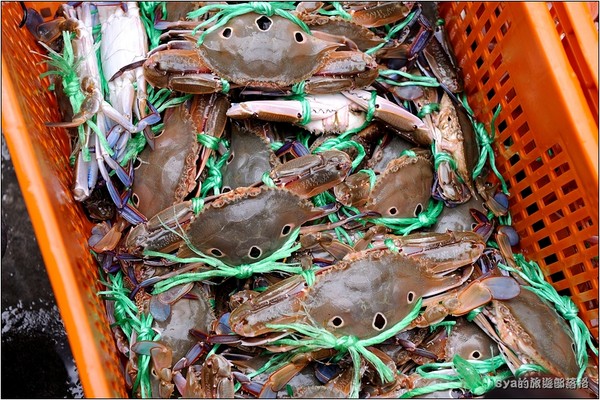
▲ Three-spot crab.
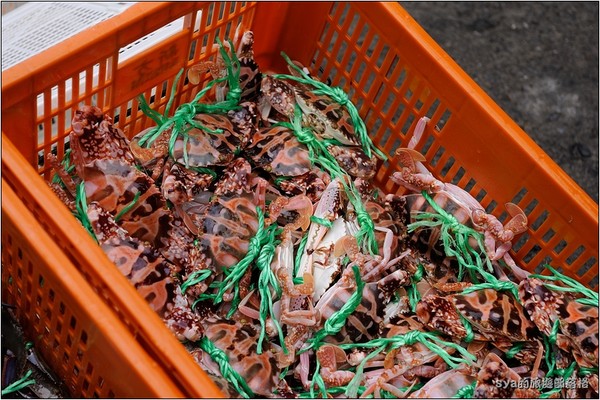
▲ Flower crab.
The New Taipei City Government aims to use the “Wanli Crab” brand to champion local Taiwanese flavors. Craving delicious seafood? You don’t need to cross the ocean or travel far — just drive up to Wanli in northern Taiwan, and you can easily enjoy these fresh and flavorful crabs. Moreover, 80% of all crabs consumed across Taiwan come from this very place. How could you not know about it?
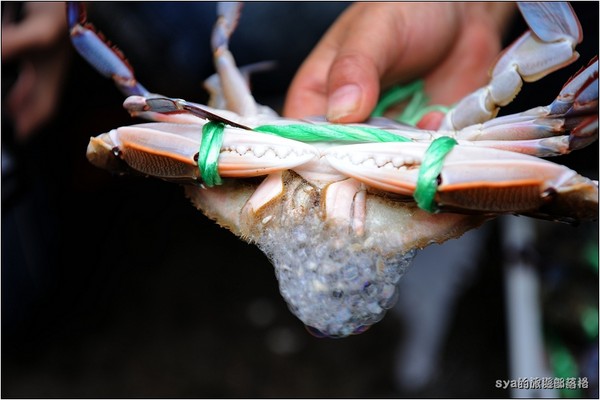
Why do many crabs foam excessively when they’re brought ashore? Crabs, like fish, breathe through gills. But since they often crawl onto land to forage, their gills can store large amounts of water to sustain breathing for short periods. However, if too much air is inhaled, the water in their gills mixes with the air and is expelled as tiny bubbles, creating the foamy mass shown in the photo above.
Reference article links:
1. “In Taiwan, you have to eat Wanli Crab – The Story Behind Wanli Crab”
2. “The Big Three Sea Crabs: A Fisherman’s Feast”
Share
This article is published by HowToTrip. Sharing and reposting are welcome — please credit the source.
Article URL: https://www.howtotrip.net/views-26440
Related Articles
- Shaoxing's "Grandpa Gourd" hangs the gourds back up: "If there are too many people, we'll interact less — just take a quick look from afar"
- Chinese authorities announce "reciprocal adjustment" to Japan visa fees — single-entry visa jumps from 2,250 to 16,750 yen!
- The "health stones" carried by a traveler were found to have radiation levels exceeding safety limits by a thousand times, potentially endangering fellow passengers on the same flight. Customs issues warning!
- Shenzhen Airport Issues Late-Night Notice: Unidentified Aerial Object Detected, Causing Widespread Flight Delays!
- “They only said it cost money after I opened the box and washed it!” 200g of grapes sold for 60 yuan on a high-speed train—12306 responds!
- Can't buy an airline ticket? Denied exit? Blocked from boarding? A large number of Chinese tourists have mysteriously become "discredited individuals"
- Adverse weather and economic fluctuations impact Colombia's coffee market
- Beach bathing area responds to 2 yuan/30 seconds fee for freshwater foot rinsing: Clearly priced!
- Taking off with an improperly closed cabin door? Wing malfunction? Multiple flights made emergency returns mid-journey!
- Experience the gifts of nature! A countdown of the world’s ten most stunning coastlines