Yoshino Mountain in Nara, Japan — A Romantic and Ethereal Cherry Blossom Landscape
Photos & Text byMIKA’s Foodie Adventure Journal
Yoshino Mountain, located in the central part of Nara Prefecture, Japan, is renowned as Japan’s top cherry blossom viewing destination. It boasts 30,000 cherry trees of 200 varieties, including the Shiro-yama cherry. During the cherry blossom season, the mountainsides blanketed in blossoms combined with the surrounding mountain scenery create a breathtaking view, often described as "a thousand trees in a single glance." Yoshino Mountain is divided into areas such as Shimo-Senbon, Naka-Senbon, Kami-Senbon, and Oku-Senbon, with approximately 30,000 cherry trees planted across the mountain, earning its title as Japan’s No. 1 and also the birthplace of Yoshino cherry blossoms. Because it’s quite remote, if you’re really planning to go to Yoshino Mountain, be prepared to spend an entire day there — just the round trip takes at least five hours by car. It's more convenient to get there from Osaka, while from Kyoto you’ll need to transfer trains.
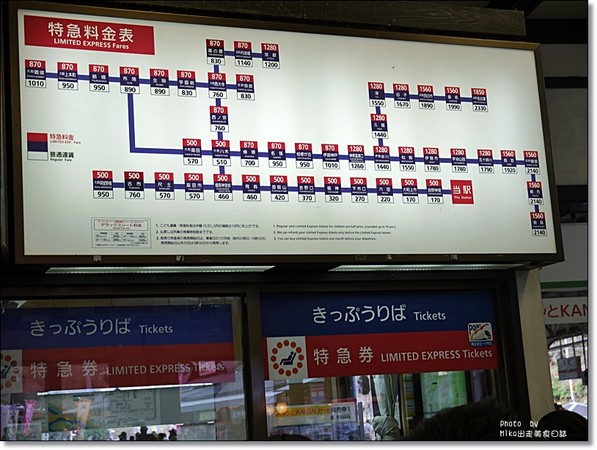
Whether traveling from Osaka or Kyoto to Yoshino Mountain, the usual option is to take a Kintetsu train. From Osaka, take the Abeno-koji (Tennoji) – Yoshino line, which offers direct services running every 30 minutes. The limited express one-way fare is ¥1,450 (approx. NT$465), with a journey time of about 70 minutes; the express one-way fare is ¥950 (approx. NT$316), taking about 90 minutes. But getting there from Kyoto is a bit more complicated, requiring
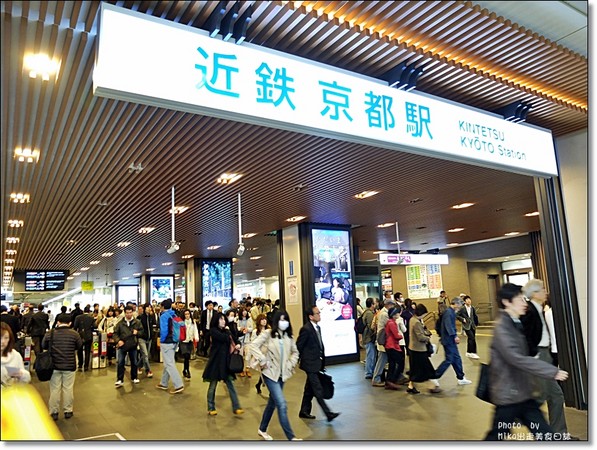
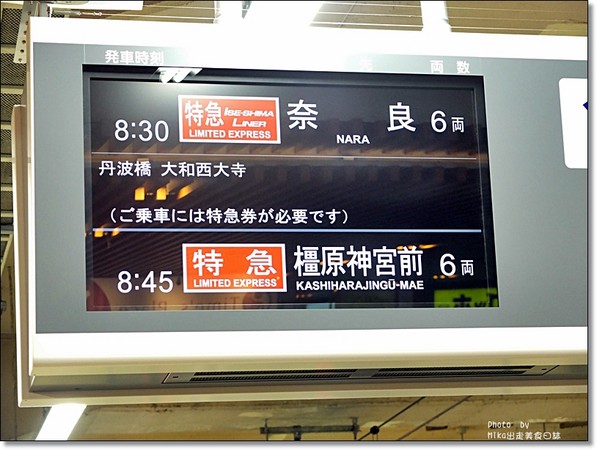
Since we changed our plans at the last minute to go to Yoshino Mountain, it was really because the weather in Japan is so unpredictable. Our original itinerary was well thought out, focusing on cherry blossom viewing within Kyoto city. But on the day we were set to depart, Kyoto experienced torrential rain for two straight days, causing the cherry blossoms to fall almost overnight. What a disaster~ ~ So we decided to head farther out or up into the mountains, where we could at least catch the tail end of the cherry blossoms. That’s how this trip to Yoshino Mountain came about.
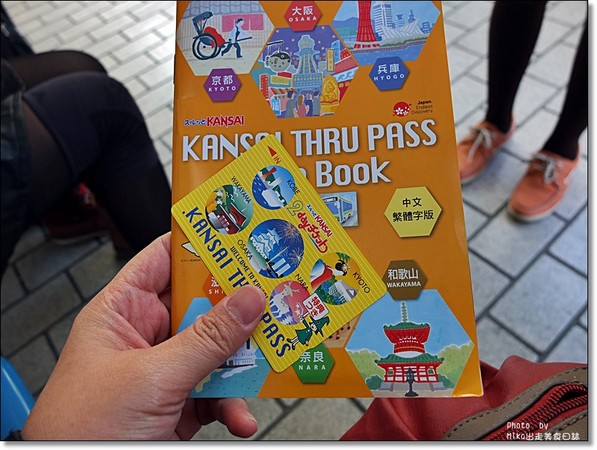
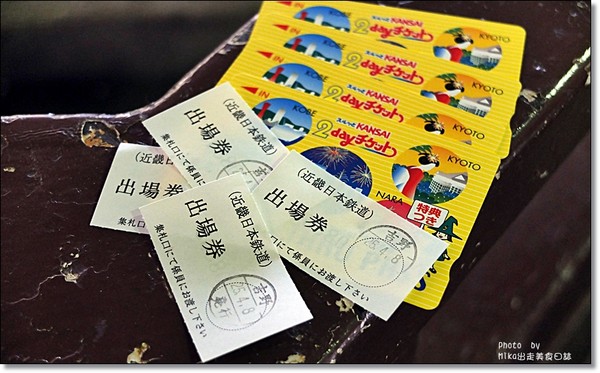
But because it was such a sudden decision, we had to figure out the transportation on the fly. How to get to Yoshino Mountain? How to take the train? This really caught us off guard. Fortunately, we met some Taiwanese tourists and ended up traveling together. We bought the Kansai Thru Pass, not realizing at the time that its coverage only extended as far as Tsubosakayama. We thought that after transferring at Yoshino-Hongu Taisha, we could go directly to Yoshino Mountain. But in the end, it only got us as far as Tsubosakayama... XD. Basically, if no one noticed, you could go straight to Yoshino Mountain and just pay the difference (¥420, approx. NT$140) upon exiting the station.
Transfer at Kyoto to Yoshino-Hongu Taisha.

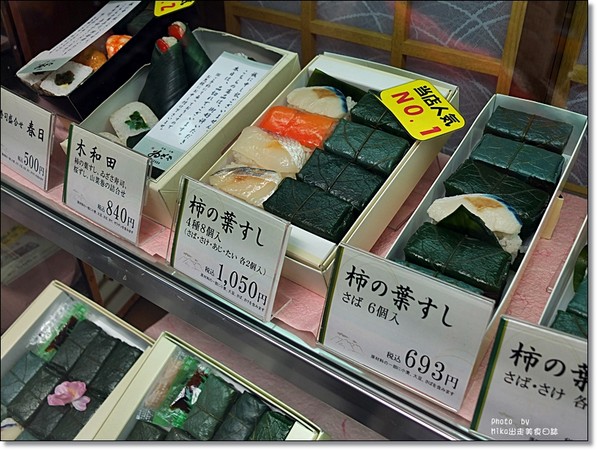
While waiting to transfer, we went to buy kakinoha sushi — sushi wrapped in persimmon leaves — which is said to be a must-try local specialty for picnics in Yoshino Mountain. Actually, you can buy it once you get to Yoshino Mountain too; we just thought we might face long lines or run out (way too overthinking, as it turned out).
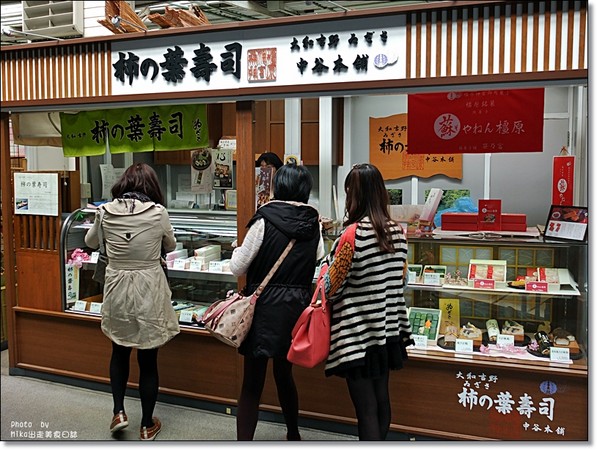
Tourists love to buy the store’s No. 1 bestseller.
As mentioned earlier, if you have the Kansai Thru Pass, the transport range only goes as far as Tsubosakayama. We figured we’d just pay the fare difference after exiting the station — but because we weren’t entirely sure about the situation, we asked the station staff on the train to clarify, just to be safe. The moment he saw we had the Kansai Thru Pass, he didn’t say a word and made us get off at Tsubosakayama... Ugh, what a bummer XDDD.
At the time, we still didn’t fully understand what was going on when we were asked to get off. Looking at the desolate and empty Tsubosakayama station, we were left speechless. There probably should’ve been a few crows flying overhead, cawing mockingly... Should’ve known getting kicked off the train meant we shouldn’t have asked the staff... V绠....
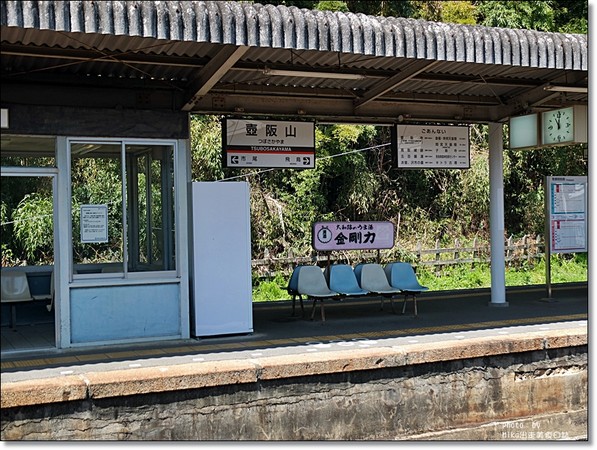
Fortunately, the next train to Yoshino Mountain was in just over ten minutes. We quickly bought the additional ticket and waited for the train to come pick us up from this deserted Tsubosakayama station...
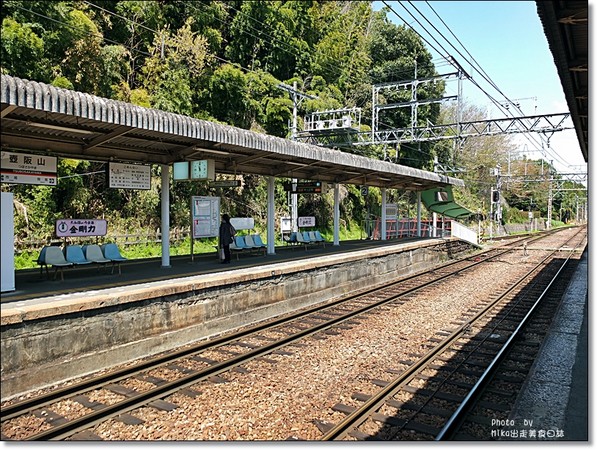
Traveling to Yoshino Mountain isn’t cheap, and it takes a lot of time — at least five hours for the round trip.
After all the transportation chaos and a group of us wandering around half-lost, we finally made it to the base of Yoshino Mountain.
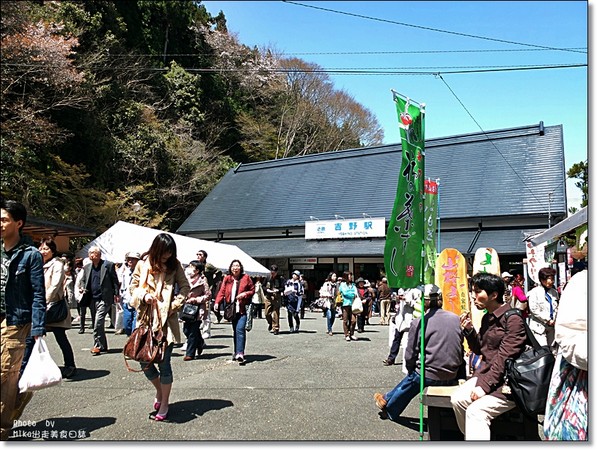
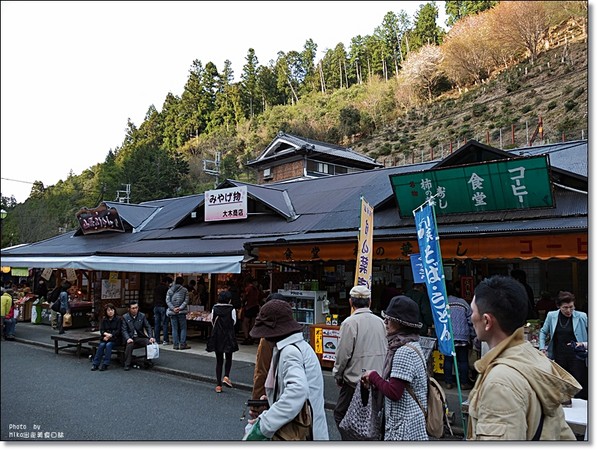
As soon as you exit the station, you’ll see shops on both sides — there are eateries, drink stands, and even kakinoha bento boxes, making it very convenient. You can actually buy your picnic food here instead.
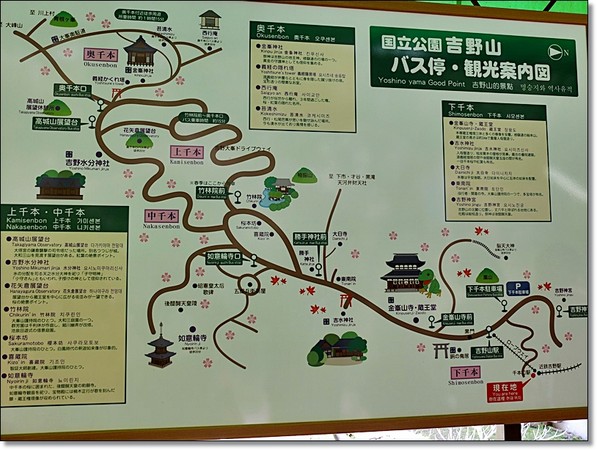
The cherry blossom season on Yoshino Mountain is quite long, so if you’re in a situation as rough as ours, come to Yoshino Mountain — at least you have a much higher chance of seeing cherry blossoms here. Yoshino Mountain is divided into ‘Shimo-Senbon,’ ‘Naka-Senbon,’ ‘Kami-Senbon,’ and ‘Oku-Senbon’ areas, with the blooming sequence being: lower → middle → upper → inner, opening in that order over the course of a full month.
On this trip to Yoshino Mountain, we found that most of the blossoms in Shimo-Senbon and Naka-Senbon had already fallen, likely due to the heavy rain too!! So we had originally planned to head straight to Kami-Senbon for cherry blossom viewing, but you know how tourists are — seeing a crowd and a line, we just joined in. We noticed everyone was lining up for the cable car and naively thought, “Hey, this cable car can take us straight to Oku-Senbon or Kami-Senbon to see the cherry blossoms — not bad...” But then—
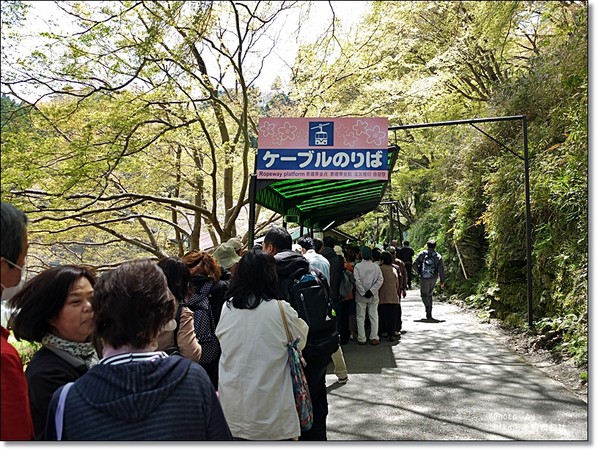

We heard this was Japan’s oldest cable car. Us, foolishly joining the line, ended up waiting nearly an hour (rolling our eyes). The fare for adults is ¥350 (approx. NT$116).
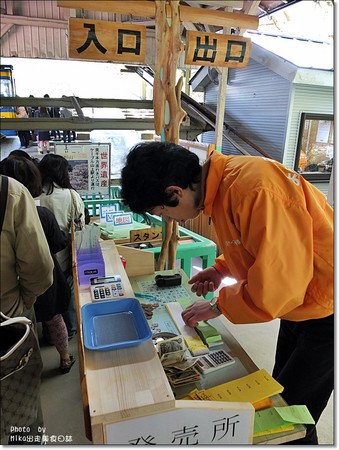
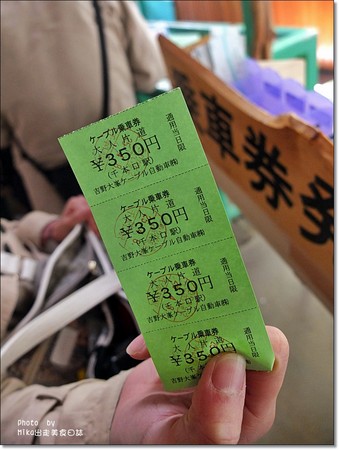
Map of Yoshino Mountain.
After what felt like forever, we finally got on the cable car, which clearly showed its age.
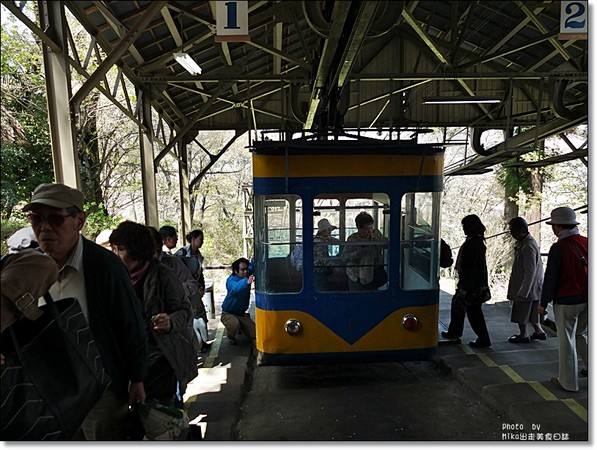
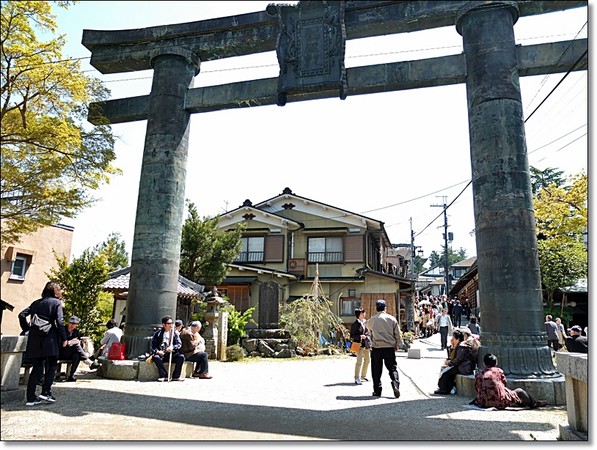
It only took a few minutes to reach Shimo-Senbon, which was quite lively with lots of people and a shopping street. The Niomon Gate is not only a UNESCO World Heritage Site but is also registered as a National Treasure by the Japanese government.
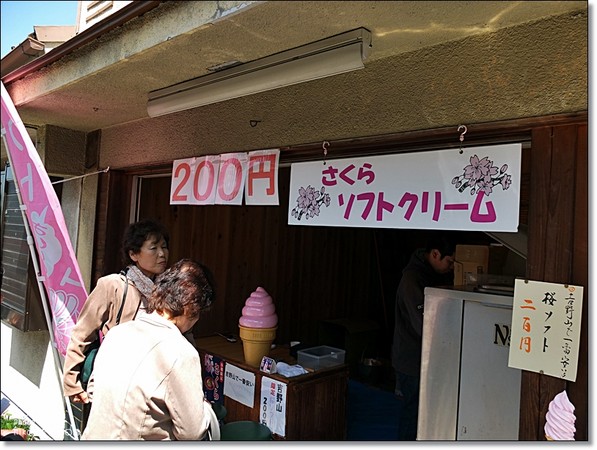
At the shopping street, we spotted cherry blossom-flavored ice cream for ¥200 (approx. NT$66).
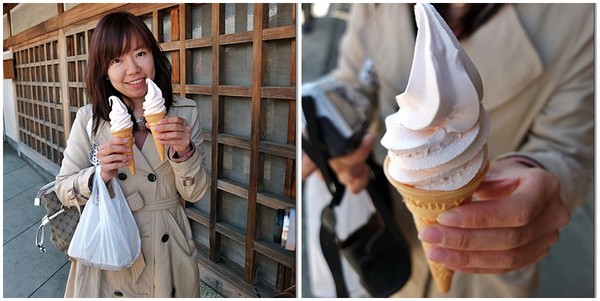
It tasted alright — just regular ice cream. We couldn’t really tell how it differed in taste from regular ice cream with cherry blossom flavor.
This is Japan’s UNESCO World Heritage Site — Kinpusen-ji Temple, which is located in the foothills of Mount Yoshino.
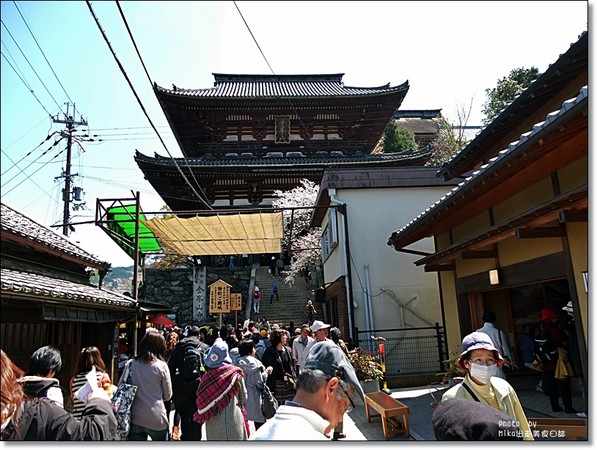
We only saw one fiercely blooming cherry tree, but aside from that one, there were barely any cherry blossoms in sight. We started to get suspicious. After asking around, we learned that the cable car only goes as far as Shimo-Senbon. To get to Oku-Senbon, you need to take the cable car back down and then transfer to a bus to go up. Oh boy, talk about a letdown...
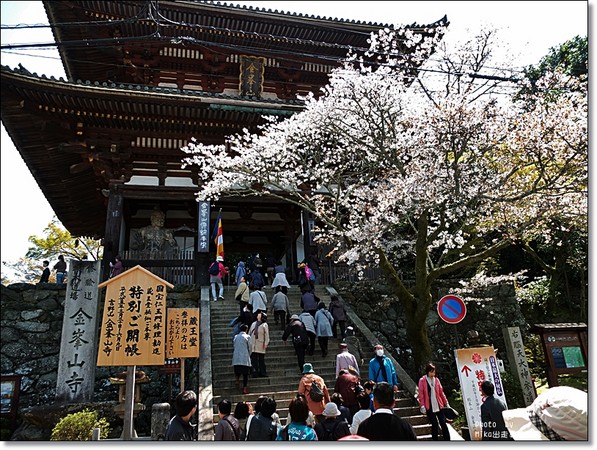
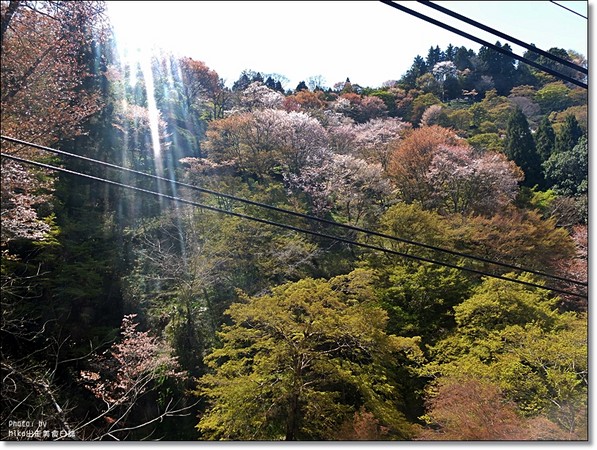
Fortunately, the view from the cable car was stunning, so we decided to take it as a happy accident. At least we got to ride a historic cable car and enjoy the beautiful scenery.
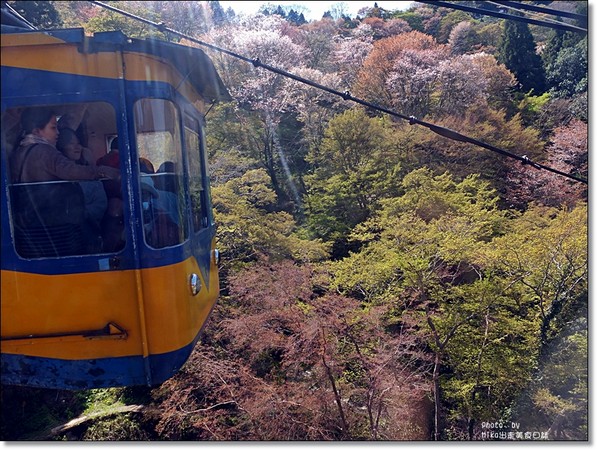
The mountain views seen from the cable car.
After getting off the cable car, we took a bus to Chūsenbon, only to find out we had to transfer to another bus to reach Ōsenbon. We thought the cherry blossoms might not have bloomed yet at Ōsenbon, but we could still slowly walk down the mountain to enjoy them. However, when we got to the bus stop for Ōsenbon, we saw an even more astonishing crowd—lines stretching as far as the eye could see—so we gave up on taking the bus!! We decided to hike up the mountain instead...
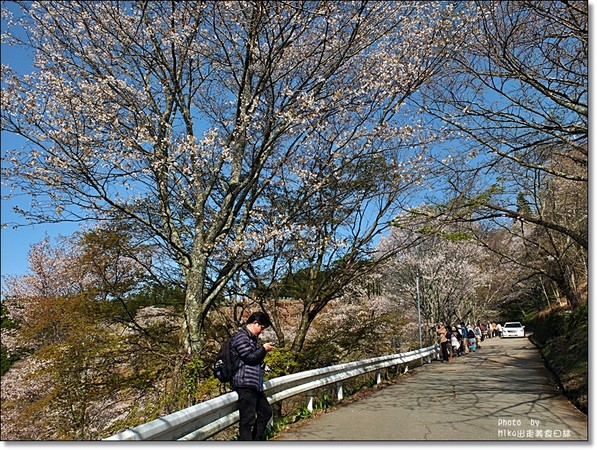
Yes, it was that steep and that high of a mountain. Some sections were so steep they made our legs go weak, but luckily the scenery along the way was beautiful.
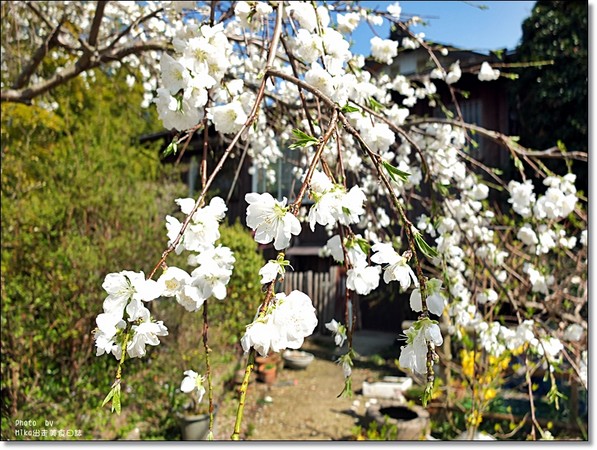
Every time we saw a crowd gathering, we’d take the chance to snap some photos and rest a bit. Hiking up Mount Yoshino is really no joke!!
By around noon, we found a resting spot and had a picnic with kakinoha (persimmon leaf) bento. There were three flavors inside—salmon, bonito, etc... The fish was salted and really salty, with a stronger fishy taste, but the sushi rice itself was mild, which balanced out the saltiness and fishiness of the fish. It was a unique flavor, but not very tasty. It’s worth trying once, but honestly, you might want to bring other food for a mountain picnic, because this probably won’t suit Taiwanese tastes very well.
But the red bean dessert wrapped in persimmon leaves was much tastier—I’d recommend getting that.
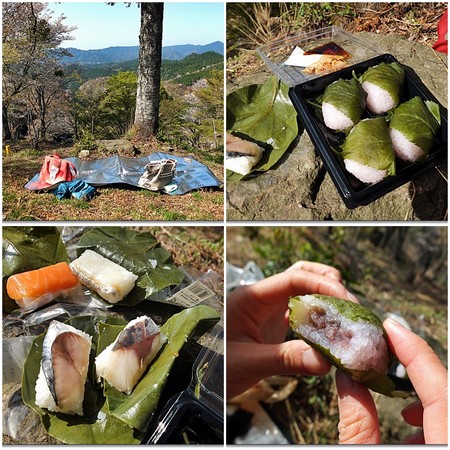
Having a picnic on Mount Yoshino under the beautiful cherry blossom-covered mountain scenery in the sunlight!! I really miss those times—we were exhausted from the climb, but also so fulfilled and happy.
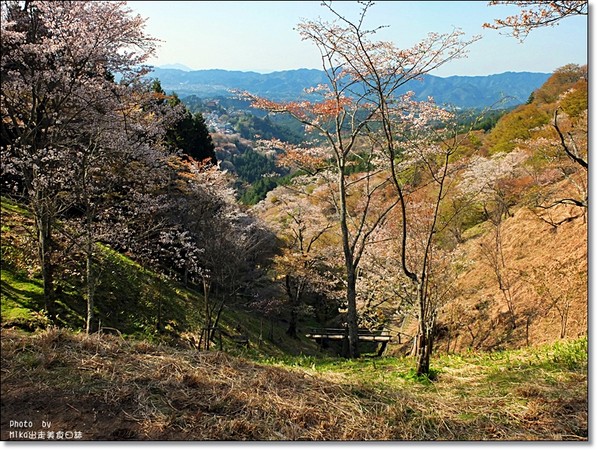
The higher we went up the mountain, the more expansive the view became... We couldn’t help but keep stopping to take photos along the way.
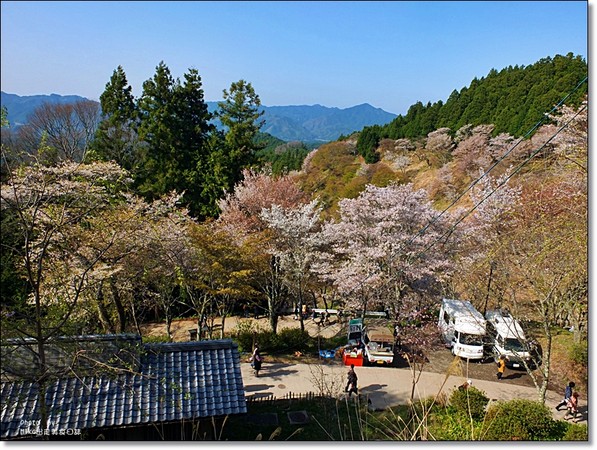
Luckily, the scenery along the way was truly stunning, giving us the motivation to keep climbing.
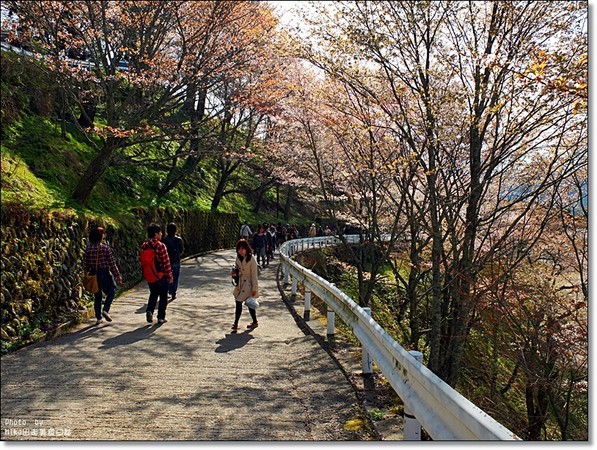
Besides the cherry blossoms covering the mountains, we could also see the lush green mountains stretching out in the distance.
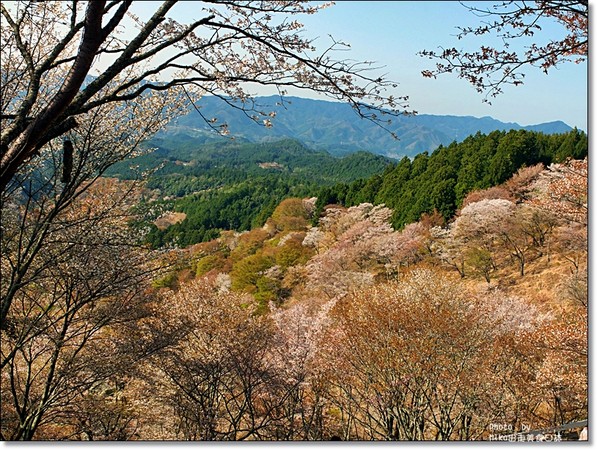
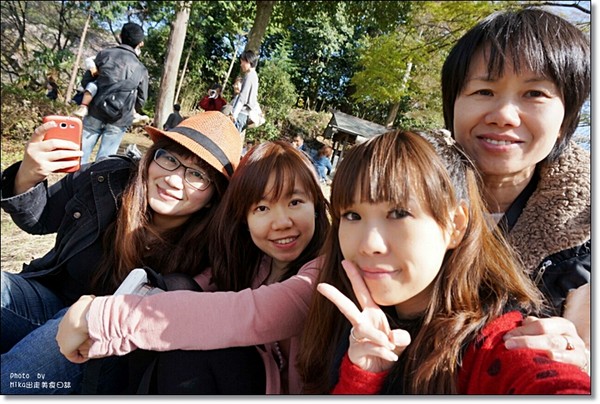
At that point, I could still manage to smile. Even though we kept stopping to take photos and rest, it was tiring but still manageable.
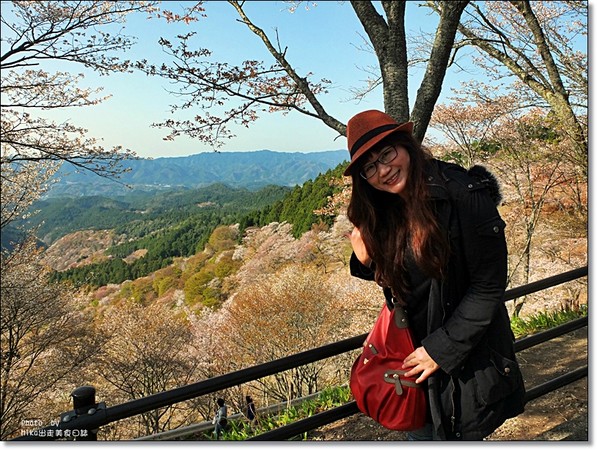
Looking down at the path we had come from, I admired how I had just walked all the way along those winding S-curves.
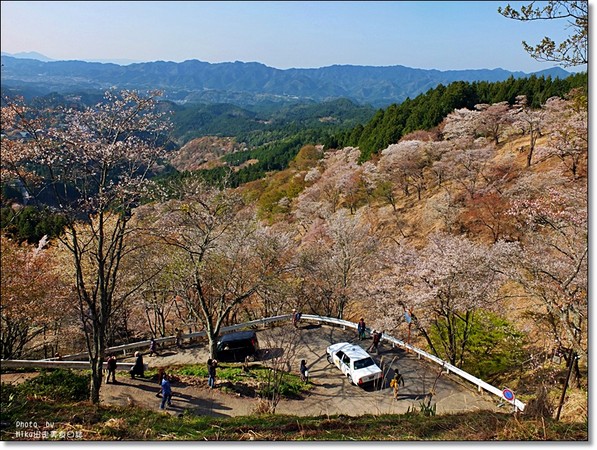
Walking and taking photos like this, it probably took us a little over an hour...

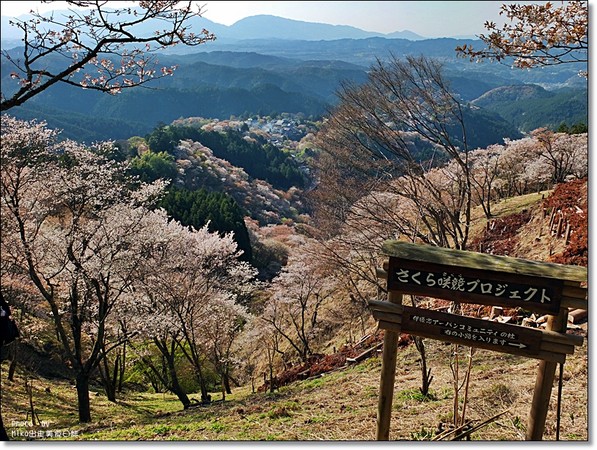
Finally, we reached the best photo spot at Kami Senbon, with smoke gently rising in the distance. So atmospheric.
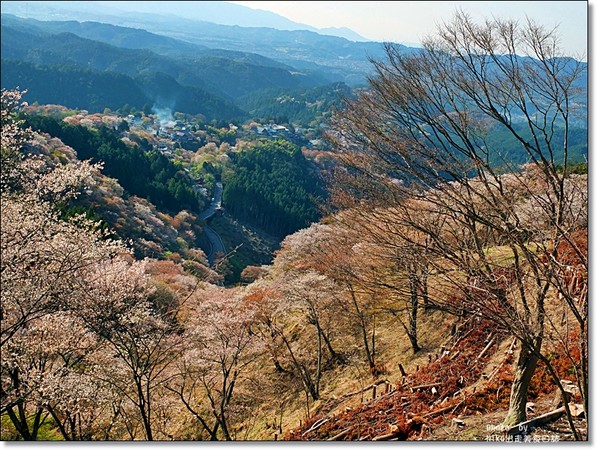
Although many of the cherry blossoms at the base of the mountain had already fallen, you could still see the layered pink hues stretching out toward the distant mountains—mountains covered in pink and green, pink intermingled with green, plus the gentle smoke rising in the air. Wow, such a scene—it really felt like a beautiful painting.
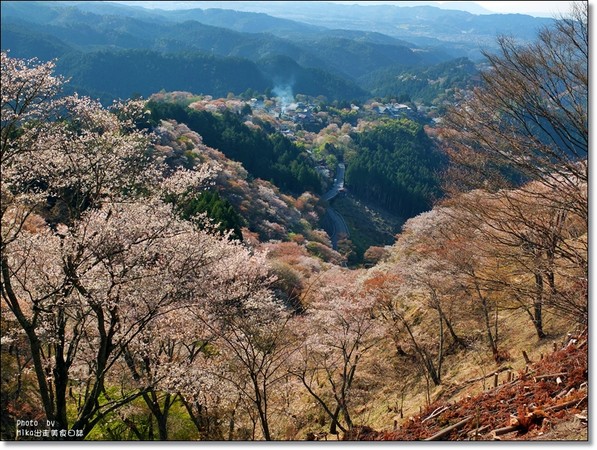
This is my favorite photo. Under the landmark with its wooden sign, looking out at the sea of cherry blossoms and the green mountains all around, amidst the pink, white, and green hues of the mountains competing in beauty, I enjoyed this romantic and transcendent mountain cherry blossom view here and took this photo as proof that I had been there.
My friend Jungle Chen, who was with us at the time, continued hiking up to the highest viewpoint. The view from there was even more expansive—I’m sharing the photos he took with everyone here ^^
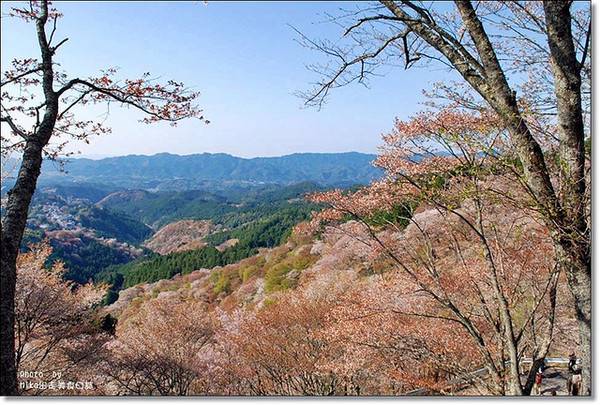
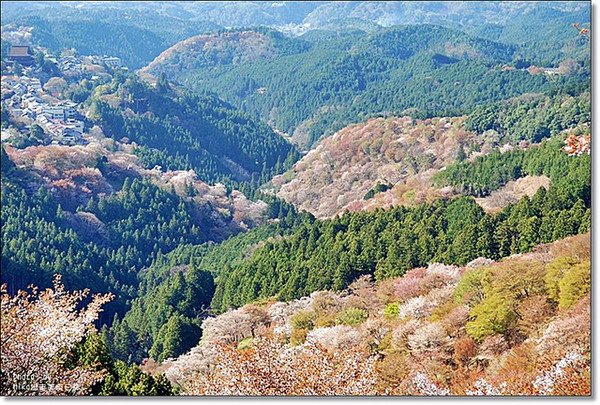
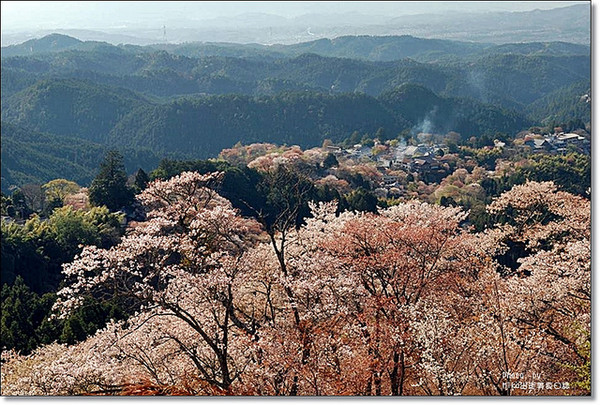
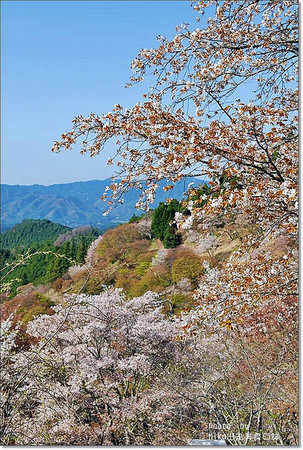
This one is really gorgeous. It was definitely worth lugging that DSLR up the mountain!!
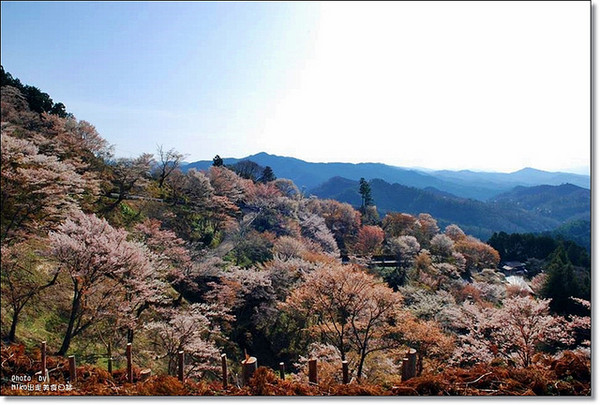
The atmosphere in this photo is amazing.
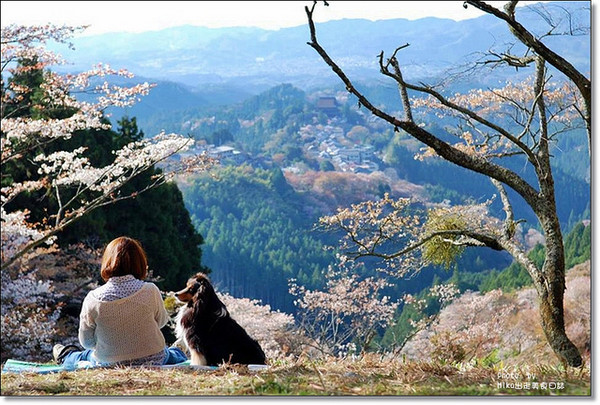
Actually, hiking up Mount Yoshino isn’t too tiring. Walking up while taking photos and stopping along the way, although the path is steep, it doesn’t completely drain your energy. But going down the mountain is actually harder on the legs, because it’s a very steep downhill. Your steps unconsciously speed up, and if you don’t apply pressure correctly, it can hurt your legs. That’s exactly what happened to me and my friend—we were so sore, and I think it was from going down, not up.
Around 3 or 4 in the afternoon, while it was still light out, we hurried down the mountain to catch a bus and leave Mount Yoshino. After all, the journey back takes quite a while... Visiting Mount Yoshino requires sacrificing both money and time, but if you ask me if it’s worth it? I’d still say yes, because seeing the magnificent sight of over 30,000 cherry blossom trees covering the mountains is truly moving and unforgettable.
I’d just suggest saving it for the last few days of your trip, so you don’t end up as sore as we were, making the rest of your itinerary a bit more difficult. Haha... Also, Mount Yoshino is super crowded. If you can take the bus, definitely take the bus~ If you want to avoid the crowds, try to arrive as early as possible, otherwise the wait can really waste a lot of time. I personally think it’s better to just accept the hike than to wait in line for an hour or two—the scenery along the way has lots of great photo ops, and the sense of accomplishment and emotion you get from making it up the mountain is even deeper and more profound.
Mount Yoshino
Address: Yoshinoyama, Yoshinocho, Nara
Scale: Approximately 30,000 trees
Opening Hours: March 27–April 25, 2010, Time: 18:00–22:00
Estimated Bloom Period: Early to Late April
Admission: Free
Traveling afar helps you return home with deeper meaning
MIKA's Foodie Adventure Journal
Share
This article is published by HowToTrip. Sharing and reposting are welcome — please credit the source.
Article URL: https://www.howtotrip.net/views-26056
Related Articles
- Shaoxing's "Grandpa Gourd" hangs the gourds back up: "If there are too many people, we'll interact less — just take a quick look from afar"
- Chinese authorities announce "reciprocal adjustment" to Japan visa fees — single-entry visa jumps from 2,250 to 16,750 yen!
- 旅客携带的“保健石”核辐射超标千倍,同机人员或遭殃!海关提醒!
- 深圳机场深夜通报!出现不明升空物,航班大面积延误!
- “拆盒洗了才说要钱!”高铁200克葡萄卖60元,12306回应!
- 买不了机票?出境被拒?登机被拦?一大波中国游客莫名成了“失信人”
- 不利天气和经济波动影响哥伦比亚咖啡市场
- 海边浴场回应冲脚淡水收费2元/30秒:明码标价!
- 舱门没关好就起飞?机翼出现问题?多个航班途中紧急折返!
- 感受大自然的馈赠!盘点世界十大唯美海岸线