Exceptionally high value-for-money Japanese delicacies — Zhongli’s “Sit and Make” sushi shop crafts great food through sitting
Photos and text byXiao Hu’s Dream Food Blog
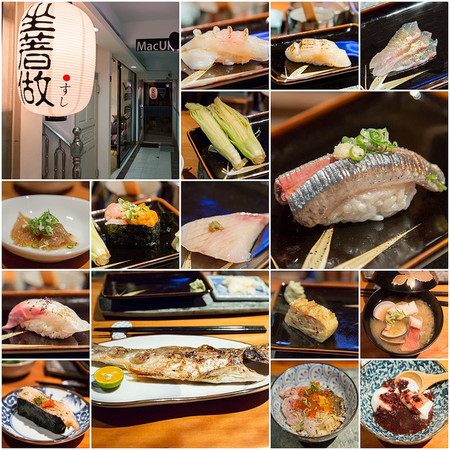
(All the dishes in this combo photo cost 680 NT — is that even fair?)
Lately, my craving for nigiri sushi has become unbearable. I was originally planning to cure it at one of three places: Mánzhe Diē, Ajishi, or Shulin Hong Sushi. But coincidentally, last week, my idol and senior, Food For Die, returned from Green Island and Orchid Island. So I took the opportunity during her trip to Kinmen to set up a meal together. It just so happened she also wanted to try this sushi shop that’s been making waves in Zhongli, Taoyuan recently, and through my good friend Willy, we managed to book two seats after a lot of trouble.
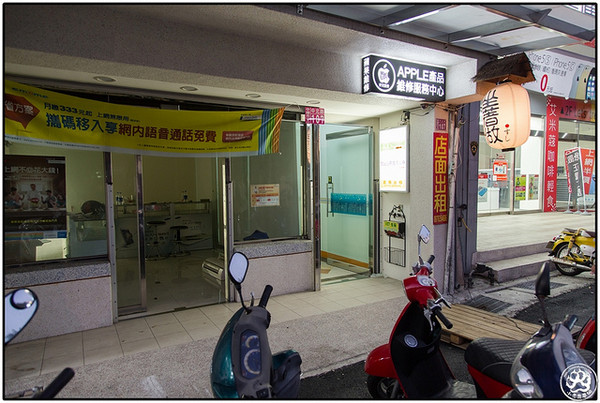
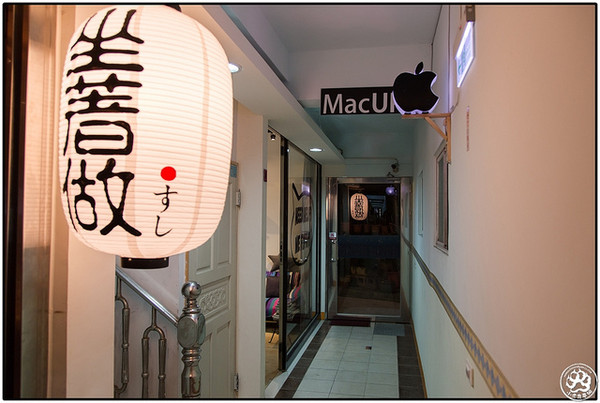
Before arriving, I’d only heard they said “Sit and Make” is in a very odd location, but when I got to the shop — or should I say, the alley? Or the secret passageway? — I still couldn’t help but laugh.
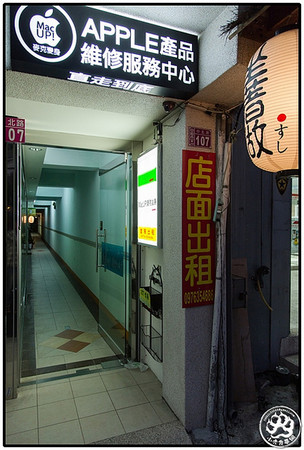
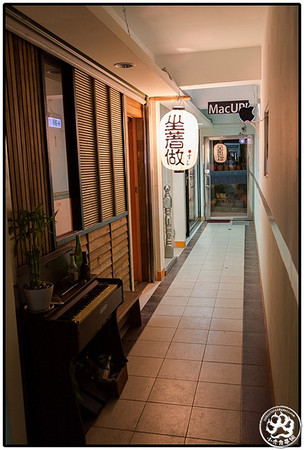
A series of photos paired with “dong~ dong~ dong” sounds — doesn’t it have the vibe of “The Solitary Gourmet”? Seriously, this place is way too hidden. I wonder how the first customers even found it.
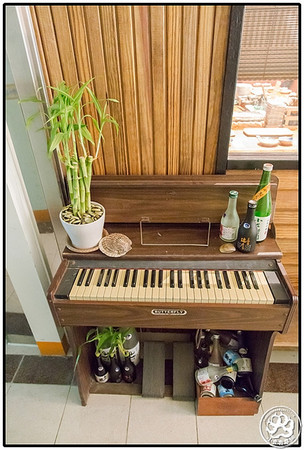
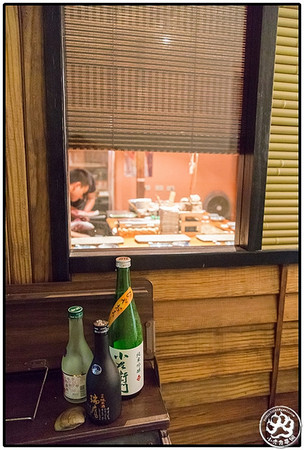
There’s an organ placed in front of the shop which I didn’t quite understand the purpose of, but because it was unique I obediently took a picture. There's a small window on the organ where you can peek at the prep work before opening.
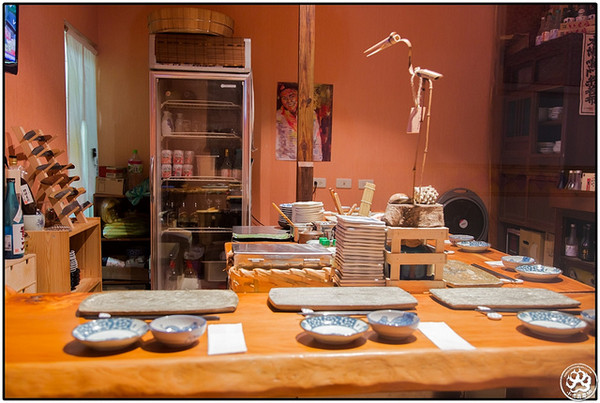
The “Sit and Make” sushi shop is very small, barely squeezing in eight people if you push. But for some reason, I really felt the vibe — that cozy little-shop atmosphere reminiscent of a late-night diner, and naturally, also reminiscent of “Mánzhe Diē.”
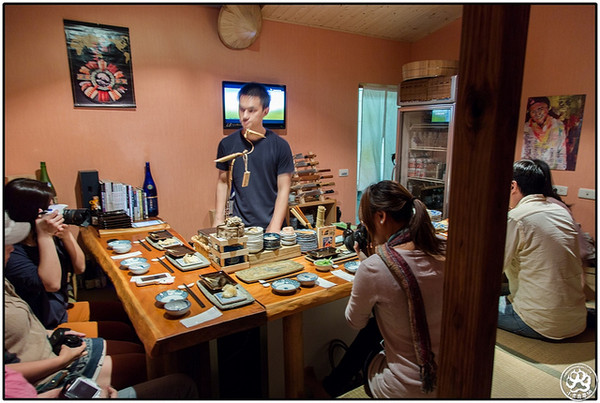
Eight people sit around a small U-shaped counter that serves as both the cooking station and the dining table. It has the warmth of a small shop, and you can see the chef’s craft up close — I love it.
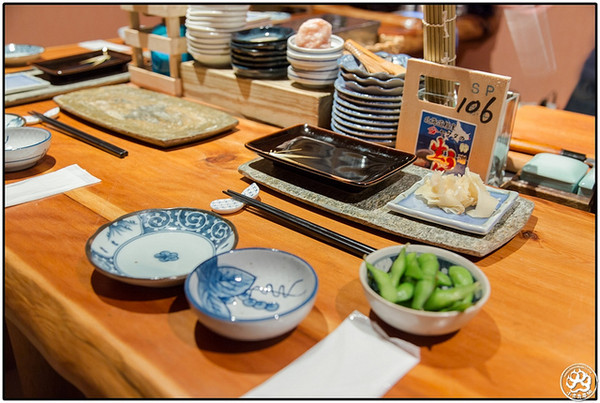
The tableware naturally carries a Japanese vibe — simple and unadorned.
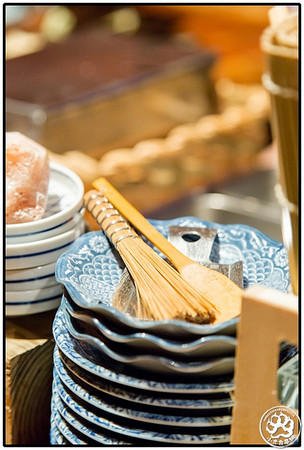
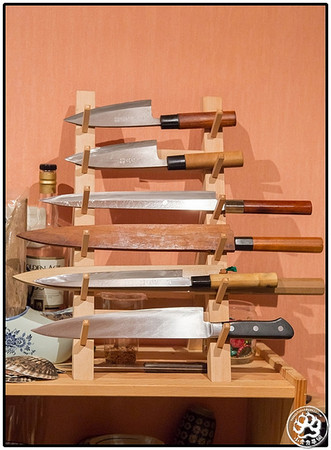
Though the shop is small, the selection is surprisingly complete, and the chef seems very, very young. For some reason, I suddenly envied him — being able to own his own shop at such a young age, and more importantly, doing what he loves.
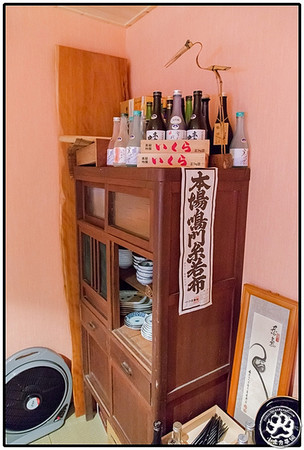
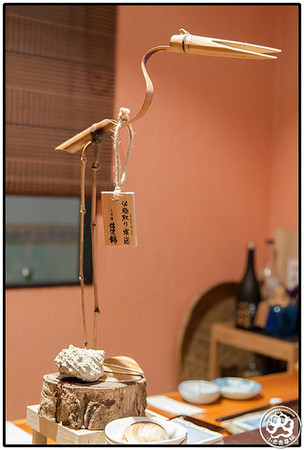
Somehow, there’s an old-fashioned cabinet brought in, but why are the calligraphy and paintings on the floor? This tall, slender wooden crane is so cute — I’d love to buy one, though I have no idea where I’d put it at home (laughs).
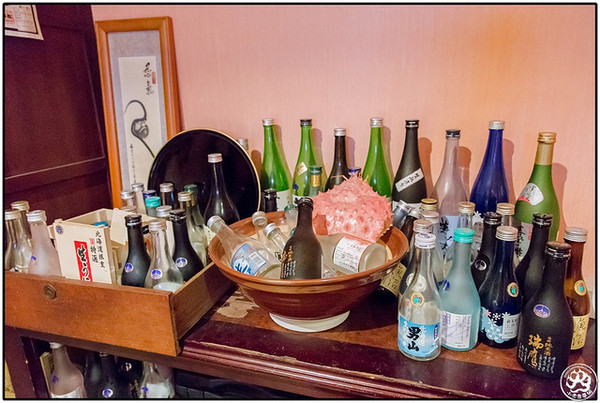
Besides enjoying delicious nigiri sushi here, you can also pair it with sake or beer.
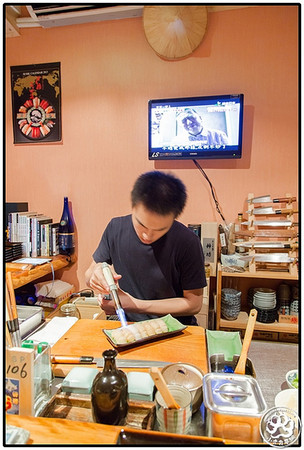
I wonder if anyone else shares Xiao Hu’s question: why is the shop called “Sit and Make”? I believe this photo provides the answer.
The young chef sits at the counter making sushi, then serving each dish one by one to customers on the three sides. What’s special is that the chef is very thoughtful — the first round he serves from left to right, the second time he reverses it and goes from right to left. Suddenly, it reminded me of the attention to detail mentioned by the “Sushi Master” in the documentary.
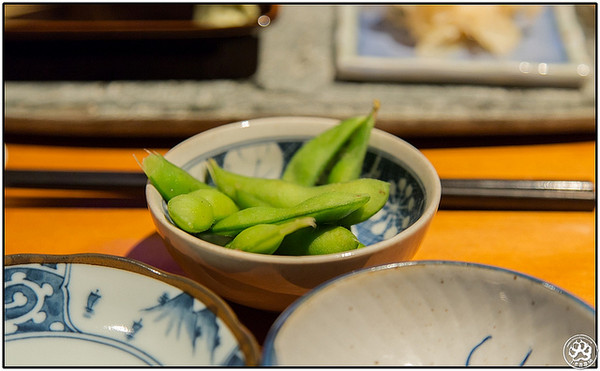
If I get the chance, I’ll definitely ask Japanese chefs why Japanese cuisine loves to start meals with edamame. Is there a tradition behind it, or is it just that edamame works best? Or maybe someone who knows can enlighten me. The edamame here is served plain, with a faint hint of light saltiness.
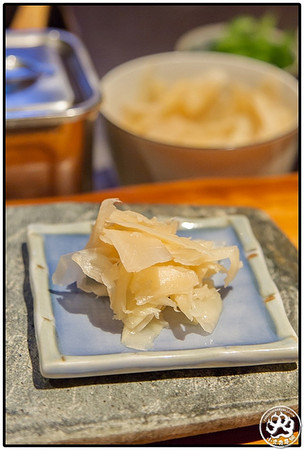
The pickled ginger is also seasoned on the saltier side, with relatively mild acidity, but I unexpectedly found it to be more “clean” in taste. Though it’s not particularly delicious on its own.

As with many nigiri sushi shops, the first piece is usually shellfish — most often scallops. This one had almost no crispness, and it didn’t melt instantly in your mouth. Instead, it had a slight bite for half a second, then softened quickly, starting off with a toasty flavor before turning sweet, and finally fading into the subtle sourness of the vinegar rice and the natural sweetness of the rice — a pretty solid opening piece.
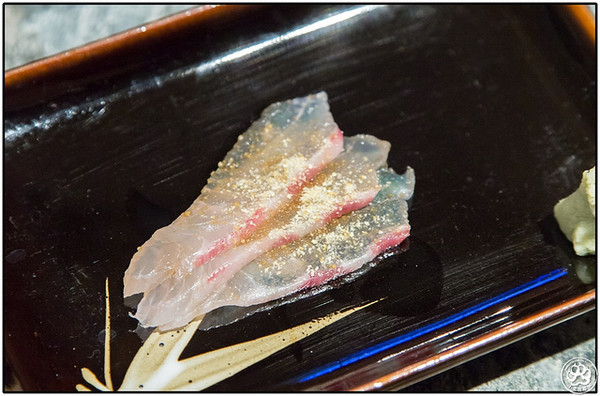
Next came three extremely thin slices of “pufferfish.” Though thinly sliced, they still offered a slight chew in the mouth. Topped with a yuzu pepper salt that carried the fragrance of yuzu, bitterness, and the spiciness of pepper, it was very assertive. I felt it was a bit over-seasoned and slightly overshadowed the fish flavor, so the bottom slice’s sweetness came through more clearly.
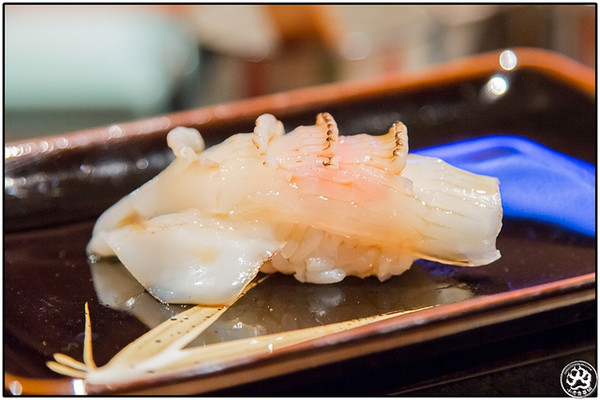
At first glance at this piece, did anyone guess it was shellfish? But actually, it’s a thin slice of squid, lightly grilled, with a bit of pickled radish paste placed between the vinegared rice.
Overall, it didn’t have the sticky texture I usually love in squid, but the sweetness was quite sufficient. Coupled with the subtle emulsification effect of the vinegar rice and a pleasant hint of acidity, it was a decent, well-balanced piece. At this point, I noticed the sauce was slightly on the sweeter side, and the vinegar rice was a touch more moist.
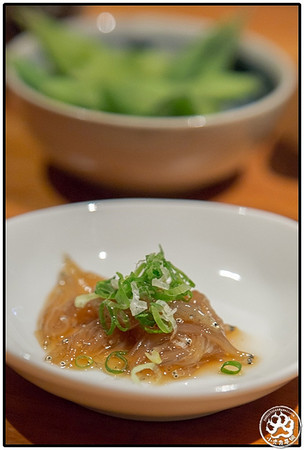
Then the chef opened a small box in front of the counter and picked up a small clump of what I thought was minced onion, but upon closer inspection, it turned out to be anchovies.
Before serving, the chef warned that this one had a stronger flavor, but to me it wasn’t too bad — there wasn’t as much fishy smell as I expected, just a slightly heavier saltiness. The chopped scallions added a nice aroma, making it a pretty good little side dish.
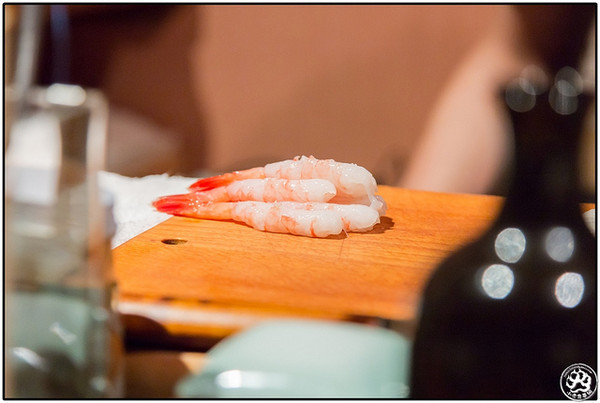
Because the counter is close and low, you can clearly see every move the chef makes, and the freshness of each ingredient is fully visible. When he took out this shrimp, I thought he was going to make a sweet shrimp nigiri, but it turned out not to be.

Sweet shrimp + horseshoe crab roe gunkan maki.
The first bite brought the crispness of the seaweed sheet — not too wet, with a likable seaweed aroma. As I bit into the roe, a burst of sweetness filled my mouth. The roe was delicious and completely free of fishiness. Initially, the sweetness of the shrimp wasn’t very pronounced, but it provided a slightly thick and mildly sweet texture. Only after the roe’s sweetness faded did the shrimp’s sweetness arrive along with the vinegar.
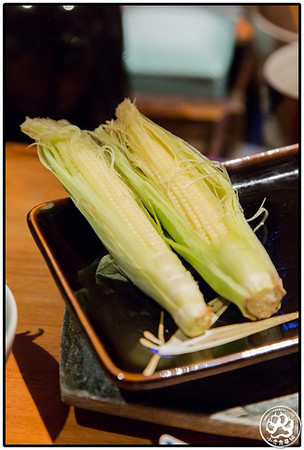
In addition to the main chef at the counter, there’s another chef in the back handling grilled items and other dishes. He brought out two corn shoots per person, with a bit of salt on the side, but I didn’t dip any since they were sweet and delicious enough on their own.
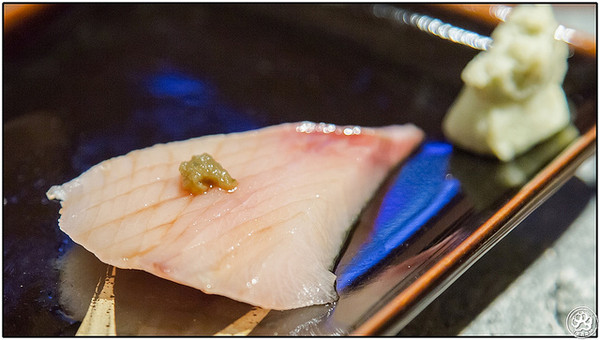
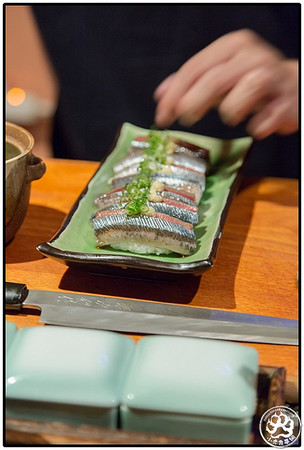
This cut of saury, though a bit thicker, is absolutely the most tender and sweet piece I’ve ever had. It melted in your mouth in half a second — absolutely delicious. Paired with a touch of yuzu sauce that subtly shifted the initial slight bitterness, it was a truly moving piece of sashimi.
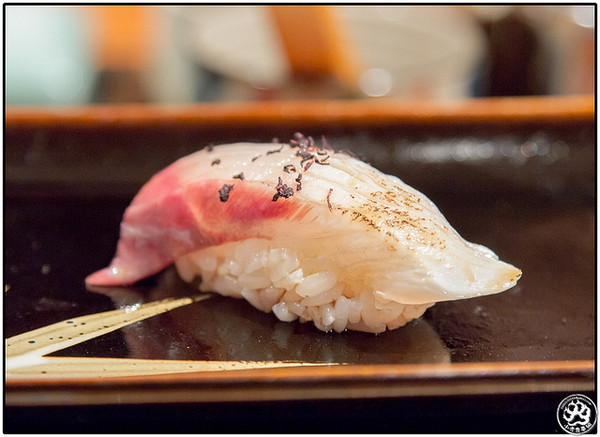
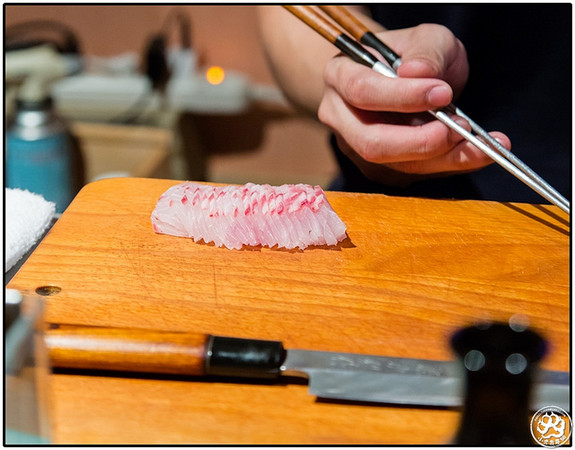
After firmly holding this Taiwanese red snapper slice, the chef skillfully seared only one side—the oilier side. This small move gave it the charred aroma of fish oil upon entering the mouth, without compromising too much of the fish’s texture. Coupled with the emulsifying effect of the vinegar rice melting at the back and the light sprinkle of spice salt on top, it was truly delicious.
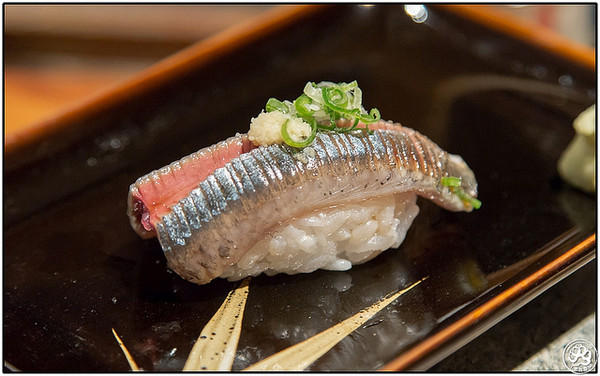
I used to never eat raw “saury” because it was too fishy, but ever since I had that sweet, completely non-fishy saury nigiri at Kun Washoku Japanese食堂, I’ve been haunted by that wonderful taste—even though most others I’ve had since tend to have some level of fishiness.
Sitting down to eat this one not only had no fishiness but was incredibly sweet. Another moving aspect was how beautiful it was—the richness of the “saury” was fully revealed in one bite. Even without being grilled, it didn’t diminish the emotional impact it had on me.
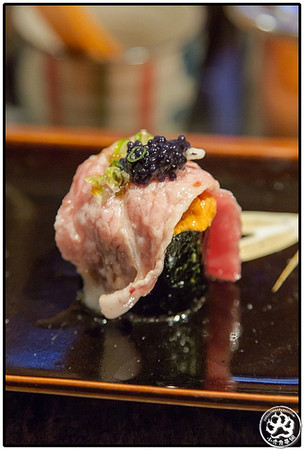
At “Sit Down and Eat,” there are only two price points: 680 and 980. The only difference is this “tuna belly” nigiri—that’s what makes it worth 300 more.
As the master chef sliced this piece of tuna belly, I was drooling while telling food for die that this piece of fish looked a lot like high-quality pork belly. On the garnish, they first placed two blobs of sea urchin, then laid down this tuna belly, and torched it with a blowtorch. No exaggeration—while torching, we watched the “oil” drip down, smelled that insanely fragrant, sweet oil, and of course, kept swallowing saliva nonstop. Then they topped it with chopped scallions and caviar.
It tasted in just three words: “oily, oily, oily.” It melted in the mouth, and the sea urchin, caviar, and tuna belly were completely indistinguishable. Then there were another three words: “sweet, sweet, sweet.” Even after fully swallowing, that indistinct oily flavor lingered for a long time. Although I was moved, I still felt the flavors were a bit mixed—or rather, it was hard to tell what was what.
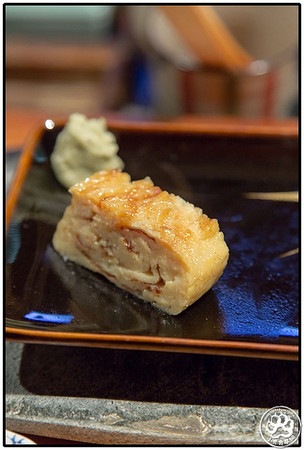
This tamagoyaki (Japanese omelet) was brought out from the back kitchen and was still steaming when it arrived at the table. Inhaling the light smoke, you could also catch a hint of sweetness.
I’ve never even eaten warm tamagoyaki, let alone hot. But the moment “it” entered my mouth, I was enchanted—it was super sweet, super soft, and melted effortlessly. Oh my God, I remember shouting in my head at the time: even though its sweetness slightly overpowered the “egg” aroma that tamagoyaki should have, all my taste buds told my brain was simply: “deliciously chaotic.”
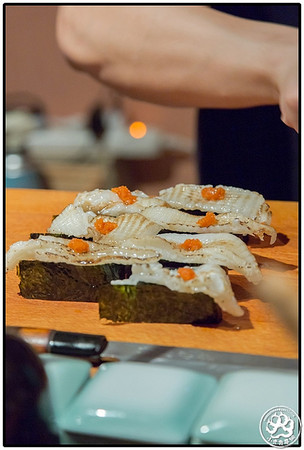
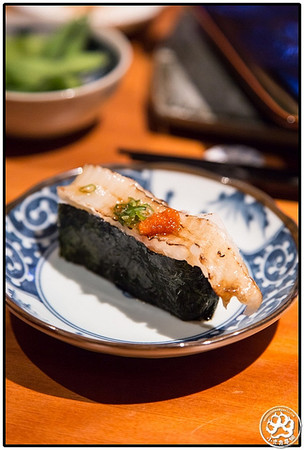
While the chef was preparing the flounder’s engawa (skirt edge), neither I nor food for die took our eyes off the fish slice. Especially when the chef torched the slice—Xiao Hu tried to flare his nostrils as wide as possible, trying to suck in all the sweetness from the other seven nigiri.
This one, once in the mouth, lived up to my love for melt-in-your-mouth textures. The way the engawa melted made me whisper in my mouth: “long time no see.” Just then, I caught a glimpse of food for die, who had just finished this one, nearly collapsing onto the table.
This one was almost the most melt-in-your-mouth flounder engawa I’ve had so far, except for a slightly annoying, unmeltable piece of “nori” (seaweed) at the end. Though I felt the sweetness was still just a little lacking—certainly less than the one at 【Zhongxiao Dunhua Station】’s Suzuhana Sushi Bar.
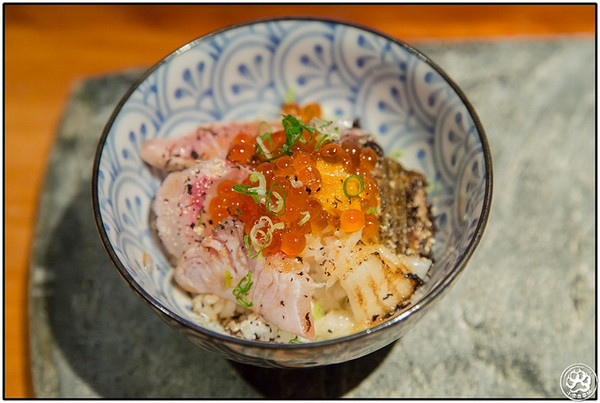
Mini chirashi sushi. I remember that from the time I took the photo to my first and last bite, it couldn’t have been more than a minute—and my first words were: “This proportion of chirashi sushi is just right!”
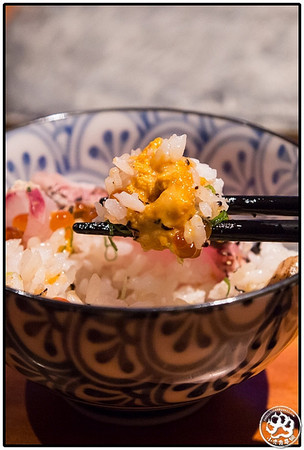
In addition to this small lump of sea urchin, it also had the previously mentioned red snapper, ? fish, flounder engawa, and spaghetti eel. Of course, it also had salmon roe, essential for any chirashi bowl. With the vinegar’s acidity just right, this small bowl was incredibly moving. Aside from 【Zhongxiao Fuxing Station】’s Mantoudie Sushi Bar No. 3, I’ve never had more delicious chirashi sushi.
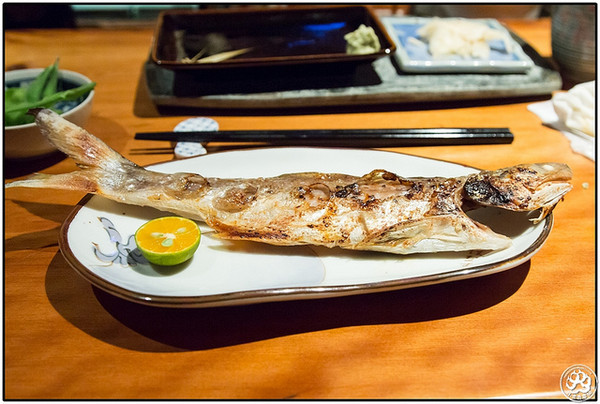 For 680, getting grilled fish is already touching—I mean, one per person—and it’s even “young yellow croaker,” such a great catch.
The moment it entered my mouth, I almost cursed because the fish skin was grilled unbelievably well. The sweet, charred aroma of the fish skin, its addictive crispy oiliness—it was quite simply the best fish skin I’ve ever had. The flesh inside was naturally soft and delicious, so much so that I didn’t even want to squeeze the half-piece of citrus to avoid ruining the fish’s sweetness. In the end, this was probably the cleanest fish I’ve ever eaten—almost went so far as to swallow the bones too.
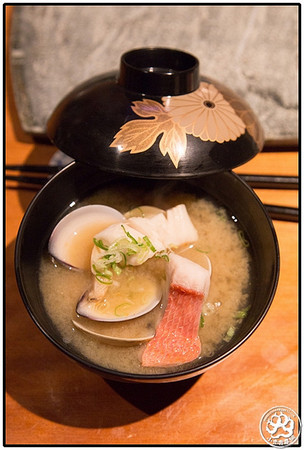
In the past, I’ve had too many cheap set meal miso soups that were just thrown together, but this bowl of miso didn’t have any particularly outstanding aroma, yet the saltiness was just right. What moved me most was that the fish slice wasn’t leftover “salmon” bits, but bright-red-fleshed “sea bream” slices, tender and sweet with a slight bite. The clams had a slight fishy smell, but all things considered, it was still good miso soup—and at the very least, very comforting to drink.
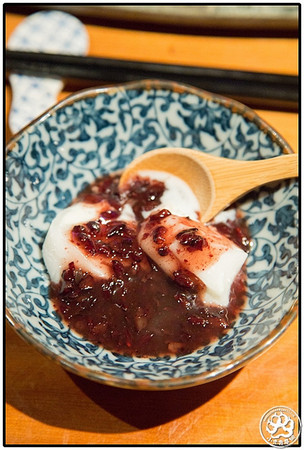
And of course, there was also a dessert with a slight Japanese flair: purple rice ice cream mochi. The purple rice itself isn’t very sweet—the sweetness comes entirely from the ice cream in the mochi. Because the purple rice is hot and the mochi is cold, the purple rice is soft and the mochi is chewy, the ice cream is sticky. Though the taste and texture weren’t hard to imagine, it was still delicious without a doubt—at the very least, a perfect ending.
Overall, for 680 (excluding that “sea urchin belly” nigiri), this is an unbeatable cost-performance ratio in Taipei. Add to that the sufficient level of deliciousness (for 680), and it’s enough for me to give it a high rating of ★★★★1/3☆ after just one meal—even earning a spot on my list of favorite restaurants on the first try. That day, I even joked on the fan page: “HANA, you can rest in peace”—it was truly a moving meal.
【Sit Down and Eat Sushi】
Address: Room C, No. 107, Zhongbei Road, Zhongli City, Taoyuan County
Phone: 0989025064
Business hours: 17:30–23:30
(Evening slots are divided into 17:30, 19:30, and 21:30, as there are only eight seats on-site—best to make a reservation in advance).
Xiao Hu's Dream Food Blog
If “eating” is just about filling your stomach, then “food” would be far too boring~~~
Share
This article is published by HowToTrip. Sharing and reposting are welcome — please credit the source.
Article URL: https://www.howtotrip.net/views-26050
Related Articles
- Shaoxing's "Grandpa Gourd" hangs the gourds back up: "If there are too many people, we'll interact less — just take a quick look from afar"
- Chinese authorities announce "reciprocal adjustment" to Japan visa fees — single-entry visa jumps from 2,250 to 16,750 yen!
- The "health stones" carried by a traveler were found to have radiation levels exceeding safety limits by a thousand times, potentially endangering fellow passengers on the same flight. Customs issues warning!
- Shenzhen Airport Issues Late-Night Notice: Unidentified Aerial Object Detected, Causing Widespread Flight Delays!
- “They only said it cost money after I opened the box and washed it!” 200g of grapes sold for 60 yuan on a high-speed train—12306 responds!
- Can't buy an airline ticket? Denied exit? Blocked from boarding? A large number of Chinese tourists have mysteriously become "discredited individuals"
- Adverse weather and economic fluctuations impact Colombia's coffee market
- Beach bathing area responds to 2 yuan/30 seconds fee for freshwater foot rinsing: Clearly priced!
- Taking off with an improperly closed cabin door? Wing malfunction? Multiple flights made emergency returns mid-journey!
- Experience the gifts of nature! A countdown of the world’s ten most stunning coastlines