Could there be a "ryokan" in a remote mountain village? Like an inn where ancient Kyoto officials retreated to the mountains after leaving office.
Text and photos / Japan’s 100 Famous Ryokan: The Sacred Scriptures of Japanese Inns by authoritative innkeeper Yasushi Kashiwaya – A selection of 100 ryokan featuring breathtaking views, hot springs, and gourmet cuisine.
Kyoto may seem small, but it’s actually quite vast. Even if you drive north from the elegant streets of central Kyoto for an hour, you’ll still find yourself within Kyoto’s Sakyo Ward.
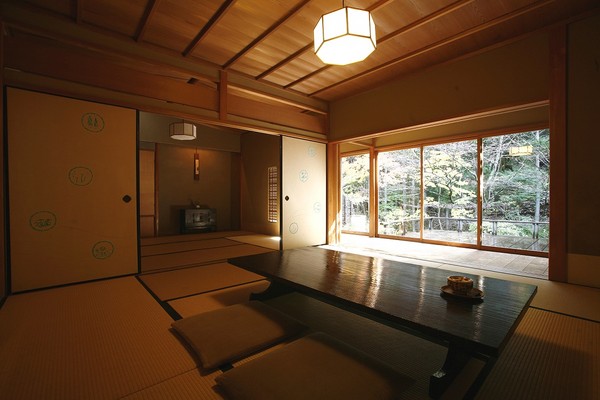
To get to the inn from Kyoto Station, you first head toward “Kamigamo Shrine,” one of the destinations of the “Aoi Matsuri,” one of Kyoto’s three major festivals. Though you’ve already left the central area, you still have a long way to go before reaching the inn. Passing through the mountains and over Mt. Kurama, where the legendary warrior Minamoto no Yoshitsune trained under the tengu, you enter winding mountain roads before finally arriving at the mountain village of Hanase. This remote village, far removed from anything refined, is dotted with thatched-roof farmhouses. I imagine anyone visiting here for the first time would wonder: could there really be a famous ryokan in a place like this?
After passing through the small village, you’ll come across a sign for “Minezumi-ji Temple,” renowned as one of the three sacred sites of Shugendo. Established in the late Heian period, “Mieszan” originally served as its lodging temple and began operating as a public inn in the early Meiji era. It was the third-generation former owner who transformed the lodging temple into a renowned ryokan. He came up with the concept of “foraged herb cuisine,” infusing the local mountain village cooking with exquisite culinary techniques, propelling “Mieszan” to national fame.
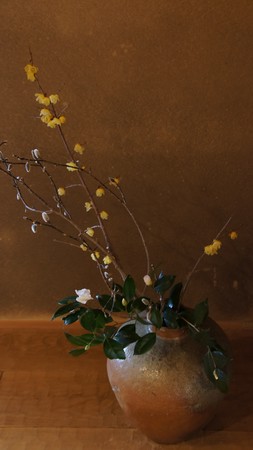
The elegant interiors of the inn make you feel that any ancient Kyoto noble who retired to the mountains would surely choose to live in a place like this. Whether it’s the main building with its grand entrance hall or the more relaxed atmosphere of the sukiya-style annex, both are adorned with wildflowers picked locally, and every decoration exudes refined taste, bringing to mind the word “wild outing.” This remote little village, fused with Kyoto culture, creates a sense of “light elegance” just a hair’s breadth away from “refinement.” And the cuisine shares that same light elegance.
Compared to central Kyoto, the seasons in the mountain village are even more distinct. The cuisine at Mieszan beautifully captures the changing beauty of the seasons on its tableware.
As spring approaches, the mountain village, which has endured a long, harsh winter, pays close attention to the subtle signs of spring, expressing the joy of its impending arrival through the cuisine. For example, ingredients like the tender leaves of ixeris (a type of chrysanthemum) and butterbur—both possessing bitter flavors that awaken one from winter—are featured. In summer, the menu highlights sweetfish, amago (rainbow trout), and red-spotted masu salmon—stream fish that thrive in the clear waters—as a celebration of the village’s brief summer. Autumn is when the mountain village truly shines. Mushrooms such as maitake, black koshin, and matsutake, paired with chestnuts or Japanese yam tubers, offer a full array of forest delicacies, storing up nutrients to endure the long winter.
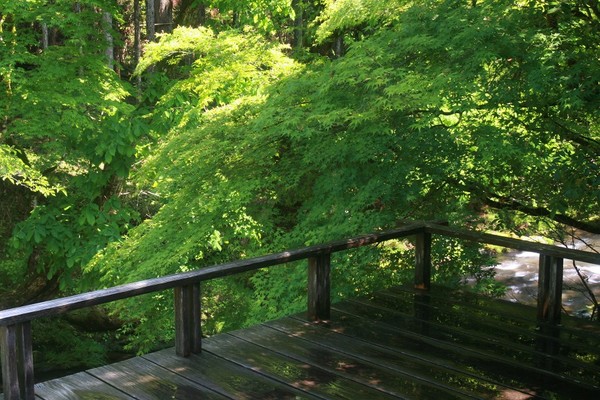
Thanks to modern logistics, the meals now also include seafood commonly found in Kyoto, such as snakehead fish or horsehead fish. Without overly extravagant plating, they still retain the simple and understated charm of the mountain village. Though the inn doesn’t have a hot spring, its clean baths are filled with fresh water from the nearby Tera Valley River. Soaking in the bath while watching the tranquil stream flow below, spending the night in the serene atmosphere of the inn, offers a refreshing cleansing for both body and soul.
Share
This article is published by HowToTrip. Sharing and reposting are welcome — please credit the source.
Article URL: https://www.howtotrip.net/views-23557
Related Articles
- Shaoxing's "Grandpa Gourd" hangs the gourds back up: "If there are too many people, we'll interact less — just take a quick look from afar"
- Chinese authorities announce "reciprocal adjustment" to Japan visa fees — single-entry visa jumps from 2,250 to 16,750 yen!
- The "health stones" carried by a traveler were found to have radiation levels exceeding safety limits by a thousand times, potentially endangering fellow passengers on the same flight. Customs issues warning!
- Shenzhen Airport Issues Late-Night Notice: Unidentified Aerial Object Detected, Causing Widespread Flight Delays!
- “They only said it cost money after I opened the box and washed it!” 200g of grapes sold for 60 yuan on a high-speed train—12306 responds!
- Can't buy an airline ticket? Denied exit? Blocked from boarding? A large number of Chinese tourists have mysteriously become "discredited individuals"
- Adverse weather and economic fluctuations impact Colombia's coffee market
- Beach bathing area responds to 2 yuan/30 seconds fee for freshwater foot rinsing: Clearly priced!
- Taking off with an improperly closed cabin door? Wing malfunction? Multiple flights made emergency returns mid-journey!
- Experience the gifts of nature! A countdown of the world’s ten most stunning coastlines