The Mysterious Veil of Thailand’s Long-Necked Tribe — What Happens When the Brass Rings Are Removed?
Text & Photos /Shao Sheng
The Long-Necked Tribe in northern Thailand is one of the ethnic minorities from the Thai-Myanmar border. They settled in northern Thailand to escape the turmoil of war in Myanmar, primarily in Chiang Mai, Chiang Rai, and Mae Hong Son Province, but Mae Hong Son is where the largest population of the Long-Necked Tribe resides. Although I had visited the Long-Necked Tribe before, this time I wanted to explore their stronghold by visiting the largest Long-Necked Village, Noi Soi.
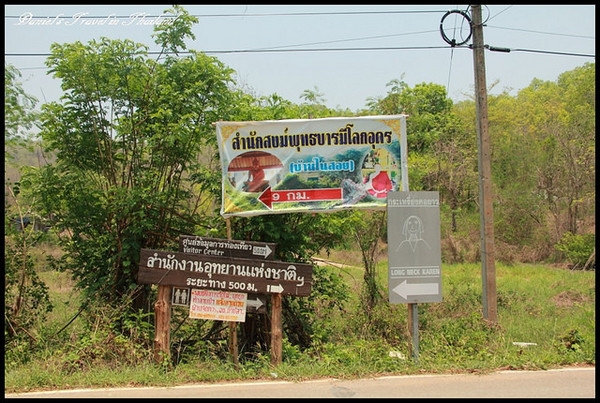
The largest Long-Necked Tribe village in Mae Hong Son’s capital is located in the northern village of Ban Nai Soi (Ban means village). In fact, there are many tour agencies in the city offering trips to the Long-Necked Tribe, but as someone with a backpacker’s spirit, I prefer the thrill of exploring on my own. Compared to joining a tour group, this kind of journey feels more rewarding to me. How do you get to the Long-Necked Tribe village? From the capital of Mae Hong Son, head north along Highway 1095 for about 3–4 kilometers until you see a sign pointing to Ban Nai Soi. Along the way, you’ll cross the larger Highway 108. There are a few forks in the road leading to the Long-Necked Tribe village, and while you might not find the right path immediately, you’ll see signs for the Long-Necked Tribe like the one shown above. If you’re unsure, just ask the villagers for directions to “Long Neck” — they’ll gladly point you the way.
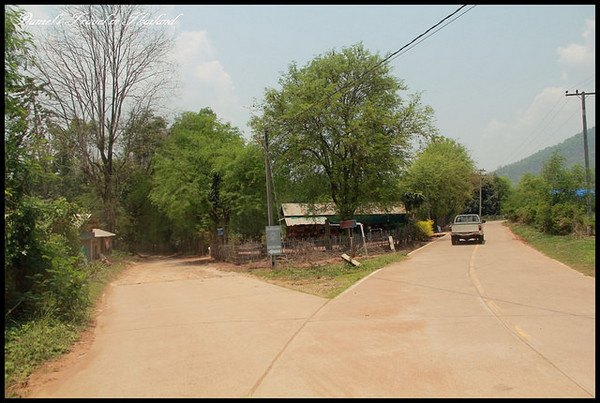
The road to the Long-Necked Tribe village is generally in good condition, except for the last one or two kilometers before the village, which are bumpy dirt roads. That final stretch had me riding nervously, but fortunately, I’ve had plenty of practice and my biking skills are decent, so I managed to reach the destination without too much trouble. Those planning to bike there should pay extra attention to the road conditions.
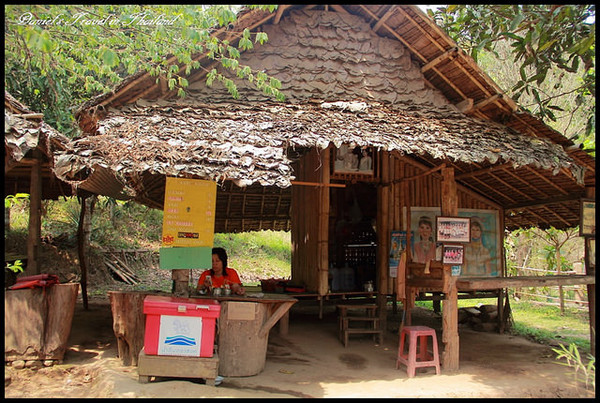
At the entrance to the Long-Necked Tribe village, there’s a ticket booth where you’ll be charged an admission fee of 250 Thai Baht. Officially, the fees are said to support the Long-Necked Tribe community, but some claim that most of the money goes to tourism operators, with very little actually reaching the tribe. Since I don’t speak Thai and the villagers don’t speak much English, I couldn’t verify the truth. Regardless, I still wanted to see this unique long-neck culture for myself.
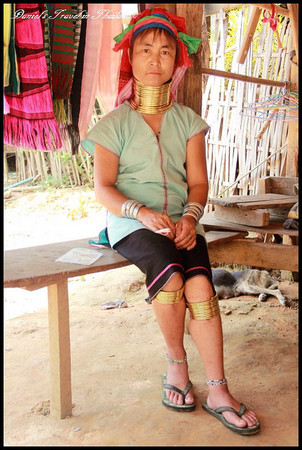
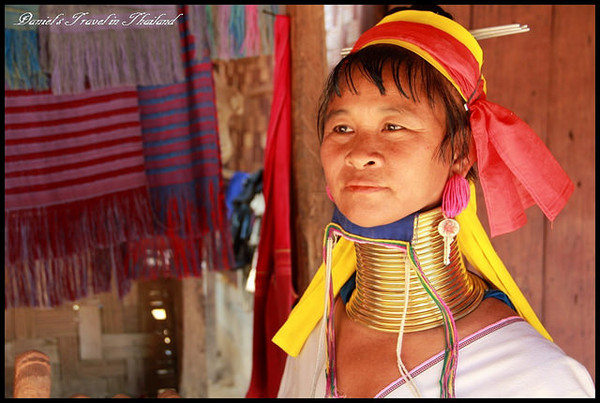
First, here’s a photo of the Long-Necked Tribe. Apart from the heavy brass rings around their necks, they also wear them on their legs. I once heard an elder say he disapproved of Long-Necked Tribe tours, as it felt like people were being treated like animals. I only partly agree with that. I think the Long-Necked culture is a unique tradition unlike any other country’s, making it well worth seeing. But I approach it with a mindset of cultural exchange. When taking photos, I always ask for permission first, and I only take one or two shots — I don’t treat them like animals and snap away endlessly. Although they’re used to being photographed, I still believe in respecting their wishes. Respecting them is also a form of respecting their culture, and that’s the right attitude to have when traveling.
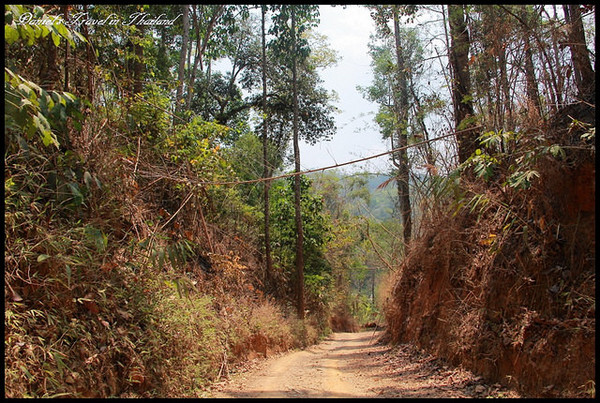
The most fantastical adventure begins as you make your way from the entrance to the land of the Long-Necked Tribe. It’s said that during the 1980s and 1990s, the Long-Necked Tribe migrated to Mae Hong Son to escape the conflict in Myanmar. As a result, there are several refugee villages of the Long-Necked Tribe in Mae Hong Son, which eventually evolved into one of Thailand’s most famous tourist attractions. It’s rumored that the Thai government relocated some of the Long-Necked Tribe to areas near Bangkok to attract tourists. Apparently, some Bangkok tour groups can now include visits to the Long-Necked Tribe — something that wasn’t possible on Bangkok tours over a decade ago.
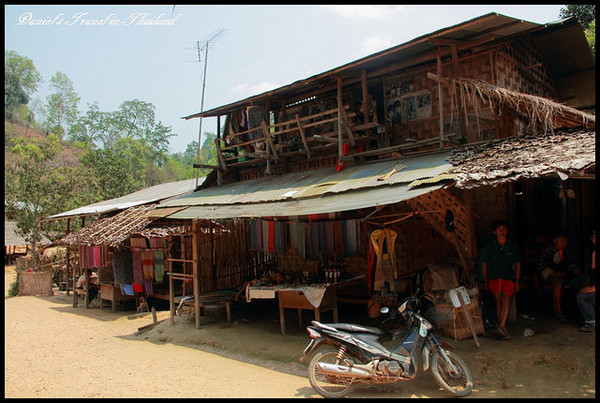
The traditional wooden houses of the Long-Necked Tribe. Unlike the Yapa Long-Necked Tribe village in Chiang Rai, where the Long-Necked Tribe live alongside the Aka and Big Ear tribes, Nai Soi is home only to the Long-Necked Tribe. As a result, the Yapa village is much larger, whereas Nai Soi is comparatively smaller. However, according to available information, this Long-Necked Tribe village is still the largest in Mae Hong Son Province.
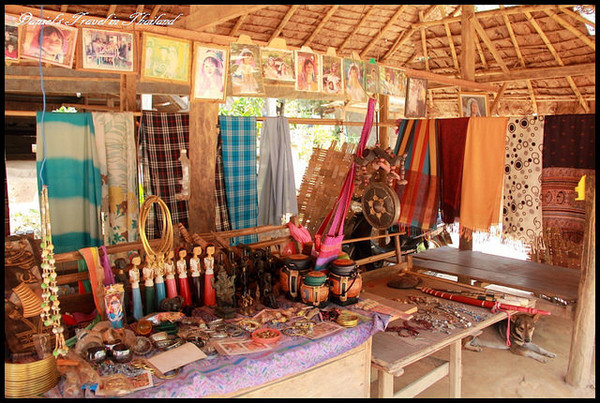
The main source of income for the Long-Necked Tribe is selling related souvenir items and handmade scarves. Earlier, we discussed whether the admission fees paid by tourists actually benefit the Long-Necked Tribe — the truth is unclear. That’s why I think if you have the chance to visit, buying some souvenirs directly from the villagers is a good idea, as it can provide tangible support to these minority communities. In that sense, visiting the Long-Necked Tribe village isn’t entirely a bad thing. Moreover, I feel that the quality of the handmade souvenirs here is better than those sold in regular souvenir shops — plus, they’re often cheaper and have more unique character.
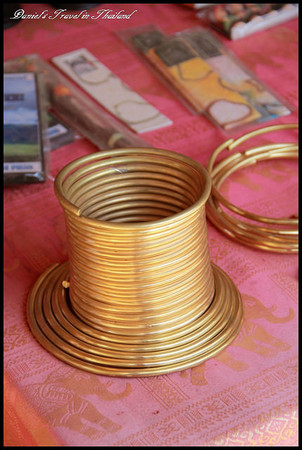
Among the souvenirs, you can also find brass rings used by the Long-Necked Tribe. However, these rings weigh several kilograms, and seeing the women wear them daily is incredibly tough. It’s hard for us to imagine, but for them, it seems like a completely normal way of life.

Inside the souvenir shop, there are also cut-in-half brass rings that allow tourists to try on and experience what it’s like to be a Long-Necked Tribe member. But look at my expression — it’s so weird. I don’t have such a long neck, XD.
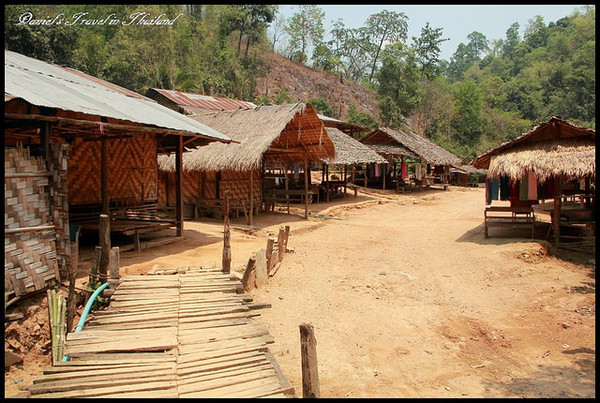
Unlike my first visit to the Yapa Long-Necked Tribe village, which felt solemn and serious, this experience felt more ordinary. Perhaps it’s because this was my second visit to a Long-Necked Tribe village, or maybe it’s because this village gave me a stronger sense of everyday life.
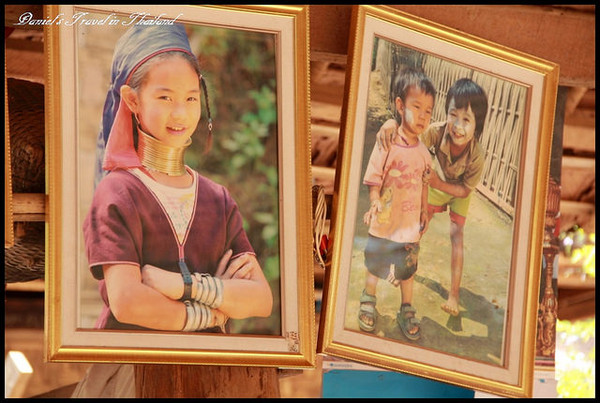
There’s a common myth about the Long-Necked Tribe: it’s said that if the brass rings are removed, their necks won’t be able to support the weight of their heads, leading to injury or even death. But the real truth is...
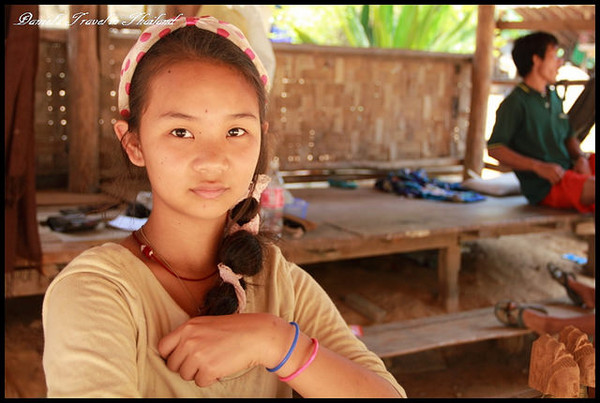
Nothing happens at all when the rings are taken off, XD. Long-Necked Tribe girls typically start wearing the brass rings around the age of 4 or 5. As they grow older, more rings are added. The rings actually push down the collarbone, preventing it from growing properly, which creates the illusion of an elongated neck.

In the Yapa village, I never saw any men (except for young boys). I’m not sure why, but here, I could see male villagers chatting leisurely, strumming guitars, and singing cheerful tunes. This peaceful lifestyle made me realize that the Long-Necked people live just like anyone else, giving me a greater sense of closeness.
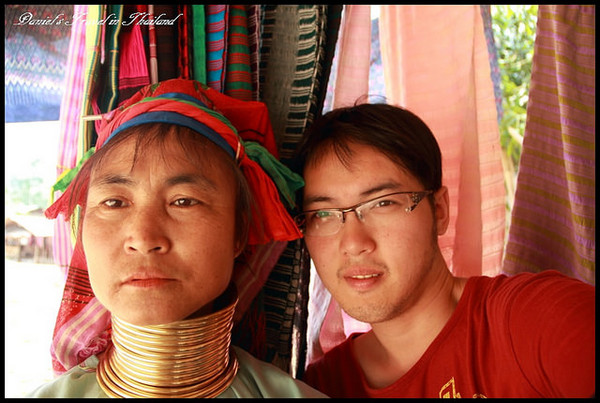
A photo with a woman from the Long-Necked Tribe.
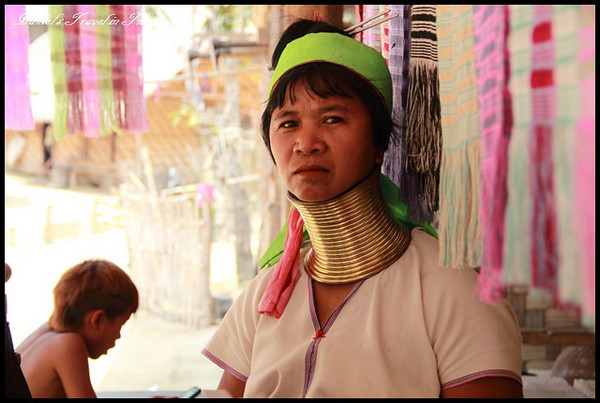
Why do the women of the Long-Necked Tribe wear brass rings? One theory is that it’s a tribal custom, and wearing more rings is considered more beautiful and gives them a legendary dragon-like appearance. Another theory is that it’s to protect their throats from animal attacks.

The women of the Long-Necked Tribe are skilled in weaving, and you can often see them weaving in the village. There are also women in the village who don’t wear the rings, and aside from the absence of rings, their necks show no signs of having worn them, making their necks appear unusually long.
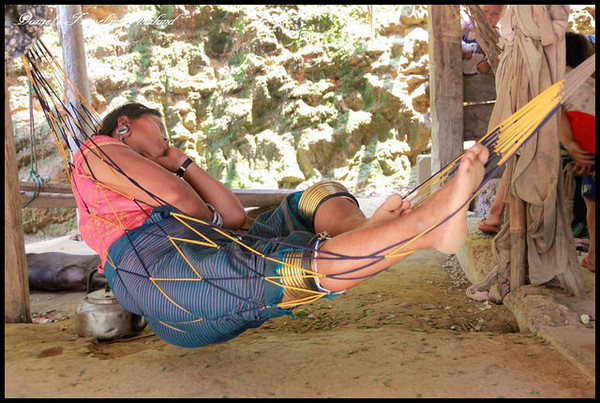
The elderly woman resting in the village — she’s the only Big Ear woman I’ve seen. Members of the Big Ear tribe also wear brass rings on their legs, though I’m not sure why either the Long-Necked or Big Ear tribes wear them there.
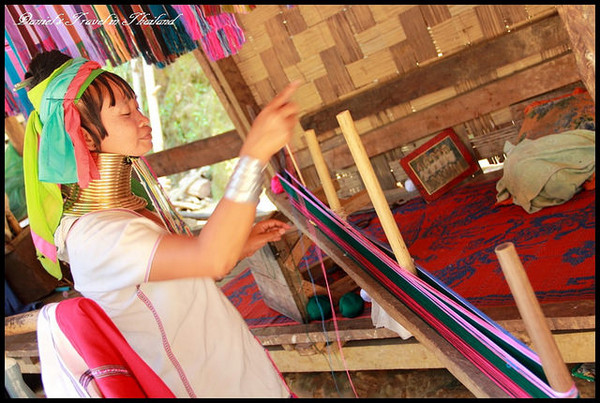
Here’s another photo of a Long-Necked Tribe woman weaving. Whether the Long-Necked Tribe village in northern Thailand is a must-visit attraction is subjective. But for me, experiencing different cultures is what I seek in travel. That said, it’s essential to respect local culture when visiting the Long-Necked Tribe village — treating them like rare animals is the wrong approach. For me, this trip to the Long-Necked Tribe village revealed a surprisingly down-to-earth side, showing that their lives aren’t so different from our own.
________________________________________
Nai Soi Long-Necked Tribe Village
Location: Approximately 3–4 km north of Mae Hong Son’s capital. Follow the signs along Highway 1095 to get there.
Shao Sheng’s Wandering Journey
Every journey, every trip is a quest. Though I’m not entirely sure what I’m searching for, what I ultimately gain is always more than I expected. And so, my wandering journey will continue, endlessly.
Share
This article is published by HowToTrip. Sharing and reposting are welcome — please credit the source.
Article URL: https://www.howtotrip.net/views-16008
Related Articles
- Shaoxing's "Grandpa Gourd" hangs the gourds back up: "If there are too many people, we'll interact less — just take a quick look from afar"
- Chinese authorities announce "reciprocal adjustment" to Japan visa fees — single-entry visa jumps from 2,250 to 16,750 yen!
- The "health stones" carried by a traveler were found to have radiation levels exceeding safety limits by a thousand times, potentially endangering fellow passengers on the same flight. Customs issues warning!
- Shenzhen Airport Issues Late-Night Notice: Unidentified Aerial Object Detected, Causing Widespread Flight Delays!
- “They only said it cost money after I opened the box and washed it!” 200g of grapes sold for 60 yuan on a high-speed train—12306 responds!
- Can't buy an airline ticket? Denied exit? Blocked from boarding? A large number of Chinese tourists have mysteriously become "discredited individuals"
- Adverse weather and economic fluctuations impact Colombia's coffee market
- Beach bathing area responds to 2 yuan/30 seconds fee for freshwater foot rinsing: Clearly priced!
- Taking off with an improperly closed cabin door? Wing malfunction? Multiple flights made emergency returns mid-journey!
- Experience the gifts of nature! A countdown of the world’s ten most stunning coastlines