Swinging "penises" to pray for fertility? Unveiling 8 must-visit attractions in Bhutan
By Chen Zi-Yin / Special Report
When Bhutan comes to mind, one thinks of the "land of happiness"—a place almost synonymous with joy. As a traveler, how can you not pay it a visit? However, surrounded by mountains on all sides and relatively late in developing tourism, Bhutan often gives off an air of mystery,Roland, a tour guide who specializes in South Asian travel and has visited Bhutan many times, says: "Bhutan is something to be savored slowly and experienced at a gentle pace." Roland has summarized eight must-visit spots in Bhutan for readers of ETtoday EBC News,Among them is a peculiar fertility temple that uses phallic-shaped ritual objects to bless worshippers. The true face of Bhutan is unveiled one by one through Roland’s explanations.
1. Tiger’s Nest Monastery (Taktshang Goemba)
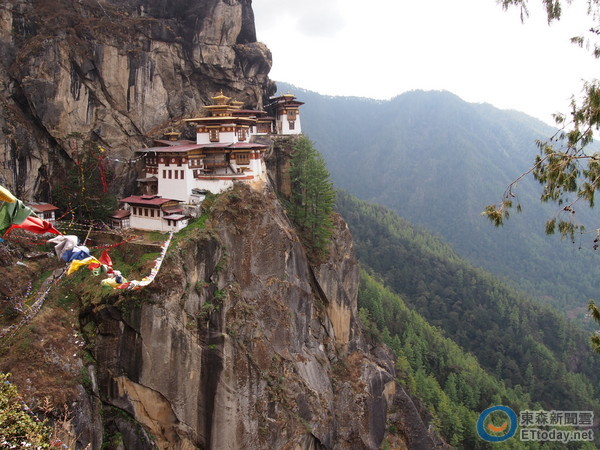
▲ Tiger’s Nest Monastery perched on a 3,100-meter-high cliff. (Photo provided by Roland, please do not repost without permission)
The must-visit Tiger’s Nest Monastery is renowned as one of the world’s top ten most extraordinary temples.Built in 1692, Tiger’s Nest Monastery is also recognized locally as "the most sacred temple in Bhutan." Perched on a 3,100-meter-high cliff, it is said that Guru Rinpoche rode on a tiger from Tibet to this spot to subdue demons and evil spirits. Of course, it is also through him that Buddhism spread to Bhutan. However, the monastery once suffered a devastating fire, severely damaging its wooden structures. It was not until 1998 that it was rebuilt to its current form. Roland says that it takes about two and a half hours to walk or ride a small horse up from the base of the mountain (because even if you ride a horse, it’s a small one and doesn’t go very fast). He says: "Actually, tourists who choose to ride horses are often laughed at by locals because they believe that climbing on foot will earn you the blessing of the Buddha, but if you ride a horse, the blessing goes to the horse instead."
2. Burning Lake (Burning Lake)
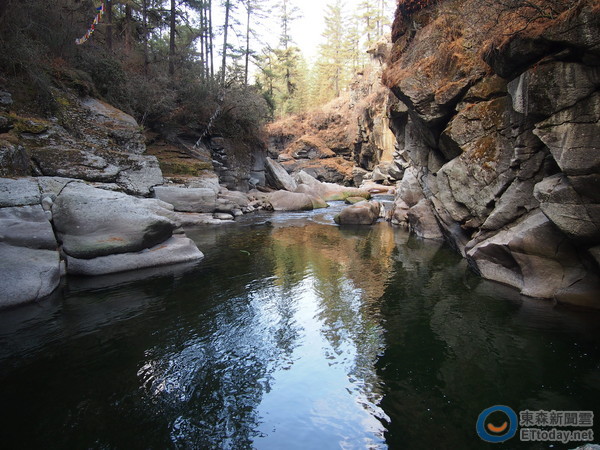
▲ For locals, the Burning Lake is a highly sacred body of water. (Photo provided by Roland)
Located in Bumthang, the Burning Lake is said to be where Guru Rinpoche hid three treasures, making it a highly sacred lake for locals. Roland recalls: "The Burning Lake actually looks like a small stream, with prayer flags hanging all around. Walking slowly downstream, you’ll see the valley, and next to it there’s a cave where locals or pilgrim travelers go to meditate." However, since it takes about ten hours just to get from the capital to Bumthang, it is generally only visited by pilgrimage groups.
3. Chhimi Lhakhang (Chhimi Lhakang)
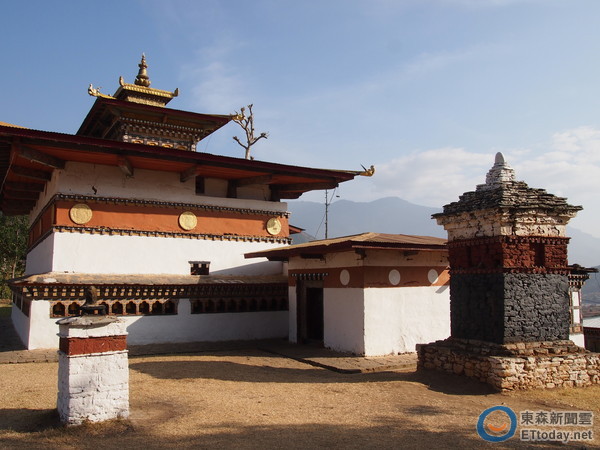
▲ Chhimi Lhakang is a famous fertility temple. (Photo provided by Roland)
Located on a small hill in the village of Lobesa, Chhimi Lhakang, also known as the "No Dog Temple," is a "fertility temple" and the only temple in Bhutan that enshrines the Divine Madman—Drukpa Kunley.Interestingly, the ritual objects in the temple are a bow and arrow, along with an embarrassing wooden phallic carving. It is said that these were naturally found by the river in ancient times and have been placed in the temple ever since. Locals believe that the male organ symbolizes strength, so the temple caretaker uses these objects to bless visitors.They can offer blessings and also help with fertility; it is said that a couple from New York who had been infertile for many years actually gave birth to a daughter after praying here.Roland says: "The monks in the temple use a wooden carving representing the genitals of Guru Drukpa Kunley to tap your head—that’s a form of blessing for worshippers."Furthermore, Roland explains that the worship of phallic symbols is seen as a form of respect among Bhutanese people, symbolizing fertility and the continuation of life. Therefore, phallic paintings are commonly seen in Bhutanese architecture, and carved wooden "phalluses" are even commonly sold in markets. The surrounding areas of Chhimi Lhakhang are mostly hilly farmland, where passersby—farmers and children—greet you warmly as you stroll. Inside the temple, you’ll often see monks reading, and locals are always very friendly and kind."
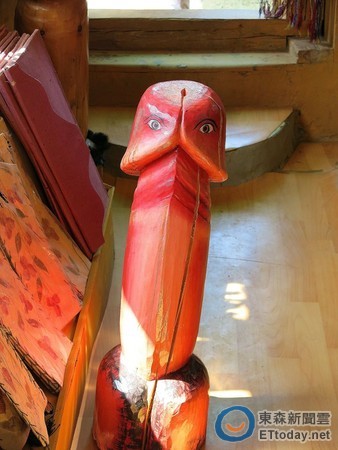
▲ Photography is not allowed inside the temple, but wooden phallic carvings can also be seen in general folk shops. (Photo provided by Roland)

▲ Phallic paintings are also commonly seen in the streets. (Photo provided by Roland)
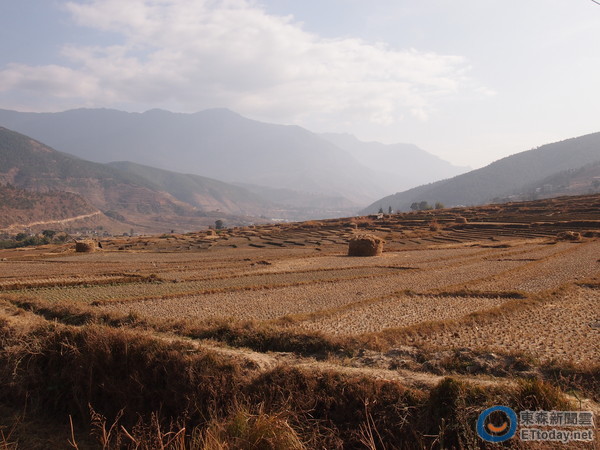
▲ The vast fields near Chhimi Lhakhang. (Photo provided by Roland)
4. Kiuchu Lhakhang (Kichu Lhakang)
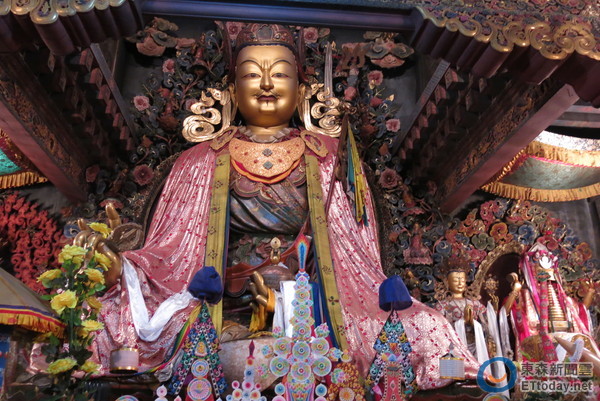
▲ A small temple next to Kiuchu Lhakang enshrines Guru Rinpoche. (Photo provided by Roland)
Kiuchu Lhakang is one of the oldest temples in Bhutan, built by King Songtsen Gampo of the Tubo Dynasty. Legend has it that he built 108 temples to suppress a demoness lying across the snowy plateau, with each temple pinning down a part of her body. Two of these 108 temples are located in Bhutan. Later, a small temple dedicated to Guru Rinpoche was added next to Kiuchu Lhakang. This area used to be off-limits, but has only recently been opened to visitors, quickly becoming a popular and bustling site, with even the temple floor worn down by pilgrims. Roland says: "There’s an orange tree here that bears fruit every year, and there’s another old tree that locals believe is a sacred tree—if the tree stands, the nation stands, so there’s no need to worry."
5. Thimphu (Thimphu)

▲ Western Thimphu is the capital of Bhutan. (Photo provided by Roland)
The capital city of Bhutan—Thimphu—is located in the west, in a basin at 2,400 meters above sea level in the Himalayas. Since 1955, Thimphu has been the political, economic, military, religious, and cultural center of the Kingdom of Bhutan, with all major administrative offices stationed here. The main temple in Thimphu is open for visits, but all visitors must go through security checks. Inside, there are three thrones—one for the late king, one for the current king, and one for the Je Khenpo (Chief Abbot), along with various Buddha statues that visitors can admire. Roland explains that the word "dzong" originally referred to a fortress, but now it represents a city.
Additionally, Roland also recommends visiting the Takin Zoo in Thimphu. The Takin is Bhutan’s national animal, also known as the "four-unlike" creature, which has the head of a goat, the body of a cow, and the hooves of a pig. It is said to have been created by the mad monk Drukpa Kunley.

▲The takin is Bhutan's national animal, also known as the "four-unlike" creature. (Photo provided by Roland)
VI. Punakha Dzong (Punakha District)

▲The breathtaking Punakha Dzong at the confluence of two rivers. (Photo provided by Roland)
Punakha Dzong is the second-largest dzong in Bhutan. The city is located at the confluence of two rivers—the Mochhu on the left, considered the mother river, and the Phochhu on the right, considered the father river. Roland said, “Because the water temperatures of the two rivers differ, their colors also vary—the mother river is slightly darker, while the father river is lighter. Where they meet, the contrast of black and white creates a truly unique sight.” Punakha Dzong served as the former capital and is now the summer capital. Due to the concept of a “moat,” you must cross a wooden bridge to reach it, offering picturesque scenery.
VII. Rinpung Dzong (Paro Dzong)
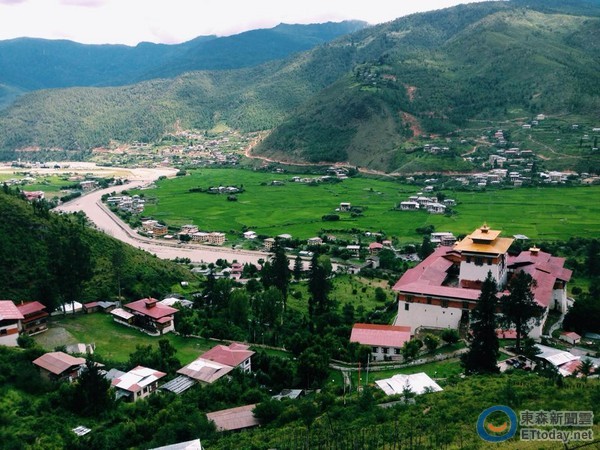
▲Rinpung Dzong is hailed as a “fortress among gems.” (Photo provided by Roland)
Rinpung Dzong, built with stones rather than clay, is known as the “fortress among gems” and was the filming location for the movie Little Buddha. But it is even more famous for being where Tony Leung Chiu-wai and Carina Lau got married. On the stone steps, Carina Lau in her white wedding gown and Tony Leung in a tailored suit were surrounded by young monks, making this spot a popular tourist attraction.
VIII. Dochu La Pass

▲The Dochu La Pass features a spectacular array of 108 stupas. (Photo provided by Roland)
Located at an altitude of 3,150 meters, the Dochu La Pass is home to 108 stupas commissioned by the fourth queen mother to commemorate the victory in the Assam War and to pray for the nation’s well-being. These are known as the Victory Stupas (108 Bhutanese Stupas). Roland mentioned that besides the beautiful stupas, when the weather is clear, you can also see the entire Himalayan mountain range, making it the best spot in Bhutan to view the Himalayas.
Roland noted that Bhutan’s attractions are not grand landscapes but small scenes that require slow appreciation, immersing yourself in the unique atmosphere and cultural vibes of the country. Moreover, travel to Bhutan is only allowed in group tours because tourism is government-regulated—regardless of group size, a driver and guide must accompany you. A group of four is recommended as the ideal size.
※ Interested in traveling to Bhutan? >>> Click here to joinI Had Fun in South Asia for No ReasonFan Page.
Share
This article is published by HowToTrip. Sharing and reposting are welcome — please credit the source.
Article URL: https://www.howtotrip.net/views-15435
Related Articles
- Shaoxing's "Grandpa Gourd" hangs the gourds back up: "If there are too many people, we'll interact less — just take a quick look from afar"
- Chinese authorities announce "reciprocal adjustment" to Japan visa fees — single-entry visa jumps from 2,250 to 16,750 yen!
- The "health stones" carried by a traveler were found to have radiation levels exceeding safety limits by a thousand times, potentially endangering fellow passengers on the same flight. Customs issues warning!
- Shenzhen Airport Issues Late-Night Notice: Unidentified Aerial Object Detected, Causing Widespread Flight Delays!
- “They only said it cost money after I opened the box and washed it!” 200g of grapes sold for 60 yuan on a high-speed train—12306 responds!
- Can't buy an airline ticket? Denied exit? Blocked from boarding? A large number of Chinese tourists have mysteriously become "discredited individuals"
- Adverse weather and economic fluctuations impact Colombia's coffee market
- Beach bathing area responds to 2 yuan/30 seconds fee for freshwater foot rinsing: Clearly priced!
- Taking off with an improperly closed cabin door? Wing malfunction? Multiple flights made emergency returns mid-journey!
- Experience the gifts of nature! A countdown of the world’s ten most stunning coastlines