Sheraton's Cantonese-style crispy duck with skin and meat separated Ingredients sourced from Hong Kong’s Yung Kee
▲ Slicing the duck at Sheraton Chenyuan.
Reported and photographed by Huang Shiyuan / Taipei
When it comes to roast duck in Taipei, many people’s first thought is likely the Cantonese-style crispy-skin duck from Lungdu Restaurant. But what few may know is that the mastermind behind Lungdu’s roast duck is Yang Huaguang, the current head chef of char siu and roast meats at Sheraton’s Chenyuan. He was once the fifth-ranked chef at Hong Kong’s Yung Kee and has nearly 40 years of experience in roast meats and duck. Yang Huaguang says that Chenyuan’s Cantonese-style crispy-skin duck features skin and meat that are separated, which helps remove excess fat, and ensures the skin and meat are of similar size so that the texture remains balanced upon eating.
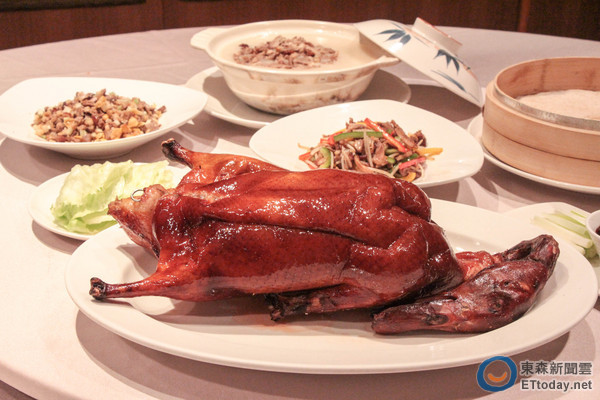
▲ Chenyuan’s roast duck is a Cantonese-style crispy-skin duck.
Chenyuan’s roast duck is a Cantonese-style crispy-skin duck, with over 20 proprietary ingredients such as specially prepared Chinese herbal powder, Cantonese sauces, kaoliang liquor, Shaoxing wine, oyster sauce, and sour plums stuffed inside the duck. Yang Huaguang says these ingredients were learned during his time at Hong Kong’s Yung Kee, with slight adjustments made after coming to Taiwan. Next, the skin is sewn up and the duck is blanched to tighten the skin. To make the skin extra crispy after roasting, Yang Huaguang says the duck is repeatedly brushed with a mixture of white vinegar and maltose—the ratio of which varies by each chef’s recipe. It is then air-dried for about eight hours.
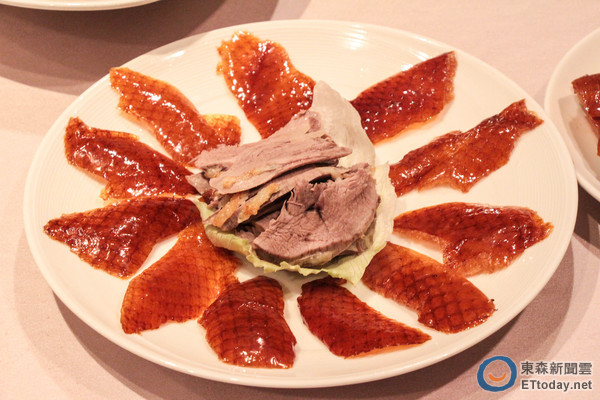
▲ Each piece of skin and meat should be as similar in size as possible—a test of the chef’s knife skills.
After air-drying, the duck is roasted in an oven at high temperatures of 100–160 degrees Celsius for about 60 minutes. Yang Huaguang says that during this time, the marinade inside the duck slowly heats up, and the meat and bones gradually absorb the aroma and flavors of the seasonings, making their roast duck more fragrant than Peking duck. He also adds that this stage tests the chef’s skill in sewing up the duck—poor stitching can easily cause it to burst open.
Cantonese-style crispy duck features crisp skin and tender, juicy meat that isn’t dry. Paired with handmade pancakes, scallions, cucumber, and sweet bean sauce, Yang Huaguang says it offers a multi-layered taste experience. He also mentions that slicing the duck isn’t done haphazardly—each piece of skin and meat should be similarly sized, and each duck yields at most around 20 slices. The rest is usually served as shredded or stir-fried duck. Does anyone ever opt to just eat the sliced duck? Yang Huaguang says it’s rare, but if they do, they still slice only about 20 pieces of skin and meat per duck, and the rest is given to customers to take home.
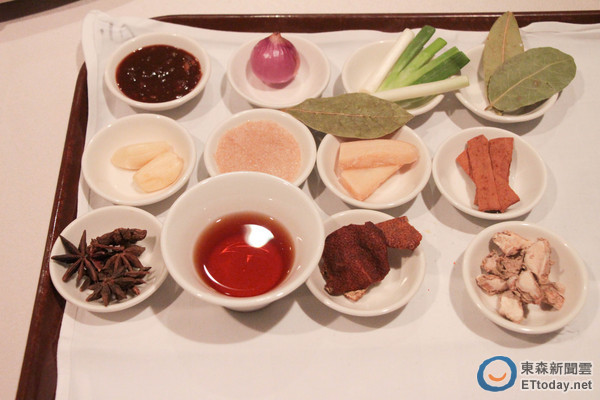
▲ Over 20 proprietary ingredients stuffed inside the duck (some not shown).
Yang Huaguang also says that Chenyuan’s pancakes are different from others—they’re smaller, which he says is just the right size to balance with the duck skin, meat, scallions, and cucumber. If the pancakes are too big, you won’t get to fully enjoy the crispness of the skin or the tenderness of the meat.
As for what constitutes authentic roast duck? Yang Huaguang says there’s no such thing as a universally “authentic” roast duck. Even an authentic Hong Kong-style duck won’t work if Taiwanese diners don’t like it—so what matters most is what flavor the customers prefer.
The process of making roast duck always takes quite a bit of time, so it’s best to make a reservation in advance if you want to try it—ideally at least one day ahead.
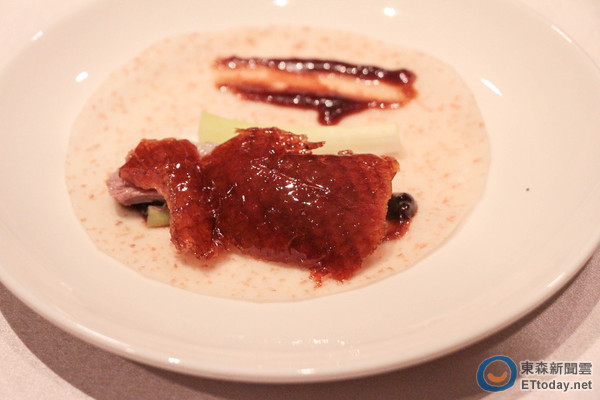
▲ Chenyuan’s small-sized pancakes are just right for balancing with the duck skin, meat, scallions, and cucumber.
Sheraton Taipei Hotel, Chenyuan (B1, No. 12, Section 1, Zhongxiao East Road, Taipei City)
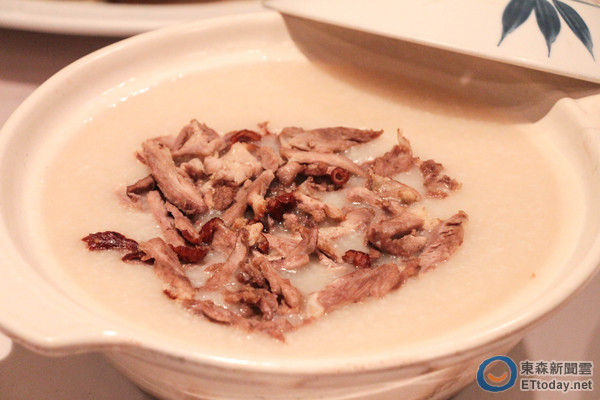
▲ Duck congee.
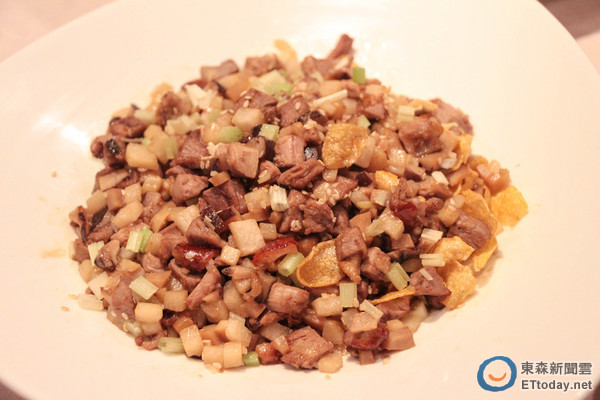
▲ Duck floss.
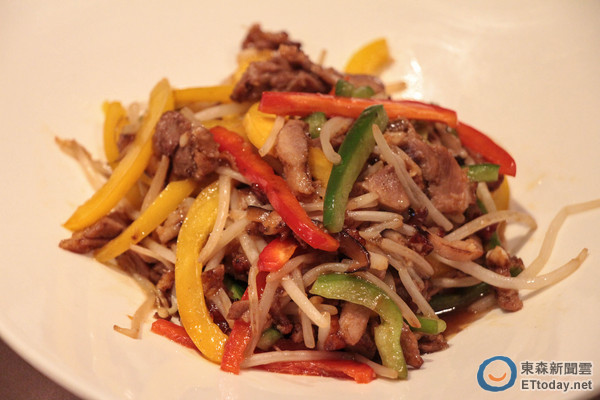
▲ Stir-fried shredded duck.
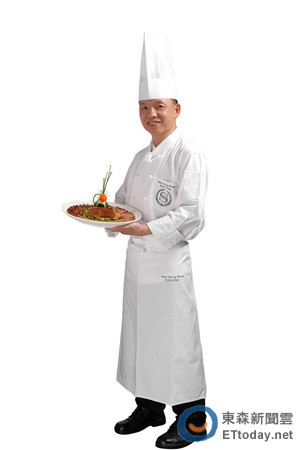
▲ Yang Huaguang, head chef of char siu and roast meats at Chenyuan (Photo provided by Sheraton)
Share
This article is published by HowToTrip. Sharing and reposting are welcome — please credit the source.
Article URL: https://www.howtotrip.net/views-11744
Related Articles
- Shaoxing's "Grandpa Gourd" hangs the gourds back up: "If there are too many people, we'll interact less — just take a quick look from afar"
- Chinese authorities announce "reciprocal adjustment" to Japan visa fees — single-entry visa jumps from 2,250 to 16,750 yen!
- The "health stones" carried by a traveler were found to have radiation levels exceeding safety limits by a thousand times, potentially endangering fellow passengers on the same flight. Customs issues warning!
- Shenzhen Airport Issues Late-Night Notice: Unidentified Aerial Object Detected, Causing Widespread Flight Delays!
- “They only said it cost money after I opened the box and washed it!” 200g of grapes sold for 60 yuan on a high-speed train—12306 responds!
- Can't buy an airline ticket? Denied exit? Blocked from boarding? A large number of Chinese tourists have mysteriously become "discredited individuals"
- Adverse weather and economic fluctuations impact Colombia's coffee market
- Beach bathing area responds to 2 yuan/30 seconds fee for freshwater foot rinsing: Clearly priced!
- Taking off with an improperly closed cabin door? Wing malfunction? Multiple flights made emergency returns mid-journey!
- Experience the gifts of nature! A countdown of the world’s ten most stunning coastlines