Yamagata’s Super Popular Japanese Dessert Shop – The 150-Year-Old Yamada Family
Text & Photos byRight-Up at a 45-degree Angle (Right-Up 45-Degree Angle Girl)
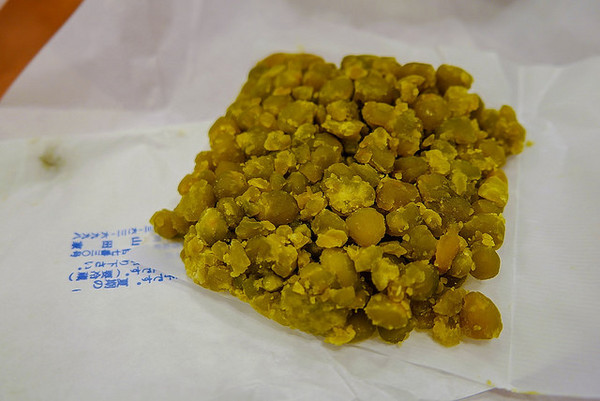
Do you know what this thing is called? Have you tried it? If your answer is no, then join Huxiao and Right-Up as they use 100Q to make a trip to a 50-year-old shop. Also, if you often use Tabelog to find food, you’ll know how hard it is to get a 4-star rating—especially for a dessert shop (usually four stars are reserved for very high-end places or Michelin-level spots).

For Taiwanese people, Yamagata might be known as “the hometown of Ashin,” at least that’s what I kept telling myself before I came. But after arriving, I realized it’s actually quite progressive—more modern than I had imagined.
PS: The photo above shows Yamagata Station.
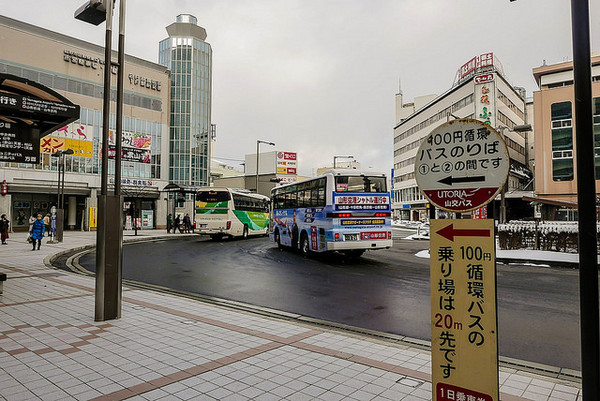
In front of the station, there’s a loop bus you can take for 100 yen per ride.
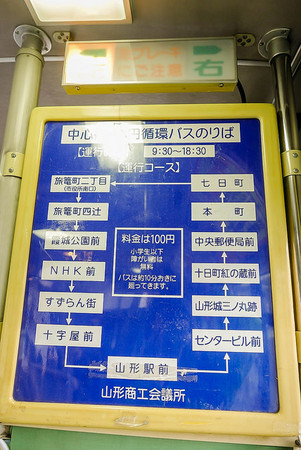
You can get off at any of these stops, and of course, you’ll need to pay another 100 yen to get back on. For a city in Japan where transportation costs are relatively high, 100 yen is pretty reasonable.
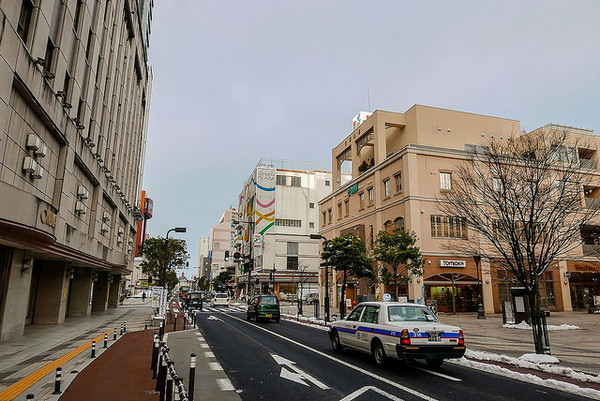
Although Yamagata feels a bit lively as a city, it doesn’t have many skyscrapers, and even in its busiest commercial area, it’s not overly crowded. It’s quite pleasant to stroll around, though the winter wind is a bit strong—it’s super cold.
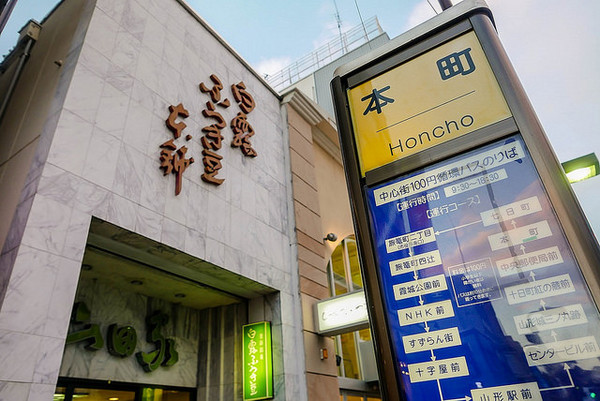
Following the map’s directions, we got off at “Honmachi” Station, and our target, “Yamada-ya,” was right next to the bus stop—literally a one-second walk into the store.
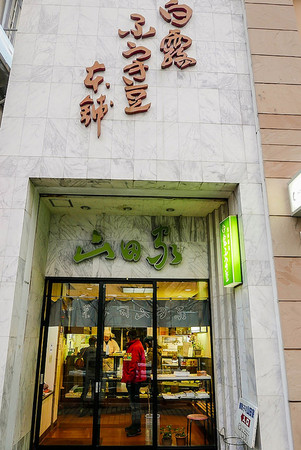
The characters at the top, “Hakuro Fuki Mame,” are the shop’s signature dessert. Hakuro is the 15th solar term in the traditional East Asian calendar, occurring around mid-August (lunar calendar). It’s said that in the past, Japanese people would eat these sweets made from “green beans, sugar, and salt” during Hakuro, which is how the name came about.
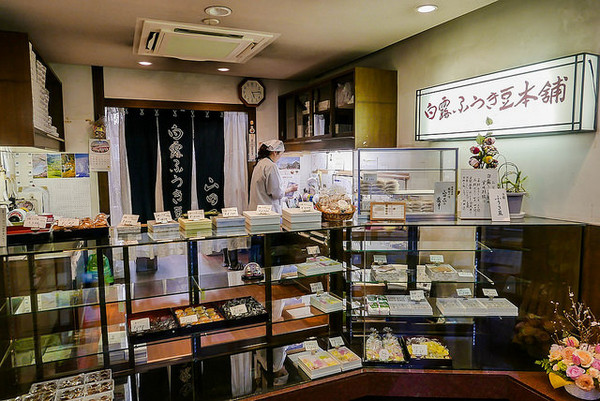
If you’re curious, you can ask Google Guru (Guru), or simply search for “fuki mame,” and it will directly lead you to Yamada-ya in Yamagata City. This shows just how well-known Yamada-ya is among Japanese people—it’s definitely a popular dessert shop, at least a top spot in Yamagata, Tohoku.
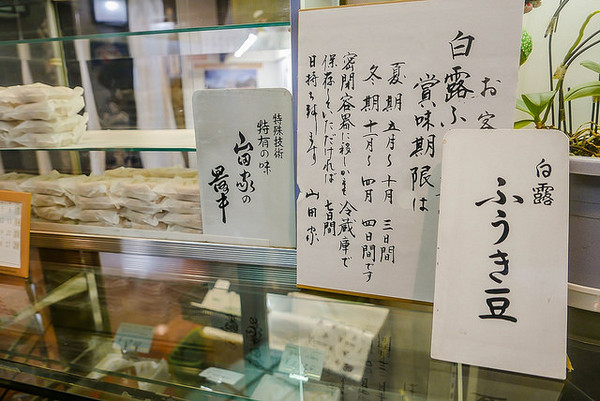
After checking, I found out that the shelf life of Hakuro Fuki Mame isn’t very long, or else I really would’ve bought some to bring back for Mom Hu. Because it’s honestly so delicious.
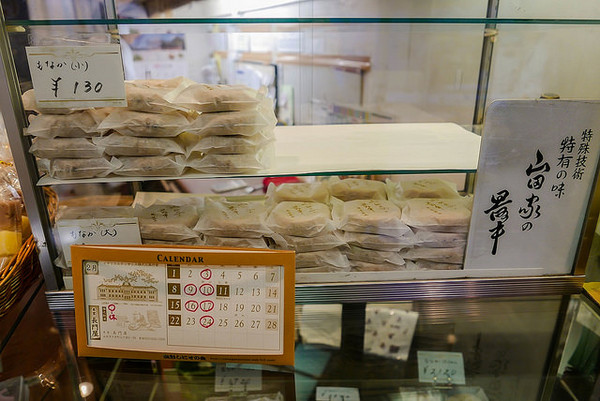
Aside from selling fuki mame, the shop also offers other desserts, but most are small snacks like this one by Konaka, which is a bit different from traditional wagashi shops.
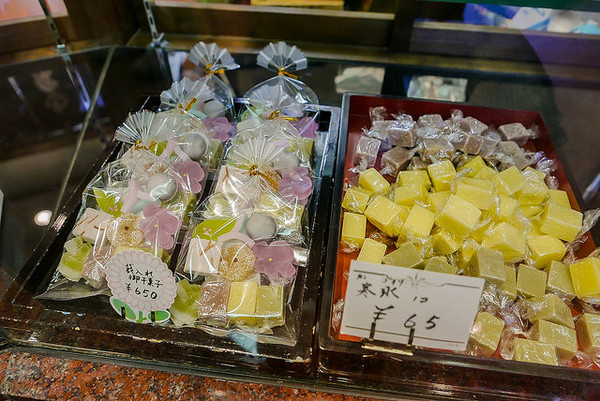
There were also more than ten other kinds of desserts whose names I couldn’t recall—most are uncommon or even unavailable in Taiwan. In the end, we randomly picked a few to try.
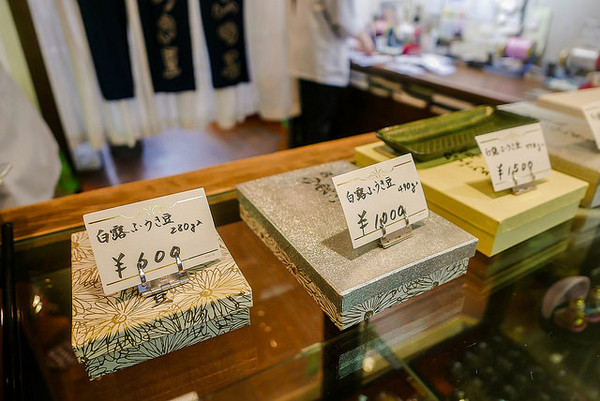
Hakuro Fuki Mame is, of course, the flagship product of Yamada-ya, available in various box sizes. The smallest is at least 600 yen.
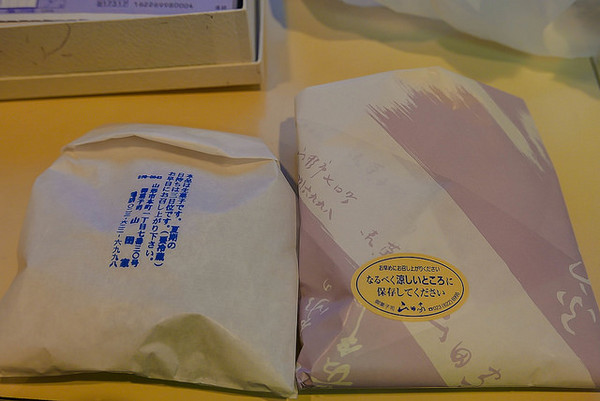
But since I’d never tried it before and didn’t want to risk it, I bought a small one for 300 yen (if I remember correctly), packaged in a traditional Japanese paper bag.
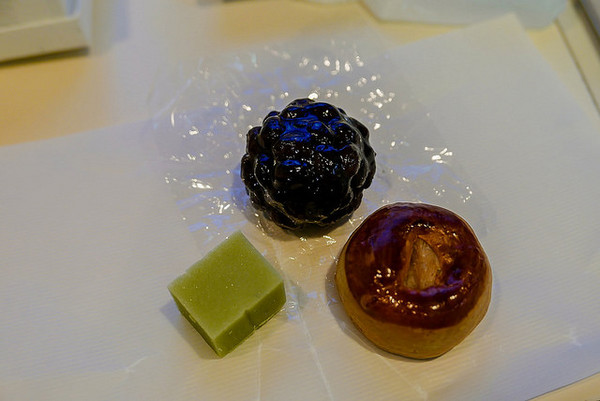
Besides Hakuro Fuki Mame, I asked the staff to recommend a few other small sweets. The green one on the left tasted a bit like edamame, with a texture like a sweetened cake ball, but the sweetness was lighter than I expected. Honestly, it was pretty good.
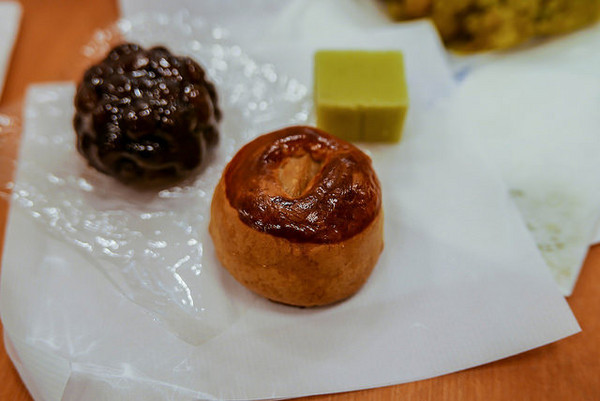
This one resembles a small mooncake and tastes just like a typical Japanese “manju.”
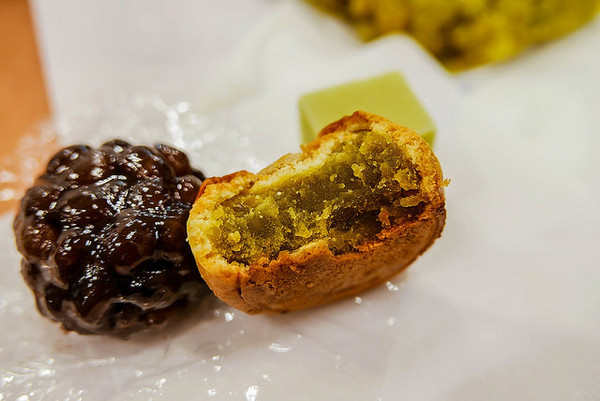
Inside is a sweet red bean paste filling, but fortunately, it’s moist enough that it doesn’t feel too cloying.
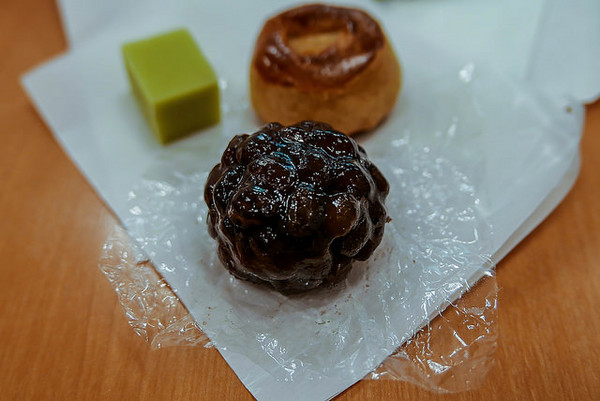
The last one seemed like it would be super sweet—it’s a ball made from red beans. But when I tried it, it wasn’t nearly as sweet as I expected. The red beans had a slightly sticky and chewy texture, and it was really delicious.
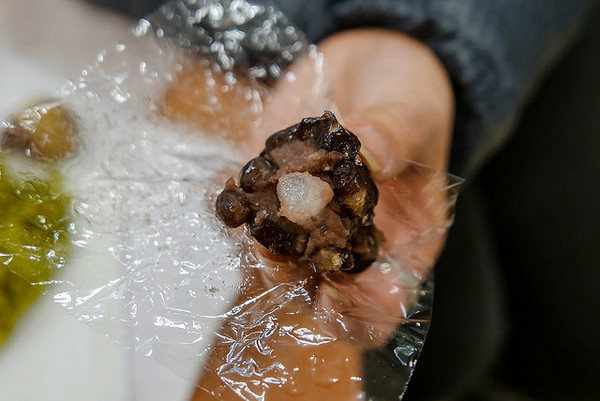
The outside is whole red beans, the middle has a slightly sweeter red bean paste, and even further inside is a small mochi-like filling. I highly recommend it, both for its texture and taste—not to mention Hakuro Fuki Mame.
Finally, let’s talk about the flagship Hakuro Fuki Mame. When you first taste it, you’re greeted with a very familiar sweetness... it took me a couple more bites to realize it reminded me of the “honey azuki beans” I used to eat as a kid. The bean sweetness is replaced by green beans (or rather, the aroma of edamame), and the texture is dry on the outside yet moist inside. With a slightly sugary coating at first and a dissolved sugar feel afterward, it’s really delicious. Of course, it does get sweeter the more you eat, but overall, it’s much less sweet than I expected and goes down really smoothly—even without tea, I could easily eat them one after another.
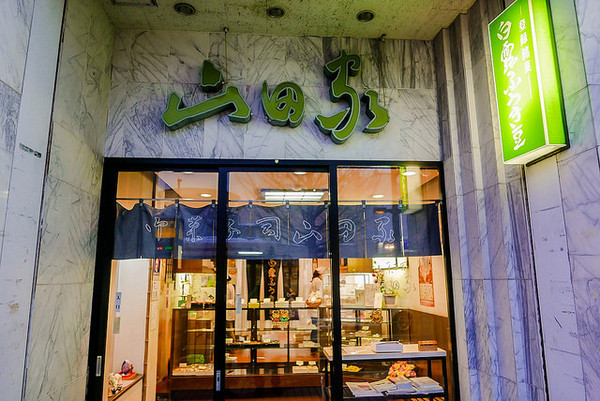
[Yamada-ya Fuki Mame Main Store]
http://tabelog.com/yamagata/A0601/A060101/6000124/
TABELOG Rating: 3.92 (a score over 3.5 is considered high—you can refer to [Essential Japanese Travel Websites] Tabelog (食べログ): A Must for Food Hunting)http://serene1102.pixnet.net/blog/post/30705268)
Yamagata, Yamagata City, Honmachi 1-7-30
Tel: 023-622-6998
Business Hours: 9:00–18:00, Closed on Tuesdays and the 3rd Monday of each month
Access: A 15-minute walk from JR Yamagata Station, or take the 100-yen loop bus from JR Station to Honmachi Station, and you’ll arrive right at the shop.
Share
This article is published by HowToTrip. Sharing and reposting are welcome — please credit the source.
Article URL: https://www.howtotrip.net/views-10837
Related Articles
- Shaoxing's "Grandpa Gourd" hangs the gourds back up: "If there are too many people, we'll interact less — just take a quick look from afar"
- Chinese authorities announce "reciprocal adjustment" to Japan visa fees — single-entry visa jumps from 2,250 to 16,750 yen!
- The "health stones" carried by a traveler were found to have radiation levels exceeding safety limits by a thousand times, potentially endangering fellow passengers on the same flight. Customs issues warning!
- Shenzhen Airport Issues Late-Night Notice: Unidentified Aerial Object Detected, Causing Widespread Flight Delays!
- “They only said it cost money after I opened the box and washed it!” 200g of grapes sold for 60 yuan on a high-speed train—12306 responds!
- Can't buy an airline ticket? Denied exit? Blocked from boarding? A large number of Chinese tourists have mysteriously become "discredited individuals"
- Adverse weather and economic fluctuations impact Colombia's coffee market
- Beach bathing area responds to 2 yuan/30 seconds fee for freshwater foot rinsing: Clearly priced!
- Taking off with an improperly closed cabin door? Wing malfunction? Multiple flights made emergency returns mid-journey!
- Experience the gifts of nature! A countdown of the world’s ten most stunning coastlines