Step into history on Heritage Day together with us at Taipei’s ten historic sites and witness the city’s past.
Travel Center / Comprehensive Report
The Taipei City Government’s Department of Cultural Affairs’ 2015 Heritage Day, in sync with the global celebration, kicks off on September 19. Many heritage sites will be specially open to the public on that day, offering guided tours and souvenirs. ETtoday EBC has compiled a list of ten classic heritage sites in Taipei, allowing everyone to appreciate the city’s scenic charm through this special event.
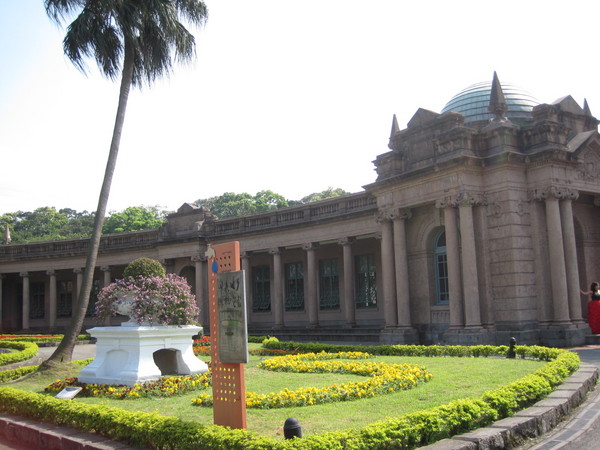
▲ Taipei Water Department Museum. (Photo / Screenshot fromWikipedia)
1. Taipei Water Department Museum
Recognized as a third-grade historic site by the Ministry of the Interior, the Taipei Water Department Museum was originally the Taipei Public Waterworks established by Liu Ming-chuan, Taiwan’s first governor during the Qing Dynasty. After several renovations, it now features a Baroque architectural style reminiscent of late European Renaissance. The museum houses a wealth of historical photos and equipment related to water supply, offering visitors deeper insights into the history of tap water. It’s also a popular spot among netizens for photography.

▲ National Museum of History. (Photo / Screenshot fromWikipedia)
2. National Museum of History
Established after the government’s relocation to Taiwan, the National Museum of History was the first public museum in the country. Originally a Japanese-style wooden building, it was later expanded with an exhibition hall to showcase calligraphy and paintings. The wooden structure was then transformed into the current red-brick and green-tiled building. The museum boasts a rich collection of calligraphy and paintings. Its phoenix-patterned emblem symbolizes the pursuit of perfection akin to “a phoenix singing atop a high ridge,” while visitors are seen as a good omen, akin to “a phoenix arriving at a noble house,” bringing positive energy. The museum aims to present more diverse collections and highlight cultural values.
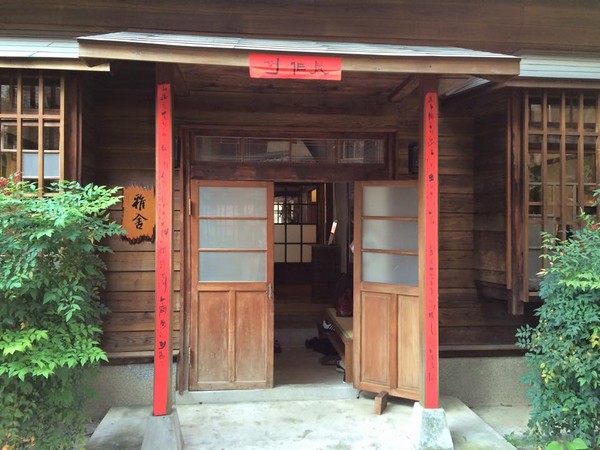
▲ Liang Shiqiu’s Former Residence. (Photo / FromLiang Shiqiu’s Former Residence Fan Page)
3. Liang Shiqiu’s Former Residence
Liang Shiqiu’s Former Residence was the first official dormitory where Liang lived after coming to Taiwan, holding significant historical value. In 2003, in recognition of his contributions to Taiwan, the residence was designated as a historic building. This single-story Japanese-style wooden structure combines Western and Japanese architectural elements. A large breadfruit tree in the yard, said to be part of Liang’s memories, remains deeply symbolic even years after he moved out. Visitors should note that socks must be worn indoors to protect the traditional Japanese wooden flooring.
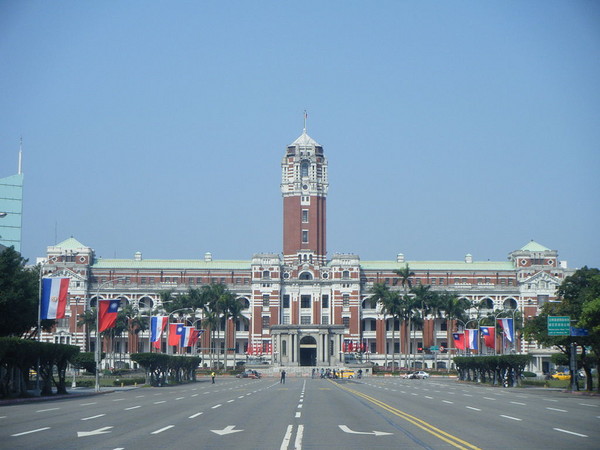
▲ Presidential Office Building. (Photo / Screenshot fromWikipedia)
4. Presidential Office Building
The Presidential Office Building was formerly the Governor-General’s Office during the Japanese colonial period, serving as the political center. In 1998, its main structure and surrounding grounds were designated as historic sites. In recent years, the heritage boundary has been expanded to include: the main office building, the rear section of the 211th Military Police Battalion (including the corridor), Annex I (part of the first floor), Annex II (original first-floor corridor section), the underground air-raid shelter in the Lixing Building, street lamps, walls, gas lamps, and more. These additions further enrich the cultural significance of the site, highlighting its role in preserving cultural heritage.

▲ Taipei Guest House. (Photo / Reporter Chen Mingren, archival photo)
5. Taipei Guest House
Long serving as a core location in Taiwan’s political scene, the Taipei Guest House was formerly the Governor-General’s Official Residence. It hosted state banquets, receptions for foreign dignitaries, party-government meetings, and cultural events, and was designated a historic site in 1998. Influenced by Western historical architectural styles introduced during Japan’s Meiji Restoration, the building features Mansard roofs, Greek pediments, Roman columns, and elaborate Baroque ornamentation, along with balconies typical of European colonial cities. Its Western style is distinctive, and visitors can experience a century of Taiwan’s political transformation within its walls.
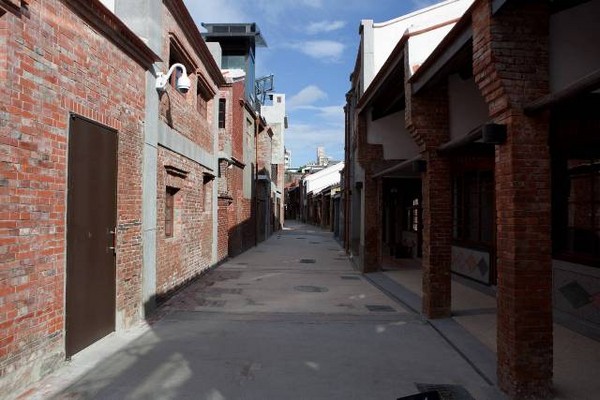
▲ Bopiliao Historical Block. (Photo / Screenshot fromTaipei City Government Department of Cultural Affairs website)
6. Bopiliao Historic Block
After the movie "Gangs of Taipei" was filmed here, it attracted many visitors who came to pay homage, making Bopiliao one of the most popular attractions in Taipei. The name "Bopiliao" originated during the post-war recovery period, and there are various theories about the origin of the name. However, what remains unforgettable is the nostalgic vibe the street evokes. Walking through Bopiliao feels like stepping into a bygone era of splendor, with its exquisite Western-style buildings and streets once bustling with commerce. Want to escape the hustle and bustle? Bopiliao is a great choice.

▲Lin An Tai Ancient House Folk Culture Museum. (Photo / courtesy ofTaipei Travel Net)
7. Lin An Tai Ancient House Folk Culture Museum
The Lin An Tai Ancient House is one of the oldest surviving traditional houses in Taipei. It was originally situated on a feng shui site described as “a serpent encircling the Big Dipper’s bowl, with the serpent’s head facing the Seven Stars,” and was built facing southwest from the northeast. However, in 1978 (the 67th year of the Republic of China), it was demolished due to not being listed as a historical site, among other reasons. Following suggestions from experts and scholars, it was relocated to its current site, where efforts were made to preserve the original feng shui layout. It now operates as the Lin An Tai Ancient House Folk Culture Museum, maintaining the traditional appearance of the old house. Its Southern Fujian architectural style is widely admired, making it a popular leisure spot for many during holidays.
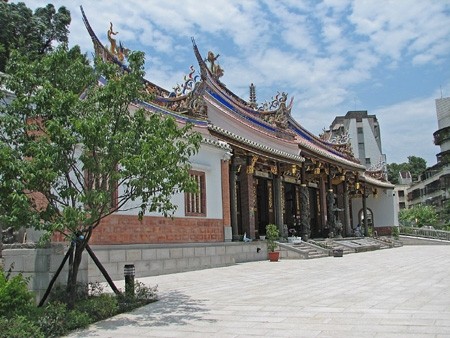
▲Chien Tan Old Temple. (Photo / courtesy ofTaipei Travel Net)
8. Chien Tan Old Temple
According to historical records, Chien Tan Old Temple has been around for over 350 years. Legend has it that a monk passing by encountered a snake blocking his path. After divining, he found the omen to be highly auspicious. Later, he dreamed of a goddess in white, who told him that eight boats would arrive from Shanghai via Keelung, bringing funds for the temple’s establishment—the prophecy came true. Under these circumstances, Chien Tan Temple came into being. Although it was later relocated to its current site in Datong, you can still find the original location via a small alleyway. In the surrounding garden, you can see the old temple pillars and stone steles from Chien Tan Old Temple. Each inscription carries a piece of history, making it deeply meaningful.
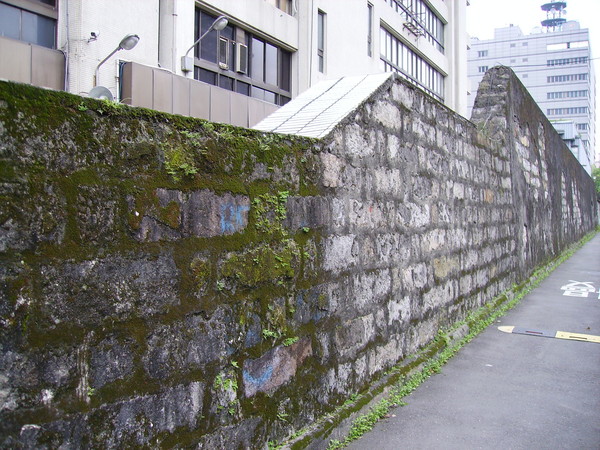
▲Remnants of Taipei Prison Walls. (Photo / courtesy ofWikipedia)
9. Remnants of Taipei Prison Walls
The remnants of the Taipei Prison walls are the only remaining parts of the Taipei Prefecture city wall, as well as the surrounding walls of the Taipei Prison during the Japanese colonial period in Taiwan. During that time, in order to maintain public order and suppress anti-Japanese movements, the Governor-General’s Office planned to build a temporary prison. After modifications to the Qing Dynasty’s Prefectural Government Office, it became Taiwan’s first Western-style prison, named the Taiwan Governor-General’s Taipei Prison. Though later demolished, one wall remains, preserving a dual-layered and bisectional historical space marker. The wall, made of andesite and U-ri'an stone, also represents a page in the history of Taiwan’s prison system.

▲National 228 Memorial Museum. (Photo /provided by Taipei City Government Department of Cultural Affairs, archival photo)provided (photo for reference)
10. National 228 Memorial Museum
The Taipei 228 Memorial Museum officially opened on February 28, 1997, the 50th anniversary of the 228 Incident. It was formerly the Taipei Broadcasting Bureau, but due to the historical significance of the 228 Incident in Taiwan, it was repurposed into the National 228 Memorial Museum. The goal is to maintain the museum’s commemorative, educational, and participatory nature—allowing every visitor to feel as though they are traversing the currents of history, reflecting on the 228 Incident, and using this past as a mirror for the present.
To learn about the opening details of historic sites in Taipei during Heritage Day, visit theTaipei Old Town Storieswebsite for more information.
Share
This article is published by HowToTrip. Sharing and reposting are welcome — please credit the source.
Article URL: https://www.howtotrip.net/views-10212
Related Articles
- Shaoxing's "Grandpa Gourd" hangs the gourds back up: "If there are too many people, we'll interact less — just take a quick look from afar"
- Chinese authorities announce "reciprocal adjustment" to Japan visa fees — single-entry visa jumps from 2,250 to 16,750 yen!
- The "health stones" carried by a traveler were found to have radiation levels exceeding safety limits by a thousand times, potentially endangering fellow passengers on the same flight. Customs issues warning!
- Shenzhen Airport Issues Late-Night Notice: Unidentified Aerial Object Detected, Causing Widespread Flight Delays!
- “They only said it cost money after I opened the box and washed it!” 200g of grapes sold for 60 yuan on a high-speed train—12306 responds!
- Can't buy an airline ticket? Denied exit? Blocked from boarding? A large number of Chinese tourists have mysteriously become "discredited individuals"
- Adverse weather and economic fluctuations impact Colombia's coffee market
- Beach bathing area responds to 2 yuan/30 seconds fee for freshwater foot rinsing: Clearly priced!
- Taking off with an improperly closed cabin door? Wing malfunction? Multiple flights made emergency returns mid-journey!
- Experience the gifts of nature! A countdown of the world’s ten most stunning coastlines