The legend turns out to be true — Japan’s five legendary birthplaces let you step into the stories.
Travel Centre / Comprehensive Report
Folklore is filled with countless legends. Though their credibility is uncertain, many have become widely known through generations of oral retelling. But do you know where these legends originated? Recently,Rakuten Travelspecially compiled a list offive legendary birthplaces in Japan,allowing you to immerse yourself as if the tales were unfolding right before your eyes.
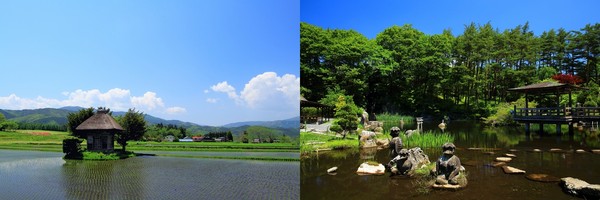
▲ With the help of folklorist Yanagita Kunio, the city of Tono has been transformed into a city of folktales, with the Kappa being its most famous representative. (Photo / courtesy ofRakuten Travel, the same below)
Iwate Prefecture – City of Tono – Tono Legends
Tono is known as the “City of Japanese Folklore,” largely thanks to renowned writer Yanagita Kunio, who collected local oral literature and published Tales of Tono in 1912, providing an annotated account of the area’s legends. Among them, the most famous is the well-known Kappa. By the small stream near the shrine lives a creature that loves cucumbers and meat and enjoys playing pranks — that must be the Kappa. If you see one, stay calm. If you frighten it and it spills the water on its head, it will lose its power. So, if you happen to meet one, bow politely, and the spirit will respectfully respond to you.
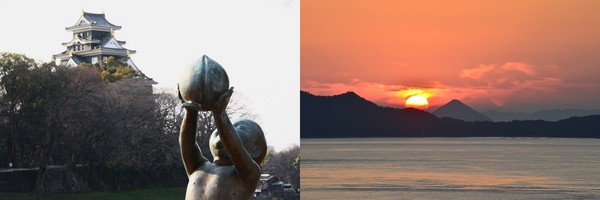
▲ The statue of Momotaro shows how much this place honors him, while Onigashima Island, regarded as the oni (demon) island, also looks imposing from afar.
Okayama Prefecture – Okayama and Onigashima Island – Momotaro
In Okayama Prefecture, Momotaro is considered a local hero. Although the origins of the Momotaro story vary, nearby Onigashima Island in Kagawa Prefecture is said to be the “Demon Island” from the legend. The island has numerous caves, perfect for hiding the demons in the story, which naturally associates the area with Momotaro. The legend tells of an elderly couple longing for a child who found a giant peach by the river. When they cut it open, a baby emerged. They raised him, and when he grew up, he set out to defeat the demons that plagued the villagers. Along the way, he was joined by allies including a pheasant, a dog, and a monkey, eventually triumphing over the demons and returning home in victory.
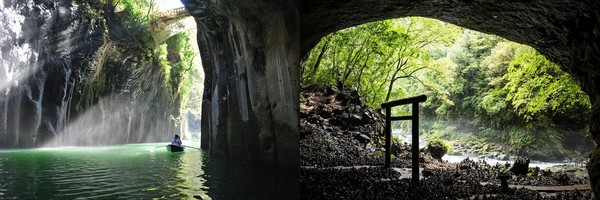
▲ The cave where Amaterasu is said to have hidden is located in Takachiho Town, secluded yet stunningly beautiful.
Miyazaki Prefecture – Takachiho Town – Amaterasu and the Cave
Legend has it that Japan’s sun goddess, Amaterasu, hid in a cave after becoming distraught over her brother’s misdeeds, plunging the land into darkness. It wasn’t until the other gods performed a joyous dance that she emerged, bringing sunlight back to the world. This cave is said to be the very spot where Amaterasu reappeared. Takachiho Shrine now performs a ritual called “Yogami Kagura” (Night Ritual Dance) every evening to continue the myth. However, to preserve the natural environment, visitors can only view the beauty from designated observation points, though the site remains awe-inspiring.
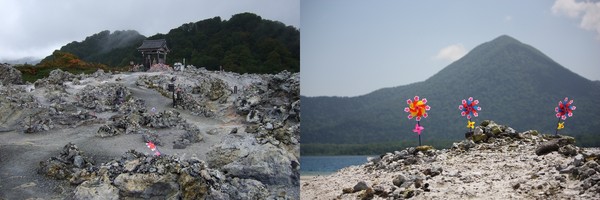
▲ Nishiyama no Kawa (West Riverbed) gives off an inexplicable sense of oppression, and the contrast between kites and ash piles enhances its gloomy aura.
Aomori Prefecture – Mount Osore – Nishiyama no Kawa
In Japanese Buddhist legend, unfortunate children who die young are believed to come to Nishiyama no Kawa, where they stack stones to accumulate enough virtue to help them be reborn. But whenever they finish stacking, demons come and destroy their work, and the process repeats endlessly. For this reason, Nishiyama no Kawa is also referred to as a “purgatory on earth.” The only consolation is that the Jizo Bodhisattva watches over the children as they try again, helping them accumulate merit. Mount Osore itself is one of Japan’s Three Sacred Mountains, but its desolate landscape gives it a spooky feel — it's often said to be the gateway to hell. Many parents who have lost children come here to pray.
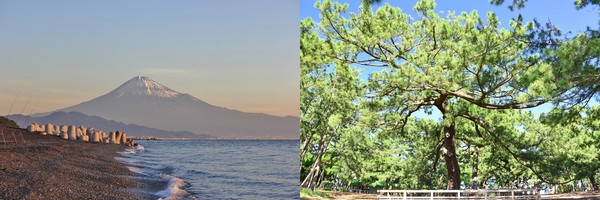
▲ Miho no Matsubara resembles a dreamy fairyland, and Mount Fuji adds a sense of grandeur.
Shizuoka Prefecture – Miho no Matsubara – The Hagoromo Legend
The legend tells of a fisherman who, while out fishing, unexpectedly found a feather robe of exquisite material and stunning color. A maiden appeared to claim it, revealing herself as a heavenly celestial maiden who needed the robe to return to the heavens. The fisherman refused to return it, but after some negotiation, the maiden put on the robe, performed a graceful dance, and then departed for the sky. The fisherman was mesmerized and watched her go, unable to look away. This place is considered the origin of the legend because Mount Fuji, framed by the sea and black pine forest, looks especially majestic — a picturesque scene that fits the tale of a celestial descent. There is also an ancient pine tree said to be where the maiden hung her robe, and a nearby shrine preserves fragments of the garment. Every October, a reenactment of the legend is performed here.
Share
This article is published by HowToTrip. Sharing and reposting are welcome — please credit the source.
Article URL: https://www.howtotrip.net/views-10073
Related Articles
- Shaoxing's "Grandpa Gourd" hangs the gourds back up: "If there are too many people, we'll interact less — just take a quick look from afar"
- Chinese authorities announce "reciprocal adjustment" to Japan visa fees — single-entry visa jumps from 2,250 to 16,750 yen!
- The "health stones" carried by a traveler were found to have radiation levels exceeding safety limits by a thousand times, potentially endangering fellow passengers on the same flight. Customs issues warning!
- Shenzhen Airport Issues Late-Night Notice: Unidentified Aerial Object Detected, Causing Widespread Flight Delays!
- “They only said it cost money after I opened the box and washed it!” 200g of grapes sold for 60 yuan on a high-speed train—12306 responds!
- Can't buy an airline ticket? Denied exit? Blocked from boarding? A large number of Chinese tourists have mysteriously become "discredited individuals"
- Adverse weather and economic fluctuations impact Colombia's coffee market
- Beach bathing area responds to 2 yuan/30 seconds fee for freshwater foot rinsing: Clearly priced!
- Taking off with an improperly closed cabin door? Wing malfunction? Multiple flights made emergency returns mid-journey!
- Experience the gifts of nature! A countdown of the world’s ten most stunning coastlines