Guanmenshan Scenic Area
Guanmenshan Scenic Area

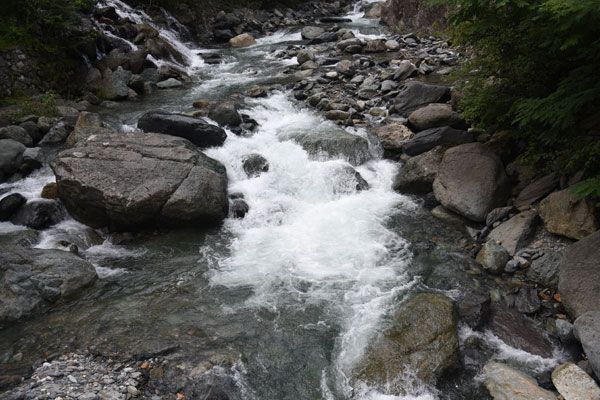
The scenic area is traversed by two roads and one river throughout its length. Lush mountains rise on both sides of the river, densely forested and shaded overhead, while the river flows gently year-round. The total length is 8 km. Along the route, visitors can find typical North subtropical evergreen broad-leaved forests, distinctive geological profiles of the Shennongjia Group, ancient stromatolites, the beautiful Longtouzhai area, and unique underground rivers. There are also nine cultural sites including the “Wild Man Sculpture of Motherly Love,” the Biodiversity Experimental Forest, the Natural Ecology Museum, the Ancient Qingsheng Tea Garden, traditional dwellings, the International Friendship Garden, China Transportation Forest, the China Nature Reserves Alliance Forest, and the Celebrity & Notable Trees Area. Additionally, there are nine rare plant conservation gardens such as the Orchid Garden, Wax Myrtle Garden, Azalea Garden, Shennong Medicinal Plant Garden, Rose Garden, Camphor Tree Garden, Time-Honored Garden, Red Maple Garden, and Hundred-Fruit Garden. There are five wildlife parks featuring animals like the Chinese giant salamander, sika deer, snakes, pheasants, and Chinese honeybees.
The Natural Ecology Museum showcases the biodiversity of Shennongjia through authenticity and direct visual experience, making it a platform for ecological education, scientific research, teaching practice, and the dissemination of traditional natural culture. The museum consists of four themed halls—the Geological Hall, Ecology Hall, Scientific Expedition Hall, and Folk Culture Hall—plus one Wild Man Cave, one reception hall, one academic lecture hall, and one temporary exhibition hall.
The Rare Plant Conservation Garden is a large-scale comprehensive mountain forest botanical garden that primarily focuses on species protection, scientific research, and tourism, while also serving educational purposes. It houses over 2,000 species of native Shennongjia plants, more than 150 endemic and rare species, 112 species of native wild fruit trees, 56 species of wild orchids, 23 species of wild rhododendrons, 46 species of red-leaf trees, 162 species of medicinal trees, 46 species of medicinal shrubs, 60 species of medicinal vines, 876 species of medicinal herbs, over 80 species of Rosaceae plants, and 14 species of wintersweet from Shennongjia and surrounding areas.
The Wildlife Park is a tourism project integrating wildlife breeding and scientific research observation. It mainly raises and breeds animals such as sika deer, white muntjac, Reeves’s muntjac, pheasants, snakes, Chinese giant salamanders, golden trout, rainbow trout, turtles, Yangtze River Chinese perch, Quipay flounder, sturgeons, and Chinese honeybees.
The Guanmenshan Ecological Science Popularization Scenic Area received strong attention and support from leaders, scholars, and international friends during its construction. From 2007 to 2010, it hosted over 40 inspection and research activities, with more than 1,300 people participating in tree-planting efforts, planting a total of over 400 trees.
The main mode of transportation to and from Shennongjia is by road, primarily via two directions: Shiyan and Yichang. From the Shiyan direction, you first arrive at Songbai Town; from Yichang to Shennongjia, you first reach Muyu Town. For traveling from Yichang to Shennongjia, it's best to take a fast bus from Yichang to Xingshan County, which runs every 30 minutes, taking about three and a half hours, then transfer to a vehicle from Xingshan to Muyu Town in Shennongjia, which takes about one and a half hours—this is more convenient. Taking a direct bus from Yichang to Shennongjia is less ideal as there is only one bus per day. The distance from Shiyan City to Shennongjia is about 202 km, with a drive of around seven hours, and only one bus per day departing at 7:00 AM. To travel from Wuhan to Shennongjia, you can take a long-distance bus from Xinhua Road Bus Station. Each evening at 8:00 PM, a sleeper bus departs from Wuhan to Xingshan County, arriving at 6:00 AM the next day, with a ticket price of 90 RMB per person. From Xingshan, minibuses are available to Muyu Town in Shennongjia (60 km), running every 30 minutes at 10 RMB per person. Alternatively, you can take a train from Wuhan to Shiyan (departing at 10:00 PM, arriving in Shiyan after 6:00 AM), then catch a bus from the station at 7:30 AM to arrive in Songbai Town, Shennongjia, by noon. From Chongqing to Shennongjia, you can take a boat and disembark at Badong Port, where there is a bus to Shennongjia daily at 5:30 AM. Alternatively, you can disembark at Xiangxi Wharf (where only small passenger ships stop), take a bus to Xingshan, and then continue to Muyu Town in Shennongjia—the transport options in between are quite convenient.
Guanmenshan Tourist Route
Tour Route: Attractions are distributed along Shicao River, spanning a total of 8 km. Visitors can enter through the main gate and take the sightseeing battery car to various spots or explore on foot along the walking trails. A quick tour takes about 3 hours, while a leisurely visit may last 1–2 days. Eleven bridges connect the roads and attractions along the way. The route is as follows: Main Gate – Biodiversity Laboratory – Ancient Qingsheng Tea Garden – Orchid Garden – Wax Myrtle Garden – International Friendship Garden – Celebrity & Notable Trees Area – Azalea Garden – Shennong Medicinal Plant Garden – Chinese Honeybee Observation Area – Rare Plant Conservation Garden – Rose Garden – Time-Honored Garden – Red Maple Garden – Natural Ecology Museum – Chinese Giant Salamander Research & Observation Area – Snake Garden – Pheasant Garden – Sika Deer Garden.

Share
This article is published by HowToTrip. Sharing and reposting are welcome — please credit the source.
Article URL: https://www.howtotrip.net/travel-8859
Related Articles
- Shaoxing's "Grandpa Gourd" hangs the gourds back up: "If there are too many people, we'll interact less — just take a quick look from afar"
- Chinese authorities announce "reciprocal adjustment" to Japan visa fees — single-entry visa jumps from 2,250 to 16,750 yen!
- The "health stones" carried by a traveler were found to have radiation levels exceeding safety limits by a thousand times, potentially endangering fellow passengers on the same flight. Customs issues warning!
- Shenzhen Airport Issues Late-Night Notice: Unidentified Aerial Object Detected, Causing Widespread Flight Delays!
- “They only said it cost money after I opened the box and washed it!” 200g of grapes sold for 60 yuan on a high-speed train—12306 responds!
- Can't buy an airline ticket? Denied exit? Blocked from boarding? A large number of Chinese tourists have mysteriously become "discredited individuals"
- Adverse weather and economic fluctuations impact Colombia's coffee market
- Beach bathing area responds to 2 yuan/30 seconds fee for freshwater foot rinsing: Clearly priced!
- Taking off with an improperly closed cabin door? Wing malfunction? Multiple flights made emergency returns mid-journey!
- Experience the gifts of nature! A countdown of the world’s ten most stunning coastlines