Square of the Golden Rooster’s Crown
Square of the Golden Rooster’s Crown
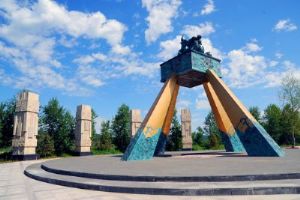
The theme sculpture of the Square of the Golden Rooster’s Crown takes the “Imperial Seal” as its creative element, the top adopts the form of the “dragon,” the spiritual totem of the Chinese nation, representing the land of China and symbolizing “Heaven’s blessing for the prosperity of the Chinese nation”; the four sides are adorned with decorative patterns of the mythological creatures—the Azure Dragon, White Tiger, Vermilion Bird, and Black Tortoise—commanding awe in all directions, representing the supreme authority bestowed by the people; the seal script on the seal is in intaglio-style “金鸡之冠,” which complements the vermilion seal script on the base, symbolizing that this place is the highest point in China’s latitude and is rightfully called the “Golden Rooster’s Crown”; the supporting structure incorporates the placement method of the “literary prosperity direction” in geographical feng shui, combining the “column body” and “seal” ingeniously; the main body rises forcefully from the ground, majestic and powerful, resembling a monument standing tall in the square, displaying the bearing and style of Mohe as the “Crown of the Golden Rooster”; the column body is made using mirror-finish stainless steel with forged copper patterns, inheriting China’s historical civilization while showcasing the new look of the “Pole of China”; under sunlight, the shining light symbolizes Mohe’s unique natural wonder—the Aurora Borealis; the forged copper patterns are decorated with traditional wave motifs, as the north corresponds to water in the Five Elements, symbolizing nourishment and accumulation, representing the mother river of the Heilongjiang region—the Heilongjiang River, truly reflecting the saying “Magical Aurora Borealis, Endless Heilongjiang River”; the base part uses the concept of “round sky and square earth,” integrating the traditional concepts of the “Four Symbols” and “Eight Trigrams,” with the four totem pillars extending from the sculpture’s main body showcasing Mohe’s unique “celestial phenomena, landscapes, culture, and history,” expressing aspirations for Mohe’s future development.
Share
This article is published by HowToTrip. Sharing and reposting are welcome — please credit the source.
Article URL: https://www.howtotrip.net/travel-8436
Related Articles
- Shaoxing's "Grandpa Gourd" hangs the gourds back up: "If there are too many people, we'll interact less — just take a quick look from afar"
- Chinese authorities announce "reciprocal adjustment" to Japan visa fees — single-entry visa jumps from 2,250 to 16,750 yen!
- The "health stones" carried by a traveler were found to have radiation levels exceeding safety limits by a thousand times, potentially endangering fellow passengers on the same flight. Customs issues warning!
- Shenzhen Airport Issues Late-Night Notice: Unidentified Aerial Object Detected, Causing Widespread Flight Delays!
- “They only said it cost money after I opened the box and washed it!” 200g of grapes sold for 60 yuan on a high-speed train—12306 responds!
- Can't buy an airline ticket? Denied exit? Blocked from boarding? A large number of Chinese tourists have mysteriously become "discredited individuals"
- Adverse weather and economic fluctuations impact Colombia's coffee market
- Beach bathing area responds to 2 yuan/30 seconds fee for freshwater foot rinsing: Clearly priced!
- Taking off with an improperly closed cabin door? Wing malfunction? Multiple flights made emergency returns mid-journey!
- Experience the gifts of nature! A countdown of the world’s ten most stunning coastlines