Nanyang Ancient Town Scenic Area
Nanyang Ancient Town Scenic Area
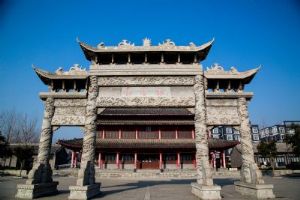
The shape of Nanyang Ancient Town resembles a pipa, and it is the largest island in Nanyang Lake. There are also over 80 smaller natural islands around it, all with neat houses, together forming a beautiful picture of a watery world along with Nanyang Ancient Town. A canal runs through the town, with streets built along the waterway, winding and twisting. Shops line the streets and canals, offering a full range of establishments including restaurants, teahouses, grain stores, inns, salt shops, and silk shops. The residential buildings in the town are quite distinctive, featuring blue bricks and small tiles, with reeds covering doors and lotus and reeds brushing against windows, complementing the small islands, canals, ancient town, water village, and the vast expanse of Nanyang Lake, creating a unique landscape of a northern water town and forming a profound backdrop of canal culture. Strolling through the town inevitably stirs deep, ancient historical memories.
The ancient town carries an extremely rich historical and cultural heritage, giving rise to the saying, "One Nanyang Town holds half the history of canal transport." The canal in the town is the only section of the Shandong Canal that has not silted up. There are over 30 scenic historical sites in the ancient town, such as the Grand Pavilion over the Canal, Guan Yu Temple, Yang Family Memorial Archway, Zhuangyuan (Number One Scholar) Alley, and the Long Bridge Lying on the Water. These sites feature simple yet classic designs, exquisite carvings, and richly varied compositions, offering a glimpse into the town’s former prosperity. After the Yuan Dynasty opened the Grand Canal connecting the north and south, emperors traveling south via water routes would pass through Nanyang and stay here. Many legendary tales about Emperor Kangxi and Emperor Qianlong’s visits to Nanyang remain in the town, along with preserved sites such as the Imperial Kitchen, Royal Palace Office, Imperial Grain Hall, and the Emperor’s Lodging. The town’s streets are all paved with bluestone slabs, and most buildings are traditional structures made of bluestone bricks, tiles, and wood. Among them, the Huji Money Shop is a Qing Dynasty building and can be regarded as a living fossil of ancient Chinese money shop culture. The ancient Chinese-style mosque reflects the integration of Islamic culture with the Manchu-Han cultures of the time. The "Folk Culture Museum" allows visitors to gain an in-depth understanding of local customs and experience the dramatic historical changes and the rise and decline of the canal transport culture in Nanyang.
Originally a village on the North China Plain, Nanyang became an island surrounded by water after the excavation of the new canal for canal transport during the Ming Dynasty, forming Nanyang Lake. The canal economy and culture of Nanyang rose to prominence, then declined, and later saw the resurgence of modern canal economy, leaving a significant mark in history. The economic and cultural prosperity of the town can be traced back earliest to the Yuan Dynasty when the Sishui River, which ran through Nanyang, was transformed into a section of the canal. In the second year of the Yuanshun era, the Nanyang Sluice was built in the town, along with the Sluice Official Hall, River Bridge Post Office, and Canal Management Office, making Nanyang an important dock along the canal. By the Ming and Qing dynasties, Nanyang reached the peak of its economic development. The Ming Dynasty established the River Bridge Post Office, Sluice Official Hall, and Canal Management Office, while the Qing government set up offices for supervising transport, tax collection, defense, and garrison duties. At that time, Nanyang became an important commercial hub along the canal, with “fishing boats, wine boats, merchant boats, rice boats coming and going in close succession, clustering together like streets with masts and sails.” It was named one of the Four Great Canal Towns along with Zhenjiang, Yangzhou, and Xiazhen.
Nanyang Town is not only rich in antique charm but also boasts 150,000 mu of lake surface, over 50 species of aquatic economic plants, and nearly 100 types of fish, shrimp, and shellfish. Vast fields of lotus flowers, acres of reeds, blue skies, clear waters, wild ducks, and lakeside grass create a natural water recreation park. “Spring brings lush grass on the lake, summer fills the air with fragrant lotuses, autumn sees reed catkins flying like snow, and winter welcomes flocks of wild geese and ducks.” Roving ferries, murmuring canals, lakeside towers and corridors, grass-roofed boats on the water, ancient streets, fluttering shop signs, green stone bridges, and classic old doorways all reflect the beauty of a northern water town.
Nanyang is recognized as a Famous Historical and Cultural Town of China and has been named a Tourism Characteristic Township by the Shandong Provincial Tourism Bureau. Its unique northern water town scenery, pristine ecological pattern, profound cultural heritage, and vibrant canal culture are delightful and captivating, attracting numerous tourists every year and making it an exceptional destination for leisure, vacation, and travel.
Address: Nanyang Town, Weishan County, Jining City
Business Hours: 6:00–19:00
Recommended Visiting Time: Approximately 3 hours
Featured Attraction: Grand Canal Scenery
Tour Routes: 1. Ancient Town Experience Tour: Nanyang Dock → South End of the West Bank of the Ancient Canal along the West Bank → Emperor’s Lodging → Hall Room → Imperial Banquet Room → Huji Money Shop → Mosque → Ancient Commercial Street → West Bank of Nanyang Sluice → Shanghai Bridge → Nanyang Dock.
2. Canal Scenic Boat Tour: Ancient Canal Dock → Round Trip via Yingjia Bridge. (Private boat rental required; additional fees apply.)
3. Island and Lake Ecological Tour: Southeast End of the Canal – Nandianzi → Ten-Thousand-Mu Lotus Field → Cormorant Fishing Show → Island Loop via the New Beijing-Hangzhou Canal to the Southeast End of the Ancient Canal. (Private boat rental required; additional fees apply.)
Guide Fees: Guide services are available at each sub-site. Under 5 people: ¥100; 5 or more people: ¥200.
Supporting Facilities:
The scenic area offers dining and accommodation services at Yingyue Lou Restaurant and Nanyang Shuiyuan Hotel. Nanyang Shuyuan Street features a wide variety of specialty goods for visitors to explore and purchase.
Visitor Service Center: The Nanyang Visitor Service Center is conveniently located in the prominent Canal Transport Square. It is a comprehensive service facility integrating guide services, promotion, consultation, complaints, leisure, and shopping.
Share
This article is published by HowToTrip. Sharing and reposting are welcome — please credit the source.
Article URL: https://www.howtotrip.net/travel-18497
Related Articles
- Shaoxing's "Grandpa Gourd" hangs the gourds back up: "If there are too many people, we'll interact less — just take a quick look from afar"
- Chinese authorities announce "reciprocal adjustment" to Japan visa fees — single-entry visa jumps from 2,250 to 16,750 yen!
- The "health stones" carried by a traveler were found to have radiation levels exceeding safety limits by a thousand times, potentially endangering fellow passengers on the same flight. Customs issues warning!
- Shenzhen Airport Issues Late-Night Notice: Unidentified Aerial Object Detected, Causing Widespread Flight Delays!
- “They only said it cost money after I opened the box and washed it!” 200g of grapes sold for 60 yuan on a high-speed train—12306 responds!
- Can't buy an airline ticket? Denied exit? Blocked from boarding? A large number of Chinese tourists have mysteriously become "discredited individuals"
- Adverse weather and economic fluctuations impact Colombia's coffee market
- Beach bathing area responds to 2 yuan/30 seconds fee for freshwater foot rinsing: Clearly priced!
- Taking off with an improperly closed cabin door? Wing malfunction? Multiple flights made emergency returns mid-journey!
- Experience the gifts of nature! A countdown of the world’s ten most stunning coastlines