Wufeng Tower in Changzhi
Last updated 2026-11-15 — The Southern Song Dynasty Wufeng Tower is located at the foot of Laoxiong Mountain in the southeastern part of Changzhi County, facing Shen Mountain and backed by Xian Ridge. Surrounded by verdant mountains and clear waters in a serene environment, the architecture...
Wufeng Tower in Changzhi
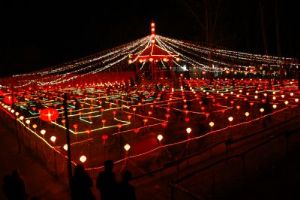
The Southern Song Dynasty Wufeng Tower is situated at the foot of Laoxiong Mountain in the southeastern part of Changzhi County, facing Shen Mountain and backed by Xian Ridge. With its picturesque mountain and water scenery, tranquil surroundings, exquisite and majestic architecture, it stands as one of the major Taoist temples in the Shangdang region. In June 2006, it was designated as a National Key Cultural Relics Protection Unit. The temple was initially built during the Song Dynasty, rebuilt in the 42nd year of the Wanli era of the Ming Dynasty, had golden statues installed in the 16th year of the Chongzhen era, and underwent further renovations in the 38th year of the Qianlong era of the Qing Dynasty. It was completely restored in 1985 with the principle of preserving its original appearance.
The temple faces south and consists of three courtyards in a row. Along the central axis are, in sequence, the Mountain Gate, Offering Pavilion, Lingxiao Palace, and Bedroom Palace, with the Bell Tower, Drum Tower, Wenchang Pavilion, Three Buddhas Hall, Side Halls, Wing Halls, and Corridors arranged on both sides. Directly opposite the Mountain Gate is a Music Tower.
The Mountain Gate, also known as the Wufeng Tower, features massive stone pillars supporting a wooden structure with five tiers of upturned eaves and a hip-and-gable roof. It is grand and imposing, radiating supreme majesty. Particularly rare is the fact that the staircase leading to the tower is made from a single giant mulberry tree, while two of the beams are crafted from thick wild raspberry wood.
Upon entering the Mountain Gate is the Offering Pavilion. Its dense brackets and beams create an intricate and solemn structure with elegant proportions and exquisite craftsmanship. The main hall houses the revered deities.
The entire architectural complex faces south and consists of three courtyards in a row. Along the central axis are the Mountain Gate, Offering Pavilion, Lingxiao Palace, and Bedroom Palace, with the Bell Tower, Drum Tower, Wenchang Pavilion, Three Buddhas Hall, Side Halls, Wing Halls, and Corridors arranged on both sides. Right across from the Mountain Gate is a performance pavilion.
The five-tiered Mountain Gate Tower, supported by giant stone columns, has a wooden structure with five layers of flying eaves and a hip-and-gable roof. It appears magnificent and supremely majestic. Especially unique is that the stairway to the tower is made from a single large mulberry tree trunk, and two of the beams are fashioned from thick wild vine wood.
Upon entering the gate is the Offering Pavilion, where densely arranged bracket sets create a refined and solemn atmosphere, characterized by elegant proportions and excellent craftsmanship. The central hall enshrines the main deity. Further inside is the Bedroom Palace, which is solemn and dignified.
The other buildings on the site are also grand and well-proportioned, with expansive layouts and vivid colors. The red walls and green tiles present a rich, traditional atmosphere. The main deity hall is over 10 meters high, and more than 170 structures including halls, pavilions, towers, and chambers are spread across the 800-plus-square-meter area. To the east of the Wufeng Tower is the newly built Four Sovereigns Palace, Doumu Palace, and Bedroom Palace, while the eastern side of the scenic area features a meticulously constructed East Garden.
The entire scenic area integrates Taoist culture, landscape scenery, architectural art, and folk culture, making it a great destination for sightseeing, relaxation, intellectual enrichment, and emotional cultivation. Visit the Wufeng Tower scenic area to enjoy the beautiful rural mountain and field scenery. Come to the Wufeng Tower scenic area to explore the mysteries of ancient Chinese architecture and gain insight into the profound richness of native Chinese Taoist culture.
Scenic Area Address
Nansong Village, Nansong Township, Changzhi County, Changzhi City, Shanxi Province
Wufeng Tower in Changzhi isAAa [level] attraction
Source: Shanxi Provincial Tourism Development Commission
Share
This article is published by HowToTrip. Sharing and reposting are welcome — please credit the source.
Article URL: https://www.howtotrip.net/travel-18386
Related Articles
- Shaoxing's "Grandpa Gourd" hangs the gourds back up: "If there are too many people, we'll interact less — just take a quick look from afar"
- Chinese authorities announce "reciprocal adjustment" to Japan visa fees — single-entry visa jumps from 2,250 to 16,750 yen!
- The "health stones" carried by a traveler were found to have radiation levels exceeding safety limits by a thousand times, potentially endangering fellow passengers on the same flight. Customs issues warning!
- Shenzhen Airport Issues Late-Night Notice: Unidentified Aerial Object Detected, Causing Widespread Flight Delays!
- “They only said it cost money after I opened the box and washed it!” 200g of grapes sold for 60 yuan on a high-speed train—12306 responds!
- Can't buy an airline ticket? Denied exit? Blocked from boarding? A large number of Chinese tourists have mysteriously become "discredited individuals"
- Adverse weather and economic fluctuations impact Colombia's coffee market
- Beach bathing area responds to 2 yuan/30 seconds fee for freshwater foot rinsing: Clearly priced!
- Taking off with an improperly closed cabin door? Wing malfunction? Multiple flights made emergency returns mid-journey!
- Experience the gifts of nature! A countdown of the world’s ten most stunning coastlines