Tiancheng Chan Temple
Tiancheng Chan Temple

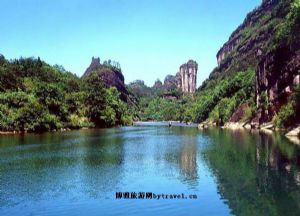
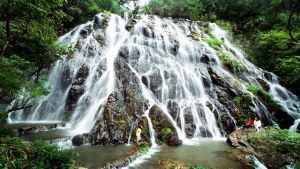
The temple clings to the mountainside, covered by towering cliffs above and overlooking sheer precipices below, surrounded by woods and crisscrossed by mountain streams. Staying overnight at the temple allows you to gaze at the stars and moon overhead and listen to the sound of flowing water. It’s as if you’re perched among the stars and moon, and cleansed amidst the water and clouds. During the Republican era, the temple gradually fell into disuse. After the Third Plenary Session of the 11th Central Committee, with the implementation of the Party’s religious policies, monks occasionally stayed at the Bīnxī Cave on Huxiao Rock and the former site of Tiancheng Chan Temple.
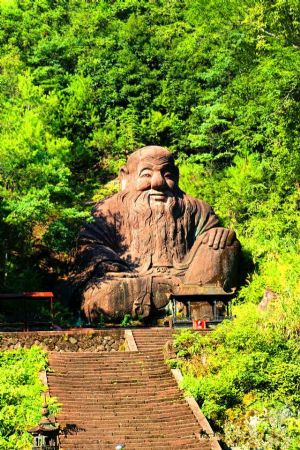
In 1993, the Wuyi Mountain Scenic Area Management Committee invested nearly 500,000 yuan to build the Jíyún Tea House and the Tiancheng Chan Temple screen wall on Huxiao Rock, and to carve out a mountain trail leading to Bīnxī Cave from the back mountain. The Bīnxī Cave on the upper part of Huxiao Rock was renovated, and statues of the Three Jewels were restored. In September 1994, with donations totaling 100,000 yuan from devotees, a 10-meter-tall relief sculpture of Guanyin was carved on the cliff behind the main hall at the former site of Tiancheng Chan Temple on the lower part of Huxiao Rock. The lotus pedestal is 3 meters tall, making the total height 13 meters, with a depth of 2 meters and a maximum width of 5 meters. By 1996, tens of thousands of tourists and devotees visited the site each year to pay their respects. Currently, four monks and nuns reside at Bīnxī Cave and Tiancheng Chan Temple to manage the site.
Guanyin smiles gently, looking down upon all beings. She holds a ruyi scepter in her left hand and presses her right hand to her chest in a gesture of reverence. Barefoot, she stands atop a lotus throne, her robes flowing gracefully. Nearby, there is an inscription: “A single lamp can dispel a thousand years of darkness; a single insight can eliminate ten thousand years of ignorance.” On the platform below, two or three nuns sort through incense papers while repeatedly saying, “Lighting a lamp or offering incense can ensure safety and good fortune for your family and yourself.”
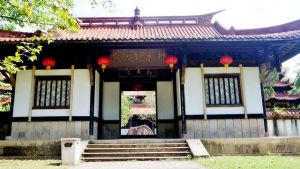
There are many temples in famous mountains, which shouldn’t be surprising. But deep within Wuyi Mountain lies a “Tiancheng Chan Temple,” which is truly unique. While visiting Wuyi Mountain and passing by Huxiao Rock, if you squeeze through the narrow “Tiger’s Tongue,” you’ll suddenly enter a slightly more open and gentle area. Look up, and you’ll see the words “Tiancheng Chan Temple.”
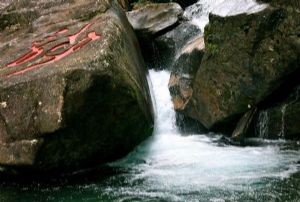
Here, a thousand-foot cliff slopes outward, forming a massive cave. The entire temple structure is roofless, impervious to wind and rain. On the ancient cliff wall is carved a large image of Guanyin. On the right rear cliff, the two characters “Hǔxiào” (“Tiger’s Roar”) are inscribed in cursive script. On the right side of the courtyard, several large rocks are stacked to form a small grotto heaven, about three or four meters high. At the top is a rock inscribed with the two characters “Línglóng” (“Exquisite”), beneath which is a bed used as a meditation spot by monks. The Guanyin statue, the small grotto heaven, and the monks’ meditation spot.






Share
This article is published by HowToTrip. Sharing and reposting are welcome — please credit the source.
Article URL: https://www.howtotrip.net/travel-18111
Related Articles
- Shaoxing's "Grandpa Gourd" hangs the gourds back up: "If there are too many people, we'll interact less — just take a quick look from afar"
- Chinese authorities announce "reciprocal adjustment" to Japan visa fees — single-entry visa jumps from 2,250 to 16,750 yen!
- The "health stones" carried by a traveler were found to have radiation levels exceeding safety limits by a thousand times, potentially endangering fellow passengers on the same flight. Customs issues warning!
- Shenzhen Airport Issues Late-Night Notice: Unidentified Aerial Object Detected, Causing Widespread Flight Delays!
- “They only said it cost money after I opened the box and washed it!” 200g of grapes sold for 60 yuan on a high-speed train—12306 responds!
- Can't buy an airline ticket? Denied exit? Blocked from boarding? A large number of Chinese tourists have mysteriously become "discredited individuals"
- Adverse weather and economic fluctuations impact Colombia's coffee market
- Beach bathing area responds to 2 yuan/30 seconds fee for freshwater foot rinsing: Clearly priced!
- Taking off with an improperly closed cabin door? Wing malfunction? Multiple flights made emergency returns mid-journey!
- Experience the gifts of nature! A countdown of the world’s ten most stunning coastlines