Lotus Peak of Mount Wuyi
Lotus Peak of Mount Wuyi
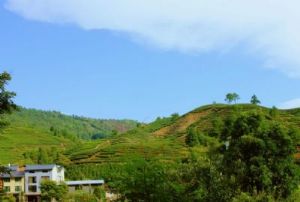
With an elevation of 536 meters, Lotus Peak is not particularly high, but it rises abruptly and stands imposingly, with sheer red cliffs and towering ridges. The winding mountain paths add to its length, and the perilous journey subtly tests the devotion of those who seek enlightenment. On the steep cliffs, there are many natural rock formations that seem like masterpieces of nature—faint outlines of ancient sacred animals such as monkeys, oxen, sheep, turtles, deer, snakes, and frogs can be seen, each taking on unique shapes. As the old saying goes, “Deep mountains hide ancient temples,” and indeed, within a cave at the summit of this very mountain lies a unique ancient temple—Miaolian Temple—becoming its most distinctive feature.
Miaolian Temple
The uniqueness of Miaolian Temple lies in the fact that it is a typical cliffside (hanging) temple. Built within a natural crevice in the rock face, aside from the temple entrance, the inner hall is carved directly into the rock fissure, without using a single brick, tile, or supporting pillar. Stretching over 30 meters in length, it houses the Mahavira Hall, the Guanyin Hall, and the Koubing Hall (the Koubing Hall commemorates the ancient Buddhist monk Koubing, the most renowned high monk in the history of Mount Wuyi). The eaves and brackets under the temple’s platforms are intricately carved, all adorned with lotus motifs. A cliffside temple of such scale is extremely rare in China, making Miaolian Temple a major highlight of Lotus Peak.
Source: Fujian Provincial Tourism Development Commission
Share
This article is published by HowToTrip. Sharing and reposting are welcome — please credit the source.
Article URL: https://www.howtotrip.net/travel-17689
Related Articles
- Shaoxing's "Grandpa Gourd" hangs the gourds back up: "If there are too many people, we'll interact less — just take a quick look from afar"
- Chinese authorities announce "reciprocal adjustment" to Japan visa fees — single-entry visa jumps from 2,250 to 16,750 yen!
- The "health stones" carried by a traveler were found to have radiation levels exceeding safety limits by a thousand times, potentially endangering fellow passengers on the same flight. Customs issues warning!
- Shenzhen Airport Issues Late-Night Notice: Unidentified Aerial Object Detected, Causing Widespread Flight Delays!
- “They only said it cost money after I opened the box and washed it!” 200g of grapes sold for 60 yuan on a high-speed train—12306 responds!
- Can't buy an airline ticket? Denied exit? Blocked from boarding? A large number of Chinese tourists have mysteriously become "discredited individuals"
- Adverse weather and economic fluctuations impact Colombia's coffee market
- Beach bathing area responds to 2 yuan/30 seconds fee for freshwater foot rinsing: Clearly priced!
- Taking off with an improperly closed cabin door? Wing malfunction? Multiple flights made emergency returns mid-journey!
- Experience the gifts of nature! A countdown of the world’s ten most stunning coastlines