Shangjiu Mountain Ancient Village
Shangjiu Mountain Ancient Village

Shangjiu Mountain Ancient Village is a national-level traditional village, a demonstration site for China's leisure agriculture and rural tourism, one of China's most beautiful pristine ancient villages, a model village for rural tourism in China, a national AAA-level scenic spot, a historical and cultural village in Shandong Province, and a pilot unit of Shandong Province's Rural Memory Project.
Shangjiu Mountain Ancient Village is located in Zoucheng, the hometown of Mencius, and is deeply influenced by Confucian and Mencian culture, earning it the reputation of being a folk village directly shaped by Confucian thought. At the same time, the village lies within the influence zone of Guoli, the hometown of Fuxi, and is also deeply impacted by Fuxi culture. In addition, the ancient village is the place where Liang Shanbo and Zhu Yingtai became sworn siblings and where the Qin Emperor’s ancient road is located, so Liang-Zhu culture and Qin Emperor culture also hold certain influence here.
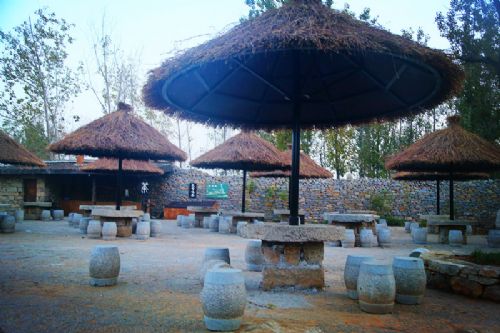
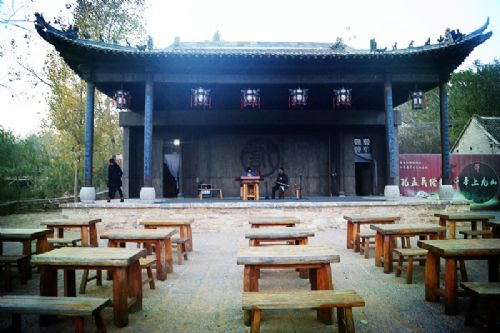
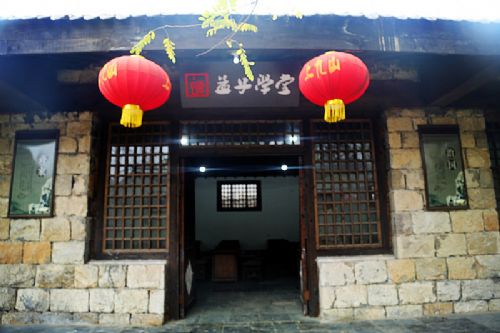
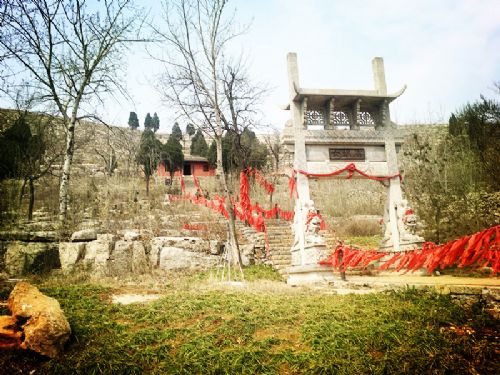
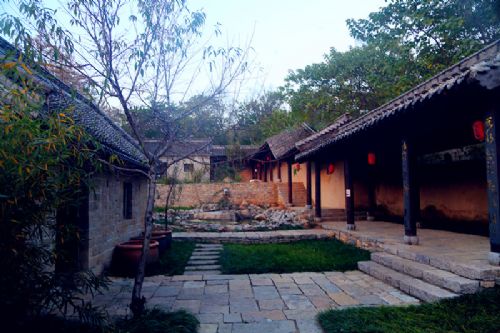
The village still fully preserves three stone streets from the Ming and Qing dynasties, over 300 stone courtyards, more than 1,200 stone houses, with a total construction area of over 30,000 square meters. Among the notable sites are the Temple of the Dark Emperor, the Yijing Well, the Xiao Family Courtyard, the Old Schoolhouse, the Old Fort Wall, and the Zheng Family Cemetery. The village currently has over 2,000 pieces of traditional daily life and production tools and folk items, including stone mills, stone rollers, stone mortars, stone benches, stone troughs, oxcarts, flatbed carts, sickles, plows, and winnowing baskets. Traditional crafts such as Liuqin opera, waist drum performances, dragon dancing, and the making of owl-shaped shoes are still practiced today.
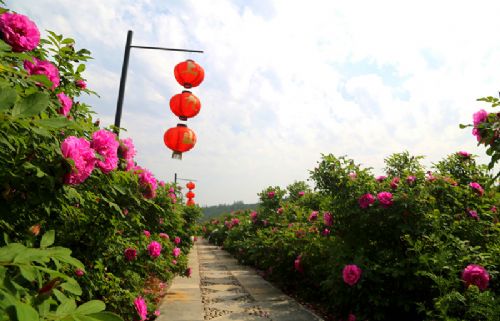
The village is situated “against the mountain, with water surrounding it, and facing a screen,” surrounded by continuous hills, creating a poetic and picturesque setting. With a large number of traditional buildings and daily tools, distinct local cultural characteristics, and well-preserved environmental scenery, it offers a unique charm.
Within the village, the Confucian academy, the grand courtyard where the six brothers of the Zheng family lived harmoniously, the residence of the Confucian official Xiao Jinshi, the Taoist temple complex of the Temple of the Dark Emperor, as well as intangible cultural heritage such as paper-cutting, embroidery, Liuqin opera, willow weaving, the legends of Shangjiu Mountain, and the marriage customs of Shangjiu Mountain, all reflect the village’s ancient civilization that respects Confucianism and values Daoism, along with its simple and honest folk customs.
Shangjiu Mountain Village boasts a beautiful environment, representing the typical living conditions of mountain villages in southwestern Shandong. The stone houses of Shangjiu Mountain are a unique residential architectural art created by the ancestors of the mountainous regions in southwestern Shandong and are a rare historical and cultural heritage. The building layouts are free and unrestrained, reflecting the simple aesthetic values of the folk people and holding high folk value. In addition, the wood carvings and stone engravings densely distributed throughout the buildings feature diverse techniques, exquisite craftsmanship, and lifelike details. These vibrant artworks also possess considerable artistic value.
Share
This article is published by HowToTrip. Sharing and reposting are welcome — please credit the source.
Article URL: https://www.howtotrip.net/travel-17647
Related Articles
- Shaoxing's "Grandpa Gourd" hangs the gourds back up: "If there are too many people, we'll interact less — just take a quick look from afar"
- Chinese authorities announce "reciprocal adjustment" to Japan visa fees — single-entry visa jumps from 2,250 to 16,750 yen!
- The "health stones" carried by a traveler were found to have radiation levels exceeding safety limits by a thousand times, potentially endangering fellow passengers on the same flight. Customs issues warning!
- Shenzhen Airport Issues Late-Night Notice: Unidentified Aerial Object Detected, Causing Widespread Flight Delays!
- “They only said it cost money after I opened the box and washed it!” 200g of grapes sold for 60 yuan on a high-speed train—12306 responds!
- Can't buy an airline ticket? Denied exit? Blocked from boarding? A large number of Chinese tourists have mysteriously become "discredited individuals"
- Adverse weather and economic fluctuations impact Colombia's coffee market
- Beach bathing area responds to 2 yuan/30 seconds fee for freshwater foot rinsing: Clearly priced!
- Taking off with an improperly closed cabin door? Wing malfunction? Multiple flights made emergency returns mid-journey!
- Experience the gifts of nature! A countdown of the world’s ten most stunning coastlines