Longmen Temple
Longmen Temple

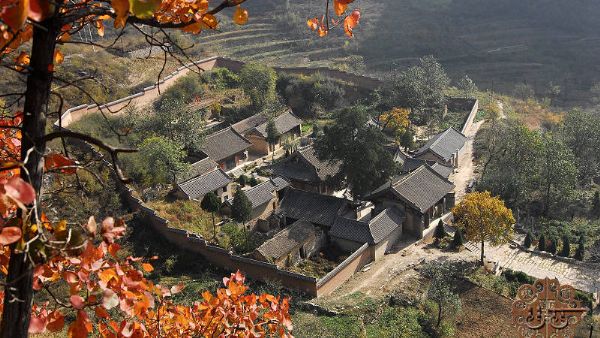
Longmen Temple (Fourth Batch of National Heritage)
Era: Five Dynasties to Qing Dynasty
Address: At the foot of Longmen Mountain, Yuantou Village, Shicheng Town, 54 km northeast of Pingshun County
The temple was originally built during the Tianbao era of the Northern Qi Dynasty (550–559 AD), and underwent major expansions during the Later Tang of the Five Dynasties and the Song and Jin periods. Especially in the first year of the Jianlong era of the Northern Song Dynasty (950 AD), the temple reached its peak size with “several hundred halls and rooms.” It has been repaired in subsequent dynasties. Currently, over seventy structures from the Later Tang, Song, Jin, Yuan, Ming, and Qing dynasties still exist.
The temple faces south and covers an area of 5,070 square meters. Its layout follows three axes—eastern, central, and western—each divided into a front courtyard, middle courtyard, and rear courtyard. The buildings are constructed along the terrain, with varying heights and a clear hierarchy. The central axis mainly includes the mountain gate (Heavenly King Hall) and side corridors in the front courtyard, side halls, a Buddhist pagoda, the middle hall, and the bell tower. The rear courtyard contains monks’ quarters on the east and west sides, and the rear hall (Ran Deng Buddha Hall). The eastern axis features a five-room Hall of the Sacred Monk, a seven-room Water-Land Hall, as well as auxiliary structures such as meditation rooms, monks’ quarters, and stables. The western axis consists of two sets of four-courtyard monks’ quarters and storage rooms. The main buildings are primarily located along the central axis.
The western side hall is situated on the west side of the front courtyard along the central axis and is the oldest building in the temple. It was built between the third year of the Tongguang era (925 AD) and the second year of the Qingtai era (935 AD) of the Later Tang of the Five Dynasties. It is three bays wide and four rafters deep, with a single-eave hanging gable roof. The structure is simple and retains the architectural style of the Tang Dynasty. It is the only known surviving hanging-gable-style building from the Five Dynasties period in China.
The middle hall, also known as the Mahavira Hall, is located at the center of the central axis. It was built in the fifth year of the Shaosheng era of the Northern Song Dynasty (1098 AD). It is three bays wide and deep, nearly square in plan, with a single-eave hip-and-gable roof. The beam framework retains characteristics of Song Dynasty architecture.
The mountain gate, also called the Heavenly King Hall, is positioned at the front end of the central axis and is a Jin Dynasty structure. It is three bays wide and four rafters deep, with a single-eave hanging gable roof. The side corridors on both sides of the gate feature column-and-lintel construction and bracket sets that echo the style of the hall, contributing to the overall architectural harmony.
The rear hall, or Ran Deng Buddha Hall, is located at the very end of the central axis and is a Yuan Dynasty building. It is three bays wide and four rafters deep, with a single-eave hanging gable roof.
The eastern side hall is located on the eastern side of the front courtyard, opposite the western side hall. It is three bays wide and four rafters deep, with a single-eave flush gable roof. It was rebuilt between the eleventh and thirty-seventh years of the Hongzhi era of the Ming Dynasty (1478–1504 AD).
The eastern axis includes the Water-Land Hall, Heavenly Palace Hall, and others; the western axis consists of a two-courtyard complex, mostly monks’ quarters and stables, most of which were built in the late Qing Dynasty or during the Republican era.
Longmen Temple has a long history and grand scale. Among the ancient buildings that still exist in China, it is the only temple complex that houses structures from the Five Dynasties, Song, Jin, Yuan, Ming, and Qing dynasties, making it of high historical, artistic, and scientific value.
Share
This article is published by HowToTrip. Sharing and reposting are welcome — please credit the source.
Article URL: https://www.howtotrip.net/travel-17137
Related Articles
- Shaoxing's "Grandpa Gourd" hangs the gourds back up: "If there are too many people, we'll interact less — just take a quick look from afar"
- Chinese authorities announce "reciprocal adjustment" to Japan visa fees — single-entry visa jumps from 2,250 to 16,750 yen!
- The "health stones" carried by a traveler were found to have radiation levels exceeding safety limits by a thousand times, potentially endangering fellow passengers on the same flight. Customs issues warning!
- Shenzhen Airport Issues Late-Night Notice: Unidentified Aerial Object Detected, Causing Widespread Flight Delays!
- “They only said it cost money after I opened the box and washed it!” 200g of grapes sold for 60 yuan on a high-speed train—12306 responds!
- Can't buy an airline ticket? Denied exit? Blocked from boarding? A large number of Chinese tourists have mysteriously become "discredited individuals"
- Adverse weather and economic fluctuations impact Colombia's coffee market
- Beach bathing area responds to 2 yuan/30 seconds fee for freshwater foot rinsing: Clearly priced!
- Taking off with an improperly closed cabin door? Wing malfunction? Multiple flights made emergency returns mid-journey!
- Experience the gifts of nature! A countdown of the world’s ten most stunning coastlines