Qufu Confucius Research Institute
Qufu Confucius Research Institute
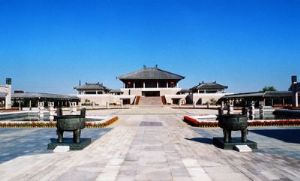
Located 500 meters south of the main gate of the Qufu Temple of Confucius, on the west side of Dacheng Road, within a perforated flower wall stands a prominent high-rise building — that is the Confucius Research Institute, completed in 1999.
The Confucius Research Institute is a research institution approved for construction by a special document from the State Council. It serves five functions: literature collection, information exchange, academic research, talent cultivation, and museum exhibitions. It is planned to become a global center for the study of Confucian thought. The institute faces east, with a three-bay entrance gate. Under the eaves hangs a gold-plated bronze plaque inscribed with “Confucius Research Institute.” Although unsigned, it is unmistakably the calligraphy of Chairman [Deng Xiaoping].
On both sides of the gate, apricot trees sway gently. Upon closer inspection, there are exactly 36 trees on each side. Confucius once taught beneath an apricot arbor, with three thousand disciples and seventy-two worthy ones. Needless to say, the apricot trees symbolize the seventy-two wise disciples. Passing through the gate, the path beneath your feet is paved with red granite laid either horizontally or vertically. In the center of the path lies a row of circular white marble pieces. Upon closer look, they turn out to be patterns of ancient jade pendants. Confucius was a passionate inheritor and advocate of ancient culture, who greatly revered the rites and music culture of the Zhou Dynasty. Rites and music thus became an important part of Confucian thought. The designers put deep thought into even such an ordinary pathway, engraving such profound symbols of traditional culture onto it.
Jining City, Shandong Province
Confucius (551 BCE~479 BCE) Confucius (551–479 BCE), also known as Kong Qiu, courtesy name Zhongni, was a native of Zouyi (present-day southeastern Qufu, Shandong), Changping District, the State of Lu. He was a thinker, educator, and statesman in the late Spring and Autumn period, the founder of Confucianism, and one of the most influential figures in Chinese history and culture. He also had a significant impact worldwide, especially in Southeast Asian countries, and is recognized as one of the world’s cultural celebrities. Confucius’ ancestors included Weizi Qi, the half-brother of King Zhou of the Shang Dynasty. Weizi Qi upheld the sacrifices of the Shang and was enfeoffed in the State of Song. His sixth-generation descendant, Kong Fu Jia, was the first to adopt the surname Kong. His fifth-generation ancestor, Shu Liangfu, fled to the State of Lu to escape turmoil and later settled in Zouyi. His father, Shuliang He, was a renowned warrior of Lu, known for his bravery and strength among the feudal lords. In his later years... More+
Share
This article is published by HowToTrip. Sharing and reposting are welcome — please credit the source.
Article URL: https://www.howtotrip.net/travel-16036
Related Articles
- Shaoxing's "Grandpa Gourd" hangs the gourds back up: "If there are too many people, we'll interact less — just take a quick look from afar"
- Chinese authorities announce "reciprocal adjustment" to Japan visa fees — single-entry visa jumps from 2,250 to 16,750 yen!
- The "health stones" carried by a traveler were found to have radiation levels exceeding safety limits by a thousand times, potentially endangering fellow passengers on the same flight. Customs issues warning!
- Shenzhen Airport Issues Late-Night Notice: Unidentified Aerial Object Detected, Causing Widespread Flight Delays!
- “They only said it cost money after I opened the box and washed it!” 200g of grapes sold for 60 yuan on a high-speed train—12306 responds!
- Can't buy an airline ticket? Denied exit? Blocked from boarding? A large number of Chinese tourists have mysteriously become "discredited individuals"
- Adverse weather and economic fluctuations impact Colombia's coffee market
- Beach bathing area responds to 2 yuan/30 seconds fee for freshwater foot rinsing: Clearly priced!
- Taking off with an improperly closed cabin door? Wing malfunction? Multiple flights made emergency returns mid-journey!
- Experience the gifts of nature! A countdown of the world’s ten most stunning coastlines