Qufu Ming City (Three Confucian Sites) Scenic Area in Jining
Qufu Ming City (Three Confucian Sites) Scenic Area in Jining
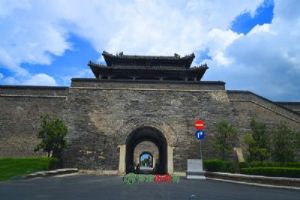
The "Temple of Confucius," "Kong Family Mansion," and "Cemetery of Confucius" are collectively known as the "Three Confucian Sites." They are among the first group of Major Historical and Cultural Sites Protected at the National Level and were inscribed as a UNESCO World Heritage Site in 1994. On May 8, 2007, the Qufu (Three Confucian Sites) Scenic Area, the hometown of Confucius, was officially approved as a National 5A-level Tourist Attraction by the China National Tourism Administration. The "Three Confucian Sites" are not only symbols of ancient China’s reverence for Confucianism but also important physical artifacts for the study of Chinese history, culture, and art.
Temple of Confucius: Originally built in 478 BC, it is the second-largest ancient architectural complex existing in China, only after the Forbidden City. It is considered a model of large-scale ancient Chinese temple architecture and one of China’s three great ancient architectural complexes, holding an important place in the history of world architecture. The Temple of Confucius has nine courtyards, with a longitudinal axis running through the entire structure, symmetrical left and right, and rigorously laid out. It stretches 630 meters in length and 140 meters in width, featuring over 460 halls, chambers, altars, and pavilions, 54 gates and archways, and 13 "Imperial Stele Pavilions," covering an area of approximately 9,600 square meters. The Hall of Sage’s Traces, the Thirteen Stele Pavilions, and the eastern and western corridors of the Dacheng Hall house a large number of stone tablets and carvings. Particularly notable is the largest collection of Han Dynasty steles in the country, along with other treasured inscriptions from various dynasties. Its abundance of stelae is only surpassed by the Xi’an Stele Forest, earning it the title of "China’s Second Stele Forest."
Kong Family Mansion: Also known as the "Mansion of the Duke Yansheng," it served as the official residence and home of the direct descendants of Confucius. The granting of noble titles to Confucius’ descendants began in 195 BC (the 12th year of Emperor Gaozu of Han). As successive emperors elevated the titles bestowed upon Confucius' lineage, the scale of the Kong Family Mansion also expanded. Construction began in 1038 AD during the reign of Emperor Renzong of the Song Dynasty, and further renovations took place during the Jiajing era of the Ming Dynasty, establishing its current size. It is the largest aristocratic residence in China after the Forbidden City in Beijing, famed as the "Number One Family Under Heaven." The mansion covers an area of 160,000 square meters, with 463 halls, pavilions, and rooms across nine courtyards, divided into three sections: east, west, and middle. The east section is the family ancestral temple area, including the Baoben Hall and Taomiao. The west section was used by the Duke Yansheng for studying, poetry, rituals, leisure, and receiving guests, featuring the Zhongshu Hall and Anhuai Hall, as well as north and south flower halls for entertaining general guests. The central section is the main body, with the front serving as the official office housing three halls and six departments, the rear as the inner residence, and the very back as the garden. The mansion houses a vast collection of historical relics, most notably the "Ten Bronzes of the Shang and Zhou Dynasties," also called the "Ten Offerings." These elegantly shaped and finely ornamented bronze ritual vessels were originally from the imperial court and were bestowed upon the Kong Family Mansion by Emperor Qianlong in the 36th year of his reign. Other collections include metalwork, ceramics, bamboo and wood carvings, ivory and jade sculptures, pearls, agate, coral, as well as robes, hats, swords, and utensils from the Yuan, Ming, and Qing dynasties. There are also calligraphy and paintings by notable figures throughout history, including the only surviving seven-beam crown from the Yuan Dynasty in China. The Kong Family Mansion is a quintessential example of the fusion between government office and private residence in feudal China.
Cemetery of Confucius: Also known as the Forest of the Supreme Sage, it is the family burial ground for Confucius and his descendants. The cemetery currently has over 100,000 tombs, making it the oldest and largest family burial ground in the world. It can also be described as a natural botanical garden. Legend has it that after Confucius’ death, “disciples planted various rare trees from all directions, resulting in many unusual species.” Today, the forest contains over 100,000 ancient and famous trees and thousands of plant species, creating a vibrant display. The Cemetery of Confucius is also a veritable open-air museum. Among the trees, there are numerous stone tablets and ceremonial statues—over 4,000 grave tablets and inscriptions, and more than 300 stone statues and archways. Aside from a number of notable Han Dynasty steles moved to the Temple of Confucius, the cemetery also features tomb inscriptions written by famous individuals such as Li Gefei, Wu Kuan, Huang Yangzheng, Yan Song, Kong Shangren, Gui Fu, Weng Fanggang, He Shaoji, Ruan Yuan, Shi Runzhang, Kang Youwei, as well as descendants of Confucius. Here, one can explore burials from the Spring and Autumn Period, examine tombs from the Qin and Han dynasties, and study the evolution of China’s economic and cultural development as well as funeral customs throughout the ages.
Address: Within Qufu Ming City
Business Hours: 8:00–17:00
Touring Time: Approximately 4 hours
Price: 150 RMB per person
Featured Attractions: Dacheng Hall, Dragon Pillars of Dacheng Hall, Kuiwen Pavilion, Thirteen Stele Pavilions, Hall of the Kong Family Mansion, Tomb of Confucius, Intricate Roof Corners, Five Locust Trees Embracing a Cypress, Autumn Scenery of the Cemetery of Confucius
Suggested Tour Route: Ten-Thousand-Ren City Wall – Temple of Confucius – Kong Family Mansion – Han and Wei Dynasty Stone Carving Exhibition Hall – Cemetery of Confucius
Guide Price: Guided tour 150 RMB per session per group
Supporting Facilities:
Qufu Visitor Service Center includes a parking lot and performance hall. The Temple of Confucius, Kong Family Mansion, and Cemetery of Confucius all have souvenir shops inside.
Visitor Service Center: Located in the northern part of Qufu city, the Qufu Visitor Service Center offers the following services: ticket sales for attractions, guide services, transportation transfer hub, inquiry and complaint handling, dining and shopping, leisure performances, monitoring and management, and city exhibitions.
Transportation Guide
Bus:
Tourist shuttle electric bus, fare: 15 RMB per person (10 RMB per person for groups). After purchasing a ticket at the Tourist Distribution Center, visitors can take the tourist shuttle electric bus to visit the three scenic areas.
Self-Drive Guide:
(1) G3 (Beijing–Fuzhou) Expressway – exit at Qufu – drive west along National Highway 327 to downtown Qufu – follow scenic area signs to the Three Confucian Sites; approximately 10 minutes’ drive after exiting the expressway.
(2) G1511 (Rizhao–Dongming) Expressway – exit at Qufu South – drive south along National Highway 104 to downtown Qufu – follow scenic area signs to the Three Confucian Sites; approximately 10 minutes’ drive after exiting the expressway.
Parking Information:
Qufu Visitor Service Center has a large dedicated parking lot that can accommodate various types of vehicles, offering safety, reliability, and reasonable fees.
Share
This article is published by HowToTrip. Sharing and reposting are welcome — please credit the source.
Article URL: https://www.howtotrip.net/travel-15608
Related Articles
- Shaoxing's "Grandpa Gourd" hangs the gourds back up: "If there are too many people, we'll interact less — just take a quick look from afar"
- Chinese authorities announce "reciprocal adjustment" to Japan visa fees — single-entry visa jumps from 2,250 to 16,750 yen!
- The "health stones" carried by a traveler were found to have radiation levels exceeding safety limits by a thousand times, potentially endangering fellow passengers on the same flight. Customs issues warning!
- Shenzhen Airport Issues Late-Night Notice: Unidentified Aerial Object Detected, Causing Widespread Flight Delays!
- “They only said it cost money after I opened the box and washed it!” 200g of grapes sold for 60 yuan on a high-speed train—12306 responds!
- Can't buy an airline ticket? Denied exit? Blocked from boarding? A large number of Chinese tourists have mysteriously become "discredited individuals"
- Adverse weather and economic fluctuations impact Colombia's coffee market
- Beach bathing area responds to 2 yuan/30 seconds fee for freshwater foot rinsing: Clearly priced!
- Taking off with an improperly closed cabin door? Wing malfunction? Multiple flights made emergency returns mid-journey!
- Experience the gifts of nature! A countdown of the world’s ten most stunning coastlines