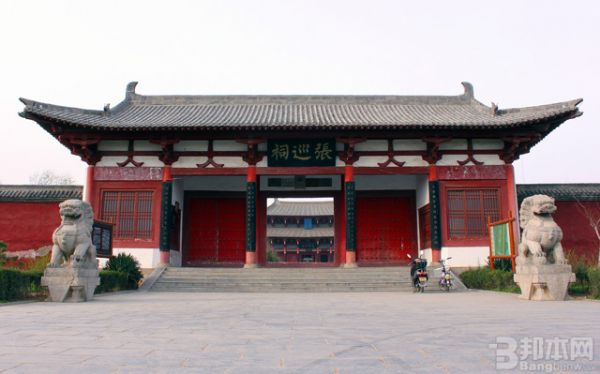
Zhang Xun Temple in Shangqiu
Zhang Xun Temple in Shangqiu

At that time, although there were over 60,000 civilians in Suiyang, there were only 6,800 soldiers to defend it, facing an enemy force of 130,000. By May, the city’s food supplies had run out, but the rebel forces temporarily withdrew due to their commander Yin Ziqi being wounded. In July, Yin Ziqi led 140,000 soldiers to besiege Suiyang for the third time—bloody fighting, endless bloodshed. By August, the city was completely out of food, with over 100,000 soldiers surrounding Suiyang in layers. The city was cut off from the outside world, fully isolated. Bark, wormwood, grass roots, horse saddles, belts—everything edible had been consumed. In September, the enemy attacked the city walls. The soldiers atop the walls were starving. Surrender? The word “surrender” had not yet left someone’s lips when Zhang Xun raised his sword and struck—the word was never spoken. (Suiyang) had been under siege for so long, food was gone, most of Zhang Xun’s soldiers had starved to death, and those still alive were injured, their strength exhausted. Zhang Xun offered up his concubine, saying, “Comrades, we’ve long lacked food, but our loyalty has not diminished. I regret that I cannot cut my own flesh to feed you, but how can I begrudge a mere concubine while watching my soldiers starve?” He then had her killed to feed the soldiers, and everyone present wept. Zhang Xun forced them to eat, even to the point of catching birds with nets, digging for rats, and boiling clothes and bowstrings for food. This is recorded in the *Guide Prefecture Annals*:
“First they slaughtered horses for food, and when those ran out, they turned to women, the elderly, and the weak—feeding on a total of 30,000 people.”
The rebels knew there would be no external relief and intensified their siege. Some proposed retreating eastward, but Zhang Xun and Xu Yuan believed Suiyang was the shield of the Jianghuai region. If Suiyang fell, the rebels would press forward triumphantly into the south, and Jianghuai would surely be lost. Moreover, leading a starving army on the move would certainly fail. On the 23rd day of the 10th month (lunar calendar), the rebels attacked the city, and the soldiers were too exhausted to fight. Suiyang thus fell, and Zhang Xun and Xu Yuan were captured. When Zhang Xun’s subordinates saw him captured, they stood upright and wept. Zhang Xun said, “Stay calm, do not fear. Death is fate.” After the city fell, Zhang Xun refused to surrender and was executed at the age of 49. Thirty-six other defending officers were also killed.
With unyielding courage and the city walls of Suiyang as his bulwark, Zhang Xun faced thirty or forty thousand elite enemies with just six thousand soldiers, holding off the rebel main forces for a full year. This prevented the rebels from crossing into Jianghuai, sparing the people there from devastation, and bought the Tang Dynasty precious time to quell the rebellion. The *Guide Prefecture Annals* praised:
“Zhang Xun shielded Jianghuai, checked the rebels’ advance, and ensured the survival of the realm—such was his merit.”
Address: South Gate, Ancient City of Shangqiu
Type: Cemetery/Palace/Temple
Recommended visiting time: About 1 hour
Opening hours:
All day
Ticket information:
Door price: 10.0 RMB
Share
This article is published by HowToTrip. Sharing and reposting are welcome — please credit the source.
Article URL: https://www.howtotrip.net/travel-14484
Related Articles
- Shaoxing's "Grandpa Gourd" hangs the gourds back up: "If there are too many people, we'll interact less — just take a quick look from afar"
- Chinese authorities announce "reciprocal adjustment" to Japan visa fees — single-entry visa jumps from 2,250 to 16,750 yen!
- The "health stones" carried by a traveler were found to have radiation levels exceeding safety limits by a thousand times, potentially endangering fellow passengers on the same flight. Customs issues warning!
- Shenzhen Airport Issues Late-Night Notice: Unidentified Aerial Object Detected, Causing Widespread Flight Delays!
- “They only said it cost money after I opened the box and washed it!” 200g of grapes sold for 60 yuan on a high-speed train—12306 responds!
- Can't buy an airline ticket? Denied exit? Blocked from boarding? A large number of Chinese tourists have mysteriously become "discredited individuals"
- Adverse weather and economic fluctuations impact Colombia's coffee market
- Beach bathing area responds to 2 yuan/30 seconds fee for freshwater foot rinsing: Clearly priced!
- Taking off with an improperly closed cabin door? Wing malfunction? Multiple flights made emergency returns mid-journey!
- Experience the gifts of nature! A countdown of the world’s ten most stunning coastlines