Yuku Village
Yuku Village
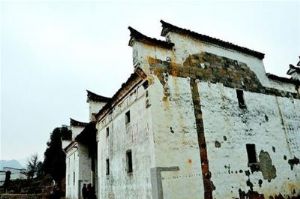
Yuku Village has a long history and profound cultural heritage. According to the Yangxin County Annals and the genealogy of the Li family in Yuku Village, ancestors have lived here since the Song and Yuan dynasties. During the Ming and Qing dynasties, the village flourished with a growing population and thriving traditions. On Huanggu Mountain behind the village, the Xishan Temple built in the Qing dynasty echoes with evening drums and morning bells, and the sounds of scriptures fill the air; on Baifo Mountain, the Baifo Temple built in the Ming dynasty houses 100 vivid iron Buddha statues; at Yaotoubao, the ancient Baixia Cave features cave-within-a-cave structures, colonies of bats, and cool breezes, its depths still unexplored to this day; there is also an ancient camphor tree on Shenjialing, over ten meters tall, with a canopy like an umbrella, a trunk circumference of 5 meters, requiring three people to encircle, and over 400 years of history. In front of the village once stood an ancient Ming dynasty bridge, but only two damaged piers remain after mountain floods. The village also has two Ming dynasty bluestone wells with double mouths—still providing clear water that has never dried up in a century and is still used by villagers today. Two nearly 100-meter-long Ming dynasty bluestone alleyways continue to welcome passersby. The Ming dynasty residences in the village feature tall square walls, straight-line door walls, with only the roof ridges and fir beams wrapped within the square walls—simple and practical. Villager Lu Zhanghuang still lives in one of these old houses. The most eye-catching structures in the village are the group of Qing dynasty residences where six families, including Li Xiangjun, still reside. These Qing dynasty houses feature Huizhou-style horse-head gables and straight-line gateways, as well as architectural elements typical of southeastern Hubei, such as inward-slanting knife-shaped windows, inward-retracting main gates, stark black-and-white eave paintings, “four waters returning to the hall” skylights and courtyards, thick fir wood doors with anti-theft functions, and stone-carved dog holes for guard dogs to come and go.
The main historical and cultural landmarks of Yuku Village are the birthplace of the late Qing dynasty statesman Li Hengshi, who held the prestigious rank of Second-Class Baoxian and served as the Judicial Commissioner of Xinjiang, as well as his former residence, the ancestral temple of the Li family, and Li Hengshi’s tomb. According to the Hubei Provincial Annals and the Yangxin County Annals, Li Hengshi was a historically significant figure who played an important role in promoting economic and cultural development during his time. His remarkable achievement of recovering Ili without resorting to military force became a celebrated tale throughout China (see the July 20th supplement of the "Yijiangting" column, “Li Hengshi’s Silver Tongue Recovers Ili”).
Li Hengshi’s former residence was built in the 31st year of the Guangxu reign during the Qing dynasty (1905 AD). The residence consists of main structures including the main hall, central hall, and wing rooms, along with secondary rooms for the butler, chef, and servants, covering a total area of 1,391 square meters. The entrance gate features a Qing dynasty stone plaque inscribed with the title “Guanglu Daifu,” with vigorous and powerful calligraphy. Inside, there are four courtyards, symbolizing “four waters returning to the hall.” The doors and windows are adorned with dragon and phoenix designs, gilded and painted red, exuding luxury and elegance.
The Li Family Ancestral Temple was constructed in the 26th year of the Guangxu reign during the Qing dynasty (1900 AD). It comprises a complex of four main sections in a row: the theater stage, main hall, passageway hall, and ancestral hall, covering a total area of 1,673 square meters. Both the Li Family Former Residence and the Li Family Ancestral Temple conform to the principles of Chinese feng shui—facing south with water in front, a mountain at the back, and wings on both sides. They are now both key provincial-level cultural heritage protection units in Hubei Province.
Li Hengshi’s tomb is currently an unmarked grave, with only a few bluestones piled at the head. This is because Li Hengshi held a high and prestigious position, renowned throughout China. Therefore, his descendants buried him alongside the graves of three revered ancestors in a row as a sign of respect. Since those three ancestors had no tombstones, to avoid breaking ancestral traditions, Li Hengshi’s tomb was also left without one. Today, many descendants believe that the absence of a tombstone reflects Li Hengshi’s noble character of “coming into the world pure and leaving without taking even a blade of grass.”
Additionally, Yuku Village preserves a wealth of China’s oral and intangible cultural heritage. Local customs include the “New Crop Festival,” “Water Offering Festival,” “Thousand-Day Pass,” and “Touching Greens on the Fifteenth Day of the First Lunar Month.” Folk tales such as “Li Hengshi’s Three Challenges to the Old Scholar,” “Jigong Builds the Baifo Temple,” and “The First Emperor of Qin Unleashes Eighteen Bends with a Whip” remain popular topics among villagers. Folk songs like “Ten Views Through,” “One Sister, Ten Husbands,” and “A Bird Appears Over the Western Hills at Sunrise” can often be heard echoing around the hills and valleys near the village.
Share
This article is published by HowToTrip. Sharing and reposting are welcome — please credit the source.
Article URL: https://www.howtotrip.net/travel-12760
Related Articles
- Shaoxing's "Grandpa Gourd" hangs the gourds back up: "If there are too many people, we'll interact less — just take a quick look from afar"
- Chinese authorities announce "reciprocal adjustment" to Japan visa fees — single-entry visa jumps from 2,250 to 16,750 yen!
- The "health stones" carried by a traveler were found to have radiation levels exceeding safety limits by a thousand times, potentially endangering fellow passengers on the same flight. Customs issues warning!
- Shenzhen Airport Issues Late-Night Notice: Unidentified Aerial Object Detected, Causing Widespread Flight Delays!
- “They only said it cost money after I opened the box and washed it!” 200g of grapes sold for 60 yuan on a high-speed train—12306 responds!
- Can't buy an airline ticket? Denied exit? Blocked from boarding? A large number of Chinese tourists have mysteriously become "discredited individuals"
- Adverse weather and economic fluctuations impact Colombia's coffee market
- Beach bathing area responds to 2 yuan/30 seconds fee for freshwater foot rinsing: Clearly priced!
- Taking off with an improperly closed cabin door? Wing malfunction? Multiple flights made emergency returns mid-journey!
- Experience the gifts of nature! A countdown of the world’s ten most stunning coastlines