Zimbabwe
A landlocked highland nation in southern Africa, home to the roaring Victoria Falls, the stone ruins of Great Zimbabwe, and herds of elephants in Hwange National Park.
Zimbabwe (Republic of Zimbabwe)
| Capital | Harare |
|---|---|
| Continent | Africa |
| Languages | English, Shona, Ndebele |
| Currency | Zimbabwean dollar (foreign currencies such as the US dollar are widely used) (ZiG Z$) |
| Time Zone | UTC+2 |
| Dialling Code | +263 |
| Area / Population | Approximately 391,000 square kilometers / Approximately 16.6 million |
| Visa | Most foreign visitors need a visa to enter Zimbabwe in advance. E-visas can be applied for online, and visas on arrival are available at major ports such as Victoria Falls. Please check the latest announcements from the Zimbabwe Immigration Department. A travel itinerary and accommodation information are required. |
| Best Season | The dry season from May to August is cool and dry with less rainfall, making it the best time for wildlife viewing as animals gather around water sources. The rainy season from November to March features the highest water volume at Victoria Falls and the lushest vegetation. |
| Main Cities | Harare, Bulawayo, Victoria Falls, Hwange, Masvingo, Mutare, Matobo, Kariba |
Zimbabwe in Detail
Zimbabwe Overview
Zimbabwe is a landlocked country in southern Africa, bordered by Zambia to the north across the Zambezi River, South Africa to the south, Mozambique to the east, and Botswana to the southwest. It covers an area of approximately 391,000 square kilometers. The entire country sits on a plateau over 1,000 meters above sea level. The capital, Harare, located in the northeastern highlands, enjoys a mild climate with spring-like weather year-round. In its early years of independence, it was known as the "Sunshine City" for its abundant flowers and trees, and during the 1980s and 1990s, it was nicknamed the "Paris of Africa" as one of the most livable cities on the continent.
With a population of about 16.6 million, the main ethnic groups are the Shona and Ndebele peoples. English, Shona, and Ndebele are all official languages. Zimbabwe has long maintained a high standard of education in Africa, with one of the highest literacy rates on the continent for many years.
Geography and Climate
Zimbabwe lies entirely on the southern African plateau, with terrain rising from the Zambezi River Valley in the northwest to the eastern highlands. The Eastern Highlands (around Mutare, Bindura, and Chimanimani) feature rolling mountains, with Mount Nyangani being the highest peak at 2,592 meters. The Zambezi River Valley in the northwest forms a dramatic escarpment at Victoria Falls, one of the world’s largest sheet waterfalls. Lake Kariba and the Zambezi River are vital sources of hydroelectric power and fisheries.
The climate is tropical savanna, moderated by the high altitude: the dry season from May to August has large diurnal temperature variations, clear skies, and little rain—making it ideal for wildlife viewing. The rainy season from November to March brings lush greenery, with Victoria Falls at its most powerful and jacaranda and jacaranda flowers blooming in Harare from September to October.
Historical Background
Zimbabwe is the heartland of ancient civilizations in southern Africa. From the 11th to 15th centuries, the Shona people built the prosperous Kingdom of Great Zimbabwe in the Masvingo area, leaving behind massive stone ruins. The name "Zimbabwe" comes from the Shona words meaning "stone houses." Later, the Monomotapa Kingdom continued trade networks with the Swahili merchants along the Indian Ocean coast. In the late 19th century, British colonialist Cecil Rhodes’ British South Africa Company occupied the territory, then known as Rhodesia. In 1965, the white minority regime unilaterally declared independence, leading to international sanctions. After prolonged guerrilla warfare, Zimbabwe gained full independence on April 18, 1980, with Robert Mugabe as the first prime minister, ruling for decades until 2017.
In the 2000s, radical land reforms triggered economic turmoil and hyperinflation. A political transition occurred in 2017, and President Emmerson Mnangagwa introduced economic reconstruction and foreign investment policies, gradually revitalizing tourism.
Economy and Currency
Zimbabwe’s economy traditionally relied on agriculture (tobacco, maize) and mining (platinum, gold, lithium, diamonds), and it once had relatively advanced industrial infrastructure in Africa. However, hyperinflation in the early 2000s severely damaged the economy. In 2008, inflation reached astronomical levels, and in 2009, the government abandoned the Zimbabwean dollar in favor of a multi-currency system including the US dollar. In 2016, bond notes were issued, and in 2019, the Zimbabwean dollar (ZWL) was reintroduced. In 2020, the US dollar regained legal tender status, and in April 2024, the Zimbabwe Gold (ZiG), backed by gold reserves, was launched. Currently, both the US dollar and the new ZiG circulate, with the US dollar dominating in retail and services. Mining and tourism are the main sources of foreign exchange.
Culture and Society
Shona culture is central to Zimbabwe: Shona stone sculptures are internationally renowned in the art market, and the clear tones of the mbira thumb piano represent traditional music. The staple food is sadza, a thick porridge made from white maize meal, typically served with stews. Fried mopane worms are a traditional protein source from the highland bush. The soapstone carving of the Zimbabwe Bird, excavated from Great Zimbabwe, is a national symbol featured on the flag and coat of arms. Education and family are highly valued, and churches and community organizations play significant roles in rural life.
Tourism Overview
Zimbabwe is a top destination in southern Africa for safari and natural wonders. Victoria Falls Town is famous for the world-class waterfall, Devil’s Pool, and sunset cruises on the Zambezi River. Hwange National Park, covering about 14,000 square kilometers, is Zimbabwe’s largest park, home to tens of thousands of elephants. The two UNESCO World Heritage Sites, Great Zimbabwe and Matobo Hills (featuring San rock art and balancing rocks), preserve ancient history. The Eastern Highlands offer mountain hiking, while Lake Kariba is popular for fishing and boating. Eased visa policies and restored flight routes have improved travel connections, often combined with Botswana and Zambia. However, the cash-based economy requires travelers to carry sufficient US dollar banknotes.
Local Currency: Zimbabwean dollar (foreign currencies such as the US dollar are widely used) (ZiG)
Currency Overview
Zimbabwe’s monetary history is one of the most dramatic in modern finance. When it gained independence in 1980, the Zimbabwean dollar was stronger than the US dollar. In the 2000s, economic turmoil led to hyperinflation, with the rate hitting astronomical levels by 2008, including the issuance of a 100 trillion Zimbabwean dollar note. In 2009, the government officially abandoned the Zimbabwean dollar and allowed multi-currency use, including the US dollar and South African rand. In 2016, "bond notes" were introduced, followed by the reissue of the Zimbabwean dollar (ZWL) in 2019. The US dollar’s legal tender status was reaffirmed in 2020, and in April 2024, the new Zimbabwe Gold (ZiG) currency, backed by gold and foreign exchange reserves, was launched. Currently, ZiG and the US dollar are used officially, but the US dollar dominates market transactions.
Denominations
ZiG banknotes come in denominations of 1, 5, 10, 20, 50, 100, and 200, with coins used for smaller amounts. Banknote designs feature themes such as gold bars, minerals, and national landmarks, often with historical figures and national symbols on the front. Due to frequent exchange rate fluctuations, the value of cash denominations changes rapidly. Trillion-denomination notes from 2008–2009 are no longer in circulation and have become popular collector’s items. Prices are generally listed in US dollars, with ZiG used mainly for public transport and some government payments.
Cash and Payment Habits
Zimbabwe is a "cash-first" society: ATMs have limited support for foreign cards and often run out of cash, and card payments may suffer from network issues. Travelers rely almost entirely on US dollar cash, and businesses prefer newer US dollar bills issued after 2013—older or damaged notes are often rejected. Small change is hard to come by, so it’s advisable to carry small bills in denominations of 1, 5, 10, and 20 US dollars. Some places accept Visa cards (hotels, travel agencies), with Visa/Mastercard POS systems more common in Harare and Victoria Falls. Mobile payment EcoCash is widely used locally but difficult for tourists to access.
Traveler Tips
- Carry a sufficient amount of new US dollar bills in small denominations and store them separately. Old or damaged US dollars are often not accepted.
- Bring small bills (1, 5, 10 USD) as taxi drivers, markets, and small restaurants may struggle to provide change.
- Park entry fees, guide fees, and other site-related expenses are paid in US dollars, so keep enough cash on hand.
- Official and market exchange rates differ. Exchange money only through banks or authorized channels—avoid street exchanges.
Flag Meaning
Flag Design
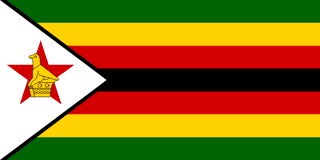
The Zimbabwean flag has a 1:2 aspect ratio, composed of seven equal horizontal stripes: green, yellow, red, black, red, yellow, and green from top to bottom. On the hoist side is a white isosceles triangle containing a red five-pointed star with the Zimbabwe Bird, a yellow silhouette, superimposed on it. The combination of the seven colorful stripes and the white triangle with the red star makes this flag one of the most visually intricate among African nations.
Meaning
Green represents the land, agriculture, and vegetation; yellow symbolizes the country’s mineral wealth, especially gold and platinum; red stands for the blood shed during the struggle for independence; and black represents the majority Black population. The white triangle signifies peace, the red star embodies the nation’s aspirations and internationalism, and the Zimbabwe Bird is the central element—taken from a soapstone carving found at Great Zimbabwe, symbolizing the achievements of ancient African civilization and the country’s historical continuity.
History and Legal Status
The current flag was adopted on April 18, 1980, Independence Day, replacing the previous Rhodesian flag. Its design incorporated public submissions and expert reviews, making it one of the few flags of a newly independent African nation created through collaborative effort. The Zimbabwe Bird, found at Great Zimbabwe, includes eight soapstone carvings. Some were taken to South Africa by colonists but were repatriated after independence. Their return became a key moment in the narrative of national sovereignty—one bird remains on display at the Parliament building. Flag law mandates its display at government buildings, schools, during Independence Day celebrations (April 18), and at official events. The Zimbabwe Bird also appears on the coat of arms, currency, and official emblems, serving as a core national symbol.
Zimbabwe Travel Guide
All Guides »Zimbabwe Travel Quick Guide: e-Visa, Seasons, Budget & Safari Etiquette
Before the waterfalls and safaris: how to apply for an e-visa, carry US cash, an...
Classic 7-Day Zimbabwe Itinerary: Harare — Great Zimbabwe — Matobo — Hwange — Victoria Falls 7 days
Travel from the highland capital south and north: explore the Stone City, rock a...
Zimbabwe 4-Day Short Trip: Full Experience in Victoria Falls Town 4 Days
Experience the world’s largest curtain of falling water in four days: walk along...
Must-visit attractions in Zimbabwe: waterfalls, elephant herds, Great Zimbabwe, and rock art
Two UNESCO World Heritage Sites and two national parks form the backbone, comple...
A Guide to Zimbabwean Cuisine: Sadza, Mopane Worms, and Highland Steaks
The foundation is sadza, a staple made from maize meal served with peanut sauce ...
Zimbabwe Transport Guide: Domestic Flights, Long-Distance Buses, and Cross-Border Bridges
The over 1,000-kilometer journey from Harare to Victoria Falls makes understandi...
10 Practical Tips for Traveling in Zimbabwe
US Dollar Cash, Safari Safety & Border Transfers – 10 Practical Tips for Visitin...