Uruguay
One of South America’s countries with the highest quality of life, known for its tranquil beaches, colonial old towns, barbecue culture, and yerba mate traditions. It enjoys social stability and moderate prices.
Uruguay (Eastern Republic of Uruguay)
| Capital | Montevideo |
|---|---|
| Continent | South America |
| Languages | Spanish |
| Currency | Uruguayan Peso (UYU $U) |
| Time Zone | UTC-3 |
| Dialling Code | +598 |
| Area / Population | Approximately 176,000 square kilometers / Approximately 3.4 million |
| Visa | Most foreign visitors need to apply for a visa in advance to visit Uruguay. Applications can be submitted to the Uruguayan Embassy or Consulate in your own country, or through authorized visa agencies, and must include a travel itinerary, accommodation details, and proof of sufficient funds. When entering overland via Argentina or Brazil, ensure your passport and visa are valid. |
| Best Season | December to February is summer in the Southern Hemisphere, ideal for beach holidays; March to May and September to November have mild weather and fewer tourists, making them great for city and countryside exploration. |
| Main Cities | Montevideo, Punta del Este, Colonia del Sacramento, Piriápolis, Salto, La Paloma, Punta del Diablo, Rocha |
Uruguay in Detail
Overview of Uruguay
Uruguay (officially the Eastern Republic of Uruguay) is located in the southeastern part of South America, bordered by Brazil to the north, separated from Argentina by the Uruguay River to the west, and facing the Atlantic Ocean to the southeast. The country covers an area of approximately 176,000 square kilometers, making it one of the smaller nations in South America. Its capital, Montevideo, is situated on the northern bank of the Río de la Plata estuary and accounts for about half of the country’s metropolitan population. It serves as Uruguay’s political, economic, cultural, and port hub.
Uruguay is a presidential republic and one of the most socially stable and institutionally mature countries in South America. It consistently ranks among the top in Latin America in terms of democracy index, transparency, and quality of life, often referred to as the “Switzerland of South America.”
Geography and Climate
Uruguay’s terrain is mainly characterized by gentle hills and grasslands, with the country’s highest point reaching only about 514 meters—there are no high mountains or deserts. The northern border with Brazil features rolling pastures, while the southern region along the Río de la Plata and the Atlantic Ocean boasts long stretches of riverbanks and beaches. The eastern area of Rocha Province includes a mix of bays, sand dunes, and wetlands, making it a popular spot for holidays and whale watching.
The climate is temperate and humid, with distinct seasons: summers (December to February) are warm, with temperatures ranging from 25–35°C, making it peak beach season; autumn (March to May) and spring (September to November) are mild and pleasant; winters (June to August) are damp and cool, with temperatures around 5–15°C. Rainfall is fairly evenly distributed throughout the year, with spring, autumn, and summer offering the best travel experiences.
Historical Background
Uruguay was originally inhabited by indigenous peoples such as the Charrúa. In the 16th century, Spain and Portugal successively entered the region. In 1726, the Spanish established Montevideo to counter Portugal’s stronghold in Colonia. In the early 19th century, national hero José Gervasio Artigas led the independence movement. Uruguay declared independence from Brazil in 1825 and was officially established as a nation in 1828. Since then, the Colorado and Blanco parties have alternated in power for many years. In the early 20th century, under the leadership of Batlle y Ordóñez, a series of social reforms were implemented, including the early establishment of secularism, the eight-hour workday, and social security systems.
From 1973 to 1985, Uruguay experienced military rule before returning to democracy in 1985. Between 2010 and 2015, President José Mujica gained international attention for his modest lifestyle and progressive social policies. Today, Uruguay is known for its stable democratic system and open, inclusive social environment.
Economy and Currency
Uruguay’s economy is driven by agriculture, pulp and forestry, tourism, and software services. Key exports include beef, soybeans, and pulp. The country is a global leader in energy transition, with renewable energy sources such as wind, hydro, and solar accounting for over 90% of its energy mix. The official currency is the Uruguayan Peso (UYU), which remains relatively stable. While the US dollar is widely accepted in the tourism sector, everyday transactions are typically conducted in pesos.
Culture and Society
Uruguay is a highly secular society. It adopted the separation of church and state in the early 20th century and has since legalized civil unions and recreational marijuana nationwide (in 2013), making it one of Latin America’s most socially liberal countries. Culturally, Montevideo and Buenos Aires jointly gave birth to tango, and the country preserves traditional music styles such as candombe drumming and murga satirical theater. Its Carnival, lasting over 40 days, is among the longest in Latin America.
In daily life, yerba mate is the national drink, often enjoyed by people carrying thermoses and drinking from gourds in streets, parks, and at the beach. Barbecue (asado) is central to weekend family meals, and Montevideo’s Port Market (Mercado del Puerto) is a renowned spot for grilled meats. Beef, cheese, dulce de leche (caramelized milk spread), and chivito sandwiches are staples of the local diet.
Tourism Overview
Uruguay stands out for its tranquility, safety, and value for money. Montevideo offers city explorations with its historic old town, Independence Square, Port Market, and seaside promenade. Punta del Este in the east is a renowned South American resort destination, famous for its Hand of the Sea sculpture and upscale beaches. Colonia del Sacramento in the west is a well-preserved Portuguese colonial town, designated a UNESCO World Heritage Site in 1995. Salto in the north has hot springs, while Rocha Province in the east features sand dunes, fishing villages, and whale-watching spots. With convenient transportation and good public safety, it makes a great extension to an Argentine trip or a standalone slow-travel destination.
Local Currency: Uruguayan Peso (UYU)
Currency Overview
The official currency of Uruguay is the Uruguayan Peso (Peso uruguayo), with the currency code UYU and symbol $U or $. One peso is divided into 100 centésimos and is issued by the Central Bank of Uruguay (Banco Central del Uruguay). Unlike some of its volatile neighboring currencies in South America, the Uruguayan Peso has remained relatively stable over the long term, with moderate exchange rate fluctuations, making it one of the more reliable currencies in the region. Due to Uruguay’s stable economic and financial system, its sovereign credit rating has consistently ranked high within the region. During times of currency instability in neighboring countries, the Peso is often seen as a more stable option.
Denominations
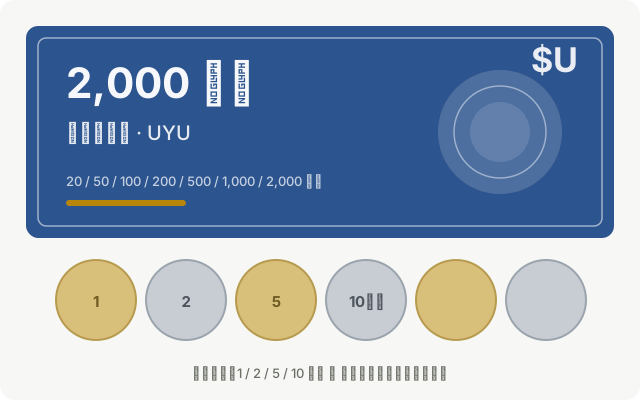
Currently circulating banknotes come in denominations of 20, 50, 100, 200, 500, 1,000, and 2,000 pesos. The front features portraits of Uruguayan scientists, artists, and politicians, while the back depicts themes related to their contributions. Coins are available in 1, 2, 5, and 10 pesos, as well as 50 centésimos. Due to the prevalence of electronic payments for small purchases, coins are less commonly used in daily life but may still be needed in supermarkets and on buses. In recent years, Uruguay has issued new editions of banknotes with enhanced anti-counterfeiting features. Both new and old versions circulate interchangeably during the transition period and remain valid.
Cash and Payment Habits
Uruguay is one of the most cashless societies in Latin America. Debit and credit cards are widely accepted in supermarkets, restaurants, and gas stations, and locals commonly use debit cards and mobile banking. Tourists can easily use cards at hotels, restaurants, and large shopping malls, but smaller shops, market stalls, and buses often deal primarily in cash. While US dollars are often accepted in the tourism sector—especially in resort areas like Punta del Este—change and settlements are usually given in pesos, and the exchange rate may not be favorable.
Traveler Tips
- ATMs are readily available in urban areas and airports, dispensing both pesos and US dollars. Be aware of your bank’s transaction fees.
- Credit and debit cards are widely used in resort areas and the capital, but carry enough cash for remote regions.
- Most businesses display prices clearly, and service charges are usually included in the bill. Tipping is optional but appreciated for good service.
- Before leaving the country, you can exchange leftover pesos back to US dollars at airports or banks.
Flag Meaning
Flag Design
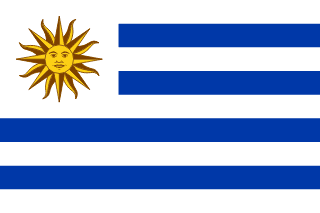
The flag of Uruguay consists of nine equal horizontal stripes alternating between white and blue—five white and four blue. The top left corner (the canton) is white and features a golden Sun of May (Sol de Mayo). The flag has a 2:3 width-to-length ratio. The Sun of May has sixteen rays, alternating between straight and wavy.
Meaning
The blue and white colors originate from the cockade used during Argentina’s May Revolution, symbolizing the pursuit of independence and freedom. The nine horizontal stripes represent the nine original departments (provinces) of Uruguay at the time of its founding. The white canton stands for republicanism and peace, while the golden Sun of May commemorates the May Revolution of 1810 in Buenos Aires, symbolizing the dawn of liberty. The alternating straight and wavy sun rays represent the spread of light and hope across the land.
History and Legal Status
Uruguay initially used a simple blue-and-white striped flag. After gaining independence in 1828, it briefly used a version with more stripes, but in 1830, the design was officially revised to feature nine stripes and the Sun of May, establishing the flag still in use today. Minor adjustments have been made since then, mainly to color standards and manufacturing specifications. The number of stripes was set at nine to reflect the original nine provinces. Even though more provinces have been added over time, the number of stripes has remained unchanged as a historical tribute to the early administrative divisions. Today, the flag is widely displayed at government buildings, sporting events, and on National Day (August 25), serving as a key symbol of national identity alongside the national anthem.
Uruguay Travel Guide
All Guides »Uruguay Travel Quick Guide: Visas, Seasons, Budgets, and Social Etiquette
Visas, seasons, budgets, and mate culture — everything you need to know before p...
Uruguay 7-Day Classic Route: Montevideo – Colonia – East Coast 7 days
The capital’s historic center, a UNESCO-listed colonial town, and South America’...
Uruguay 4-Day Short Trip: Montevideo and Nearby Coastal Towns 4 days
Even with just 4 days, you can enjoy a relaxed trip: base yourself in the capita...
Essential Attractions in Uruguay: Capital City, UNESCO Sites, and the East Coast
Explore by region—from Montevideo’s plazas and markets to the colonial old town ...
Uruguay Food Guide: Parrilla Grilled Meat, Chivito, and Mate Tea
From charcoal-grilled meats to the national sandwich and everyone’s favorite mat...
Uruguay Transport Guide: Intercity Buses, Ferries, and City Transit Passes
Intercity buses connect the whole country, and ferries go straight to Buenos Air...
10 Practical Tips for Traveling in Uruguay
Visa, accommodation, public transport cards, and mate etiquette—this checklist w...