United Kingdom
An island nation composed of England, Scotland, Wales, and Northern Ireland, renowned for its monarchical traditions, world-class museums, castles, and Highland landscapes, it is one of Europe’s most popular travel destinations.
United Kingdom (The United Kingdom of Great Britain and Northern Ireland)
| Capital | London |
|---|---|
| Continent | Europe |
| Languages | English |
| Currency | British Pound (GBP £) |
| Time Zone | UTC+0 to UTC+1 |
| Dialling Code | +44 |
| Area / Population | Approximately 244,100 square kilometres / Approximately 68 million |
| Visa | Most foreign visitors need to apply for a Standard Visitor Visa in advance to visit the UK. Complete the online application form and provide fingerprints and a photo at a visa center. The visa generally allows stays of up to 6 months. It is recommended to allow at least three weeks for processing, and apply even earlier during peak seasons. |
| Best Season | The best travel season is from May to September when the climate is mild and daylight hours are very long. July and August are peak months with significantly higher hotel and train ticket prices. Visiting in April–May or September–October offers fewer crowds and more stable prices. |
| Main Cities | London, Edinburgh, Manchester, Liverpool, Oxford, Cambridge, Bath, York, Scottish Highlands |
United Kingdom in Detail
Overview of the UK
The United Kingdom (UK), officially the United Kingdom of Great Britain and Northern Ireland, is an island nation located off the northwest coast of mainland Europe. It comprises England, Scotland, and Wales on the island of Great Britain, along with Northern Ireland in the northeast of the island of Ireland, covering a total area of approximately 244,100 square kilometres. To the east lies the North Sea, to the south the English Channel separates it from France, and to the west the Atlantic Ocean and Irish Sea, sharing a land border with the Republic of Ireland. The capital, London, situated on the River Thames in southeastern England, is the national centre of politics, finance, culture, and transportation, as well as one of the world’s most important global cities, with a metropolitan population of around ten million.
The UK is a constitutional monarchy. The monarch is the head of state, while executive power is held by the Cabinet and Prime Minister. Parliament consists of the House of Lords and the House of Commons and is the birthplace of the modern parliamentary system. The country is made up of four constituent countries: England, Scotland, Wales, and Northern Ireland, each with varying degrees of autonomy in areas such as judiciary, education, and some aspects of legislation. The Scottish Parliament and Welsh Parliament have the broadest powers.
Geography and Climate
The UK’s terrain is mainly hilly and low mountainous. The Pennines stretch across northern England, while the Scottish Highlands and the Snowdonia region of Wales feature the most rugged landscapes. The highest peak is Ben Nevis (1,345 metres). The country has an extensive river network, with the Thames, Severn, and Clyde rivers serving both transport and scenic purposes. The Prime Meridian at Greenwich in London marks the starting point of global time zones.
The climate is temperate maritime, generally mild and moist year-round, without extreme cold in winter or heat in summer. Temperatures fluctuate gently, but the weather is highly changeable, with sunshine, cloud, and rain often occurring within a single day. Influenced by the North Atlantic Drift, winter temperatures are generally higher than in other regions at similar latitudes. Rainfall increases the further north and west you go, with the Scottish Highlands and Wales receiving the most annual precipitation. In summer, days are extremely long — in late June, it can still be light in London at 9 or 10 pm. In winter, it gets dark around 4 pm. A compact umbrella and layered clothing are almost essential for travel.
Historical Background
The British Isles were originally inhabited by Celts. In 43 AD, the Roman Empire conquered England and ruled for nearly four hundred years, leaving behind relics such as Hadrian’s Wall and the Roman Baths in Bath. After the Romans withdrew, Anglo-Saxon peoples gradually migrated in, forming multiple kingdoms. In 1066, William the Conqueror, Duke of Normandy, invaded England, introducing feudalism and French culture, which profoundly shaped the UK’s language and aristocratic traditions. The Magna Carta of 1215 established the principle that royal power was subject to the law and is regarded as a key source of modern legal governance.
Since then, the UK experienced the religious reforms of the Tudor dynasty and overseas expansion during the Elizabethan era. In 1603, England and Scotland entered a personal union, and in 1707, the Acts of Union formally unified them into the Kingdom of Great Britain. In 1801, Ireland also joined the union. During the Victorian era of the 19th century, the UK completed the Industrial Revolution and became the world’s leading power, known as the empire on which the sun never sets. After the two world wars in the 20th century, its colonial system gradually disintegrated. It joined the European Economic Community in 1973, voted to leave the EU in a 2016 referendum, and officially exited in 2020. Following the death of Queen Elizabeth II in 2022, King Charles III ascended the throne.
Economy and Currency
The UK is one of the world’s leading developed economies. Its financial services, insurance, legal sector, creative industries, biomedicine, aerospace, and higher education rank among the best globally. The City of London and Canary Wharf are key hubs of international finance. The official currency is the British Pound (GBP, symbol £), issued by the Bank of England, where 1 pound equals 100 pence. The UK is not part of the eurozone and continues to use the pound, so currency arrangements for the UK differ completely from those for France or Germany, requiring separate preparation and exchange for cross-border travel.
Culture and Society
British culture blends tradition and innovation: the monarchy and royal ceremonies, parliamentary debates, afternoon tea, country estates, theatres, and literary traditions represent the classical side, while The Beatles and British rock, football and Wimbledon tennis, contemporary art and design, film, and gaming industries reflect the modern aspect. Writers such as Shakespeare, Dickens, and Austen, along with bands like The Beatles and The Rolling Stones, have helped shape the UK’s cultural image worldwide.
Society is orderly, with a deeply rooted culture of queuing. Politeness is valued in public spaces, and phrases like “please,” “thank you,” and “sorry” are common in daily conversation. Pubs are important social venues, and the culture of Sunday roasts and beer during sports matches is especially typical. The UK is a multi-ethnic society, with diverse neighbourhoods in London, Birmingham, and Manchester home to communities from South Asia, the Caribbean, Africa, and East Asia, contributing to a rich culinary scene.
Tourism Overview
The UK offers a dense and varied range of tourism resources: London is home to world-class landmarks such as the British Museum, National Gallery, Tate Modern, London Eye, and Buckingham Palace; Edinburgh is famous for its castle, Royal Mile, and August arts festival; Oxford and Cambridge showcase the academic charm of historic university towns; cities like Bath, York, and Canterbury preserve Roman and medieval heritage; Stonehenge and Hadrian’s Wall carry prehistoric and imperial history; the Scottish Highlands, Loch Ness, and the Isle of Skye are paradises for road trips and hiking. The national rail network is highly developed, making train travel between cities convenient, though prices vary widely and booking early is key to saving money.
Local Currency: British Pound (GBP)
Currency Overview
The official currency of the UK is the British Pound (currency code GBP, symbol £, commonly called pound sterling), issued by the Bank of England, where 1 pound equals 100 pence (pence, singular: penny). The pound is one of the oldest major currencies still in use and is also an important international reserve and foreign exchange trading currency. The UK has been part of the European Community since 1973 and participated in the European Monetary System for a long time but never adopted the euro. After the 2016 Brexit referendum, it confirmed its retention of the pound, making it one of the few European countries not using the euro. Separate currency preparation is needed for travel to the UK compared to France or Germany.
Denominations
The Bank of England issues four denominations of polymer (plastic) banknotes in circulation: £5, £10, £20, and £50. These plastic notes are waterproof, durable, and more resistant to counterfeiting. The £5 note features Winston Churchill, the £10 note features author Jane Austen, the £20 note features painter J.M.W. Turner, and the £50 note features mathematician Alan Turing. Plastic notes can be touched and folded without easily tearing like paper notes, but should not be exposed to prolonged sunlight or heat sources.
Coin denominations include 1p, 2p, 5p, 10p, 20p, 50p, £1, and £2. The £1 coin is dodecagonal for easy identification by the visually impaired. Each coin denomination features different designs on the reverse, including the Royal Shield, plants, and regional symbols. Note that several commercial banks in Scotland and Northern Ireland are also authorised to issue their own banknotes, which differ in design from Bank of England notes. These are legally accepted throughout the UK, though smaller shops in England may occasionally refuse them due to unfamiliarity. It is advisable to avoid carrying too many Scottish or Northern Irish notes when travelling south.
Cash and Payment Habits
The UK is one of the most cashless societies in the world. Contactless payments and mobile payments (Apple Pay, Google Pay) work almost everywhere — in supermarkets, cafés, buses, and the tube. You can even tap your overseas bank card or phone directly at London Underground gates. Merchants are less likely to accept large cash payments, and some shops do not take cash at all. Carrying a small amount of cash is enough for small taxi rides, markets, and rural shops.
Foreign currency can be exchanged at banks, airports, and authorised exchange bureaus in city centres. Airport counters typically offer poor exchange rates, while post offices and professional exchange chains in town are often better. ATM withdrawals may incur fees, with some machines charging separately by operators — always check the screen prompts before withdrawing. The UK shopping tax refund system has undergone recent changes. Duty-free shopping at airports must be processed at designated stores and according to specified procedures. Check the latest regulations for details.
Traveler Tips
- The UK does not use the euro. France and Germany do — prepare both currencies or use a bank card when travelling between the UK and EU countries.
- UK coins come in many types and similar sizes. Check the value carefully when paying, as change often includes multiple coins.
- Banknotes from Scotland and Northern Ireland may be refused by smaller shops in England. Try to exchange them for Bank of England notes.
- Most Tubes and buses support contactless bank cards for direct gate entry — there’s no need to buy a separate travel card.
- Tipping is not mandatory in the UK. Restaurant bills may already include a service charge. If not, around 10% is customary.
Flag Meaning
Flag Design
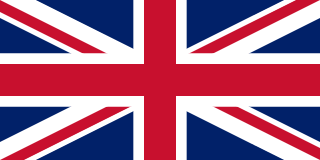
The UK flag is commonly known as the Union Jack, and its official name is the Union Flag. The flag has a dark blue background with three sets of crosses overlaid: in the centre is a white-edged red upright cross, representing the Cross of St George of England; above it is a white diagonal cross on a blue background, representing the Cross of St Andrew of Scotland; and there is also a white-edged red diagonal cross, representing the Cross of St Patrick of Ireland. These three crosses overlap with white borders, forming the unique Union Jack pattern. The flag’s proportions when flown on land are 1:2, while the version used by the Royal Navy and flown from the bows of warships is 3:5.
Meaning
The pattern of the Union Jack itself tells a story of unification: the upright cross represents England, the white diagonal cross represents Scotland, and the red diagonal cross represents Ireland. Together, they symbolise the unity and coexistence of the UK’s constituent parts. The blue background comes from the Scottish flag, while the red and white colour scheme continues the tradition of the English flag. Because the three crosses are not perfectly symmetrical, slight directional differences exist, and care should be taken when hoisting the flag. Flying the flag upside down is traditionally seen as a signal of distress or protest.
History and Legal Status
In 1606, during the personal union of England and Scotland, the two crosses were first combined to form the original Union Flag. In 1801, after Ireland joined the United Kingdom, the Cross of St Patrick was added, establishing the design still in use today. The Union Jack was widely spread throughout the British Empire and remains visible in the top-left corners of flags of countries such as Australia, New Zealand, Fiji, and Tuvalu, serving as a visual link to the Commonwealth’s historical ties.
In UK law, the Union Jack is not defined by a single statute but has gained its status as a national symbol through long-standing convention and royal proclamations. The public is free to use and display it without permission. Wales is not individually represented on the Union Jack, though its Red Dragon flag is widely used within Wales. Today, the Union Jack is one of the most iconic symbols of British national identity, especially during royal celebrations, national holidays, and sporting events, and is one of the most familiar elements of the UK for tourists worldwide.
United Kingdom Travel Guide
All Guides »UK Independent Travel Quick Guide: Visas, Best Seasons, Budget, and Local Etiquette & Taboos
UK visas and Schengen visas are two separate systems. What’s the most comfortabl...
Classic 7-Day UK Itinerary: London – Cambridge – York – Edinburgh – Scottish Highlands 7 days
Connect England’s cities, historic university towns, medieval streets, and the S...
4-Day Short Trip in the UK: In-Depth Exploration of Central London by District Without Detours 4 Days
Even with limited time, you can fully experience London: by dividing attractions...
Complete list of must-visit attractions in the UK: London landmarks, historic cities, and Scottish Highlands scenery
Explore the top attractions in the UK by city and region, covering London landma...
The Ultimate Guide to British Cuisine: Fish and Chips, Sunday Roast, and Afternoon Tea Explained
British food is far more than just "mystery meat": from pub mains to market snac...
The Ultimate Guide to Transportation in the UK: A Complete Breakdown of the Tube, Trains, and Airport Transfers
Understand the UK’s metro zoning fares, the three types of train tickets, and th...
10 Essential Travel Tips for the UK: Weather, Train Tickets, and Money-Saving Hacks
Bringing the right rain gear, buying the correct train tickets, and avoiding Sun...