Mongolia
A landlocked country in Central Asia, renowned for its vast grasslands, Gobi Desert, nomadic traditions, and the Naadam Festival. The homeland of Genghis Khan still preserves a lifestyle of following water and grass.
Mongolia
| Capital | Ulaanbaatar |
|---|---|
| Continent | Asia |
| Languages | Mongolian |
| Currency | Mongolian tögrög (MNT ₮) |
| Time Zone | UTC+8 |
| Dialling Code | +976 |
| Area / Population | Approximately 1.564 million square kilometers / Approximately 3.4 million |
| Visa | Most foreign visitors need a visa to visit Mongolia. Tourist visas can be applied for through Mongolian embassies or consulates in your own country or via designated channels, generally requiring proof of itinerary and accommodation. Visa requirements and procedures have evolved in recent years. For specific visa types, required documents, and permitted lengths of stay, please refer to the latest information provided by the relevant embassy, consulate, or official government sources. It is recommended to apply 2–3 weeks in advance. |
| Best Season | The most comfortable climate and greenest grasslands are from June to September, with the Naadam Festival reaching its peak around July 11. May and late September are less crowded and more affordable. Winters are extremely cold, suitable for experiencing ice and snow as well as winter festivals. |
| Main Cities | Ulaanbaatar, Terelj National Park, Kharkhorin, Lake Khövsgöl, Dalanzadgad, Orkhon Valley, Altai Tavan Bogd |
Mongolia in Detail
About Mongolia
Mongolia (Mongolian: Монгол Улс) is a landlocked country in Central Asia, bordered by Russia to the north and China to the south, east, and west. Covering an area of approximately 1.564 million square kilometers, it is the world’s second-largest landlocked country and one of the countries with the lowest population density. With a population of about 3.4 million, nearly half live in the capital, Ulaanbaatar, where urbanization coexists with traditional nomadic life on the grasslands. Mongolia is a parliamentary republic, with the president as the head of state. The prime minister, appointed by the unicameral State Great Khural, holds executive power. The country is divided into the capital, Ulaanbaatar, and 21 provinces (aimag), each further subdivided into districts (sum). The majority of the population is ethnically Mongol, with minority groups including Kazakhs and Dörvöds. The official language is Mongolian, which is primarily written in Cyrillic script, while efforts are underway to restore the traditional vertical Mongolian script.
Situated between China and Russia, Mongolia has long pursued a balanced foreign policy. With abundant mineral resources and a unique nomadic culture, it holds a distinctive place on the world stage.
Geography and Climate
Mongolia lies on the Mongolian Plateau, with an average elevation of about 1,580 meters. The terrain slopes from northwest to southeast. The Altai Mountains in the west and southwest include Mongolia’s highest peak, Khüiten Peak (Friendship Peak), at 4,374 meters. The central region features the Khangai and Khentii mountain ranges, which are the source of many rivers. The southern part extends into the vast Gobi Desert. Major rivers include the Selenge, Orkhon, and Kherlen. Lake Khövsgöl, one of Asia’s deepest freshwater lakes, is known for its clear waters and is called Mongolia’s Blue Pearl.
Mongolia has a typical continental climate, with long, harsh winters. January temperatures can drop as low as -20 to -30°C, and extreme lows below -40°C have been recorded in some areas. Summers are short and mild, with July being the hottest month. Precipitation decreases from north to south, with northern grasslands receiving about 300 mm annually and the southern Gobi less than 100 mm. Ulaanbaatar is one of the coldest capitals in the world, often experiencing smog in winter. Large diurnal temperature variations are common year-round, and even in summer, grassland nights can drop below 10°C.
Historical Background
The Mongolian Plateau has long been a stage for nomadic peoples. The Xiongnu, Xianbei, Rouran, Turkic peoples, and Uyghurs rose and fell here, leaving behind relics such as deer stones, stone figures, and Turkic inscriptions. In 1206, Temüjin united the tribes and was proclaimed Genghis Khan, founding the Mongol Empire. At its height, the empire spanned Eurasia, profoundly influencing world history. Kublai Khan established the Yuan Dynasty with its capital at Dadu (modern-day Beijing). After the fall of the Yuan, Mongolia retreated to the grasslands, known historically as the Northern Yuan. In the 17th century, the Khalkha Mongols gradually submitted to the Qing Dynasty, and by the 18th century, the entire region was incorporated into the Qing realm.
When the Qing Dynasty collapsed in 1911, Mongolia declared independence. The Mongolian People’s Republic was established in 1924, becoming the world’s second socialist country. In the early 1990s, Mongolia peacefully transitioned to a multiparty democracy and market economy. A new constitution was adopted in 1992, and the country was renamed Mongolia. This journey from a steppe empire to a modern nation has shaped a society that values tradition while actively engaging with the world.
Economy and Currency
Mongolia’s economy is highly dependent on mining and animal husbandry, earning it the titles of “mineral-rich country” and “land of herders.” The country boasts abundant mineral resources, with the Oyu Tolgoi copper-gold mine and the Tavan Tolgoi coal mine as major projects. Copper, coal, gold, fluorspar, and zinc make up the majority of exports, with China being Mongolia’s largest trading partner and export destination. Animal husbandry is the traditional economic base, with livestock including sheep, goats, cattle, horses, and camels. Cashmere is an important export. Ulaanbaatar concentrates most of the country’s industry and services and also attracts many herders moving from the grasslands to the city.
Mongolia’s economic development is closely tied to global commodity prices, resulting in noticeable fluctuations. The official currency is the Mongolian tögrög (MNT, symbol ₮), issued by the Bank of Mongolia. Exchange rates fluctuate with international markets, so travelers should check the rate on the day of their trip.
Culture and Society
Mongolian culture centers on nomadic traditions, emphasizing freedom, resilience, and hospitality. The Naadam Festival, held around July 11, is the country’s most important celebration, featuring the “Three Manly Games” of wrestling, horse racing, and archery. The opening ceremony includes performances of the morin khuur (horsehead fiddle) and traditional throat singing (khoomei) and long songs. Tibetan Buddhism has a profound influence in Mongolia, with monasteries such as Gandan Monastery serving as key religious sites. Shamanic traditions also persist among the people. The ger (yurt) is a symbol of nomadic life, while White Month (Tsagaan Sar) and Naadam are two of the most important festivals. The diet is meat- and dairy-based, with milk tea, airag (fermented mare’s milk), and boiled meat forming the staples. Mongolian long songs, khoomei, and morin khuur music, along with Naadam-related traditional skills, are listed by UNESCO.
Tourism Overview
Mongolia’s appeal lies in its vast natural landscapes and authentic nomadic life. Ulaanbaatar is home to Gandan Monastery, Sükhbaatar Square, and the statue of Genghis Khan on horseback. The nearby Terelj National Park is easily accessible for short trips. Kharkhorin and Erdene Zuu are historical centers of the Mongol Empire. Northern Lake Khövsgöl is famous for its clear waters and forests, and visitors can meet the Tsaatan reindeer herders. The southern Gobi features wonders such as the Flaming Cliffs of Bayanzag, the Khongoryn Els sand dunes, and the Yolyn Am glacier valley. Naadam is the best time to experience Mongolian culture. Due to the long distances and challenging road conditions between attractions, private car hire or joining local tours is common, and staying in a ger camp on the grassland is a must for many travelers.
Local Currency: Mongolian tögrög (MNT)
Currency Overview
The official currency of Mongolia is the Mongolian tögrög (currency code: MNT, symbol: ₮). One tögrög is equal to 100 möngö, but due to long-term inflation, möngö have largely disappeared from circulation, and the smallest unit used in daily transactions is 1 tögrög. The tögrög is issued by the Bank of Mongolia (Монголбанк). Since its introduction in 1925, the currency has undergone several reforms and denomination adjustments. The current version consists of a system of banknotes and coins established after social and economic stabilization, and it is the only legal tender in Mongolia. Because Mongolia’s economy is closely linked to mineral exports, the tögrög experiences relatively noticeable exchange rate fluctuations against the US dollar and other major currencies. The timing of currency exchange can impact travel budgets, so it’s advisable to compare rates at multiple providers before exchanging large amounts.
Denomination System
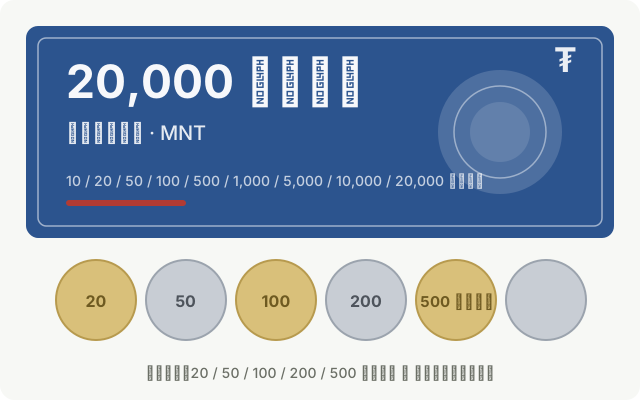
Currently circulating banknotes include denominations of 10, 20, 50, 100, 500, 1,000, 5,000, 10,000, and 20,000 tögrög. The 20,000 tögrög note is the highest denomination, while 1 and 5 tögrög notes have long been discontinued. Banknote designs feature themes of national history and culture, with portraits of Genghis Khan, revolutionary leader Sükhbaatar, and traditional Mongolian patterns on the front, and images of grasslands, monuments, and ethnic motifs on the back. Each denomination is color-coded for easy identification.
Coin denominations in circulation are 20, 50, 100, 200, and 500 tögrög, with varying materials and sizes. There are also smaller coins of 20, 50, and 100 möngö, but these are mostly for collectors. Due to the wide range of denominations, from a few dozen tögrög to 20,000 tögrög, it’s important to pay attention to the color and numbers on banknotes to avoid overpayment or calculation errors. Although möngö coins are nominally still legal tender, they are no longer used in actual transactions. Merchants price and give change exclusively in tögrög, and möngö coins received can generally only be kept as souvenirs.
Cash and Payment Habits
Mongolia is a cash-dependent society, especially in rural areas, ger camps, markets, taxis, and small restaurants, where cash is almost always required. In Ulaanbaatar, international credit cards such as Visa and Mastercard are accepted in hotels, malls, chain restaurants, and some souvenir shops. UnionPay cards can be used at some ATMs, but availability is limited. Locals commonly use mobile payment methods like QPay and SocialPay, which usually require a local phone number and bank account, making them less accessible to short-term travelers.
It is recommended to exchange enough cash in Ulaanbaatar at banks, airports, or authorized exchange points. Before traveling to remote areas like the Gobi or Khövsgöl, ensure you carry sufficient cash, as ATMs may be unavailable and some camps do not accept card payments. When exchanging money, compare rates at banks and authorized street exchange points—the latter sometimes offer better rates but choose reputable, clearly priced providers. Airport exchange rates are usually less favorable than those in the city; if not urgent, exchange money after arriving in town. Most ATMs have withdrawal limits per transaction, so for larger amounts, make multiple withdrawals and be aware of your bank’s fees.
Traveler Tips
- Tögrög exchange rates fluctuate significantly. It’s advisable to exchange in smaller amounts and keep exchange receipts for verification.
- Credit cards are not accepted in remote areas. Carry enough cash based on the length of your trip.
- Some merchants may refuse torn or damaged banknotes. Select clean bills when exchanging money.
- Mongolia does not have a strong tipping culture. However, it’s customary to give a small token of appreciation to drivers and guides based on the length of the trip.
Flag Meaning
Flag Design
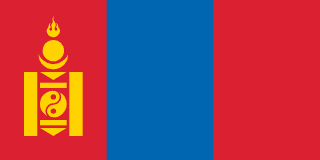
The Mongolian flag consists of three vertical bands of equal width in red, blue, and red. The hoist side and the outer side are red, while the center is blue, with a 1:2 aspect ratio. On the upper left red band, centered near the top, is a yellow Soyombo symbol. The Soyombo is composed of geometric shapes representing fire, sun, moon, arrows, and rectangles arranged from top to bottom. It is Mongolia’s most iconic traditional emblem and the only specific graphic on the flag. The combination of the red-blue-red bands and the yellow symbol is simple yet dignified, making the flag highly recognizable on the grasslands.
Meaning
Red symbolizes progress and prosperity, as well as the history of Mongolia’s struggle for independence and revolution. Blue represents the Eternal Blue Sky, symbolizing the eternal heavens and loyalty, and is the most important spiritual symbol of the Mongolian people. Yellow (gold) signifies nobility and abundance. The elements of the Soyombo also carry specific meanings: the three flames at the top represent the past, present, and future, signifying continuity and prosperity. Below them, the sun and moon symbolize the everlasting existence of Mongolia. The downward-pointing triangles and arrows signify defense against enemies and determination. The rectangles on the sides represent honesty, justice, and equality for all citizens. The central yin-yang symbol represents balance, harmony, and vigilance. Together, the flag reflects the nomadic people’s understanding of the universe, the nation, and unity.
History and Legal Status
The Soyombo symbol originated from the script and seal system created by the 17th-century Mongolian Buddhist monk Zanabazar and later became a national and cultural emblem. After the 1921 Mongolian Revolution, the Soyombo was used on flags. When the Mongolian People’s Republic was established in 1924, a five-pointed star was added above the Soyombo. On February 12, 1992, the new Mongolian constitution came into effect, removing the star and restoring the red-blue-red design with the Soyombo, which has been in use ever since.
The proportions, colors, and display regulations of the Mongolian flag are stipulated by the Mongolian Flag Law. Government institutions, schools, and major holidays must raise the flag in accordance with the regulations, and its design or proportions must not be altered arbitrarily. Today, the flag is widely displayed during the Naadam Festival, at government buildings, overseas embassies and consulates, and at sporting events, serving as the most visible symbol of Mongolian national identity.
Mongolia Travel Guide
All Guides »Mongolia Solo Travel Quick Guide: Visa, Season, Budget & Grassland Etiquette
How to prepare your visa, what’s the best time to visit, how much you’ll spend p...
Mongolia 7-Day Classic Itinerary: Ulaanbaatar, Terelj, Kharkhorin, and the South Gobi 7 days
From the capital’s history to the wonders of the grassland’s strange rocks, then...
4-Day Short Trip in Mongolia: Highlights of Ulaanbaatar City and Terelj Grassland 4 days
Experience Mongolia even on a short holiday: Use the capital as your base, split...
Essential Attractions in Mongolia: Gandan Monastery, Terelj, Kharkhorin, and the South Gobi
Organized by direction—capital city, nearby suburbs, northern & western regions,...
A Guide to Mongolian Cuisine: How to Eat Buuz, Stone-Cooked Meat, and Steppe Dairy Delights
Mongolian meals revolve around meat and dairy. From street-side fried meat pies ...
Mongolia Transportation Guide: Getting from the Airport to the City, Taxis within the City, and Private Vehicle Hire for the Grasslands
Getting from Chinggis Khaan International Airport to the city, hailing taxis wit...
10 Practical Tips for Traveling in Mongolia: From Cash to Grassland Etiquette
Bring enough cash, dress appropriately, and respect herders' customs—these ten d...