Madagascar
The world’s fourth-largest island in the Indian Ocean, home to lemurs, baobabs, and over 80% endemic species, forming a unique natural kingdom.
Madagascar (Republic of Madagascar)
| Capital | Antananarivo |
|---|---|
| Continent | Africa |
| Languages | Malagasy, French |
| Currency | Malagasy Ariary (MGA Ar) |
| Time Zone | UTC+3 |
| Dialling Code | +261 |
| Area / Population | Approximately 587,000 square kilometres / Approximately 30 million |
| Visa | Most foreign visitors can obtain a visa on arrival at international entry points such as Antananarivo (usually valid for 15–30 days, with a visa fee required and proof of onward travel and accommodation), or apply in advance via Madagascar’s official e-visa platform or the Malagasy embassy or consulate in their own country. Please check the latest announcements from the relevant embassy or immigration authority. |
| Best Season | The dry season from April to October is the best time for travel and hiking; the rainy season and cyclone season from November to March mainly affects the eastern coastal areas. Whale shark watching off Nosy Be is best from October to December, while humpback whale watching around Île Sainte-Marie is ideal from July to September. |
| Main Cities | Antananarivo, Antsirabe, Morondava, Isalo National Park, Andasibe National Park, Nosy Be, Île Sainte-Marie, Toliara |
Madagascar in Detail
Overview of Madagascar
Madagascar (officially the Republic of Madagascar) is an island nation located in the southwestern Indian Ocean, the world’s fourth-largest island, separated from the African continent by the Mozambique Channel. It covers an area of approximately 587,000 square kilometres with a population of around 30 million. The capital, Antananarivo, situated on the central highlands, is the country’s political, economic, and cultural hub. Madagascar’s ethnic groups and culture have dual roots in Africa and Asia, and its language belongs to the Austronesian family, reflecting deep historical ties with Southeast Asia—making it a unique cultural microcosm in the Indian Ocean.
The official languages are Malagasy and French. The nation comprises more than 18 ethnic groups, including the Merina, Betsimisaraka, and Betsileo, each with its own traditions and dialects. Madagascar is a semi-presidential republic and has experienced several periods of political instability since gaining independence.
Geography and Climate
Madagascar has a long, narrow shape, with a central north-south mountainous plateau, a steep rainforest-covered eastern strip, broad western plains and dry forests, and a semi-arid, spiny-plant region in the south. The humid and rainy eastern coast is home to tropical rainforests and numerous national parks; the west features the famous “Avenue of the Baobabs” and the Isalo sandstone canyons; the north includes the Ankarana stone forest and Nosy Be, while the Tsingy de Bemaraha limestone karst formations in the west are a UNESCO World Natural Heritage Site.
Climatically, the southeast has a tropical rainforest climate, the central highlands are mild, and the southwest is arid with little rainfall. The rainy season and cyclone season from November to March particularly affect the eastern coastal regions, while the dry season from April to October is the best time for travel and hiking. Due to its long isolation from the mainland, Madagascar boasts extremely high levels of endemism—around 80% of its flora and fauna are found nowhere else on Earth. Lemurs, chameleons, baobabs, and fossas are among its iconic species.
Historical Background
Around two thousand years ago, Austronesian-speaking seafarers from Southeast Asia (mainly Borneo) arrived and later intermingled with incoming African Bantu peoples and Arab traders, forming Madagascar’s unique ethnic and cultural blend. The Merina Kingdom in the central highlands grew powerful during the 17th–19th centuries, with King Radama I and Queen Ranavalona III engaging frequently with European powers in the 19th century. France officially colonized Madagascar in 1896, and a major anti-colonial uprising was suppressed in 1947.
Madagascar gained independence in 1960 and has since undergone multiple changes in government and economic fluctuations: it adopted socialist policies in the 1970s, introduced multiparty democracy in the 1990s, and has continued to experience political shifts in the 21st century. Long-term political transitions and weak infrastructure have kept this resource- and biodiversity-rich island nation classified as a developing country.
Economy and Currency
Madagascar’s economy is primarily agricultural, with important exports including vanilla, cloves, pepper, cocoa, coffee, lychees, and sugarcane. Vanilla production has long ranked first in the world, earning it the title “the Vanilla Island.” Textiles and mining (nickel, cobalt, and ilmenite) also play significant roles. The national currency is the Malagasy Ariary (MGA, symbol Ar), issued by the Central Bank of Madagascar. The Ariary uses a non-decimal unique counting system where 1 Ariary = 5 iraimbilanja.
Culture and Society
Malagasy culture blends Southeast Asian, African, and Arab elements. Highland communities practice famadihana (the “turning of the bones”), a ceremonial reburial of ancestors to honour them. Drum music, the valiha (bamboo tube zither), and polyphonic singing form a unique musical tradition. Rice is the staple food, present in nearly every meal. Popular dishes include romazava (meat and greens stew), ravitoto (pork with cassava leaves), koba (peanut and glutinous rice cake), and grilled zebu (local cattle) meat. Ancestor worship and traditional taboos (fady) are widely respected, and visitors should be mindful of local customs.
Tourism Overview
Madagascar attracts travellers with its unique natural environment: the Avenue of the Baobabs near Morondava offers dreamlike views at sunset; Andasibe-Mantadia National Park is home to the loud calls of the indri lemur echoing through the rainforest; Ranomafana National Park is known for its diverse lemur species and hot springs; Isalo National Park features sandstone canyons, natural pools, and hiking trails; and the Tsingy de Bemaraha and Ankarana stone forests showcase striking karst landscapes. Among the islands, Nosy Be is famous for diving and whale shark encounters, Île Sainte-Marie offers humpback whale watching from July to September, and smaller islands like Nosy Iranja are ideal for island-hopping holidays.
It’s worth noting that road conditions in Madagascar vary greatly, overland travel takes considerable time, and night driving can be risky. Domestic flights or pre-arranged transport through tour operators are recommended. Carry sufficient cash, sun protection, and mosquito repellent, and stay alert to weather changes during cyclone season.
Local Currency: Malagasy Ariary (MGA)
Currency Overview
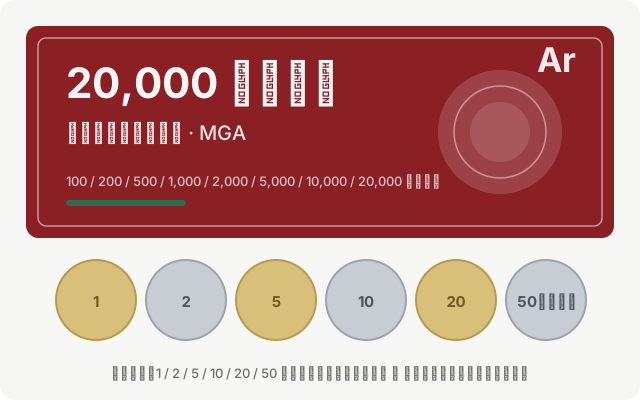
The official currency of Madagascar is the Malagasy Ariary (currency code MGA, symbol Ar), issued by the Central Bank of Madagascar (Banky Foiben’i Madagasikara). The Ariary is unique in using a non-decimal counting system: 1 Ariary = 5 iraimbilanja, making it one of only two non-decimal currencies in the world, alongside the Mauritanian ouguiya. The Ariary once circulated alongside the Malagasy franc in 1961 and became the sole currency in 2005.
Denomination System
Currently circulating banknotes include denominations of 100, 200, 500, 1,000, 2,000, 5,000, and 10,000 Ariary, featuring designs of Madagascar’s natural landscapes, wildlife, ports, and historical figures in vibrant colours. Coins come in 1, 2, 5, 10, 20, 50 Ariary, and smaller iraimbilanja units, though the smaller coins are rarely used in practice. Due to the large denominations, pay attention to colour and design differences when shopping and receiving change.
Cash and Payment Practices
Madagascar remains a cash-based society. Aside from high-end hotels and restaurants in the capital, Antananarivo, and some tourist areas that accept cards, markets, small shops, taxis, and taxi-brousses typically only take cash. International credit cards are accepted in limited areas within tourist sites, often with fees or spending limits, so it’s advisable to carry ample cash. The Ariary cannot be exchanged abroad, so use it up before departure or exchange it at the airport.
As for cash withdrawals, ATMs accepting foreign cards are available at Antananarivo Airport and a few banks in the city, but they are practically non-existent in remote tourist areas. Plan your cash needs carefully before your trip. Some hotels and tour operators may accept US dollars or euros, but the exchange rates are usually unfavourable—it’s better to convert to Ariary.
Traveler Tips
- Cash is the main method of payment for attractions and long-distance transport—carry enough Ariary based on your itinerary.
- Smaller denomination bills and coins are more practical; actively exchange for small bills to facilitate payments and change.
- Try to use up all Ariary before leaving, as it is not an internationally traded currency and is hard to exchange back home.
- Tipping is not mandatory but is appreciated—consider tipping guides, drivers, and hotel staff as appropriate.
Flag Meaning
Flag Design
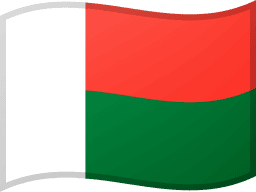
The flag of Madagascar consists of a vertical white stripe and two horizontal stripes of red and green: the white stripe is on the hoist side, with the red above and green below. The flag has an approximate ratio of 3:2, with the white vertical stripe taking up about one-third of the flag’s length, and the red and green each occupying half of the remaining height. The overall design is simple and striking, with colours that reflect both African and Southeast Asian island traditions.
Meaning
White symbolizes purity and integrity, red represents sovereignty and the courage to fight for independence, and green stands for hope as well as the land and its farmers. Another interpretation suggests that the red and green colours originate from the traditional colours of the Merina Kingdom of the central highlands, while white corresponds to coastal peoples and historical flags—altogether symbolizing the unity of all ethnic groups under the aspirations of independence and hope. The Malagasy flag is often displayed alongside the national coat of arms, which also features the colours red, green, and white, along with symbols like rice sheaves, zebu cattle, and baobabs, reflecting themes of agriculture and the island’s natural heritage.
History and Legal Status
The Malagasy flag was first adopted on October 14, 1958, when Madagascar was an autonomous republic within the French Community. Two years later, on June 26, 1960, the country gained full independence, and the flag naturally became the national flag of the republic. Its design draws inspiration from the flag traditions of the Merina Kingdom and the political colours of the independence movement. According to Madagascar’s flag usage guidelines, the flag must be kept clean and intact on formal occasions and must not be flown upside down or used for commercial purposes, reflecting the nation’s respect for this symbol. Today, the flag is widely used by government institutions, schools, sporting events, and embassies and consulates, serving as an important emblem of Malagasy national identity.
Madagascar Travel Guide
All Guides »Madagascar Travel Quick Guide: Visa, Best Time to Visit, Budget & Health Tips
How to get a visa on arrival, choose between dry and rainy seasons, plan your bu...
Classic 7-Day Madagascar Itinerary: Antananarivo, Ranomafana, and Isalo 7 days
Travel south along the main RN7 highway, connecting highland towns, rainforests,...
Madagascar 4-Day Short Trip: Antananarivo and Andasibe Rainforest 4 days
A combination of the capital’s history and culture with the nearest tropical rai...
A must-visit list of attractions in Madagascar: lemurs, baobabs, and stone forests
Select must-see destinations by region—from the Highland Palace to the western b...
Madagascar Food Guide: Rice, Romazava, and Vanilla Desserts
With rice as the base, stews as the soul, and the world’s finest vanilla, Madaga...
Madagascar Transportation Guide: International Flights, Taxi-Brousses, and Private Transfers
Understanding the trade-offs between domestic flights, shared buses, and private...
10 Practical Tips for Traveling in Madagascar
Cash, mosquito protection, road conditions, and local customs—these details can ...