Bulgaria
Thrace civilization and the land of roses—Bulgaria, the eastern gateway to the Balkans, is famed for the Rila Monastery, Black Sea beaches, the Rose Valley, and being the birthplace of yogurt.
Bulgaria (Republic of Bulgaria)
| Capital | Sofia |
|---|---|
| Continent | Europe |
| Languages | Bulgarian |
| Currency | Bulgarian Lev (BGN лв) |
| Time Zone | UTC+2 to UTC+3 |
| Dialling Code | +359 |
| Area / Population | Approximately 111,000 square kilometers / Approximately 6.5 million |
| Visa | Bulgaria has joined the Schengen Area; valid Schengen visas or residence permits from Schengen countries allow entry. Separate trips to Bulgaria require applying for a Bulgarian short-stay visa (Category C), which can be submitted via embassies/consulates or visa centers. Check the latest policies before traveling. |
| Best Season | The Rose Valley blooms and hosts the Rose Festival in May–June; June–September is ideal for the Black Sea coast and mountain areas; December–March is ski season in Bansko; spring and autumn are the most comfortable for city sightseeing. |
| Main Cities | Sofia, Plovdiv, Varna, Burgas, Veliko Tarnovo, Kazanlak, Nesebar, Bansko |
Bulgaria in Detail
About Bulgaria
Bulgaria (Republic of Bulgaria) is located in the eastern part of the Balkan Peninsula in southeastern Europe. It borders Romania to the north across the Danube River, Serbia and North Macedonia to the west, Greece and Turkey to the south, and the Black Sea to the east. The country covers an area of approximately 111,000 square kilometers. Its capital, Sofia, is nestled at the foot of Vitosha Mountain and serves as the nation’s political, economic, and cultural center, with a population of around 1.3 million.
Bulgaria is a parliamentary republic. It joined NATO in 2004 and the European Union in 2007, and is one of the EU member states with a smaller population. The official language is Bulgarian, written in the Cyrillic script—Bulgaria is an important birthplace of the Cyrillic alphabet. The Preslav and Ohrid literary schools of the 10th century played a profound role in spreading Slavic writing.
Geography and Climate
Bulgaria features diverse terrain: northern lowland hills along the Danube, central mountain ranges including the Stara Planina (Balkan Mountains) and the Rose Valley, southwestern mountainous areas of the Rila-Rhodope region (home to Musala Peak, the highest in the Balkans at 2,925 meters), and eastern coastal plains along the Black Sea, with the major bays of Varna and Burgas. The colorful mountains and over 380 kilometers of coastline create a destination ideal for both mountain and beach holidays.
The climate is temperate continental, with Mediterranean influences along the Black Sea coast: summers (June–August) are hot, making the coast a prime holiday destination; winters (December–February) are cold and snowy, with excellent skiing conditions in the Rila, Pirin, and Rhodope mountains; May–June brings warm, humid weather to the Rose Valley, perfect for viewing the rose blossoms before harvest.
Historical Background
Bulgaria is one of Europe’s oldest civilizations. The Thracians left behind treasures like the Kazanlak Thracian Tomb and numerous gold artifacts. Gold ornaments unearthed from the Varna Necropolis, dating back about 6,500 years, are considered the oldest processed gold in Europe. In 681 AD, the Bulgars established the First Bulgarian Empire. In the 9th century, Tsar Boris adopted Christianity and promoted the Cyrillic script. The reign of Tsar Simeon I (893–927) marked a golden age.
After being annexed by the Byzantine Empire in 1018, the Second Bulgarian Empire was established in 1185, with Veliko Tarnovo as its capital. The 14th century saw nearly 500 years of Ottoman rule. Following the Russo-Turkish War in 1878, the Principality of Bulgaria was re-established under the Treaty of San Stefano and the Congress of Berlin. Full independence was declared in 1908. The 20th century brought the Balkan Wars and two World Wars. Bulgaria became a socialist state after 1946 and transitioned peacefully in 1989. The golden domes of Alexander Nevsky Cathedral in central Sofia remain an iconic landmark.
Economy and Currency
Bulgaria is one of the most affordable economies within the EU, with key sectors including IT outsourcing, machinery manufacturing, winemaking and food processing, tourism, and agriculture. Bulgarian rose oil accounts for about 70% of global production, mainly from the Rose Valley near Kazanlak. Yogurt, known for its Lactobacillus bulgaricus strain, is a national dietary staple and export highlight. The official currency is the Bulgarian Lev (BGN), pegged at a fixed rate of 1 euro = 1.95583 leva since 1997, making it highly stable. Future euro adoption will also use this exchange rate as the basis.
Culture and Society
Bulgarian culture is deeply rooted in a blend of Thracian, Slavic, and Bulgar traditions. UNESCO-recognized intangible heritage includes the mysterious vocal choir “Mystery of the Bulgarian Voices,” the ancient town of Nesebar and the Boyana Church (World Heritage Sites), and the Nestinarstvo fire-dancing ritual. Eastern Orthodox Christianity is the main religion, with Easter and Christmas being major family holidays. On March 1, people exchange red-and-white “martenitsa” bracelets to wish for health and the arrival of spring.
Cuisine highlights include yogurt, Shopska salad, Banitsa (cheese pastry), and grilled skewers. A shot of Rakia (fruit brandy) before or after meals is a Bulgarian social custom. Bulgarians value family and community, and rural areas maintain traditions like homemade wine, pickled vegetables, and herbal remedies.
Tourism Overview
Bulgaria is an exceptionally affordable European holiday destination. Key attractions include Sofia’s Alexander Nevsky Cathedral and Vitosha Mountain, the golden domes and frescoes of Rila Monastery, the Roman theater in Plovdiv’s Old Town, medieval fortresses in Veliko Tarnovo, the Rose Valley in Kazanlak, the Black Sea city of Nesebar, and the ski resort charm of Bansko. Prices are 30–50% lower than Western Europe, and visa policies have eased with Schengen status, attracting more in-depth travelers.
Local Currency: Bulgarian Lev (BGN)
Currency Overview
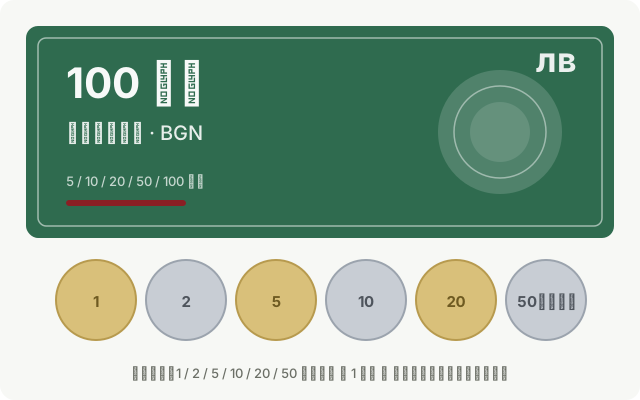
The official currency of Bulgaria is the Bulgarian Lev (plural: Leva; currency code: BGN; symbol: лв, often written as lv or BGN in English). One lev equals 100 stotinki (plural: stotinki). The lev is issued by the Bulgarian National Bank (BNB). Since the introduction of the currency board system in 1997, the lev has been pegged at a fixed rate of 1 euro = 1.95583 leva, with almost no exchange rate fluctuation, which makes currency exchange and budgeting straightforward.
Denominations
Banknotes are available in denominations of 2, 5, 10, 20, 50, and 100 leva, often featuring historical figures and artists, such as monk educator Paisiy Hilendarski on the 2-lev note. The newer series includes transparent windows and 3D security features. Coins come in denominations of 1, 2, 5, 10, 20, and 50 stotinki, as well as 1 lev. Small purchases are usually made with coins or 5 or 10 lev notes. With the lev fixed at around 1.95583 to the euro, 1 lev is roughly equivalent to $1, offering an easy mental conversion for some.
Cash and Payment Habits
In Bulgarian cities, most supermarkets, restaurants, and hotels accept Visa and Mastercard. Sofia’s metro and bus services also support card payments. However, in rural areas, markets, taxis, and smaller guesthouses, cash is still the primary method of payment. In seaside and mountain resort towns, many vendors also prefer cash. ATMs are widely available in cities and tourist areas, allowing direct withdrawal of leva, with clear fee information displayed at bank-affiliated machines.
As the lev is pegged to the euro, some tourist areas may show prices in both currencies, but all transactions must be completed in leva by law. When choosing the payment currency at terminals, always select leva (BGN) to avoid extra charges from dynamic currency conversion. The lev can be difficult to exchange in some countries; it’s a good idea to carry a small amount of euros or withdraw leva from an ATM after arrival. Use up any leftover leva before leaving the country or spend them at the airport.
Traveler Tips
- The lev is fixed at 1.95583 to the euro, simplifying budgeting, but all transactions are conducted in leva.
- Bulgaria is considering adopting the euro in the future; check for official updates before your trip.
- Cash is often required in markets, taxis, and rural guesthouses; it’s helpful to carry small-denomination bills, such as 5–20 leva.
- At payment terminals, always choose leva (BGN) as the settlement currency and decline dynamic currency conversion options.
- For special products like rose oil, buy from trusted retailers and ask for a receipt for potential tax refunds or border inspections.
Flag Meaning
Flag Design
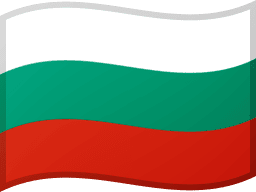
The Bulgarian flag consists of three horizontal stripes of equal width in white, green, and red, from top to bottom, with no emblem. The official flag ratio is 3:5 (a 2:3 ratio is also commonly used), making it a classic tricolor. The white-green-red combination is unique in the Balkans, easily distinguishable from neighboring countries like Serbia and Hungary.
Meaning
Traditionally interpreted as: white symbolizes peace and freedom, as well as the shimmering Danube and snow-capped mountains; green represents Bulgaria’s vast forests, farmland, and natural vitality; red stands for the blood shed for national independence and the courage of its soldiers. Together, the colors embody Bulgaria’s national identity of “mountains, rivers, and people.” The precise color values are legally defined, with green being a deep grass green and red a pure red.
History and Legal Status
The current tricolor flag originated during the re-establishment of Bulgaria as a nation from 1878–1879. An early version included a lion emblem on the red stripe, which was removed in the late 19th century due to visibility issues. During the socialist period (1946–1990), the flag featured a national emblem (later a lion emblem) in the top-left corner, which was removed after the 1989 transition. The clean tricolor was reinstated and confirmed by the 1991 Constitution and the “Law on the State Seal, Flag, and Anthem.”
The flag is widely used at government institutions, schools, military sites, and on March 3 (Liberation Day). The Bulgarian flag and Cyrillic script are two of the nation’s most distinctive visual and cultural symbols.
Bulgaria Travel Guide
All Guides »Bulgaria Travel Snapshot: Schengen, Seasons, Budget & Etiquette
Now part of the Schengen Area with the lev pegged to the euro—check visa rules, ...
Classic 7-day Bulgaria itinerary: Sofia – Rila – Rose Valley – Black Sea 7 days
Monasteries, old towns, the Rose Valley, and the Black Sea form a classic east-w...
Bulgaria 4-Day Short Trip: Sofia, Rila, and Plovdiv 4 days
A compact 4-day itinerary: two days in the capital plus a visit to the Rila Mona...
A must-visit list of attractions in Bulgaria: monasteries, old towns, and the Rose Valley
From Alexander Nevsky Cathedral to Rila Monastery, from Plovdiv Old Town to the ...
Bulgarian Food Guide: Yogurt, Rakia, and the Balkan Table
The Right Way to Experience Bulgaria’s Yogurt Nation: From Breakfast Banitsa to ...
Complete Guide to Transportation in Bulgaria: Airports, Metro, Intercity Buses & Driving
Sofia Airport is directly connected to the city by metro, intercity buses are fa...
Practical Travel Tips for Bulgaria: Schengen, Cash, and the Rose Festival
10 practical tips covering Schengen connections, lev cash withdrawals, monastery...