Armenia
An ancient Christian nation in the Caucasus Mountains, renowned for its pink tuff Yerevan, Lake Sevan, brandy, and the legend of Noah’s Ark.
Armenia (Republic of Armenia)
| Capital | Yerevan |
|---|---|
| Continent | Asia |
| Languages | Armenian |
| Currency | Armenian Dram (AMD ֏) |
| Time Zone | UTC+4 |
| Dialling Code | +374 |
| Area / Population | Approximately 29,700 square kilometers / Approximately 3 million (with several million more ethnic Armenians living abroad) |
| Visa | Citizens of most countries can enjoy visa-free entry to Armenia. Since 2020, the country has had a mutual visa exemption agreement, typically allowing stays of up to 90 days per visit and no more than 90 days within any 180-day period. Be sure to carry a valid passport, return or onward tickets, and proof of accommodation upon entry, as these may be checked by immigration officials. Entry requirements are subject to the latest bilateral agreements and official notices from Armenian authorities. |
| Best Season | The most pleasant climate occurs in May–June and September–October, with excellent mountain blooms and autumn foliage; July–August is hot in Yerevan, while winter brings deep snow in the mountains, ideal for skiing. |
| Main Cities | Yerevan, Etchmiadzin, Sevan, Garni, Geghard, Dilijan, Tatev, Haghpat |
Armenia in Detail
About Armenia
Armenia (officially the Republic of Armenia) is a landlocked country in Western Asia, located south of the Caucasus Mountains. It shares borders with Georgia to the north, Azerbaijan to the east, Iran to the south, and Turkey to the west. The country covers an area of approximately 29,700 square kilometers, with its capital, Yerevan, situated on the banks of the Hrazdan River on the eastern edge of the Ararat Plain. Yerevan serves as the political, economic, and cultural center of the nation. Armenia is a parliamentary republic, and its official language is Armenian, which uses a unique alphabet created in the 5th century by scholar Mesrop Mashtots. The script is considered an important cultural symbol.
With a population of around 3 million, Armenia also has a global diaspora, with several million ethnic Armenians living in countries such as Russia, the United States, France, and Lebanon. The Armenian diaspora contributes significantly to the country’s economy and culture. Armenia is one of the world’s oldest Christian nations, with a deeply rooted religious heritage and numerous churches and monasteries spread across its mountainous terrain.
Geography and Climate
Located on the southern part of the Caucasus Plateau, Armenia has an average elevation of about 1,800 meters, with mountains and plateaus covering much of the country. The highest peak, Mount Aragats, rises to approximately 4,090 meters. Lake Sevan, located in the northeast, is the largest lake in the Caucasus region and one of the highest freshwater lakes in the world. Armenia has no coastline, and its main rivers include the Araks and Hrazdan. The terrain includes volcanic plateaus, deep valleys, forests, and lakes.
The climate is a highland continental type: summers (June–August) are hot and dry, with temperatures in Yerevan often exceeding 35°C; winters (December–February) are cold, with heavy snowfall in the mountains, making them suitable for skiing. Spring and autumn are mild and pleasant, making them ideal times to visit. Be prepared for significant day-to-night temperature variations at higher elevations, and pack accordingly.
Historical Background
The Armenian Highlands have been home to ancient civilizations for millennia. From the 9th to 6th centuries BCE, the Kingdom of Urartu flourished here, leaving behind fortress ruins such as Erebuni, which gave rise to the name Yerevan. The region was later ruled by various empires, including the Achaemenid, Seleucid, Roman, and Parthian Empires. In 301 CE, King Tiridates III of Armenia adopted Christianity as the state religion, making Armenia the first country in the world to officially embrace Christianity.
During the Middle Ages, Armenia established the Bagratuni Dynasty and the Kingdom of Cilician Armenia, leaving a rich legacy of monasteries and khachkars (cross-stones). The country later came under prolonged periods of Ottoman and Persian rule, with parts of its territory incorporated into the Russian Empire in the 19th century. In 1915, Armenians under Ottoman rule experienced a large-scale tragedy, considered one of the darkest chapters in the nation’s history. The First Republic of Armenia declared brief independence in 1918, became a Soviet republic in 1920, and regained full independence on September 21, 1991.
Economy and Currency
Armenia’s economy is based on services, agriculture, mining, and information technology. Notable sectors include winemaking, brandy production, and jewelry manufacturing. Key growth areas include remittances, tourism, and the IT sector, with Yerevan seeing a rise in tech startups in recent years. The national currency is the Armenian Dram (AMD), issued by the Central Bank of Armenia. Its value has remained relatively stable, and debit cards and mobile payments are commonly used in urban areas.
Culture and Society
Armenian culture is deeply influenced by Christian traditions and mountain life. Monasteries, khachkars, and sacred music are central to its religious heritage. The haunting tones of the duduk flute and traditional folk dances are iconic elements of Armenian culture, while the thin flatbread “lavash” was inscribed on UNESCO’s Intangible Cultural Heritage list in 2014.
The cuisine features grilled meats (“khorovats”), grape leaf-wrapped rice (“dolma”), barley and meat soup (“harissa”), and a range of dairy products. Common ingredients and cultural symbols include apricots, pomegranates, walnuts, and grapes, with the apricot regarded as the national fruit. Armenia is known for its brandy and wine production, with the Ararat Plain considered one of the possible birthplaces of viticulture. Mount Ararat, believed to be the resting place of Noah’s Ark, holds deep symbolic importance for Armenians, although it is now located within Turkey.
Tourism Overview
Armenia is an increasingly popular destination in the Caucasus. Yerevan, known as the “Pink City” for its distinctive pink tuff stone architecture, features landmarks such as Republic Square, the Opera House, and the Cascades. Nearby UNESCO World Heritage Sites, including the Etchmiadzin Cathedral and Zvartnots Temple, offer insight into the country’s long Christian heritage. The Garni Temple is the only surviving Hellenistic temple in the former Soviet Union, while Geghard Monastery is carved into a cliff face. Khor Virap Monastery provides views of Mount Ararat, and Lake Sevan is surrounded by scenic monasteries such as Sevanavank and Tatev (which can be reached via the “Wings of Tatev” cable car).
Armenia is safe, affordable, and welcoming, making it a great choice for self-drive or guided exploration of villages and monasteries, or for short trips from Yerevan. With its visa-free entry for many international travellers, it offers excellent value for immersive cultural travel.
Local Currency: Armenian Dram (AMD)
Currency Overview
The official currency of Armenia is the Armenian Dram (currency code: AMD, symbol: ֏, Armenian: դրամ). One dram equals 100 lumas, but luma coins are no longer in circulation, and prices are typically rounded to whole dram amounts. Issued by the Central Bank of Armenia, the dram was introduced in November 1993, replacing the Soviet ruble and interim currencies. Its value has remained generally stable within the region.
Denominations
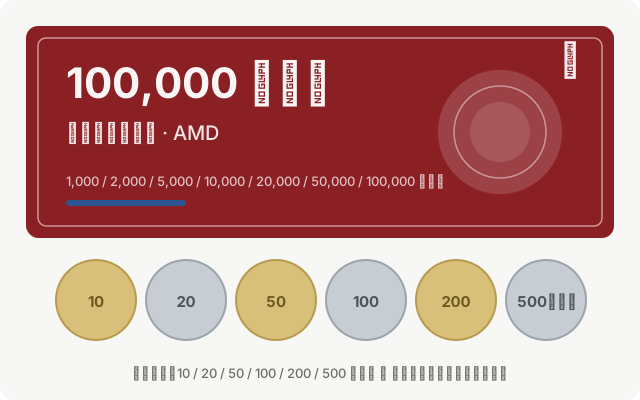
Current banknotes come in denominations of 1,000, 2,000, 5,000, 10,000, 20,000, 50,000, and 100,000 drams, featuring designs of Armenian historical figures, landmarks, and musical heritage. Coins are issued in 10, 20, 50, 100, 200, and 500 drams, often depicting the national coat of arms, the sun, and khachkars. Commonly used denominations range from 1,000 to 20,000 drams, with 100,000 drams considered a high-value note.
Cash and Payment Habits
In Armenian cities, hotels, restaurants, supermarkets, and malls generally accept international credit cards. Mobile payments and card usage are widespread in Yerevan, but cash is still preferred in rural areas, small shops, markets, bakeries, and some taxis. ATMs are common in urban areas and airports, often dispensing U.S. dollars or drams, though some may charge fees for foreign cards. It’s advisable to carry small denominations of drams and a small amount of U.S. dollars for emergencies.
For currency exchange, banks or authorized exchange offices are recommended, as rates are usually better than at airports. U.S. dollars are widely accepted, and euros or local currency can also be exchanged.
Tips for Travelers
- Dram denominations can be confusing—pay close attention when receiving change between 1,000 and 10,000, or 5,000 and 50,000.
- Service charges are not always included on restaurant bills; tipping around 5–10% is appreciated for good service.
- Bargaining is acceptable in markets and independent shops, but not in malls or chain stores.
- Unused drams can be exchanged back to U.S. dollars at airports or exchange offices, or kept as souvenirs.
Flag Meaning
Flag Design
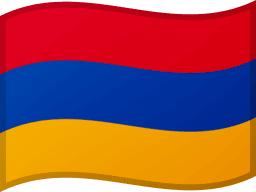
The Armenian flag consists of three equal horizontal bands of red, blue, and orange (often described as apricot), from top to bottom. The flag’s aspect ratio is 1:2. The colors are bright and the design simple, with the orange leaning toward a warm tone reminiscent of apricot. This design is nearly identical to the flag of the First Republic of Armenia from 1918 to 1920.
Meaning
The three colors are commonly interpreted as follows: red symbolizes the Armenian Highlands and the struggle of the Armenian people for survival and faith, as well as the spirit of those who died for their country; blue represents the sky and peace, reflecting the people’s desire for tranquility; orange stands for courage and hard work, as well as fertile land and harvest, particularly the apricots native to the Armenian Highlands. Together, the colors embody the nation’s history, aspirations for peace, and industrious spirit.
History and Legal Status
The red-blue-orange tricolor was first adopted by the First Republic of Armenia in 1918, but was replaced after the country joined the Soviet Union in 1920, when the Soviet republic flag featuring the hammer and sickle was introduced. On August 24, 1990, the Supreme Soviet of Armenia decided to restore the tricolor, and it was officially reinstated as the national flag after independence in 1991, with laws enacted to regulate its proportions and usage. Today, the flag is prominently displayed at government buildings, schools, embassies, and during national celebrations such as Independence Day on September 21, serving as a powerful symbol of Armenian identity.
Armenia Travel Guide
All Guides »Armenia Travel Snapshot: Visa-Free Policy, Best Seasons, Daily Budget & Travel Etiquette
A highland ancient nation in the Caucasus with visa-free access for many interna...
Classic 7-Day Armenia Itinerary: Explore Yerevan, Monasteries, Lake Sevan, and Wine Country 7 Days
Based in Yerevan, this route connects Geghard, Zvartnots, Lake Sevan, and the Ta...
Armenia 4-Day Short Trip: Highlights of Yerevan and Its Outskirts 4 days
This 4-day itinerary focuses on two UNESCO World Heritage Sites and monastery ro...
Essential Attractions in Armenia: Monasteries, Lake Sevan, and Vistas of Mount Ararat
From Yerevan’s Pink Square to the cave-carved Geghard and cliffside Tatev, here’...
Armenian Cuisine Guide: A Map for Kebabs, Dolma, and Brandy Tasting
The Caucasus table is bold yet refined: try lavash flatbread, khorovats grilled ...
Travel Guide to Transportation in Armenia: Getting to and from Airports, City Taxis, and Outskirts Car Hire
Zvartnots International Airport is close to downtown Yerevan, city taxis are aff...
10 Practical Travel Tips for Armenia: Visa-Free Entry, Dress Code & High-Altitude Travel
From visa-free stay durations to monastery dress codes, from Dram change to cabl...