How did people in the Song Dynasty greet the New Year? The more unique "chants of greeting" you made, the more respect you showed.
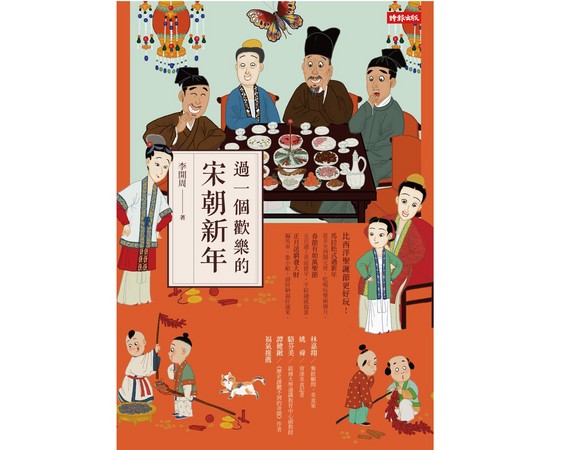
Image,Text by Li Kaizhou, excerpted from *Celebrate a Joyful New Year in the Song Dynasty*, published by Times Publishing
How did folk people greet the New Year?
Of course, folk New Year greetings weren’t this complicated. According to Sima Guang’s *Family Rituals*: “Six bows for Winter Solstice and New Year’s Day, four bows for the first and fifteenth of each month.” Children and grandchildren were expected to regularly pay respects to their elders at home—four kowtows on the first and fifteenth of each month, and six kowtows on Winter Solstice and New Year’s Day. When kowtowing, one couldn’t just kowtow without speaking—they also had to “chant greetings.” What is chanting greetings? It’s essentially a polite way of saying hello.
For example, when Ximen Qing greeted Pan Jinlian, saying, “My lady, have you been well since we last met?”—that was a chant of greeting. When Pan Jinlian greeted Ximen Qing, saying, “My lord, how have you been lately?”—that was also a chant of greeting. When a female petitioner saw the county magistrate, she would kneel on the ground, kowtow, and shout while doing so, “This humble woman pays her respects to Your Honor!”—that too counted as a chant of greeting.
In movies, when eunuchs saw Empress Dowager Cixi, they would shriek in their shrill voices, “Long live the Empress Dowager!”—that was a chant of greeting as well. In the Song Dynasty story *A Ghost Story from the Western Hills*, when schoolchildren said goodbye to their private tutor after class, they would say, “Master, take good care of yourself.” Meaning, “Teacher, please rest early,” which was also a chant of greeting. Even something as simple as a foreigner casually saying “Good morning” or “What’s up?” in the Song Dynasty could be classified as a chant of greeting.
Chants of greeting during New Year visits could also be further divided.
Based on the number of repetitions in the greeting, there were “single chants,” “double chants,” and “triple chants.” For example, when a student greeted a teacher with “Happy New Year, Teacher,” that was a single chant. Saying it twice was a double chant. And if one repeated it three times like a tape recorder—“Happy New Year, Teacher”—that was a triple chant. The people of the Song Dynasty believed that the more times the same greeting was repeated, the more respect it showed. Therefore, a triple chant was much more respectful than a single chant.
Based on the content and tone of the greeting, they could also be divided into “regular chants,” “grand chants,” and “hearty chants.” When we modern people greet the New Year, a simple “Happy new year” only carries polite meaning, not deep respect—it’s a “regular chant.” But if you sincerely wish a child, “May you grow big and strong from eating sweets,” which is not just polite but heartfelt—that’s called a “grand chant.” And if you see a relative or friend you haven’t seen in years, and you can’t help but rush over for a hug, saying, “I’ve missed you so much!”—that’s equivalent to the level and sentiment of a “hearty chant” in the Song Dynasty.
Kowtowing and chanting greetings were the rules for juniors greeting elders during the New Year. If it was between peers, there was no need to kowtow—just making a bow or performing a “hands-folded” gesture was enough. “Hands-folded” doesn’t mean interlocking all ten fingers, but rather using the index, middle, ring, and little fingers of your left hand to grasp your right thumb, lifting your left thumb high, while extending the other four fingers of your right hand straight downward to the left. After crossing your hands like this, you hold them in front of your chest but not touching it, keeping a slight distance as if guarding your heart—this is the “hands-folded” etiquette.
The “hands-folded” gesture was a common form of greeting among Song Dynasty men when meeting strangers. This gesture was lighter than a bow and much lighter than kowtowing. Commoners would kowtow to officials, juniors would bow to elders, but before figuring out someone’s identity or seniority, the “hands-folded” gesture was the safest way to show courtesy and respect without seeming overly formal.
Of course, chanting greetings was also required when doing the “hands-folded” gesture. For example, if two young peers in the Song Dynasty met on New Year’s Day, they would stop walking, stand about two or three feet apart facing each other, perform the “hands-folded” gesture while saying, “Happy New Year.”
Sick of work and classes—want to go traveling?
Download the “ETtoday News Cloud APP” and take a virtual trip →
iOS:https://goo.gl/rmIDdx
Android:https://goo.gl/XPe8Uj
Share
This article is published by HowToTrip. Sharing and reposting are welcome — please credit the source.
Article URL: https://www.howtotrip.net/views-8481
Related Articles
- Shaoxing's "Grandpa Gourd" hangs the gourds back up: "If there are too many people, we'll interact less — just take a quick look from afar"
- Chinese authorities announce "reciprocal adjustment" to Japan visa fees — single-entry visa jumps from 2,250 to 16,750 yen!
- The "health stones" carried by a traveler were found to have radiation levels exceeding safety limits by a thousand times, potentially endangering fellow passengers on the same flight. Customs issues warning!
- Shenzhen Airport Issues Late-Night Notice: Unidentified Aerial Object Detected, Causing Widespread Flight Delays!
- “They only said it cost money after I opened the box and washed it!” 200g of grapes sold for 60 yuan on a high-speed train—12306 responds!
- Can't buy an airline ticket? Denied exit? Blocked from boarding? A large number of Chinese tourists have mysteriously become "discredited individuals"
- Adverse weather and economic fluctuations impact Colombia's coffee market
- Beach bathing area responds to 2 yuan/30 seconds fee for freshwater foot rinsing: Clearly priced!
- Taking off with an improperly closed cabin door? Wing malfunction? Multiple flights made emergency returns mid-journey!
- Experience the gifts of nature! A countdown of the world’s ten most stunning coastlines