Firefly Watching / Shooting Fireflies | Expert Tip: Stacking Photos Yields Higher Success Rates Than Long Exposure
Reporter Tsai Meng-hsiu / Taipei Reporting
“…Hurry to the fireflies, kind ones lighting the way, the sudden northwest rain pours down…” A familiar nursery rhyme evokes memories of midsummer from April to June—the mating season for fireflies and the best time for firefly watching. But how can one capture those beautiful, touching moments in the dark with a camera? Firefly photography expert Fu Jiaxian notes that taking photos of clustered light spots is generally beyond the capability of point-and-shoot cameras. Even DSLRs rely on post-processing techniques. “Fireflies’ flight paths are unpredictable. Do you think they’d gather right in front of your lens just for everyone to shoot?”
Fu Jiaxian, with extensive experience in firefly photography, enjoys photography and also writes photography tutorials to share with fellow enthusiasts in his spare time. He humbly says he doesn’t deserve the title of an expert but is happy to share his “firefly shooting” experiences. Fu further reveals that fireflies prefer to appear in warm weather and usually start glowing from the darker parts of the woods. Therefore, setting up the camera in darker areas increases the chances of capturing them. It’s also important to avoid locations with too many obstructions—once fireflies fly past them, the light spots in long-exposure shots will be interrupted, significantly reducing photo quality.
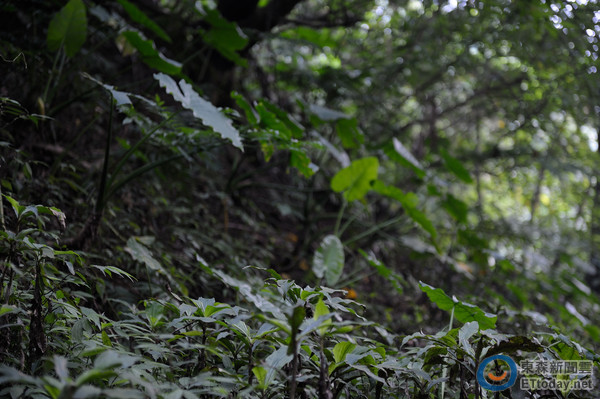
▲ Choose shooting locations with minimal obstructions after prior site scouting. Taro plants are common natural obstructions in the wild. (Photo provided by Fu Jiaxian)
He also adds that fireflies become active around sunset and are most lively until 8 PM. Since their glow is brief, it’s essential to scout the location and set up the camera beforehand. Once exposure begins, it’s hard to refocus or make adjustments. To avoid overly bright or overexposed backgrounds, the best time to shoot is in dim conditions with only moonlight remaining. Therefore, arrive at the firefly-watching spot before sunset.
“If you want to do a good job, prepare your tools well.” Fu Jiaxian recommends the following gear:A camera with a shutter speed of 10 seconds or more—or one that supports B mode and has M mode (full manual mode)—a lens with a large aperture (2.8 or wider is ideal), a tripod, and a shutter release cable… among other “essentials.” The tripod is a must-have tool.In the wild, any type of terrain can appear. When shooting in the dark, a tripod is essential to keep the lens steady; otherwise, you won’t get decent shots no matter how long you shoot.
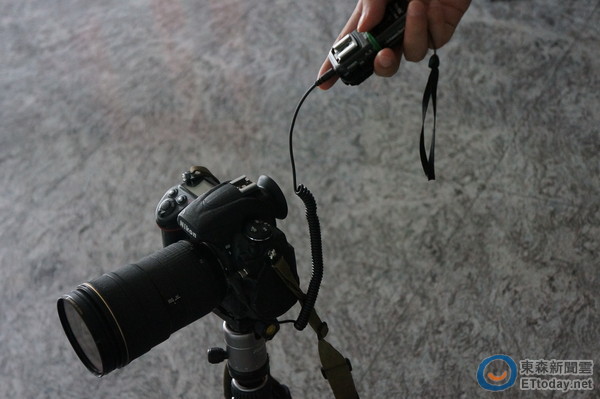
▲ A shutter release cable prevents camera shake when pressing the shutter, especially crucial in low-light environments. (Photo by Reporter Tsai Meng-hsiu)
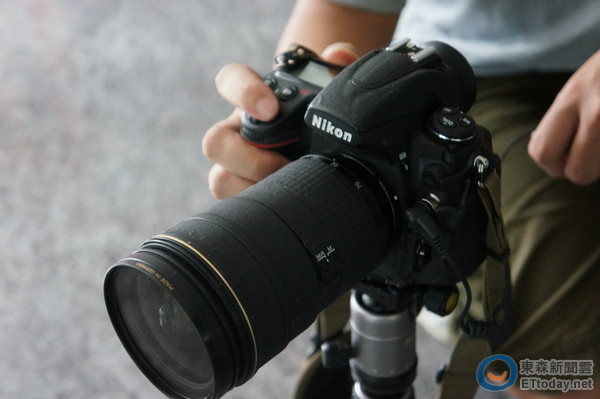
▲ It’s generally recommended to use a camera with a shutter speed of 10 seconds or more—or one that supports B mode and has M mode (full manual mode)—and a lens with a large aperture (2.8 or wider). (Photo by Reporter Tsai Meng-hsiu)
“Fireflies usually fly above flowers and grass, and at ground level, roughly knee to chest height for an adult. So, to frame the shot, you often need to place the camera tripod close to the ground. If your camera has a flip-out screen or a vertical viewfinder, it can ease the framing burden at low angles,” Fu Jiaxian explains further.
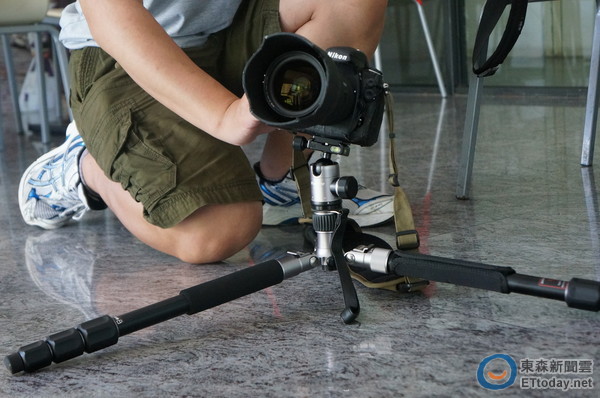
▲ In the wild, fireflies typically fly above flowers and grass, and at ground level, about knee to chest height for an adult. Therefore, the camera should be positioned at a height similar to that in the photo. If your camera has a flip-out screen or a vertical viewfinder, it can ease the framing burden at low angles. (Photo by Reporter Tsai Meng-hsiu)
Based on his firefly-shooting experience,Fu suggests using stacking instead of long exposure. Stacking offers advantages such as low noise, reduced flashlight interference, higher success rates, and the ability to start shooting earlier.He also recommends a set of starting settings for firefly photography—“ISO 800, exposure 8–10 seconds, F2.8.” Begin with these settings for test shots, then fine-tune the shutter speed based on the actual brightness (if using lenses like F1.4 or F1.8, reduce aperture and ISO values according to ambient light). Only proceed to take the stacked photos once you can capture the fireflies’ light points against a background nearly pitch black.
Next, adjust the color temperature within the range of 3500K–5000K based on your preferred light spot color. Finally, use Photoshop to stack the photos, setting each layer’s blending mode to “Lighten” or “Screen” to reveal vibrant clusters of fireflies.
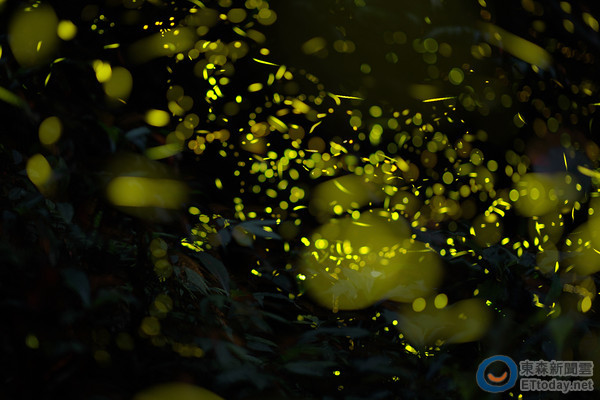
▲ Stacking can overcome the issue of insufficient fireflies and deliver better results. Generally, good firefly photos require stacking because fireflies won’t pose in front of the lens or follow predictable paths—one shot alone won’t capture a great image. (Photo provided by Fu Jiaxian)
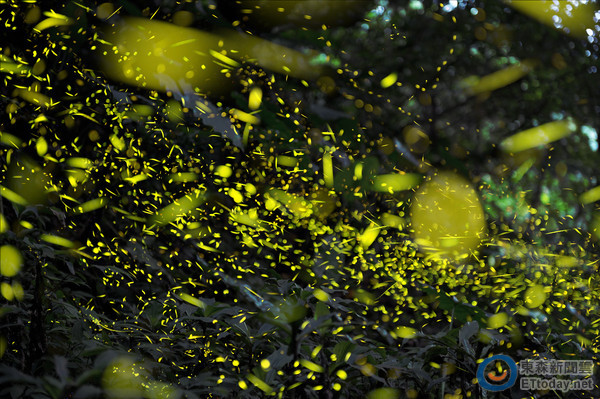
▲ After repeated stacking, the number of visible fireflies in the photo increases noticeably. (Photo provided by Fu Jiaxian)
As forthose aiming to capture a “firefly river,” it’s essential to choose an almost completely dark environment for long exposure. If the environment isn’t dark enough, you might end up making night look like day, and digital cameras are prone to generating lots of noise that’s hard to remove.Besides considering the ambient brightness, also account for external factors like flashlight beams from passersby. So, choose locations rarely frequented by people to minimize such interference.
If your camera’s memory card has sufficient capacity, it’s recommended to shoot in RAW format. Although RAW files are about three times the size of JPEGs, they capture unprocessed data directly from the image sensor without compression, offering greater flexibility in adjustments—such as exposure and color temperature, which affect the fireflies’ colors.
For lenses, many photography enthusiasts use wide-angle lenses with focus set to infinity. However, Fu believes that if your budget allows, using mid-to-long telephoto lenses with beautiful bokeh (like an 85mm F1.4) can more precisely capture light points about two meters away. Budget-conscious users can opt for more affordable F1.8 lenses.But since mid-to-long telephoto lenses are harder to frame, stacking is also a great way to “change the background” for fireflies.
Beyond photography tips, Fu also kindly reminds firefly watchers to stay safe. For unmarked or off-the-beaten-path spots, be especially cautious of mosquitoes, snakes, and road conditions. For safety, carry a flashlight but avoid shining it around randomly—it not only infringes on others’ shooting rights but also disturbs the fireflies’ habitat.
The safest way to use a flashlight is to wrap its head with multiple layers of red cellophane. Dim red light is less disturbing to insects and less likely to affect other photographers. When using the flashlight, direct the covered head downward to illuminate only your immediate surroundings—not to shine directly at targets.
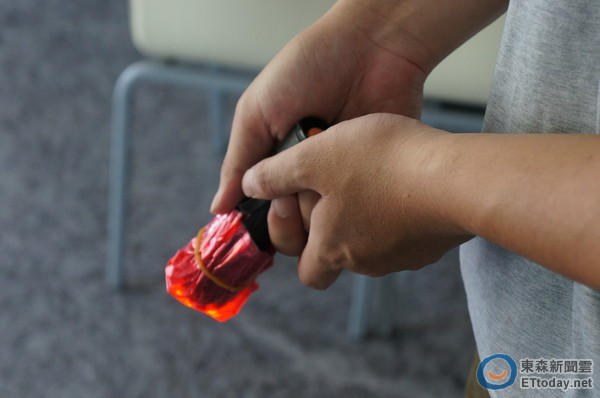
▲ At shooting sites, flashlights should have their heads wrapped in multiple layers of red cellophane to reduce light intensity. Never shine them directly at people or fireflies—this is basic respect for both the ecosystem and fellow humans. (Photo by Reporter Tsai Meng-hsiu)
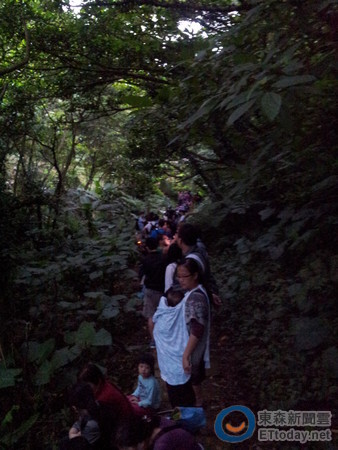
▲ During peak firefly-watching season, mountain trails are crowded with photographers. Therefore, arrive early to secure a spot and avoid affecting others’ shots when using flashlights. (Photo by Reporter Tsai Meng-hsiu)
Fu Jiaxian concluded by saying,For photography enthusiasts capturing fireflies, it’s important to respect not only others but also the ecological environment. After taking photos, always demonstrate public-mindedness by taking your trash with you. In truth, photographing fireflies has little to do with technique or camera equipment—just approach the experience with a joyful heart. “Leave nothing but photos.”
Share
This article is published by HowToTrip. Sharing and reposting are welcome — please credit the source.
Article URL: https://www.howtotrip.net/views-28713
Related Articles
- Shaoxing's "Grandpa Gourd" hangs the gourds back up: "If there are too many people, we'll interact less — just take a quick look from afar"
- Chinese authorities announce "reciprocal adjustment" to Japan visa fees — single-entry visa jumps from 2,250 to 16,750 yen!
- The "health stones" carried by a traveler were found to have radiation levels exceeding safety limits by a thousand times, potentially endangering fellow passengers on the same flight. Customs issues warning!
- Shenzhen Airport Issues Late-Night Notice: Unidentified Aerial Object Detected, Causing Widespread Flight Delays!
- “They only said it cost money after I opened the box and washed it!” 200g of grapes sold for 60 yuan on a high-speed train—12306 responds!
- Can't buy an airline ticket? Denied exit? Blocked from boarding? A large number of Chinese tourists have mysteriously become "discredited individuals"
- Adverse weather and economic fluctuations impact Colombia's coffee market
- Beach bathing area responds to 2 yuan/30 seconds fee for freshwater foot rinsing: Clearly priced!
- Taking off with an improperly closed cabin door? Wing malfunction? Multiple flights made emergency returns mid-journey!
- Experience the gifts of nature! A countdown of the world’s ten most stunning coastlines