Dongshan Tianhou Temple
Dongshan Tianhou Temple
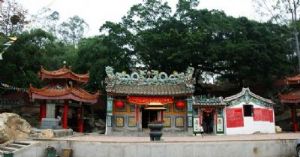
The temple faces west and backs onto green hills, overlooking Gongqian Bay. It is a Mazu temple branched off from Meizhou Mazu Temple during the Chongzhen era of the Ming Dynasty. The single-courtyard structure features side halls and reflects the architectural style of the Ming Dynasty. Inside, a statue of Mazu is enshrined, and a green-background, gold-character imperial plaque inscribed with “The Imperial Edict of Emperor Kangxi” is hung. This plaque was erected in 1685, the 24th year of the Kangxi reign. Three couplets are also displayed on the temple pillars: “Your divine virtue spans the heavens, calming seas and nations across ten thousand miles; as a motherly figure, you are forever honored with offerings at Meizhou”; “Originating from Meizhou, you calm the tides and soothe the seas; your shrine on Lingdao Island showers blessings upon the people”; “Glorious and resplendent, you are the sister of Heaven; bountiful and blessing-bringing, you dwell by the waters.” These praise Mazu’s merits in “protecting the nation and sheltering the people.”
A temple gains fame through its spiritual power. This ancient small shrine, the Tianhou Temple, is widely renowned and attracts a continuous stream of visitors and worshippers due to legends about the “miraculous powers” of Mazu. According to records: In 1687, the 21st year of the Qing Emperor Kangxi’s reign, in preparation for the campaign to reclaim Taiwan, General Shi Lang of the Fujian Navy was ordered to lead 40,000 troops to Pinghai Bay (Gongqian Bay) on Dongshan Island for pre-battle drills, with the command post set up right next to the Mazu Temple. At that time, there was only one well in front of and to the left of the temple in Gongqian Village, which could barely provide enough water for the hundred or so local fishermen. The navy faced great difficulty accessing water, so Shi Lang prayed to Mazu and pledged his devotion, ordering soldiers to dig deeper into the well. To everyone’s surprise, the spring surged forth abundantly, providing more than enough water for the troops. Morale soared, and the preparatory training proceeded smoothly. Once the navy set off, the well’s output returned to its original capacity, just enough for the villagers. People were deeply grateful and called it the “Ten Thousand Soldiers’ Well,” a name that has endured to this day. Another legend says that during Shi Lang’s successful campaign against the enemy in Penghu, the robe of the Mazu statue in the temple became wet, as if Mazu herself had gone to sea to assist in battle. After Taiwan was reclaimed, General Shi Lang submitted a memorial to the emperor detailing Mazu’s miraculous assistance and petitioned for her official recognition. Touched by the account, Emperor Kangxi dispatched an official in the 23rd year of his reign (1684) to conduct a ceremony at the temple and conferred upon Mazu the title “Bodhisattva Who Protects the Nation, Shelters the People, Miraculously Responsive, Compassionate, and Heavenly Queen.” Due to this imperial honor, Mazu was elevated from “Heavenly Consort” to “Heavenly Queen,” and the temple became known as the “Tianhou Temple.” The imperial memorial and ceremony text are inscribed on the plaque bestowed by the emperor inside the temple.
Source: Fujian Provincial Tourism Development Commission
Share
This article is published by HowToTrip. Sharing and reposting are welcome — please credit the source.
Article URL: https://www.howtotrip.net/travel-9172
Related Articles
- Shaoxing's "Grandpa Gourd" hangs the gourds back up: "If there are too many people, we'll interact less — just take a quick look from afar"
- Chinese authorities announce "reciprocal adjustment" to Japan visa fees — single-entry visa jumps from 2,250 to 16,750 yen!
- The "health stones" carried by a traveler were found to have radiation levels exceeding safety limits by a thousand times, potentially endangering fellow passengers on the same flight. Customs issues warning!
- Shenzhen Airport Issues Late-Night Notice: Unidentified Aerial Object Detected, Causing Widespread Flight Delays!
- “They only said it cost money after I opened the box and washed it!” 200g of grapes sold for 60 yuan on a high-speed train—12306 responds!
- Can't buy an airline ticket? Denied exit? Blocked from boarding? A large number of Chinese tourists have mysteriously become "discredited individuals"
- Adverse weather and economic fluctuations impact Colombia's coffee market
- Beach bathing area responds to 2 yuan/30 seconds fee for freshwater foot rinsing: Clearly priced!
- Taking off with an improperly closed cabin door? Wing malfunction? Multiple flights made emergency returns mid-journey!
- Experience the gifts of nature! A countdown of the world’s ten most stunning coastlines