Kaiping Temple
Kaiping Temple
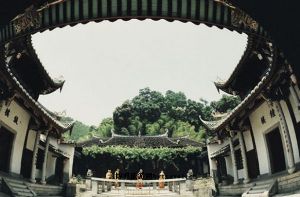
Kaiping Temple observes numerous Buddhist festivals, especially the Bathing the Buddha Festival on the eighth day of the fourth lunar month and the Guanyin Birthday, which are particularly lively. Monks and devotees from all directions come here to listen to sermons, worship the Buddha, and offer incense, creating an unending stream of visitors. As the most renowned ancient temple in northern Fujian, Kaiping Temple has, since the reform and opening-up, welcomed batches of overseas Buddhist disciples, contributing to the promotion of cultural exchanges between China and other countries. In 1982, Master Tan Chan from Singapore visited the temple and donated a bronze bell. Japanese eminent monk Mengchun Kukai personally inscribed the words “Compassionate Eyes Watching over All Beings, Blessings Gathered Like the Boundless Sea,” and gifted a finely painted “Bodhidharma Crossing the River” painting along with a wooden fish instrument. In January 1990, Venerable Kuanjing, Chairman of the North American Buddhist Association of California, USA, together with a Singaporean layperson, brought many Buddhist scriptures to donate to the temple. In September 1996, eminent monks and Buddhists from the United States, Singapore, Taiwan, and Hong Kong visited the temple and made donations for the restoration of the ancestral temple. In recent years, the number of people visiting Kaiping Temple for sightseeing, worship, and Buddhist practice has been continuous, reaching over 100,000 visitors each year.
Share
This article is published by HowToTrip. Sharing and reposting are welcome — please credit the source.
Article URL: https://www.howtotrip.net/travel-20645
Related Articles
- Shaoxing's "Grandpa Gourd" hangs the gourds back up: "If there are too many people, we'll interact less — just take a quick look from afar"
- Chinese authorities announce "reciprocal adjustment" to Japan visa fees — single-entry visa jumps from 2,250 to 16,750 yen!
- The "health stones" carried by a traveler were found to have radiation levels exceeding safety limits by a thousand times, potentially endangering fellow passengers on the same flight. Customs issues warning!
- Shenzhen Airport Issues Late-Night Notice: Unidentified Aerial Object Detected, Causing Widespread Flight Delays!
- “They only said it cost money after I opened the box and washed it!” 200g of grapes sold for 60 yuan on a high-speed train—12306 responds!
- Can't buy an airline ticket? Denied exit? Blocked from boarding? A large number of Chinese tourists have mysteriously become "discredited individuals"
- Adverse weather and economic fluctuations impact Colombia's coffee market
- Beach bathing area responds to 2 yuan/30 seconds fee for freshwater foot rinsing: Clearly priced!
- Taking off with an improperly closed cabin door? Wing malfunction? Multiple flights made emergency returns mid-journey!
- Experience the gifts of nature! A countdown of the world’s ten most stunning coastlines