Longjing Mountain
Longjing Mountain

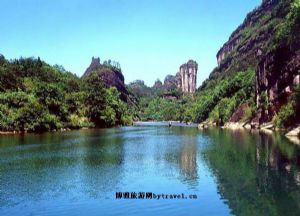
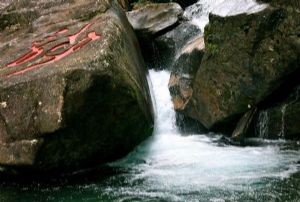
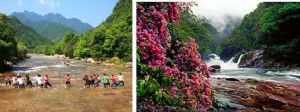
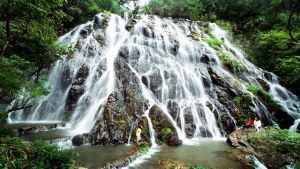
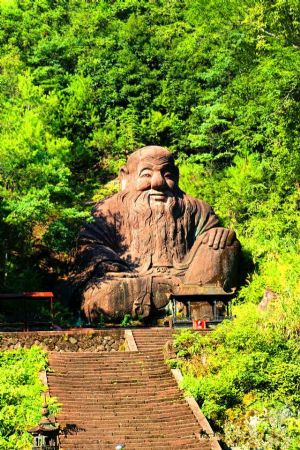
The scenic area is themed around “geographical feng shui culture,” with an average elevation of over 300 meters. It serves as a summer retreat due to its mild temperatures year-round. The terrain is a fault valley formed in the Cretaceous period, featuring steep cliffs and towering crags on both sides of the valley. The valley floor is rich in water sources, and the long-term scouring of the riverbed by thin-stream water has created multi-tiered waterfalls. The vegetation community is diverse, and the original ecological forest within the valley is well-preserved, with both broadleaf and coniferous forests. There are 118 species of seed plants, including 1 species under national first-class protection, 5 under national second-class protection, 2 under provincial key protection, and 11 under both national and provincial protection.
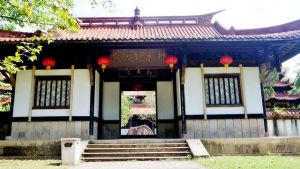
Boasting well-preserved natural landscapes, the valley offers a warm winter and cool summer. Key attractions include the Prayer-for-Rain Hall, Qiankun Hand Divination, and the Prayer-for-Water Well. The site also features representations of the Four Divine Beasts of feng shui: the Azure Dragon, White Tiger, Vermilion Bird, and Black Tortoise (the Black Tortoise, or “Xuanwu,” meaning black turtle-snake, symbolizes the turtle-snake; the Azure Dragon and White Tiger represent the 28 lunar mansions of the four directions—the Azure Dragon stands for the seven mansions of the east: Horn, Neck, Root, Room, Heart, Tail, and Winnowing Basket. These seven mansions resemble the shape of a dragon, evident even from their names: Horn is the dragon’s horn, Neck is the neck, Root is the base, Room is the shoulder, Heart is the heart, Tail is the tail, and Winnowing Basket is the end of the tail. The Azure Dragon is the dragon of the east, the White Tiger is the tiger of the west, the Vermilion Bird is the bird of the south, and the Black Tortoise is the tortoise of the north; yellow represents the central and right color.). Other highlights include the Yang Fish Eye Waterfall, the Earth Dragon Heart Cave—once bestowed by Emperor Jiaqing of the Qing Dynasty upon an eighth-rank official—and ritual altars used by generations of locals to pray for blessings.
Historical records indicate that since the Song Dynasty, the Prayer-for-Rain Hall at Longjing Mountain has been a place where locals prayed to deities for rain and blessings, becoming the most lively and influential rain-prayer site in eastern Wuyi. Whenever drought struck, villagers from nearby regions would flock to Longjing Mountain to pray for rain, creating a spectacular scene. To this day, remnants of the ancient rain-prayer water-drawing well remain.






Share
This article is published by HowToTrip. Sharing and reposting are welcome — please credit the source.
Article URL: https://www.howtotrip.net/travel-18123
Related Articles
- Shaoxing's "Grandpa Gourd" hangs the gourds back up: "If there are too many people, we'll interact less — just take a quick look from afar"
- Chinese authorities announce "reciprocal adjustment" to Japan visa fees — single-entry visa jumps from 2,250 to 16,750 yen!
- The "health stones" carried by a traveler were found to have radiation levels exceeding safety limits by a thousand times, potentially endangering fellow passengers on the same flight. Customs issues warning!
- Shenzhen Airport Issues Late-Night Notice: Unidentified Aerial Object Detected, Causing Widespread Flight Delays!
- “They only said it cost money after I opened the box and washed it!” 200g of grapes sold for 60 yuan on a high-speed train—12306 responds!
- Can't buy an airline ticket? Denied exit? Blocked from boarding? A large number of Chinese tourists have mysteriously become "discredited individuals"
- Adverse weather and economic fluctuations impact Colombia's coffee market
- Beach bathing area responds to 2 yuan/30 seconds fee for freshwater foot rinsing: Clearly priced!
- Taking off with an improperly closed cabin door? Wing malfunction? Multiple flights made emergency returns mid-journey!
- Experience the gifts of nature! A countdown of the world’s ten most stunning coastlines