Enshi Tusi City
Enshi Tusi City

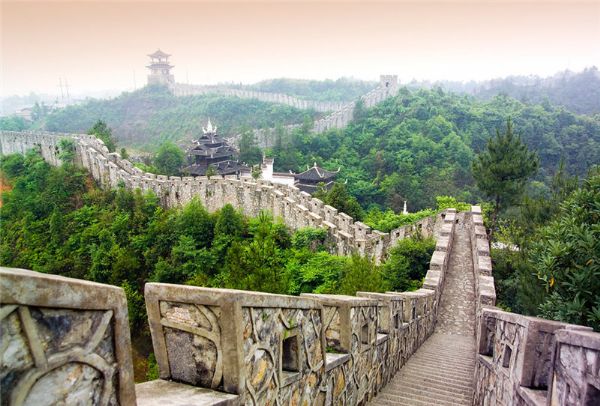
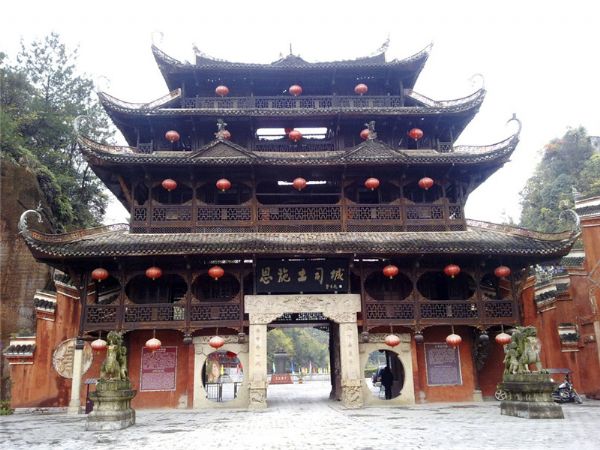
Enshi Tusi City is situated in the northwest of Enshi City, in a small locality called Duishanwan, just 500 meters from the municipal government seat. The site includes 12 scenic areas and over 30 attractions, such as the Gate Tower, Dong Minority Wind-Rain Bridge, Linjun Shrine, Drill Ground, Tujia Residential Houses, the Tusi King’s Palace—Jiujin Hall, City Walls, Bell Tower, Drum Tower, Hundred Flowers Garden, White Tiger Statue, Recumbent Tiger Iron Bridge, Tingtao Tea House, and Ethnic Art Garden.
The Tujia people have a long history and are descendants of the ancient Ba people. The Ba people originally lived in the Jianghan Plain area. Later, as the Chu people grew powerful and conflicts arose between the Ba and Chu, the Ba were defeated. They retreated to the region now known as the Qingjiang River, historically called the Yishui River, and advanced westward along the Yishui, extending their influence to eastern Sichuan. During the Spring and Autumn Period, they established the first slave-state of the Ba people, the Ba Kingdom. In 361 BC, they were conquered by the powerful Qin State. Some Ba people retreated to the Wuling region, which spans the borders of present-day Hunan, Hubei, Sichuan, and Guizhou, where they integrated with local tribes and gradually formed the Tujia ethnic group. The Tujia people refer to themselves as "Bizi Ka" or "Beijin Ka." During the Song Dynasty, the Ba people living in this region were called "Turen" (locals), and later the Tujia referred to incoming Han people as "Kehua" (guest families) and themselves as Tujia.
The Tusi system was a political management system in Chinese history whereby the central feudal dynasties governed ethnic minority regions with a degree of autonomy under nominal central allegiance. The Tusi system in the Tujia region began in the Yuan Dynasty and ended in the 13th year of the Yongzheng reign during the Qing Dynasty with the "abolition of the Tusi system and establishment of the regular administration" (改土归流). It spanned the Yuan, Ming, and Qing dynasties, lasting over 450 years. The relationship between the Tusi and the central feudal court was one where the Tusi paid tribute and pledged allegiance to the central authority, while the court granted them hereditary rule and autonomy. Tusi-controlled lands were not included in the official maps of the central dynasty, and their populations were not registered in the imperial household records. They held life-and-death power locally and dominated their territories. The Tusi king was essentially a local tribal emperor.
The Tusi governance structure in the Enshi Tujia region changed over different dynasties. The Yuan Dynasty established 29 Tusi offices, the Ming Dynasty had 31, and the Qing Dynasty had 20. The areas under Tusi jurisdiction included today’s regions south of the Qingjiang River in Enshi Prefecture, as well as parts of present-day Changyang and Wufeng counties, which now belong to Yichang.
Address: No. 138 Tusi Road, Enshi City
Type: Folk Village
Rating: AAAA
Recommended Visiting Time: 2–3 hours
Phone: 0718-8458166
Opening Hours:
8:00–17:00
Information Source: Official Website of the People's Government of Hubei Province
Share
This article is published by HowToTrip. Sharing and reposting are welcome — please credit the source.
Article URL: https://www.howtotrip.net/travel-17300
Related Articles
- Shaoxing's "Grandpa Gourd" hangs the gourds back up: "If there are too many people, we'll interact less — just take a quick look from afar"
- Chinese authorities announce "reciprocal adjustment" to Japan visa fees — single-entry visa jumps from 2,250 to 16,750 yen!
- The "health stones" carried by a traveler were found to have radiation levels exceeding safety limits by a thousand times, potentially endangering fellow passengers on the same flight. Customs issues warning!
- Shenzhen Airport Issues Late-Night Notice: Unidentified Aerial Object Detected, Causing Widespread Flight Delays!
- “They only said it cost money after I opened the box and washed it!” 200g of grapes sold for 60 yuan on a high-speed train—12306 responds!
- Can't buy an airline ticket? Denied exit? Blocked from boarding? A large number of Chinese tourists have mysteriously become "discredited individuals"
- Adverse weather and economic fluctuations impact Colombia's coffee market
- Beach bathing area responds to 2 yuan/30 seconds fee for freshwater foot rinsing: Clearly priced!
- Taking off with an improperly closed cabin door? Wing malfunction? Multiple flights made emergency returns mid-journey!
- Experience the gifts of nature! A countdown of the world’s ten most stunning coastlines