Keshiketeng Hot Springs
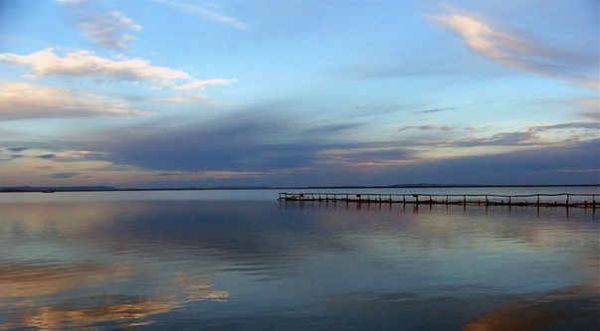
Lake Dali Nur

The Dali Nur Tourist Area combines a variety of landscapes. The main scenic area, Lake Dali, boasts abundant fish and beautiful waters, with birds singing joyfully. At the southern end of the lake lies Manduo Mountain, renowned for its steep terrain, majestic peaks, and numerous uniquely shaped rocks. To the west is the ruins of the King Lu City, built in 1271, which is a national cultural heritage site. At the westernmost point is the Fish Ponds Scenic Area, an ideal spot for fishing, sand bathing, and forest bathing.
The Bihai Yintan (Azure Sea & Silver Beach) Scenic Area is located on the southern shore of Lake Dali and is a newly developed attraction within the Dali Nur Tourist Scenic Area. To the east of this area lies the majestic Manduo Mountain, while to the south stretches the vast Hunshandake Sandy Land. The scenery here is picturesque and enchanting. The scenic zone features azure lake water, silver sandy beaches, lush willow shrubs, and tall, graceful reeds and bulrushes, all blending together to resemble a heavenly paradise on earth.
Manduo Mountain is a tourist, sightseeing, and leisure destination that encompasses mountains, lakes, sandy land, grasslands, and shrubbery. From atop Manduo Mountain, visitors can gaze into the distance: to the east lies the fertile and flat Gongger Grassland, rich in water and grass; to the south extends the boundless Hunshandake Sandy Land, white as snow and yellow as gold; to the west is a stretch of verdant shrubbery; and to the north lies the rippling waters of Lake Dali Nur. According to the "History of Yuan": "In the 24th year of Yuan (1278), the Mongolian Naiman tribe rebelled. Emperor Kublai Khan of the Yuan Dynasty personally led his troops to quell the rebellion. On his way, he stayed overnight at Yingchang. That night, a golden Buddha appeared in the sky atop the mountain, materializing like a shadow, ethereal... Subsequently, seven days and nights of Buddhist rituals were performed," culminating in a victorious battle. In the 2nd year of the Yuan Taiding era (1325), Princess Lu, the emperor’s aunt, along with Prince Lu Sangge Bulage, commemorated this event by constructing a Guanyin Hall next to a natural cave. It was named Longxing Temple, and the cave was called Jingfan Tian Shuiyun Cave. Today, the stone inscriptions of Longxing Temple and the ruins of Jingfan Tian Shuiyun Cave remain.

Share
This article is published by HowToTrip. Sharing and reposting are welcome — please credit the source.
Article URL: https://www.howtotrip.net/travel-17079
Related Articles
- Shaoxing's "Grandpa Gourd" hangs the gourds back up: "If there are too many people, we'll interact less — just take a quick look from afar"
- Chinese authorities announce "reciprocal adjustment" to Japan visa fees — single-entry visa jumps from 2,250 to 16,750 yen!
- The "health stones" carried by a traveler were found to have radiation levels exceeding safety limits by a thousand times, potentially endangering fellow passengers on the same flight. Customs issues warning!
- Shenzhen Airport Issues Late-Night Notice: Unidentified Aerial Object Detected, Causing Widespread Flight Delays!
- “They only said it cost money after I opened the box and washed it!” 200g of grapes sold for 60 yuan on a high-speed train—12306 responds!
- Can't buy an airline ticket? Denied exit? Blocked from boarding? A large number of Chinese tourists have mysteriously become "discredited individuals"
- Adverse weather and economic fluctuations impact Colombia's coffee market
- Beach bathing area responds to 2 yuan/30 seconds fee for freshwater foot rinsing: Clearly priced!
- Taking off with an improperly closed cabin door? Wing malfunction? Multiple flights made emergency returns mid-journey!
- Experience the gifts of nature! A countdown of the world’s ten most stunning coastlines