Bachu Populus Euphratica National Forest Park
Last updated 2026-11-16 — The Populus euphratica, or desert poplar, is a remarkable tree. In the Uyghur language, it is called "tokhrak," meaning "the most beautiful tree." It is renowned for the saying: "Three thousand years of life, three thousand years after death, and three thousand years of standing after falling."
Bachu Populus Euphratica National Forest Park
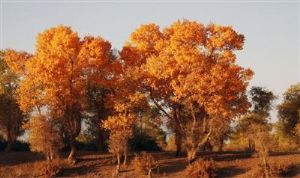
The Populus euphratica, or desert poplar, is a remarkable tree. In the Uyghur language, it is called "tokhrak," meaning "the most beautiful tree." It is renowned for the saying: "Three thousand years of life, three thousand years after death, and three thousand years of standing after falling." Bachu’s unique geographical environment has created stunning natural scenery. With over 3.16 million acres of pristine desert poplar forests—represented by the Xiamale, Xihe, and Golden Poplar Island forests—it forms the Bachu Populus Euphratica National Forest Park, home to the world’s largest contiguous natural stand of desert poplars. The forest is rich in wildlife, often inhabited by animals such as goitered gazelles, wild deer, pheasants, rabbits, and foxes. Local specialties like Bachu mushrooms, cynomorium, and apocynum are also widely known. The ancient Yarkand River carves out mirror-like small lakes across the flat forest landscape. Stepping into the desert poplar forest, you are greeted by an untamed atmosphere where you can feel the pulse of primal life. The majestic upward thrust of these trees showcases an indomitable spirit, while their uniquely sculpted forms reveal the grandeur of nature. It’s astonishing that these iron-hard trunks, dead for thousands of years, remain unrotted and stand proudly to this day. With tenacious will, they resist the encroachment of the desert, and in their presence, we can’t help but feel deep reverence.
Share
This article is published by HowToTrip. Sharing and reposting are welcome — please credit the source.
Article URL: https://www.howtotrip.net/travel-16474
Related Articles
- Shaoxing's "Grandpa Gourd" hangs the gourds back up: "If there are too many people, we'll interact less — just take a quick look from afar"
- Chinese authorities announce "reciprocal adjustment" to Japan visa fees — single-entry visa jumps from 2,250 to 16,750 yen!
- The "health stones" carried by a traveler were found to have radiation levels exceeding safety limits by a thousand times, potentially endangering fellow passengers on the same flight. Customs issues warning!
- Shenzhen Airport Issues Late-Night Notice: Unidentified Aerial Object Detected, Causing Widespread Flight Delays!
- “They only said it cost money after I opened the box and washed it!” 200g of grapes sold for 60 yuan on a high-speed train—12306 responds!
- Can't buy an airline ticket? Denied exit? Blocked from boarding? A large number of Chinese tourists have mysteriously become "discredited individuals"
- Adverse weather and economic fluctuations impact Colombia's coffee market
- Beach bathing area responds to 2 yuan/30 seconds fee for freshwater foot rinsing: Clearly priced!
- Taking off with an improperly closed cabin door? Wing malfunction? Multiple flights made emergency returns mid-journey!
- Experience the gifts of nature! A countdown of the world’s ten most stunning coastlines