Yuanling Longxing Temple
Yuanling Longxing Temple

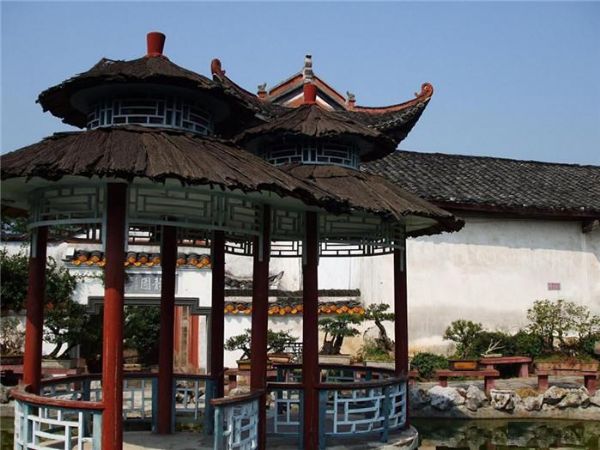
Originally built in the second year of the Zhenguan era during the Tang Dynasty (628 A.D.), the temple has undergone multiple renovations over the centuries. Covering an area of about 20,000 square meters, it boasts a majestic presence and currently features more than 10 structures including the Mountain Gate, the Mahavira Hall, and the Guanyin Pavilion. The Mahavira Hall is the main building of the temple, featuring a double-eaved hip-and-gable roof. The central bay of the hall is spacious, with eight nanmu (Phoebe nanmu) inner columns each with a diameter of over 80 centimeters. Between the column bases and the foundation stones are embedded drum-shaped wooden branches, and the stone bases are shaped like inverted lotuses. The front of the hall also hangs a plaque inscribed with the words “眼前佛国” (Buddha’s Realm Before One’s Eyes) by Dong Qichang, a calligrapher from the Ming Dynasty (1368–1644 A.D.). In addition, the temple preserves many historical relics left by notable figures throughout various dynasties.
Longxing Temple provides valuable physical materials for the study of ancient Chinese architecture, culture, and more. (National Cultural Heritage Administration)
Share
This article is published by HowToTrip. Sharing and reposting are welcome — please credit the source.
Article URL: https://www.howtotrip.net/travel-14929
Related Articles
- Shaoxing's "Grandpa Gourd" hangs the gourds back up: "If there are too many people, we'll interact less — just take a quick look from afar"
- Chinese authorities announce "reciprocal adjustment" to Japan visa fees — single-entry visa jumps from 2,250 to 16,750 yen!
- The "health stones" carried by a traveler were found to have radiation levels exceeding safety limits by a thousand times, potentially endangering fellow passengers on the same flight. Customs issues warning!
- Shenzhen Airport Issues Late-Night Notice: Unidentified Aerial Object Detected, Causing Widespread Flight Delays!
- “They only said it cost money after I opened the box and washed it!” 200g of grapes sold for 60 yuan on a high-speed train—12306 responds!
- Can't buy an airline ticket? Denied exit? Blocked from boarding? A large number of Chinese tourists have mysteriously become "discredited individuals"
- Adverse weather and economic fluctuations impact Colombia's coffee market
- Beach bathing area responds to 2 yuan/30 seconds fee for freshwater foot rinsing: Clearly priced!
- Taking off with an improperly closed cabin door? Wing malfunction? Multiple flights made emergency returns mid-journey!
- Experience the gifts of nature! A countdown of the world’s ten most stunning coastlines