Mangdang Mountain Han Culture Scenic Area
Mangdang Mountain Han Culture Scenic Area
Opening Hours:
8:30–16:40
Ticket: Baoshan Mountain Three Attractions (including Liang Xiaowang Tomb, Liang Xiaowang Li Wanghou Tomb, Liang Gongwang Tomb) Combo Ticket: 60 RMB/person
Hanxingyuan Scenic Area: 30 RMB/person; Chen Sheng Garden Scenic Area: 15 RMB/person; Fuzishan Scenic Area: 15 RMB/person
Preferential Policies:
1. Children under 1.4m are exempt from ticket fees (must be accompanied by an adult), Henan Province Senior Citizen Preferential Certificate, Disabled Veterans, People with Disabilities, Active-duty Military Personnel, Journalists, Seniors (Half-price: 60–69 years old with valid ID, free entry for those over 70), Tour Guides with valid credentials are exempt, Full-time Students with valid student IDs and residents of Shangqiu City (including six counties, one city, and two districts) receive half-price tickets.
Notes:
1. Tickets are non-refundable and non-exchangeable once sold, valid only for the day of purchase, and tearing off the stub renders the ticket invalid.
2. All the above discounts require valid personal identification (except A1)
Best Travel Time for the Scenic Area:
The optimal visiting period is from March to October each year.
Contact: 0370-5970222 5970777
Address: Shiyuan Village, Mangshan Town, Yongcheng City, Shangqiu, Henan Province
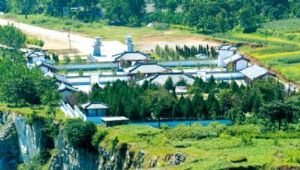
Mangdang Mountain Han Culture Scenic Area is located in Yongcheng City, Henan Province, at the junction of Henan, Shandong, Jiangsu, and Anhui provinces. It is just 1 kilometer from the Yongcheng exit of the Lianyungang–Khorgas Expressway and is an emerging Han cultural tourism destination on the eastern border of Henan. The scenic area spans fourteen square kilometers and consists of a small cluster of over ten hills. Amidst the vast plains of eastern Henan, this unique hill cluster stands out like a “fairy” descending from the sky—graceful, elegant, and captivatingly beautiful. In 2002, it was included in Henan Province’s “0-Line” Golden Tourism Belt. In September 2006, the scenic area was rated as a National
“AAAA”-level Tourist Attraction. In 2009, it was listed as a Henan Provincial Civilized Tourism Scenic Area. It was awarded the title of “China’s International Most Promising Tourist Destination” by the China Cultural Development Promotion Association.
“A mountain need not be high; it is famous so long as there is a deity on it.” Mangdang Mountain is closely linked with many notable figures in Chinese history, presenting itself like a historical scroll before the world, or a monument standing tall on the vast plains, adorned with beautiful and moving stories at every turn. Confucius took shelter here during his travels across the states; Emperor Qin Shi Huang, sensing the aura of an emperor in the southeast, traveled east to suppress it; Emperor Gaozu of Han, Liu Bang, hid in Ziqi Rock, where he slew a white snake, raised the rebellion banner, and founded his empire; Emperor Wen of Han, Liu Heng, built the Temple of Emperor Gaozu here and personally came to worship; Cao Cao led troops into Dangshan, excavated Liang Xiaowang’s tomb, and seized tens of thousands of catties of gold and treasures; Zhang Fei, after being defeated in battle, fled to Mangdang Mountain, where he built a stronghold and trained his troops; the poets Gao Shi, Li Bai, Du Fu, and Zhu Zhishan toured Mangdang Mountain, leaving behind timeless poetry; heroes from Water Margin such as Fan Rui, Xiang Chong, and Li Gun gathered in Mangdang Mountain to form a brotherhood, while Song Jiang, Wu Yong, and Gongsun Sheng came to recruit them—the novel includes a chapter titled “Gongsun Sheng Subdues Demons at Mangdang Mountain”; anti-Japanese national hero Lu Yuting shed blood at Li Heilou and rests forever at the foot of Mangdang Mountain. The mountain gains fame through its people, and the people shine because of the mountain. The mountain overflows with splendor and charm, while the people shine brilliantly in the annals of history.
Numerous historical figures have left behind a rich cultural and tourism heritage on Mangdang Mountain. Here you can find the Wensheng Garden where Confucius performed rites, the miraculous Han Gaozu Slays the Snake Stele with its legendary light and shadow effects, the tomb of Chen Sheng, the leader of China’s first peasant uprising—its inscription personally penned by Mr. Guo Moruo. The grand burial complex of the Western Han Liang Kings, praised by experts and scholars as the “Foremost Stone-Chamber Tomb Under Heaven,” is twice the size of Beijing’s Dingling Tomb in the Ming Thirteen Tombs. The jade burial suit sewn with gold thread unearthed here was displayed in Singapore as an envoy of the establishment of diplomatic relations between China and Singapore. The colorful murals of the Four Divine Beings unearthed here remain vivid after more than two thousand years and have been hailed by experts as the “Dunhuang Before Dunhuang” and the “Dunhuang Beyond Dunhuang.” Other attractions include the Songfeng Terrace, Chidi Peak, Yulong Spring, and Mangshan Academy. Truly, every corner of Mangdang Mountain is a treasure, and every hill has its own charm, attracting countless cultured individuals to wander and linger. In this flourishing era, we sing praises of our vibrant times. Since ancient times, poems and verses eulogizing Mangdang Mountain have been as numerous as pearls falling onto a jade plate or waterfalls plunging into deep pools; as brilliant as stars in the sky or murmuring streams. In recent years, paintings depicting Mangdang Mountain and photography works capturing its scenery have bloomed like rare flowers in newspapers, magazines, and websites.
Currently, the Mangdang Mountain Han Culture Scenic Area has four open scenic zones: Baoshan Mountain Royal Tomb Scenic Area, Hanxingyuan Scenic Area, Fuzishan Scenic Area, and Chen Sheng Royal Tomb Scenic Area. Scenic areas under construction include the Liu Bang Cultural Theme Park, Han Culture Museum, and Wensheng Garden Scenic Area.
I. Baoshan Mountain Royal Tomb Scenic Area:
Located within Baoshan Mountain of Mangdang Mountain, the Western Han Liang Royal Tomb Complex is one of the main attractions of the Mangdang Mountain Han Culture Scenic Area. This tomb complex is a rare and large-scale stone-chamber tomb site in China and even the world. It carves mountains into tombs and tunnels through stone to create chambers, featuring a complex yet majestic structure that resembles an underground palace. Its scale and level of sophistication are extremely rare. Currently, three sites are open to visitors: the Tomb of Liang Xiaowang’s Queen, the Tomb of Liang Xiaowang Liu Wu, and the Tomb of Liang Gongwang. The largest among them is the Tomb of Liang Xiaowang’s Queen, which is twice the size of Beijing’s Dingling Tomb in the Ming Thirteen Tombs.
1. Tomb of Liang Xiaowang’s Queen:
Located on the northern peak of Baoshan Mountain, the underground palace is 210.5 meters long from east to west, 72.6 meters at its widest point, with a total floor area of over 1,600 square meters and a total volume of over 6,500 cubic meters. It is a massive underground palace complex consisting of two tomb passages, three corridors, two main chambers, and thirty-four side chambers. It predates Beijing’s Ming Thirteen Tombs by 1,300 years and is more than twice the size of Beijing’s Ming Dingling Tomb, earning it the title “Foremost Stone-Chamber Tomb Under Heaven” from archaeological circles both in China and abroad. Its internal structure is designed based on the layout of Han imperial palaces, including a front courtyard, carriage room, corridor, reception hall, bedroom, veranda, ice cellar, stable, armory, cupboard, grain storage, front courtyard, rear chamber, bathroom, toilet, kitchen, tunnel, and drainage system.
This underground palace has four remarkable features: First, it houses China’s earliest and exquisitely carved stone toilet seat, similar in function to modern flush toilets but predating them by over 2,000 years. Second, it has an ice cellar for food storage, equivalent to a modern refrigerator. Third, it offers a spectacular “line of heaven” view. Standing beside the statue of Queen Li, looking east, you can see a narrow strip of sky—a marvel of design. Fourth, there is an underground passage between the Tomb of Liang Xiaowang and the Tomb of the Queen, called the “Longing Path,” meant to be a spiritual meeting place for the king and queen. Unfortunately, it was left unfinished when the queen passed away, leaving behind eternal regret.
2. Tomb of Liang Xiaowang Liu Wu:
This tomb consists of a tomb passage, corridor, main chamber, corner chambers, veranda, and drainage system. It is a large horizontal cave-style stone cliff tomb from the early Western Han Dynasty, artificially carved out of hard cliff rock. It is 96 meters long, 32 meters at its widest, and covers an area of about 700 square meters. The tomb entrance is U-shaped, secured at the top with trapezoidal stone slabs, making it extremely sturdy and remarkably well-preserved to this day. Many architecture experts who have visited have marveled at it, believing it could rewrite the history of Chinese architecture. Its design concepts remain valuable references for modern engineering. (Historians previously believed that arched roof architecture was introduced from the Western Regions after Emperor Wu of Han opened the Silk Road, but Emperor Wu ascended the throne in 140 BC, while Liang Xiaowang died in 144 BC—predating the previously understood timeline by a significant margin.) In the late Eastern Han Dynasty, Cao Cao led troops to raid the tomb, broke open the coffins, and looted all the treasures, seizing 72 boatloads of gold and silver. These funds sustained his army for three years and laid the economic foundation for his bid to dominate the realm.
3. Tomb of Liang Gongwang:
The most exquisite tomb in the Bao'an Mountain Scenic Area is the Tomb of King Liang Gong, discovered in 1986, excavated in 1987, and completed in 1991. It was rated as one of the "Top Ten Archaeological Discoveries in China in 1991." As a large cliff tomb, it faces west and was manually carved into hard rock. The entire underground palace consists of a tomb passage, corridor, main chamber, side chambers, passageways, and a drainage system, stretching over 70 meters in length with a total area of 383 square meters. Experts have confirmed that the tomb's owner was Liu Mai, the eldest son of Liu Wu, King Xiao of Liang, making it over 2,100 years old. Liu Mai, the eldest son of King Xiao of Liang, succeeded him as King of Liang and is historically known as King Gong of Liang. The underground palace yielded a national treasure-level cultural relic that caused a sensation in the fields of archaeology and art—the colored mural "Four Spirits and Clouds." The mural features the Azure Dragon, White Tiger, and Vermilion Bird as central motifs, adorned with swirling clouds and ribbons piercing through the wall. Despite being over two thousand years old, the colors remain vivid. Experts have praised it as the "Dunhuang before Dunhuang" and the "Dunhuang outside Dunhuang." Although the tomb has been looted multiple times, a hidden money vault was fortunately preserved beneath the blocking stones in the tomb passage. It contained 2.25 million Han Dynasty "ban liang" copper coins, weighing 5.5 tons, along with over 10,000 gilded horse and chariot ornaments, more than 40 cavalry and maid figurines, all providing valuable materials for the study of Han culture.
2. Hanxingyuan Scenic Area:
Hanxing Garden is a tourist attraction built to commemorate Emperor Gaozu of Han, Liu Bang, for his achievement in launching the rebellion against the Qin Dynasty by slaying a serpent, which led to the founding of the over 400-year-long Han Dynasty. It showcases Liu Bang’s historical contributions in the anti-Qin uprising and the establishment of the Han Dynasty. The garden systematically displays the glorious 400-year history of the Han Dynasty and the merits and demerits of its emperors on their respective historical stages. It reflects the political, economic, military, technological, cultural, and agricultural advancements of the Han Dynasty that propelled historical progress. Hanxing Garden is a complex of antique-style architecture, consisting of a square, memorial archway, entrance hall, Slaying the Serpent Palace, stele pavilion, east and west wing rooms, line-engraved stele corridor, and rear main hall.
The most breathtaking sight in Hanxingyuan is the stone stele commemorating Emperor Gaozu slaying the serpent. Erected for the third time in 1982, in March 1983, a driver noticed a human figure appearing on the stele while driving at night. Since then, many have come to see it. Despite various speculations, no one can deny this "miracle under heaven" on the stele. When night falls and lights shine directly on the stele, the over two-meter-tall structure suddenly disappears, revealing instead the golden image of an emperor seemingly walking toward you. He wears a imperial crown, a dragon robe, a jade belt around his waist, and tall boots. One hand strokes his black beard, the other rests on his sword, creating a striking three-dimensional effect, as if he were a figure from a painting—Liu Bang in his warrior days brought back to life. Multiple TV stations, including CCTV’s "Into Science," "Traveling Across China," "Journey of Discovery," China Travel Satellite TV, Phoenix TV Chinese Channel, Fujian TV, Hunan TV, and Taiwan’s CTi TV, have attempted to solve the mystery, but it remains unsolved to this day.
3. Chen Sheng Garden Scenic Area
Chen Sheng Garden Scenic Area is the resting place of the hero Chen Sheng from Daze Village. Throughout China’s over 2,000-year feudal history, every dynastic change originated from peasant uprisings, as the will of the common people has always shaped the course of history. This site serves as an educational base for historical materialism, showcasing 20 large-scale and influential peasant uprisings over the past two millennia. Based on historical facts and presented through line-engraved steles, it tells many poignant stories. Figures such as Chen Sheng, Zhang Jiao, Huang Chao, Zhu Yuanzhang, Li Zicheng, and Hong Xiuquan—names that struck fear into the hearts of feudal emperors—these grassroots heroes who rose from the soil and streets, gather here. Their achievements, failures, and impacts on their time and future generations are open for public interpretation.
Chen Sheng Garden Scenic Area consists of a gate tower, mountain gate, front hall, main hall, steles, tomb mound, and east and west wing rooms. The existing tomb mound is a stone-vaulted structure, 5 meters high with a circumference of about 200 meters, surrounded by bluestone. In front of the tomb stands a stele inscribed with Guo Moruo’s handwriting: "Tomb of Chen Sheng, Leader of the Peasant Uprising at the End of the Qin Dynasty."
4. Fuzishan Scenic Area:
Fuzishan Scenic Area is located in the western part of Mangdang Mountain and is named after Confucius taking shelter from rain here during his travels across the states. Though not large, it is the only mountain in China named "Fuzi" (Confucius). The mountain is famous because of the man, and since ancient times, it has attracted countless visitors seeking history and legends, leaving behind many renowned poems and stories. Major attractions in Fuzishan Scenic Area include the Confucian Temple, Guanyin Pavilion, Fuzi Rain Shelter, Guo Pagoda, and two Han Dynasty tombs.
Fuzi Rain Shelter is located on the southern slope of Fuzishan, southwest of the main peak of Mangdang Mountain. It is a natural cliff with a semi-collapsed pot-shaped stone chamber beneath, 6.5 meters deep, 20 meters wide, and about 4 meters at its highest point. Legend says that in the late Spring and Autumn period, Confucius and his disciples were traveling through the states en route from Cao to Song when they encountered heavy rain on Mangdang Mountain and took shelter here. To commemorate Confucius, a stone statue was later placed inside the cave. The statue depicts Confucius sitting cross-legged with hands clasped in salute, facing south, though his face is now damaged. Many stone carvings are found outside the cave, with only two damaged Ming Dynasty steles remaining on the east side, their inscriptions blurred. They were erected during the Wanli era of the Ming Dynasty. In front of Fuzi Cliff is a Book-Drying Platform. Legend says Confucius and his disciples dried their books here after the rain, hence the name. Locals claim dew never forms on the platform at night, making it suitable for drying grain overnight. Fuzi Cliff is also one of Yongcheng’s Eight Ancient Scenic Spots, known as "Dripping Emerald Cliff."
The Confucian Temple, also called Fuzi Temple, was first built during the Song Dynasty. It was damaged by war in the late Ming Dynasty and underwent several restorations in the 13th and 30th years of the Kangxi reign (1674, 1691), the 10th year of the Xianfeng reign (1860), and the 27th year of the Republic of China (1938). The temple faces south and consists of the Dacheng Hall, east and west side rooms, and Dacheng Gate. Two ancient cypresses and three steles stand in the courtyard. One is the "Fuzi Temple Stele Inscription" written by Kong Yukuang, the 67th-generation descendant of Confucius and Duke Yansheng, in the 28th year of Kangxi (1689). Another is the "Fuzi Cliff Stele Inscription" by County Magistrate Zhou Zhengji in the 30th year of Kangxi, and the "Inscribed Stone Stele Inscription" by Kong Zhaojuan, the 71st-generation descendant of Confucius, in the 15th year of Qianlong (1750). The western cypress leans against a stele, forming the "Cypress Embracing Stele" landscape.
Guanyin Pavilion is located in front of Fuzi Rain Shelter and west of the Confucian Temple. It is a two-bay pavilion-style building with the indoor floor over a meter higher than the outdoor level. A door faces south, and inside are statues of Guanyin, Manjushri, and Samantabhadra. Three steles remain in front of the pavilion.
About 60 meters east of Fuzi Cliff are three Qing Dynasty Buddhist pagodas arranged in a triangular formation, collectively called Guo Pagoda. Two stone pagodas stand in the front, and a brick pagoda is positioned about 10 meters north in the center. The brick pagoda is about 10 meters tall, designed in a pavilion-style imitation. The eastern stone pagoda is about 7 meters high, with five tiers and an octagonal dense-eave design, standing on a 1.2-meter-high base with a diameter of 2 meters. The base supports five tiers made of angled octagonal stone drums and disks. The western stone pagoda is 6 meters tall, topped with a stone bottle finial, and shares a similar structure to the eastern one.
5. Under-Construction Scenic Areas of Mangdang Mountain
1. Han Culture Museum
The Mangdang Mountain Han Culture Museum was built to fully showcase Yongcheng’s Han culture and allow the public to gain an in-depth understanding of it. The layout follows the Five Elements, Nine Palaces, and Bagua principles, forming a radial and interconnected design centered around the main building. It features four gates: Zhuque, Xuanwu, Qinglong, and Baihu. The main structure has one basement level and three above-ground floors. The first, second, and third floors house two central exhibition halls, one observation hall, and twelve display rooms. The fourth floor is a tea lounge, while the two mezzanines serve as utility spaces, and the basement functions as a collection storage and facility area.
2. Wenshengyuan Scenic Area
Wenshengyuan is named for being located east of the Confucian Temple on Fuzishan. It aims to better protect and display the cultural relics of Fuzishan, enhance their historical and cultural value, enrich their cultural content, and diversify the scenic area. The planned cultural exhibits focus on four aspects: Confucian culture, stele engraving art, classic garden art, and literary and sports arts.
3. Mangdang Mountain Liu Bang Culture Theme Park Scenic Area
This is the first phase of the project developed by Yongcheng Shangdu Tourism Investment Co., Ltd. in Mangdang Mountain, with an estimated total investment of about 300 million yuan and a construction period of three years. The development focuses on the northern peak of Mangdang Mountain. Key features include: the main gate landscape with Zhang Fei’s Fort, Horse Drinking Spring, Liu Bang Statue and supporting facilities, Worship Platform, Wangzu Pavilion, Riwu Pavilion, Grotto Red Emperor Statue, Longxing Pool, Chinese Zodiac Garden, and Sanxing Temple; as well as an outdoor adventure training base.
6. Han Culture Activities at Mangdang Mountain Scenic Area
Establishing its own brand is the goal of Mangdang Mountain Scenic Area. The Han Dynasty material cultural relics preserved here are the most abundant and best-maintained in China. By complementing them with intangible Han cultural elements, the area can truly shine. This approach transcends museum-style visits, bringing the scenic area to life. Han civilization is the core of Chinese civilization, inheriting the Zhou and Qin cultures, with etiquette as its hallmark. Creating the brand of a "Han Culture Etiquette Scenic Area" opens new development ideas and opportunities. In recent years, the area has focused on developing Han etiquette experience activities such as "wearing Han clothing, learning Han etiquette, enjoying Han dance, and dining on Han banquets." These include "Kaibi Ceremony" for children about to start school, "Chengtong Ceremony" for youths transitioning out of childhood, "Chengren Ceremony" symbolizing maturity for high school and university students, "Han Wedding Ceremony" for newlyweds, "Han Banquet Ceremony" for tourists, groups, and schools, and "Respect-for-the-Aged Ceremony" promoting filial piety for seniors. On weekends and public holidays, the area also presents the large-scale situational drama "King Liang Greets Guests," where visitors can wear Han clothing, learn Han etiquette, and engage in activities like archery and ring-pushing, ensuring a fun experience. These offerings have received high praise from visitors and full recognition from the Henan Provincial Etiquette Culture Development Promotion Association.
7. Transportation Information for Mangdang Mountain
G30 Lianyungang–Khorgas Expressway runs across the Mangdang Mountain Scenic Area. Exiting at the Yongcheng Mangshan Station (Km 297) and traveling just 1.5 kilometers leads to the scenic area. The under-construction Ji–Qi Expressway (Jining, Shandong to Qimen, Anhui) and Yong–Deng Expressway (Yongcheng to Dengfeng) integrate the Mangdang Mountain Han Culture Scenic Area into a cross-shaped highway network. Additionally, the under-construction Zheng–Xu High-Speed Railway will feature a station 2 kilometers north of the scenic area, enabling high-speed rail access to regional hubs like Zhengzhou, Hefei, and Jinan within one hour. The scenic area is less than 100 kilometers from both Xuzhou Guangjian Airport in Jiangsu and Shangqiu Airport in Henan, ensuring convenient connections to major domestic cities.
8. Food and Specialties of Mangdang Mountain
Visitors can try local dishes such as old-stock five-spice lamb head, Chengcheng five-spice carp, Renhu fragrant dog meat, farmhouse wild mushroom chicken, and large chunks of braised mutton. Breakfast options include Yongcheng specialties like beef water-fried buns, plain bean porridge, sha soup, mahufu soup, and richly flavored oil tea. Local specialties for purchase include Yongcheng Fengzhuang jujube, small-ground chili oil, fragrant chili sauce, Longgang roast chicken, crystal mung bean starch sheets, Mangdang Mountain apricots, Mangdang Mountain crisp pears, and authentic farm sweet potato noodles.
Service phone: 0370-5970777 5976226
Website: WWW.mangshan.net
Address: Mangshan Town, Yongcheng City, Henan Province (1 km right from Yongcheng Mangshan Exit at Km 296 on Lianyungang–Khorgas Expressway)
Source: Dengkou County Tourism Bureau
Share
This article is published by HowToTrip. Sharing and reposting are welcome — please credit the source.
Article URL: https://www.howtotrip.net/travel-14829
Related Articles
- Shaoxing's "Grandpa Gourd" hangs the gourds back up: "If there are too many people, we'll interact less — just take a quick look from afar"
- Chinese authorities announce "reciprocal adjustment" to Japan visa fees — single-entry visa jumps from 2,250 to 16,750 yen!
- The "health stones" carried by a traveler were found to have radiation levels exceeding safety limits by a thousand times, potentially endangering fellow passengers on the same flight. Customs issues warning!
- Shenzhen Airport Issues Late-Night Notice: Unidentified Aerial Object Detected, Causing Widespread Flight Delays!
- “They only said it cost money after I opened the box and washed it!” 200g of grapes sold for 60 yuan on a high-speed train—12306 responds!
- Can't buy an airline ticket? Denied exit? Blocked from boarding? A large number of Chinese tourists have mysteriously become "discredited individuals"
- Adverse weather and economic fluctuations impact Colombia's coffee market
- Beach bathing area responds to 2 yuan/30 seconds fee for freshwater foot rinsing: Clearly priced!
- Taking off with an improperly closed cabin door? Wing malfunction? Multiple flights made emergency returns mid-journey!
- Experience the gifts of nature! A countdown of the world’s ten most stunning coastlines