Martyrs' Cemetery of the Southern Anhui Incident
Martyrs' Cemetery of the Southern Anhui Incident

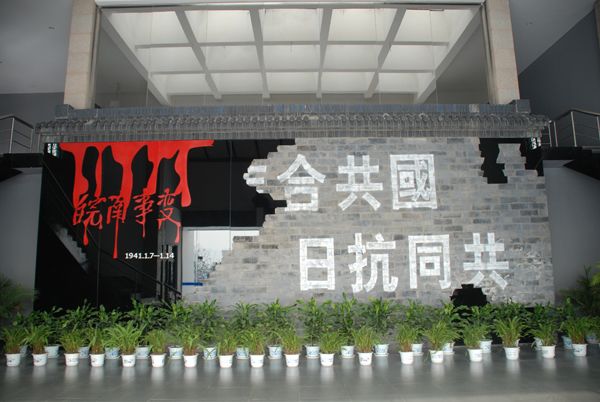
The entire cemetery consists of four memorial spatial sequences: the Entrance Memorial Monument, the Theme Square, the Main Monument Memorial Square, and the Tomb of the Unknown Heroes, organically combined with the Exhibition Hall of Historical Materials on the Southern Anhui Incident. Centered around the memorial monument inscribed with the words “Eternal Glory to the Martyrs of the Southern Anhui Incident” personally written by [leader’s name], and integrating with the mountain terrain, the various memorial structures form a complete, solemn, and dignified unity.
At the entrance of the cemetery stand four seven-meter-high stone archways with distinctive Southern Anhui features. The number four symbolizes the four regiments of the New Fourth Army, while the height of seven meters represents the tragic and arduous seven days and nights of the Southern Anhui Incident, forming the first sequence of the memorial space.
Upon entering the cemetery, after ascending thirty meters along the steps, you will reach an irregular small square. On the facing retaining wall is inlaid a stone tablet inscribed with “Martyrs' Cemetery of the Southern Anhui Incident,” written by Ye Fei, highlighting the theme of the cemetery and forming the second sequence of the memorial space.
Turning right from the square, there is a 50-meter-long Sacred Path with ninety steps. The fifty meters signify the 50th anniversary of the Southern Anhui Incident. The ninety steps are divided into three levels, representing the nine thousand soldiers of the New Fourth Army who advanced eastward in three columns to fight against the Japanese. Walking up the Sacred Path and passing through the Gate of Remembrance, you enter the third spatial sequence, which includes the Monument, the Memorial Corridor, the Mourning Square, and the Tomb of the Unknown Heroes. The Monument is situated on the central axis between the Memorial Square and the Sacred Path. Standing 12.36 meters high and 27 meters wide, its polished black granite surface is inlaid with the inscription “Eternal Glory to the Martyrs of the Southern Anhui Incident” written by [leader’s name].
The inscription is featured on the arc-shaped, soaring body of the monument, whose simple yet grand form symbolizes the open and upright hearts and the noble, great spirit of sacrifice of the martyrs. Below the monument is a wreath carved from white marble.
The Memorial Corridor features nine large traditional Southern Anhui-style circular pillars. Among them, only two are intact, while the rest are uneven and broken, symbolizing that although most of the nine thousand soldiers perished, two thousand managed to break through successfully. The seven sections of the Memorial Corridor and the nine pillars also represent how the New Fourth Army grew into a force of seven divisions and over ninety thousand soldiers fighting in the War of Resistance after the Southern Anhui Incident.
The Main Monument and the Tomb of the Unknown Heroes are combined together, and the architectural space within the monument forms the fourth memorial spatial sequence. On the sacrificial platform of the martyrs’ tomb, an eternal flame burns continuously, symbolizing that the spirit of the martyrs will never be extinguished.
The Historical Materials Exhibition Hall in the cemetery displays inscriptions by the General Secretary and the Premier for the 50th anniversary of the Southern Anhui Incident: “The loyal bones are buried in the green hills; their spirit nurtures future generations,” and “Carry forward revolutionary heroism; the indomitable spirit of the martyrs of the Southern Anhui Incident lives on.”
Share
This article is published by HowToTrip. Sharing and reposting are welcome — please credit the source.
Article URL: https://www.howtotrip.net/travel-14386
Related Articles
- Shaoxing's "Grandpa Gourd" hangs the gourds back up: "If there are too many people, we'll interact less — just take a quick look from afar"
- Chinese authorities announce "reciprocal adjustment" to Japan visa fees — single-entry visa jumps from 2,250 to 16,750 yen!
- The "health stones" carried by a traveler were found to have radiation levels exceeding safety limits by a thousand times, potentially endangering fellow passengers on the same flight. Customs issues warning!
- Shenzhen Airport Issues Late-Night Notice: Unidentified Aerial Object Detected, Causing Widespread Flight Delays!
- “They only said it cost money after I opened the box and washed it!” 200g of grapes sold for 60 yuan on a high-speed train—12306 responds!
- Can't buy an airline ticket? Denied exit? Blocked from boarding? A large number of Chinese tourists have mysteriously become "discredited individuals"
- Adverse weather and economic fluctuations impact Colombia's coffee market
- Beach bathing area responds to 2 yuan/30 seconds fee for freshwater foot rinsing: Clearly priced!
- Taking off with an improperly closed cabin door? Wing malfunction? Multiple flights made emergency returns mid-journey!
- Experience the gifts of nature! A countdown of the world’s ten most stunning coastlines