Qinghai Lake
Qinghai Lake

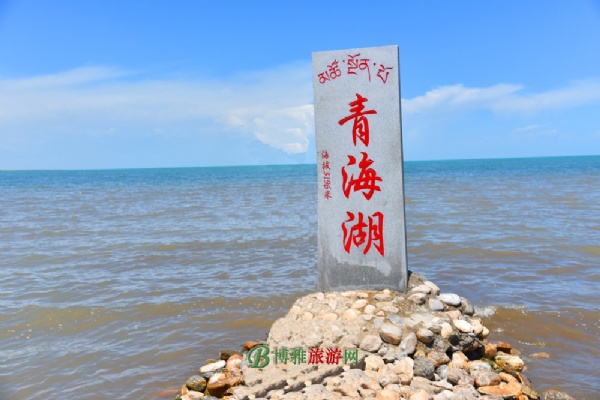
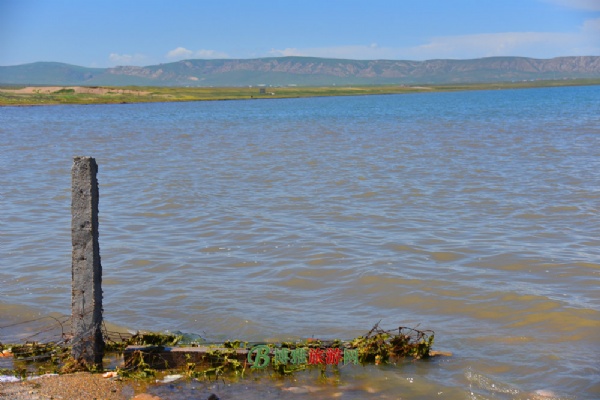
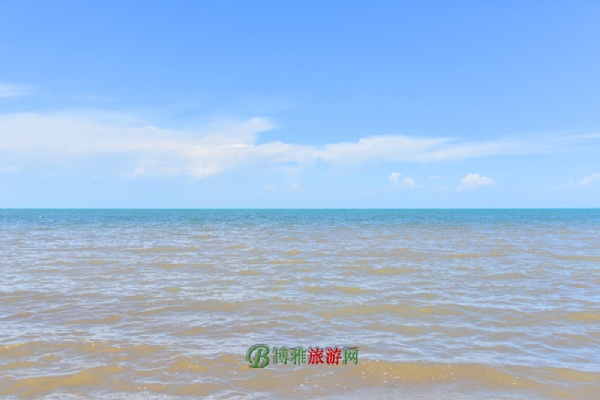
Qinghai Lake has been recognized by the World Record Association as China's largest saltwater lake and China's largest inland lake. It boasts numerous superlatives in China and is a national AAAAA-level nature scenic area.
Qinghai Lake freezes every year in December, with the ice lasting for six months and a thickness of over half a meter. There are five small islands in the lake, the largest being Haixin Mountain. Bird Island, located in the western part of the lake, covers an area of 0.11 square kilometers and serves as a breeding ground for more than 10 species of migratory birds, including bar-headed geese, fish gulls, and cormorants, with a population exceeding 100,000. A bird island nature reserve has been established. The lake is rich in Qinghai naked carp, and the lakeside grasslands serve as excellent natural pastures.
Islands in the lake:
Haixin Mountain
Located slightly south of the center of Qinghai Lake, about 25 kilometers from Bird Island, Haixin Mountain is elongated in shape, wider in the middle and narrower at both ends. It stretches 2.3 kilometers in length and 0.8 kilometers in width, covering an area of 1.14 square kilometers. The highest point on the island rises to an elevation of 3,266 meters and consists of granite and gneiss. There is a spring on the eastern edge of the island that provides potable water. The southern edge features bare rocks forming steep cliffs, while the eastern, western, and northern sides consist of gentle beaches. Most of the island is covered with sandy soil, supporting vegetation such as feather grass, needlegrass, Astragalus falcatus, Kobresia, narrowleaf yellowroot, and Siberian Solomon’s seal, with a vegetation coverage of over 50%. Birds tend to congregate along the cliffs and on the gravel beaches.
Haixipi
Haixipi, located 6 kilometers north of the mouth of the Buha River and sharing the upper reaches of the Buha River alluvial flat with Bird Island, has a fault cliff on its northeastern edge that runs close to the lakeshore. Outside the cliff, there is a nearly cylindrical rock standing in the lake, which serves as a breeding ground for cormorants. The island has over 90% vegetation coverage.
Shadao Island
Located northeast of the lake within the territory of Haiyan County, Shadao Island was once the largest island in the lake, approximately 13 kilometers long and up to 2.8 kilometers wide, covering an area of 18 square kilometers. The highest point on the island is 3,252 meters above sea level. It was formed by sand ridges emerging from the lake surface and accumulating wind-blown sand. In 1980, the northeastern end of Shadao Island connected with the mainland, turning it into a peninsula and enclosing the 33-square-kilometer Shadao Lake. The surface is entirely covered with gravel and lacks vegetation, serving as a breeding ground for fish gulls.
Three Rocks
Also known as Gucha Mountain, Three Rocks is located in the southwest of the lake and consists of seven densely packed limestone and reef rocks, standing about 17 meters high and covering an area of approximately 0.056 square kilometers. It is 20 kilometers from Bird Island and Haixin Mountain. Only a few plants such as Artemisia dubia grow in the gaps between the rocky debris. Vegetation coverage is less than 5%.
Bird Island
Also called Little West Hill or Egg Island (named for the abundance of bird eggs on the ground), Bird Island is located 4 kilometers north of the mouth of the Buha River. The eastern end of the island is broad, while the western end is narrow and elongated, resembling a tadpole, with a total length of 1,500 meters. After 1978, the northern, western, and southern parts of the island became exposed as the lakebed receded, connecting it to the mainland. The slope of Bird Island is gentle, and the surface is covered with sand and stones. Several springs flow on the southwestern side of the island. Main plant species include Potentilla bifurca, Chenopodium album, feather grass, Astragalus falcatus, Polygonum sibiricum, Kobresia, and Poa annua. Bird Island is a unique bird breeding site in Asia, ranking first among China's eight major bird reserves and serving as an important open destination in Qinghai Province.
From March to April each year, migratory birds such as geese, ducks, cranes, and gulls arrive at Qinghai Lake from the south to begin nesting. Between May and June, the island becomes lively with birds' eggs scattered everywhere and flocks of young birds, with the sounds echoing over several miles. During this period, the island hosts over 30 species of birds, numbering more than 165,000. From July to August, with clear autumn skies, flocks of birds soar through the blue sky and swim across the lake surface. Migration southward begins by the end of September. To protect the birds and allow people to observe them, the Bird Island Nature Reserve was established in August 1975, designated as a national nature reserve in 1980, and in 1986, the provincial government allocated 600,000 yuan to build facilities such as tunnels, bunkers, and observation decks for visitors. Roads lead to the island from both the north and south.
Within the picturesque Qinghai Lake lies the internationally renowned Bird Island Nature Reserve, home to nearly twenty species of birds, including bar-headed geese, brown-headed gulls, fish gulls, cormorants, terns, black-necked cranes, swans, ruddy shelducks, and birds of prey such as golden eagles with pectoral bands, as well as climbing birds like hoopoes and various small songbirds such as larks and sparrows. According to estimates by ornithologists, the total number of birds here exceeds 100,000, with Bird Island (Little West Hill) and Sanchashi (Gucha Mountain) being the most famous, as they host over 70% of the protected birds. If you have the chance to visit in person, it will truly be an eye-opening experience.
If you visit during the bird breeding season, you can witness another spectacular sight. It’s best to observe from a distance of 100–200 meters using binoculars without disturbing them. On Bird Island, which covers only 0.27 square kilometers and resembles a tadpole, the raised “tadpole head” area—about ten meters above the water—hosts tens of thousands of bird nests on this tiny piece of land. The density and sheer number of nests are indescribable in words. The birds breed and live in an environment abundant with aquatic plants and food, sunny, dry, and with few predators. No wonder Qinghai Lake’s Bird Island is called a “paradise for birds.”
Quanwan
Nagaze Wetland, located southwest of Qinghai Lake, mainly grows moisture-loving plants such as carex, dwarf spike-rush, and Ruppia. Multiple springs flow here, forming marsh wetlands that do not freeze in winter, making it difficult for humans and livestock to enter. Within 6–8 kilometers of the lakeshore, there is an abundance of aquatic plants and plankton, serving as a habitat for juvenile Qinghai naked carp and a breeding and resting area for many migratory and resident birds. Rare birds such as whooper swans and black-necked cranes live here.
Share
This article is published by HowToTrip. Sharing and reposting are welcome — please credit the source.
Article URL: https://www.howtotrip.net/travel-12544
Related Articles
- Shaoxing's "Grandpa Gourd" hangs the gourds back up: "If there are too many people, we'll interact less — just take a quick look from afar"
- Chinese authorities announce "reciprocal adjustment" to Japan visa fees — single-entry visa jumps from 2,250 to 16,750 yen!
- The "health stones" carried by a traveler were found to have radiation levels exceeding safety limits by a thousand times, potentially endangering fellow passengers on the same flight. Customs issues warning!
- Shenzhen Airport Issues Late-Night Notice: Unidentified Aerial Object Detected, Causing Widespread Flight Delays!
- “They only said it cost money after I opened the box and washed it!” 200g of grapes sold for 60 yuan on a high-speed train—12306 responds!
- Can't buy an airline ticket? Denied exit? Blocked from boarding? A large number of Chinese tourists have mysteriously become "discredited individuals"
- Adverse weather and economic fluctuations impact Colombia's coffee market
- Beach bathing area responds to 2 yuan/30 seconds fee for freshwater foot rinsing: Clearly priced!
- Taking off with an improperly closed cabin door? Wing malfunction? Multiple flights made emergency returns mid-journey!
- Experience the gifts of nature! A countdown of the world’s ten most stunning coastlines