Xianling Mausoleum
Xianling Mausoleum

The construction of Xianling began in the 14th year of the Zhengde reign (1519) during the Ming Dynasty and was completed in the 45th year of the Jiajing reign (1566), spanning a total of 47 years.
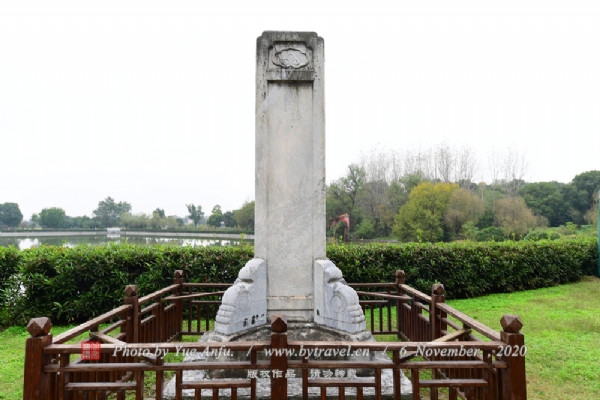
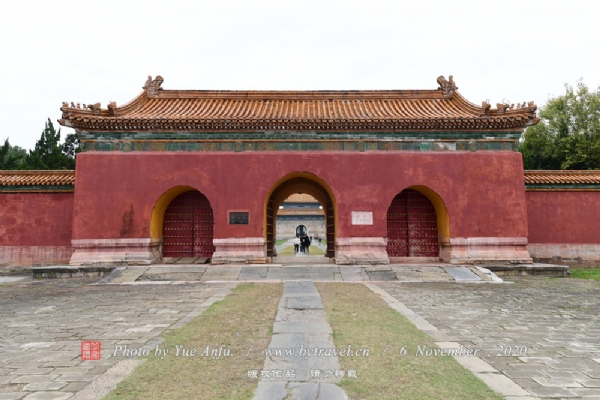
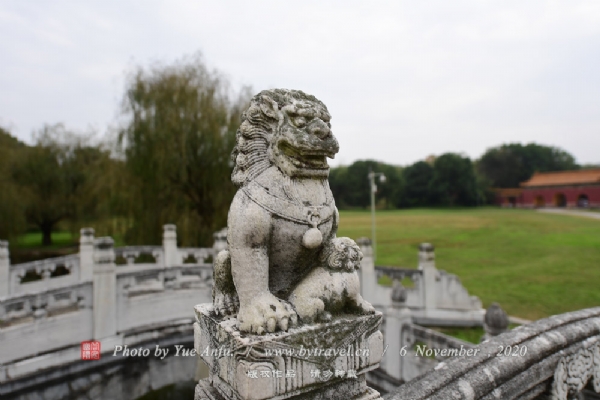
The mausoleum complex covers an area of 183.13 hectares. The entire site features a double-walled layout, with the outer wall extending over 3,600 meters, standing 6 meters high and 1.8 meters thick. Its red walls and yellow tiles, resplendent and magnificent, wind through the undulating mountain terrain, presenting a grand and imposing sight. It is the most completely preserved standalone imperial mausoleum wall among all Chinese dynastic tombs. The complex consists of more than 30 large-scale structures, including inner and outer walls, front and rear treasure cities, the Square City and Ming Tower, Ling’en Hall, Ling’en Gate, the Divine Kitchen, Divine Storehouse, the Imperial Tomb Guards, Military Guards, the Imperial Tomb Supervisory Office, the Merit Stele Pavilion, the New Red Gate, the Old Red Gate, inner and outer Ming Ponds, the Nine-Bend Imperial River, and the Dragon-Shaped Sacred Way. Its ingenious layout, soaring pavilions, exquisitely carved reliefs, and the rare design of a single mausoleum with two tombs make it a treasured gem of ancient Chinese architectural art.
The uniqueness of Xianling primarily stems from the unprecedented transformation of a royal prince’s tomb into an imperial mausoleum, resulting in the world’s only example of a single mausoleum with two tombs — an exceptionally rare and precious phenomenon. The occupant of the tomb, Zhu Youcong, was originally the Prince of Xingxian. After his death, he was buried on Songlin Mountain. In the 16th year of the Zhengde reign (1521), Emperor Wuzong passed away without an heir. Empress Dowager Cishou and Grand Secretary Yang Tinghe, adhering to the ancestral principle of "the throne passing to the next brother," followed the late emperor’s decree that “Zhu Houcong, the eldest son of Prince Xingxian, should ascend the throne.” However, Zhu Houcong insisted that his biological father, Zhu Youcong, be honored as his imperial predecessor. This triggered a prolonged four-year dispute known as the “Great Rites Controversy,” during which 17 officials were beaten to death, while over 115 others suffered imprisonment, salary cuts, exile, military service, or dismissal. Eventually, Zhu Houcong established his own ancestral system. After ascending the throne as Emperor Jiajing, he posthumously honored his father as Emperor Xiaozong and carried out massive renovations and expansions over the following decades until the project was completed.
Recognized for its unique environmental setting, ingenious layout, grand architectural scale, rich underground relics, and significant historical value, Xianling has garnered high attention from national cultural heritage experts. In 1988, the State Council designated it as a National Key Cultural Relics Protection Unit. In March 1999, the National Cultural Heritage Administration submitted it — as the sole Ming imperial mausoleum — to UNESCO’s World Heritage Committee for consideration as a World Heritage Site. The UNESCO World Heritage Committee subsequently voted to include Xianling Mausoleum in Zhongxiang City, Hubei Province, as a World Cultural Heritage property.
In 2000, Xianling Mausoleum was inscribed on the UNESCO World Heritage List under cultural heritage selection criteria C(I)(III)(VI). The World Heritage Committee noted: "The Imperial Tombs of the Ming and Qing Dynasties were carefully sited according to principles of geomancy and arranged in a carefully designed landscape. They represent the transformation of nature by human beings and reflect traditional concepts of architecture and decoration, illustrating the worldview and power structure of feudal China that lasted over 500 years."
After inspecting Xianling, UNESCO expert Jean-Louis Luxen was astonished and referred to it as the “magical Xianling Mausoleum.” He found it “simply incredible” that the outer wall has remained so well-preserved after more than 400 years. He also spoke highly of the conservation and restoration efforts for the site.
Address: Chun De Mountain, 5 km northeast of Zhongxiang City, Jingmen
Type: Mausoleum / Cemetery / World Cultural Heritage
Rating: AAAA
Recommended visiting time: 4–5 hours
Tel: 0724-4217387
Opening hours:
8:00–17:30
Share
This article is published by HowToTrip. Sharing and reposting are welcome — please credit the source.
Article URL: https://www.howtotrip.net/travel-11861
Related Articles
- Shaoxing's "Grandpa Gourd" hangs the gourds back up: "If there are too many people, we'll interact less — just take a quick look from afar"
- Chinese authorities announce "reciprocal adjustment" to Japan visa fees — single-entry visa jumps from 2,250 to 16,750 yen!
- The "health stones" carried by a traveler were found to have radiation levels exceeding safety limits by a thousand times, potentially endangering fellow passengers on the same flight. Customs issues warning!
- Shenzhen Airport Issues Late-Night Notice: Unidentified Aerial Object Detected, Causing Widespread Flight Delays!
- “They only said it cost money after I opened the box and washed it!” 200g of grapes sold for 60 yuan on a high-speed train—12306 responds!
- Can't buy an airline ticket? Denied exit? Blocked from boarding? A large number of Chinese tourists have mysteriously become "discredited individuals"
- Adverse weather and economic fluctuations impact Colombia's coffee market
- Beach bathing area responds to 2 yuan/30 seconds fee for freshwater foot rinsing: Clearly priced!
- Taking off with an improperly closed cabin door? Wing malfunction? Multiple flights made emergency returns mid-journey!
- Experience the gifts of nature! A countdown of the world’s ten most stunning coastlines