Tajikistan
The only "country of the mountains" in Central Asia with a Persian cultural heritage, where the Pamir Plateau and ancient Silk Road cities form its unique charm.
Tajikistan (Republic of Tajikistan)
| Capital | Dushanbe |
|---|---|
| Continent | Asia |
| Languages | Tajik |
| Currency | Tajikistani somoni (TJS SM) |
| Time Zone | UTC+5 |
| Dialling Code | +992 |
| Area / Population | 143,100 square kilometers / Approximately 10 million |
| Visa | Most foreign visitors need a visa to enter Tajikistan. Visas can be applied for online through Tajikistan’s e-Visa system, and eligible travelers may also obtain a visa on arrival at Dushanbe International Airport. A special permit is required to enter the Gorno-Badakhshan Autonomous Region (Pamir area). Entry policies may change; check the latest information from the Tajik Ministry of Foreign Affairs or its embassies and consulates before traveling. |
| Best Season | The most pleasant climate is from May to September, making it the best time to visit the Pamir Plateau and mountainous areas. July and August are ideal for high-altitude trekking, while most high mountain roads are accessible from June to September. |
| Main Cities | Dushanbe, Khujand, Panjakent, Khorog, Murghab, Isfara, Karakul Lake, Wakhan |
Tajikistan in Detail
Overview of Tajikistan
Tajikistan (Tajik: Тоҷикистон) is a landlocked country in southeastern Central Asia. It borders China’s Xinjiang region to the east, Afghanistan to the south, and Uzbekistan and Kyrgyzstan to the west and north, respectively. With an area of 143,100 square kilometers, its capital Dushanbe is located in a western valley. Tajikistan is the only one of the five Central Asian countries with a Persian linguistic and Iranian cultural heritage. The Tajik people are the predominant ethnic group, and Tajik, the official language, belongs to the Iranian branch of the Indo-European language family and uses the Cyrillic script.
With a population of about 10 million, Tajikistan is the smallest and most mountainous country in Central Asia, with approximately 90% of its territory consisting of mountains—earning it the nickname "Country of the Mountains." Political power is highly centralized, and the country is administratively divided into districts under central government control, Sughd Province, Khatlon Province, and the Gorno-Badakhshan Autonomous Region.
Geography and Climate
About 90% of the country is mountainous, with the Pamir Plateau, Tian Shan, and Gissar-Alay mountain ranges forming its main topographical features. Ismoil Somoni Peak (formerly Communism Peak), standing at 7,495 meters, is the highest point in Central Asia. Most of the eastern Pamir Plateau lies above 4,000 meters in elevation, while the western valleys are the main areas of population and agriculture. Rivers such as the Amu Darya and Panj River originate from glacial melt and radiate outward, nourishing mountain oases and supporting abundant hydropower resources.
The climate is typically continental: summers in the plains and valleys are hot and dry, while winters are relatively mild. The Pamir Plateau experiences extremely cold winters, thin air, and large diurnal temperature variations, with roads often closed due to snowfall. The peak travel season is in summer, but the window for accessing highland areas is short.
Historical Background
The ancestors of the Tajik people were Eastern Iranians (such as the Sogdians and Bactrians) of the ancient Persian linguistic group, and the region was an important part of the Silk Road. The Samanid Empire of the 9th to 10th centuries is considered the golden age of Tajik national and cultural identity, with cities like Bukhara and Samarkand serving as major cultural centers. The poet Rudaki was born during this period.
The region later came under the rule of the Turks, Mongols, Timurids, and the Khanate of Bukhara, before being annexed by the Russian Empire in the 19th century. It became a Soviet republic in 1929. Following the dissolution of the USSR in 1991, Tajikistan gained independence but experienced several years of civil war. Peace was achieved in 1997, ushering in a period of stability and reconstruction. Economic and transportation ties with China have since grown significantly.
Economy and Currency
Tajikistan’s economy is based primarily on agriculture, aluminum smelting, and hydropower. Cotton and aluminum are the main exports, and remittances from migrant workers play a crucial role in the national economy. The official currency is the Tajikistani somoni (TJS), introduced in 2000 to replace the Tajik ruble. The currency is named after Ismoil Somoni, the founder of the Samanid dynasty, and is seen as a symbol of national heritage. The economy is highly dependent on trade and foreign aid, with prices and exchange rates significantly affected by global markets.
Culture and Society
Tajik culture is rooted in Persian-Islamic traditions. Nowruz (Persian New Year, celebrated at the spring equinox) is the most important national holiday. Traditional foods such as sumanak (a sweet pudding made from wheat germ), the "seven spices" table, and visiting family and friends are common customs. Poetry and music hold a revered place in Tajik culture, with figures like Rudaki and Ferdowsi widely celebrated. Social values emphasize family and hospitality; it is customary to remove shoes when entering homes, serve tea to guests, and offer bread and salt as a sign of welcome.
The cuisine features staples such as naan bread, plov (rice pilaf), lamb eaten by hand, noodle soups, and yogurt. The Pamir region has its own unique highland flavors. The majority of the population is Muslim, with modern attire common in cities and more traditional dress in rural and mountainous areas.
Tourism Overview
Tajikistan attracts travelers with its vast highland landscapes and Silk Road heritage. The Pamir Plateau, known as the "Roof of the World," includes the M41 highway (Pamir Highway)—one of the world’s most renowned high-altitude driving routes—featuring views of the Panj River Canyon and the Wakhan Corridor. Destinations such as Karakul Lake, Iskanderkul Lake, and the Fan Mountains are popular for trekking and sightseeing. In Dushanbe, the Somoni Monument, National Museum, and Green Bazaar showcase the capital’s character. Cities like Khujand, Panjakent, and Isfara preserve the legacy of ancient cities and the Silk Road.
Tourism infrastructure is relatively limited, especially in highland areas where road conditions are challenging and medical or supply facilities are scarce. Travelers should be well-prepared and purchase insurance that includes high-altitude rescue and evacuation coverage. A special permit is required to enter the Gorno-Badakhshan Autonomous Region.
Local Currency: Tajikistani somoni (TJS)
Currency Overview
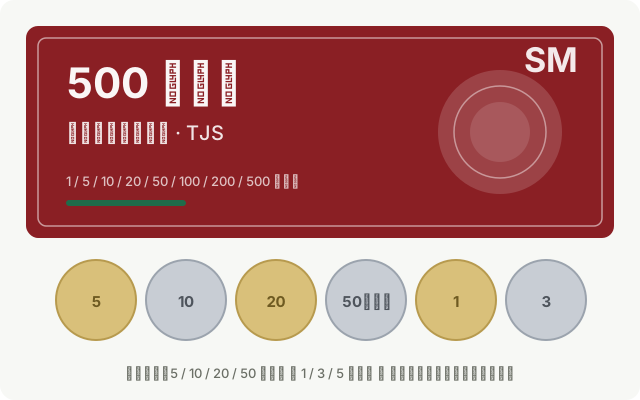
The official currency of Tajikistan is the Tajikistani somoni (currency code TJS, symbol SM). One somoni is equal to 100 diram. Introduced in October 2000 to replace the Tajik ruble, the somoni was created to stabilize the monetary system. The currency is named after Ismoil Somoni, the founder of the Samanid dynasty, and serves as an important national symbol. Issued by the National Bank of Tajikistan, somoni banknotes feature designs that highlight national identity, often depicting poets, scholars, and national landmarks.
Denominations
Common banknotes include denominations of 1, 5, 10, 20, 50, 100, 200, and 500 somoni, featuring national figures, landmarks, and buildings, with some updated versions in circulation. Coins come in denominations of 5, 10, 20, 25, 50 diram, and 1, 3, and 5 somoni, though diram coins are less commonly used in daily transactions. Higher denominations such as 200 and 500 somoni are typically used for larger payments, so travelers should be prepared for potential change issues when making small purchases.
Cash and Payment Habits
Cash is still widely used in Tajikistan, especially in markets, taxis, and rural areas. In cities like Dushanbe, hotels, restaurants, and some shops accept bank cards, and ATMs are common in major urban centers and airports—but very rare in remote or highland areas. While U.S. dollars are sometimes referenced in exchange or large transactions, daily purchases are made in somoni.
It is advisable to exchange money in cities and carry sufficient cash. Before traveling to the Pamirs, make sure to bring enough somoni and keep some U.S. dollars as a backup. Use banks or authorized exchange offices, and avoid street money changers.
Traveler Tips
- There are almost no ATMs in highland or remote areas. Carry enough cash before departing cities like Dushanbe.
- Older banknote versions may gradually go out of circulation. Check the edition when receiving or paying with cash.
- Carry small-denomination bills for ease of use in markets and for public transport.
- Keep receipts when exchanging currency—they may be useful for converting back leftover cash before departure.
Flag Meaning
Flag Design
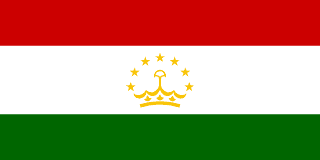
The flag of Tajikistan is a horizontal tricolor of red, white, and green bands of equal width. The white band in the center is twice the width of each of the red and green bands. At the center of the white band is a golden crown, above which are seven five-pointed stars arranged in an arc. The crown and stars are rendered in simple, flat gold and together occupy about half the height of the white band. The seven stars are aligned along a curve, with the middle star positioned highest, creating a balanced and symmetrical design.
Meaning
Red symbolizes national unity, the struggle and victory of the people, and also represents the sun. White stands for purity, cotton, and mountain snow. Green represents nature and agricultural abundance. The golden crown is modeled after the crown of the Samanid dynasty, reflecting the nation’s historical legacy and appearing on the currency as a national emblem. The seven stars symbolize Tajikistan’s historical regions and carry a “seven-fold” auspicious meaning—seven is considered a number of completeness and good fortune in Persian tradition, linked to customs such as the “seven spices” table of Nowruz. The combination of the crown and stars also appears on the national emblem, unifying the symbols of the state. Overall, the flag represents renewal and unity grounded in ancient traditions.
History and Legal Status
The Tajikistani flag was adopted on November 24, 1992, replacing the flag of the Soviet-era Tajik SSR. It was designed by artist Zuhur Habibullaev. The red, white, and green colors along with the crown and stars signify the country’s cultural identity following independence. The proportions, colors, and manufacturing specifications of the flag are legally regulated. Government buildings, schools, and public institutions must display the flag in accordance with national standards, and worn or faded flags should be replaced. Tajikistan has designated November 24 as National Flag Day, marked annually with commemorative events. The flag is widely displayed at government offices, schools, and during celebrations, serving as a key emblem of Tajikistan’s independence and national heritage.
Tajikistan Travel Guide
All Guides »Tajikistan Travel Quick Guide: Visas, Permits, Seasons, Budget & Customs
Before you go, get clear on electronic visas, Pamir special permits, highland se...
Tajikistan 7-Day Classic Route: A Loop from Dushanbe to the Pamir Highlands 7 Days
Starting from the capital, Dushanbe, travel south along the M41 Pamir Highway to...
4-Day Tajikistan Short Trip: A Relaxed Journey Through Dushanbe and the Fan Mountains 4 days
Enjoy a fulfilling experience without going to high-altitude areas: centered aro...
Essential Attractions in Tajikistan: Lakes of the Pamir Plateau and Ancient Silk Road Ruins
Explore must-see sights by region—from Karakul Lake and the Wakhan Valley in the...
Tajikistan Food Guide: Plov, Naan, and Highland Specialty Dairy Drinks
Central Asian flavors centered around naan and plov, paired with dairy products ...
Tajikistan Transport Guide: Airport Transfers, Shared Taxis, and Highland Car Hire
This guide explains your options for getting to and from Dushanbe Airport, share...
10 Practical Tips for Traveling in Tajikistan and Safety Advice for High-Altitude Travel
From permit procedures to high-altitude safety, these details can help you trave...