Morocco
Known as the "Gateway to the Western Kingdom" at the northwestern tip of Africa, this travel destination is famed for its red ancient cities, blue mountain towns, Sahara dunes, and Berber culture.
Morocco (Kingdom of Morocco)
| Capital | Rabat |
|---|---|
| Continent | Africa |
| Languages | Arabic, Berber |
| Currency | Moroccan Dirham (MAD د.م.) |
| Time Zone | UTC+1 to UTC+0 (reverts to UTC+0 during Ramadan) |
| Dialling Code | +212 |
| Area / Population | 459,000 square kilometers / Approximately 37 million |
| Visa | Since June 2016, most foreign visitors can enter Morocco visa-free for stays of up to 90 days. Be sure to have a return ticket and accommodation booking upon entry, and ensure your passport is valid for at least six months. |
| Best Season | The most comfortable weather is from March to May and September to November; winter in the Atlas Mountains allows for skiing, while summers in the desert are extremely hot and winters are bitterly cold at night—pack accordingly for the season. |
| Main Cities | Marrakech, Casablanca, Fes, Chefchaouen, Rabat, Tangier, Agadir, Merzouga, Ouarzazate |
Morocco in Detail
Morocco Overview
Morocco (officially the Kingdom of Morocco) is located at the northwestern corner of the African continent, bordered by the Atlantic Ocean to the west, the Strait of Gibraltar and Spain to the north, Algeria to the east and southeast, and the vast Sahara Desert to the south. Covering an area of approximately 459,000 square kilometers, its capital is Rabat, and its largest city and economic hub is Casablanca. The country has a population of around 37 million, primarily Arabs and Berbers (who call themselves Amazigh). The official languages are Arabic and Berber, while French is widely used in administration, business, and education. Spanish is also spoken in the northern Rif region near Spain.
Morocco is a constitutional monarchy, with the King serving as both head of state and religious leader, holding significant influence in national life. Situated at the crossroads of Europe, Africa, and the Arab world, Morocco is often referred to as a bridge between the West and the Arab world, preserving deep Islamic traditions while also exhibiting distinct European and Mediterranean influences.
Geography and Climate
Morocco boasts highly diverse landscapes: the Rif Mountains in the north, the High Atlas, Middle Atlas, and Anti-Atlas mountain ranges stretching from southwest to northeast in the central and southern parts—with Jebel Toubkal at 4,167 meters being the highest peak in North Africa. South of the mountains lies the expansive Sahara Desert. The fertile coastal plains along the narrow western edge are densely populated and home to much of the country’s agriculture. Thousands of kilometers of coastline along the Atlantic and Mediterranean Seas have given rise to coastal cities such as Tangier, Agadir, and Essaouira.
The climate varies by region and altitude: the northern and coastal areas have a Mediterranean climate, with hot, dry summers and mild, wet winters; inland and pre-mountainous regions experience a continental climate with large temperature variations; the Sahara fringe is hot and arid. Overall, the most pleasant travel seasons are from March to May and September to November, when flowers bloom or autumn air is crisp. July and August see inland and desert temperatures exceeding 40°C, while December to February may bring snow and ice to the Atlas Mountains and near-freezing nights in the desert.
Historical Background
The earliest inhabitants of Morocco were the Berbers. In antiquity, Phoenicians and Carthaginians established trading posts here, followed by the Roman Empire, which incorporated the region into the province of Mauretania, leaving behind ancient ruins such as Volubilis. By the late 7th century, Arabs brought Islam and the Arabic language, gradually Islamizing and Arabizing the region. In 788, the Idrisid Dynasty was established, considered Morocco’s first Islamic kingdom. Successive dynasties—including the Almoravid, Almohad, Marinid, and Saadian—rose to power, with Marrakech and Fes serving as capitals at different times, fostering thriving trade and scholarship.
In 1666, the Alaouite Dynasty was founded and continues to rule today. In 1912, Morocco became a French protectorate, with parts of the north and south under Spanish control. It gained independence in 1956 and was proclaimed the Kingdom of Morocco in 1957. Since then, the country has pursued modernization under a monarchical framework, with historic cities like Marrakech and Fes being preserved and restored. Tourism has grown into a key economic pillar since the late 20th century.
Economy and Currency
Morocco’s economy relies on agriculture, phosphate mining, automotive and aerospace manufacturing, textiles, fisheries, and tourism. The country holds some of the world’s largest phosphate reserves and is a major exporter of phosphates and fertilizers. In recent years, automobile assembly and component manufacturing have expanded rapidly, with industrial bases in Tangier and Kenitra serving the European market. Tourism is also a vital source of foreign exchange and employment. The official currency is the Moroccan Dirham (MAD), issued by Bank Al-Maghrib (the central bank), and it is a regulated currency with strict limits on cash imports and exports.
Culture and Society
Moroccan culture blends Berber, Arab, Andalusian, Jewish, and Saharan traditions. The medinas (old cities) are filled with souks, mosques, madrasas, and artisan workshops, where crafts like leather tanning, carpet weaving, pottery, and copperwork are passed down through generations. Gnawa music, Andalusian classical music, and Berber folk songs each have their own charm, while modern pop and hip-hop are also popular. Islam is the state religion, and during Ramadan, eating and drinking in public during daytime hours is discouraged—visitors should be respectful. Moroccans are known for their hospitality, and a sweet mint tea (called "atai") is a staple gesture of welcome.
Tourism Overview
Morocco has become one of the fastest-growing African destinations for international travelers in recent years. Key attractions include Djemaa el-Fna square and open-air markets in Marrakech, the medina and leather tanneries in Fes, the blue alleys of Chefchaouen, the Sahara dunes and camel treks in Merzouga, Berber villages and the Aït Benhaddou kasbah in the Atlas Mountains, and the Hassan II Mosque in Casablanca—forming a classic route from cities to mountains and deserts. The tourism infrastructure is relatively well-developed, with shared taxis and private transfers as common modes of transport. Overall safety is good, but visitors should be mindful of aggressive haggling and pushy sales tactics in markets.
Local Currency: Moroccan Dirham (MAD)
Currency Overview
The official currency of Morocco is the Moroccan Dirham (currency code: MAD, symbol: د.م., also commonly written as DH locally). One dirham is divided into 100 centimes (santimat), though centimes are rarely used in daily transactions. The dirham is issued by Morocco’s central bank, Bank Al-Maghrib. Importantly, the dirham is a closed currency, with strict regulations on its import, export, and exchange. While the exchange rate is relatively stable, the dirham is widely accepted in tourist areas, and some businesses may quote prices in euros—but change is usually given in dirhams.
Denominations
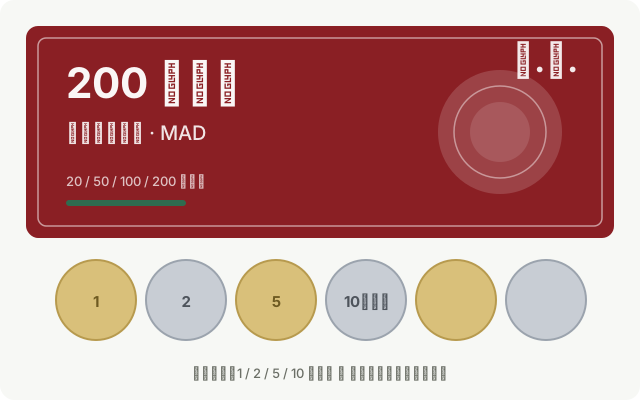
Current banknotes in circulation include denominations of 20, 50, 100, and 200 dirhams. Different denominations vary in size and dominant color, often featuring portraits of the king and traditional Moroccan patterns on the front, with landmarks and craft motifs on the back. Around 2019, Bank Al-Maghrib issued a new series of banknotes with updated security features and designs, though older versions remain in use. Coins come in denominations of ½, 1, 2, 5, and 10 dirhams, as well as 10, 20, and 50 centimes, with noticeable differences in material and size. Note that banknote sizes increase with denomination—the 200 dirham note is the highest, while 50 and 100 dirham notes are most commonly used for everyday purchases and taxi fares.
Cash and Payment Habits
Cash is still the primary mode of payment in Morocco: old medina souks, street vendors, shared taxis, tea houses, and most small restaurants typically accept only cash. Mid- to high-end hotels, large malls, some restaurants, and car rental companies may accept Visa and Mastercard, while UnionPay has limited acceptance. ATMs are widely available in major cities and tourist areas, allowing withdrawals with foreign bank cards, though fees and exchange rate markups may apply. It’s advisable to carry small-denomination bills for taxis, small purchases, and tipping.
Tips for Travelers
- The dirham is a regulated currency, and there are limits on how much you can bring in or take out. It’s best to exchange any leftover cash back to foreign currency at the airport before departure and keep the receipt.
- Use banks, hotels, or authorized exchange offices for currency exchange—avoid street money changers due to high risk and potential legal issues.
- Bargaining is common in markets. Start by offering 30–50% of the asking price, then negotiate before paying.
- Most restaurant bills include taxes, and tipping is not mandatory—but leaving 5–20 dirhams for waitstaff or porters is a common practice.
Flag Meaning
Flag Design
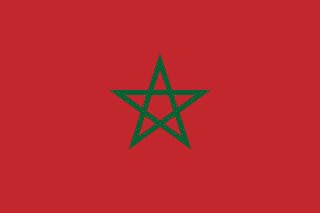
The Moroccan flag is a rectangular red field with a green five-pointed star (pentagram) in the center. The flag has a 2:3 aspect ratio. The background is a deep red, and the star—formed by intersecting green lines creating a continuous, interlaced knot-like pattern (also known as the Seal of Solomon)—points upward. Red and green are Morocco’s most iconic colors, and the design is simple yet dignified.
Meaning
Red has historically been the color of Moroccan royalty and tradition, symbolizing courage, strength, and sacrifice for the nation. It also reflects the centuries-old red banners of the Alaouite Dynasty. Green represents Islam, symbolizing peace, hope, and faith. The central five-pointed star carries rich symbolism: it represents the Five Pillars of Islam (faith, prayer, fasting, charity, and pilgrimage), is regarded as the Seal of Solomon, and its interwoven lines signify life, health, and national unity. The contrast between red and green creates a strong visual balance. For Moroccans, these colors are not just hues but a concise visual expression of national identity and faith.
History and Legal Status
Red flags have been used in Morocco for centuries, serving as royal and national emblems since the Alaouite Dynasty in the 17th century. In 1915, Sultan Moulay Youssef added the green pentagram to the red background to make the flag more distinguishable at sea from other red banners—a design that became the foundation of the modern Moroccan flag. After independence in 1956, the flag was retained, and subsequent laws and royal decrees formalized its design and proportions. Today, this red flag with the green star is displayed at government buildings, schools, embassies, and sports venues, standing as one of Morocco’s most prominent national symbols.
Morocco Travel Guide
All Guides »Morocco Travel Quick Guide: Visa-Free Policy, Best Seasons, Budget & Etiquette Taboos
How to take advantage of Morocco’s visa-free entry, the best time to visit, how ...
Classic 8-Day Morocco Itinerary: Casablanca, Fes, the Sahara, and Marrakech 8 days
The easiest first-time route through Morocco: cover the Atlantic coast, the blue...
Morocco 4-Day Short Trip: A Deep Dive into Marrakech and Highlights of the Atlas Mountains 4 days
Enjoy a fulfilling trip even with limited time: Centered around Marrakech, the i...
Essential Attractions in Morocco: Blue Mountain Towns, Ancient Cities, and the Sahara Desert
A city-by-city guide to Morocco’s top sights, from Marrakech and Fes to Chefchao...
Guide to Moroccan Food and Drinks: Tagine, Couscous, Grilled Meat, and Mint Tea
From street food stalls to courtyard restaurants, get the full taste of Moroccan...
Complete Guide to Transportation in Morocco: High-Speed Rail, Long-Distance Buses, Taxis, and Private Transfers
Understand trains, long-distance buses, shared taxis, and private transfers—from...
10 Practical Tips for Traveling in Morocco: Visa-Free Entry, Bargaining, Desert Trips & Safety
From visa-free entry and exit, bargaining at markets, to preparing for desert tr...