Greece
The cradle of European civilization, famed for the Acropolis, blue-and-white islands, and Mediterranean cuisine, with thousands of islands scattered across the Aegean and Ionian Seas.
Greece (Hellenic Republic)
| Capital | Athens |
|---|---|
| Continent | Europe |
| Languages | Greek |
| Currency | Euro (EUR €) |
| Time Zone | UTC+2 (5 hours during daylight saving time) |
| Dialling Code | +30 |
| Area / Population | 132,000 square kilometers / Approximately 10.4 million |
| Visa | Greece is part of the Schengen Area. Most foreign visitors need to apply for a Schengen visa in advance by submitting required documents and providing fingerprints at the Greek embassy or consulate (or visa center) in their own country. Travel medical insurance covering the entire Schengen Area with a minimum coverage of 30,000 euros is required. Booking slots can be tight during island peak seasons. |
| Best Season | The best times to visit are April to June and September to October when the weather is pleasant and there are fewer tourists; July and August are lively but hot and crowded on the islands, while winter is ideal for sightseeing ancient sites in Athens, though ferry services to most islands are reduced or suspended. |
| Main Cities | Athens, Santorini, Mykonos, Thessaloniki, Crete, Rhodes, Delphi, Meteora |
Greece in Detail
About Greece
Greece (the Hellenic Republic) is located in the southern part of the Balkan Peninsula in southeastern Europe, surrounded by the sea on three sides: it borders Bulgaria, North Macedonia, and Albania to the north, faces the Aegean Sea and Turkey to the east, the Ionian Sea to the west, and the Mediterranean Sea to the south. The country covers an area of approximately 132,000 square kilometers and consists of the mainland and about 6,000 islands, of which around 200 are inhabited. The capital, Athens, is situated on the Attica Peninsula and serves as the country’s political, economic, and cultural center. Greece is a parliamentary republic, with the president as the head of state and the prime minister holding executive power.
Greece is widely regarded as the birthplace of Western civilization: democracy, philosophy, drama, historiography, geometry, and the Olympic Games all originated here. As a member of the European Union, the Schengen Area, and the Eurozone, Greece is also part of NATO. Shipping, tourism, and agriculture are key pillars of the national economy.
Geography and Climate
Greece’s terrain is predominantly mountainous, with the Pindus Mountain Range extending across the western part of the mainland. Mount Olympus (approximately 2,917 meters) is the highest peak in the country and was regarded as the home of the gods in ancient mythology. With a coastline of about 15,000 kilometers, Greece has one of the most indented coastlines in the world. The islands are roughly divided into two groups: the Aegean side includes the Cyclades (Santorini, Mykonos, Naxos), the Sporades, and the Dodecanese near Turkey (Rhodes); the Ionian side features Corfu, Zakynthos, and Kefalonia. Crete is the largest island, lying at the southern end of the Aegean Sea.
The climate is typically Mediterranean: hot, dry summers with intense sunshine—temperatures in Athens often exceed 35°C in July and August—and mild, rainy winters, with snowfall possible in the north and mountainous areas. Although sea breezes provide some relief, midday sun on the islands is still very strong in summer, making early mornings and evenings better for outdoor activities, with midday best avoided. April to June and September to October offer the best balance of comfort and scenery. Some islands experience strong northerly winds known as the Meltemi in summer, which can occasionally cause ferry delays.
Historical Background
Greek civilization dates back to the Minoan civilization on Crete and the Mycenaean civilization in the Peloponnese. Between the 8th and 6th centuries BCE, numerous city-states emerged, with Athens and Sparta being the most influential. Around 508 BCE, Athens implemented the reforms of Cleisthenes, laying the foundations of democracy. This was followed by the Persian Wars (including Marathon, Thermopylae, and Salamis), the Peloponnesian War, and the Hellenistic period following Alexander the Great’s eastern conquests in the 4th century BCE.
In 146 BCE, Greece was conquered by Rome and later became the core region of the Eastern Roman (Byzantine) Empire, maintaining its identity through the Greek language and Orthodox Christianity for a millennium. After the fall of Constantinople in 1453, Greece was ruled by the Ottoman Empire for nearly four hundred years. The Greek War of Independence broke out in 1821, leading to independence in 1830 and the establishment of the modern Greek state. A referendum in 1974 abolished the monarchy and established a republic. Greece joined the European Economic Community (EEC) in 1981, adopted the euro in 2002, and experienced a severe sovereign debt crisis from 2009 to 2018, recovering gradually through shipping and tourism.
Economy and Currency
Greece is a major global shipping nation, with Greek-owned merchant ships consistently ranking first in total tonnage worldwide. The Port of Piraeus is a key hub in the Mediterranean. Tourism contributes about one-fifth of the national economy, while olive oil, wine, feta cheese, and citrus fruits are agricultural highlights, with significant agricultural exports within the EU.
The official currency is the euro (EUR, symbol €), issued by the Eurosystem of the European Central Bank, with the Bank of Greece managing domestic circulation. The euro has been in circulation since January 1, 2002, replacing the former Greek drachma (GRD). Greek euro coins feature many classical motifs, making them among the most culturally distinctive in the Eurozone.
Culture and Society
Greek culture has profoundly shaped the Western world: Socrates, Plato, and Aristotle laid the foundations of philosophy; the tragedies of Aeschylus, Sophocles, and Euripides and the comedies of Aristophanes are the roots of drama; Herodotus and Thucydides pioneered historical writing. The first modern Olympic Games were held in Athens in 1896, and the Olympics returned to Athens in 2004. Orthodox Christianity is the main religion, with churches and monasteries found throughout urban and rural areas. Easter is the most important holiday of the year, even more so than Christmas.
Greek society values family and hospitality (philoxenia). The diet follows a typical Mediterranean pattern: olive oil, tomatoes, olives, seafood, lamb, yogurt, and bread are staples. Social life includes coffee chats, late dinners, and afternoon siestas. Politeness and warmth are important in social interactions, and modest dress is required when entering churches—women should cover shoulders and wear skirts or pants that reach below the knee.
Tourism Overview
Greece’s appeal lies in the combination of ancient sites and islands: Athens is home to the Acropolis, the Parthenon, the Acropolis Museum, the Ancient Agora, and Syntagma Square, with day trips possible to Cape Sounion and Delphi. The Peloponnese features Mycenae, Olympia, and the Ancient Theatre of Epidaurus. Central Greece’s Meteora, built atop rock pillars, is a UNESCO World Heritage Site, while northern Thessaloniki has a rich historical layers.
The islands are Greece’s hallmark: Santorini is famous for its sunset in Oia and white cliffside houses, Mykonos for its windmills, Little Venice, and nightlife, Crete for the Palace of Knossos and pink-sand beaches, and Rhodes for its well-preserved medieval knight’s castle. Island hopping mainly relies on ferries and high-speed boats, with Piraeus Port as the hub. Ferry tickets should be booked well in advance during peak season.
Local Currency: Euro (EUR)
Currency Overview
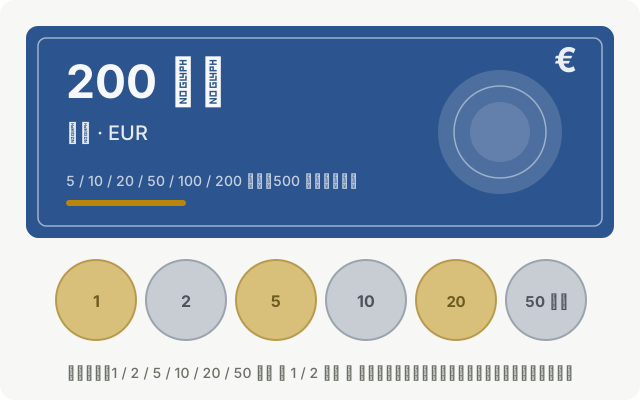
Greece is a member of the Eurozone, with the euro (currency code EUR, symbol €) as its official currency. Monetary policy is set by the Eurosystem, while the Bank of Greece manages issuance and circulation within the country. One euro is equal to 100 cents. The euro was introduced as an accounting currency in 1999 and officially circulated on January 1, 2002, replacing the former Greek drachma (GRD). The drachma, once one of the world’s currencies with very high denominations, exited circulation at an exchange rate of approximately 340.75 drachmae to 1 euro.
Denomination System
Euro banknotes have a unified design across Europe, with seven denominations: 5, 10, 20, 50, 100, 200, and 500 euros, distinguished by color and European architectural themes. The 500-euro note ceased issuance in 2019 but remains in circulation, though it is often refused by merchants. The most commonly used denominations while traveling are 5, 10, 20, and 50 euros, with larger notes sometimes met with caution at small island shops.
Euro coins come in eight denominations: 1 and 2 euros, and 1, 2, 5, 10, 20, and 50 cents. The common side is uniform across the Eurozone, while the national side is designed by each member state. Greek coin designs are distinctly classical: the 1-cent coin features an ancient Greek trireme, the 2-cent coin a two-masted sailing ship, the 5-cent coin a modern oil tanker, the 10-cent coin the statesman Rigas Feraios, the 20-cent coin the first president Capodistrias, the 50-cent coin the politician Eleftherios Venizelos, the 1-euro coin the owl from the ancient Athenian tetradrachm, and the 2-euro coin a mosaic depicting Europa being abducted by Zeus in the form of a bull, unearthed in Sparta.
Cash and Payment Habits
Cash usage is relatively high in Greece compared to other Eurozone countries, especially at small restaurants, family-run guesthouses, ferry kiosks, bakeries, and open-air markets on the islands, where only cash is often accepted. Hotels, chain stores, and larger restaurants in Athens, Thessaloniki, and major resort areas usually accept cards. During the debt crisis, some merchants were cautious about card payments, but this has improved significantly. However, carrying sufficient cash remains the safest approach.
It is recommended to carry 30–60 euros in small bills daily for coffee, snacks, ferry fees, and ticket deposits. ATMs are limited on the islands, and queues may form at terminals and main streets. It’s best to withdraw cash in Athens or Thessaloniki at bank branches. Some Greek ATMs and merchants may prompt for Dynamic Currency Conversion (DCC)—always choose to pay in euros. For currency exchange, prefer banks or authorized exchange offices, as private exchange services near tourist spots and terminals often offer poor rates.
Tips for Travelers
- Most small shops on Greek islands only accept cash, so prepare euro coins and small bills before heading to the islands.
- Tipping is not mandatory in Greece. For satisfactory service in restaurants, 5–10% or rounding up the bill is appreciated. Leaving small change is fine at coffee bars.
- Ferries and flights to the islands are often fully booked in summer, so book tickets and island accommodations several weeks in advance.
- If prompted for Dynamic Currency Conversion when paying by card or withdrawing cash, always opt to be charged in euros for a better deal.
Flag Meaning
Flag Design
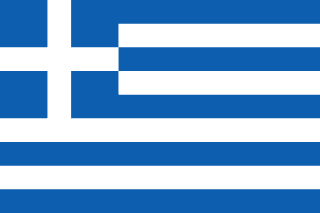
The Greek flag consists of nine horizontal blue and white stripes and a white cross in the upper left corner, with a 2:3 aspect ratio. The stripes alternate blue and white, starting and ending with blue, totaling five blue and four white stripes. The upper left corner is a blue square with a white equal-armed cross spanning all four arms. The blue is navy or medium blue, and the white is pure white, creating a simple and symmetrical design.
Meaning
Blue symbolizes the Aegean Sea and the Greek sky, while white represents purity and freedom, reflecting Greece’s natural environment and national ideals. The white cross in the upper left corner symbolizes the Greek Orthodox faith and the Christian principles of salvation and spiritual strength. The nine stripes are often interpreted as representing the nine syllables of the Greek independence war slogan “Freedom or Death” (Ελευθερία ή Θάνατος), which is the most widely cited explanation for their symbolism.
History and Legal Status
The prototype of the blue-and-white striped flag appeared during the Greek War of Independence in 1822, adopted by the provisional government’s National Assembly. It coexisted for a long time with a flag featuring a cross and crown for land use. Starting in 1828, the blue-and-white striped flag was used for both the merchant navy and as the national flag. On December 1978, Greece officially designated the current blue-and-white striped flag with the upper-left cross as the sole national flag, discontinuing the previous land version. This design carries the memory of the independence struggle and unites the Greek Orthodox faith with the identity of a maritime nation.
Today, the Greek flag is widely used on Independence Day (March 25), National Day (October 28, “Ohi Day”), Orthodox Easter, and sporting events. The blue-and-white color scheme extends into Greek life and products, becoming the most direct visual symbol of national identity.
Greece Travel Guide
All Guides »Greece Pre-Travel Guide: Schengen Visa, Best Island-Hopping Seasons, Budget Reference & Local Etiquette
How to apply for a Schengen visa, which months are ideal for island-hopping, dai...
Classic Greece 8-Day Itinerary: Athens, Delphi, Meteora, and Santorini Island Hopping 8 Days
Experience both classical Greece and the Aegean in one trip: explore ancient sit...
Greece 4-Day Short Trip: In-Depth Ancient Athens plus a Day Trip to Cape Sounion and an Island 4 days
Focus only on Athens and its nearby areas—spend four days exploring the Acropoli...
Essential Attractions in Greece: The Acropolis, Aegean Islands, and Cliffside Monasteries
From classical ruins in Athens to the white houses of the Cyclades, here’s a reg...
A Greek Food Guide: Souvlaki, Moussaka & Feta Cheese
Mediterranean flavors of olive oil, tomatoes, and seafood—from €3 souvlaki wraps...
Greece Transport Guide: Ferries for Island-Hopping, Athens Metro & Car Rentals on Islands
From getting into the city from the airport to inter-island ferries and seasonal...
10 Practical Tips for Traveling in Greece
From booking ferry tickets and preparing cash, to sun protection at ancient site...