Germany
A Central European powerhouse known for its rigorous industry, profound philosophy, and beer culture, offering distinct seasonal experiences—from Berlin’s historic sites to Bavaria’s castles and Oktoberfest.
Germany (Federal Republic of Germany)
| Capital | Berlin |
|---|---|
| Continent | Europe |
| Languages | German |
| Currency | Euro (EUR €) |
| Time Zone | UTC+1 to UTC+2 |
| Dialling Code | +49 |
| Area / Population | Approximately 358,000 square kilometers / Approximately 84 million |
| Visa | Most foreign visitors need a Schengen short-stay visa (Category C) to visit Germany. Appointments must be booked online before submitting required documents and fingerprints at a visa application center. Applicants should provide proof of travel itinerary, accommodation, flights, and travel insurance. The visa allows stays of up to 90 days within a 180-day period. |
| Best Season | Mild, sunny weather from May to September is ideal for city and castle sightseeing. The Munich Oktoberfest (late September to early October) and Christmas markets in December are two distinctive seasonal highlights. |
| Main Cities | Berlin, Munich, Frankfurt, Cologne, Hamburg, Heidelberg, Dresden, Nuremberg, Rothenburg |
Germany in Detail
Germany Overview
Germany (officially the Federal Republic of Germany) is located in Central Europe, bordering the North Sea and Baltic Sea to the north, Poland and the Czech Republic to the east, Austria and Switzerland to the south, and France, Luxembourg, Belgium, and the Netherlands to the west. Covering about 358,000 square kilometers, it is the most populous and economically largest member of the European Union. The capital, Berlin, lies in the northeast and serves as the national political and cultural hub. Frankfurt, Munich, Hamburg, and Cologne play key roles in finance, industry, ports, and commerce, with cities evenly distributed across the country rather than clustered around a single megacity.
Germany is a federal parliamentary republic consisting of 16 states. The president is the head of state, and the chancellor is the head of government. Legislative power is shared by the Bundestag (federal parliament) and the Bundesrat (federal council). As a core EU member, eurozone participant, and Schengen Area country, Germany has long played a leading role in European integration and is a globally significant exporter and manufacturing powerhouse.
Geography and Climate
Germany’s terrain is divided into three tiers from north to south: the flat North German Plain and coastal regions in the north, rolling hills and mid-sized mountains in the center, and the Bavarian Alps in the south, where Zugspitze (approximately 2,962 meters) is the highest peak. Major rivers like the Rhine, Elbe, Danube, and Main crisscross the country. The Rhine Valley and Black Forest are renowned for scenic landscapes and wine production. Forests cover about 30% of the land, and the abundance of rivers and lakes makes it ideal for hiking, cycling, and river cruises.
The climate is a transitional type between temperate maritime and continental, with four distinct seasons: cold winters with frequent snowfall in the north and east, mild summers with temperatures typically between 20–30°C, and moderate but variable spring and autumn weather. May to September is the best time to visit, while the Munich Oktoberfest (late September to early October) and December’s Christmas markets are two seasonal peaks. The former requires months of advance booking, while the latter gives winter cities a unique atmosphere.
Historical Background
The German region was known as Germania in Roman times, with the Romans building the Limes—a defensive wall—along the Rhine and Danube rivers. In 962 AD, Otto I was crowned, marking the start of the Holy Roman Empire, which nominally ruled over numerous Central European principalities for over 800 years. The Reformation initiated by Martin Luther in 1517 profoundly altered Europe’s religious landscape. In 1871, Prussian Chancellor Otto von Bismarck unified Germany, establishing the German Empire, which rapidly industrialized and became a global power.
After its defeat in World War I, Germany became the Weimar Republic. The Nazi Party rose to power in 1933, triggering World War II, which ended in Germany’s defeat and post-war division in 1945. In 1949, the Federal Republic of Germany (West Germany) and the German Democratic Republic (East Germany) were formed. The Berlin Wall, erected in 1961, physically divided the city. The Wall fell in November 1989, and Germany reunified on October 3, 1990, now celebrated as German Unity Day. The Berlin Wall Memorial and East Side Gallery serve as important sites for historical reflection.
Economy and Currency
Germany is a leading global economy and the largest in Europe. Key industries include automotive manufacturing, machinery, chemicals, electronics, electrical engineering, and renewable energy. Global brands like Volkswagen, Mercedes-Benz, BMW, Siemens, and Bosch are headquartered here, alongside a strong network of small-to-medium-sized “hidden champions.” As a founding eurozone member, Germany has used the euro (EUR, symbol €) since 2002, replacing the Deutsche Mark, which had been in use for over half a century. Cash usage remains relatively high in Germany compared to other developed countries, with many restaurants and shops still listing “cash only” policies.
Culture and Society
Germany is a nation of philosophy and music, with figures like Kant, Hegel, Nietzsche, Goethe, Schiller, Beethoven, Bach, and Wagner shaping pivotal chapters of European intellectual history. Germans are known for their punctuality, precision, and rule-following. Waste sorting is remarkably meticulous, and public spaces emphasize quiet and order. Most shops are legally required to close on Sundays, a practice deeply ingrained in both lifestyle and regulations.
The cuisine features bread, sausages, pork knuckle, and beer. Germany boasts over 300 types of bread. Beer culture is deeply embedded in daily life, with Bavarian beer gardens and regional brews like Kölsch (Cologne) and Altbier (Düsseldorf) reflecting local character. Germany is also a nation of cars and football, with Bundesliga matches and sections of its autobahn without speed limits contributing to its modern identity.
Tourism Overview
Germany offers diverse travel experiences: Berlin connects 20th-century history through the Brandenburg Gate, Reichstag, Museum Island, and Berlin Wall Memorial; Munich showcases Bavarian charm with Marienplatz, English Garden, Nymphenburg Palace, and Oktoberfest, serving as a gateway to Neuschwanstein Castle; Cologne Cathedral, Heidelberg Castle, Dresden’s Elbe Riverfront, and Rothenburg’s medieval streets each have unique appeal. Natural highlights include the Black Forest, Rhine Valley, and Bavarian Alps. Germany’s Deutsche Bahn rail network is extensive, with ICE high-speed trains linking major cities, while regional passes like the Schönes-Wochenende-Ticket and Bahncard offer cost-effective travel options.
Local Currency: Euro (EUR)
Currency Overview
The euro (currency code EUR, symbol €) is Germany’s legal tender, with 1 euro equal to 100 cents. Monetary policy is set by the European Central Bank, headquartered in Frankfurt, Germany. The Deutsche Bundesbank is a key component of the eurosystem. Germany, as a founding eurozone member, locked its currency exchange rate in 1999 and officially adopted the euro in 2002, replacing the Deutsche Mark, which had been in use for over 50 years. As the eurozone’s largest economy, Germany plays a pivotal role in discussions on monetary policy and fiscal discipline.
Denominations
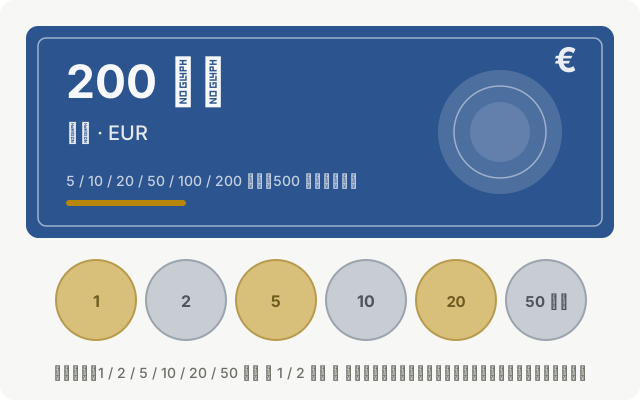
Euro banknotes come in seven denominations—5, 10, 20, 50, 100, 200, and 500 euros—designed by the European Central Bank. They vary in color and size, featuring symbolic architectural motifs like windows on the front and bridges on the back, representing openness and connectivity in Europe. The 500-euro note ceased issuance in 2019 but remains legal tender. However, it is rarely accepted by merchants in Germany, so travelers are advised to avoid carrying large denominations.
Euro coins are issued in eight denominations: 1 and 2 euros, and 1, 2, 5, 10, 20, and 50 cents. The obverse (common side) features a standardized design, while the reverse (national side) varies by issuing country. German coins often depict the federal eagle, Brandenburg Gate, the Reichstag, and oak leaves. Two-euro coins sometimes feature commemorative designs. Germans frequently use cash and coins, especially 1- and 2-euro coins, and coin trays are common at cash registers.
Cash and Payment Habits
Cash usage in Germany is notably higher than in other developed countries. Many small restaurants, bakeries, newsstands, and street vendors accept only cash. Some shops explicitly display “Nur Barzahlung” (cash only). Large malls, chain supermarkets, hotels, and train stations generally accept international credit cards and mobile payments, though credit card penetration is lower than in the UK or France. UnionPay cards have limited acceptance, so travelers should not rely solely on cards.
Foreign currency can be exchanged at German banks, savings banks, and exchange offices in city centers, though airport counters offer less favorable rates. ATMs are widely available, but some machines charge fees for foreign cards, so it’s advisable to withdraw larger amounts at once. Shopping refunds (tax-free shopping) require a minimum single purchase of approximately 50 euros at participating stores. The refund amount increases with the purchase value. Refunds are processed at airport customs after stamping the form, subject to store and customs regulations.
Traveler Tips
- Germany, like France, uses the euro, while the UK uses the British pound. Prepare separate currencies for cross-border travel.
- Many small shops and restaurants accept only cash. Carry around 100 euros in cash as a backup.
- Supermarkets and bakeries operate quickly at checkout. Prepare exact change in advance, as staff rarely sort coins for customers.
- Restaurant bills may indicate whether service charges are included. If not, a 5–10% tip is customary. Simply state the total amount including the tip.
- Most shops in Germany are closed on Sundays. Plan shopping for Saturdays or weekdays.
Flag Meaning
Flag Design
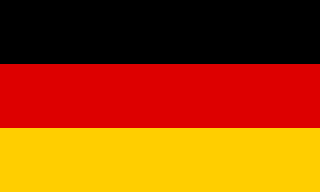
The German flag consists of three horizontal stripes of equal width in black, red, and gold (yellow), in that order from top to bottom. The color ratio follows a 3:5 vertical proportion. The colors are pure black, bright red, and vivid gold. Government buildings and federal institutions sometimes fly an official version with the federal eagle emblem in the center for specific ceremonial occasions. The standard civilian flag features only the three unadorned stripes, adhering to uniform specifications for proportions and colors.
Meaning
The black, red, and gold colors originated from the early 19th-century German nationalist and freedom movements opposing Napoleon’s rule. Participants often wore black coats with red trim and golden buttons, and these colors came to symbolize the pursuit of unity and liberty. Over time, black, red, and gold became emblematic of German democracy and republican traditions, representing rule of law, freedom, and national solidarity. They stand in contrast to the imperial-era black, white, and red tricolor and have been subject to political shifts throughout history.
History and Legal Status
The Frankfurt Parliament first adopted black, red, and gold as the flag of a unified Germany in 1848. The Weimar Republic officially used the tricolor in 1919. It was abolished during the Nazi regime from 1933 to 1945. The Federal Republic of Germany reinstated the black-red-gold flag upon its founding in 1949, as did the German Democratic Republic, which added its national emblem to the center for distinction. After German reunification in 1990, the black-red-gold flag became the sole national flag of Germany and remains in use today.
Under Germany’s Basic Law and related legislation, the national flag is a protected symbol. Insulting the flag is a punishable offense. German Unity Day on October 3 is the most prominent occasion for flag displays, with federal buildings, schools, and public institutions widely raising the flag. Today, black, red, and gold are also prominently featured at sporting events, serving as a direct expression of German national identity.
Germany Travel Guide
All Guides »Germany Solo Travel Quick Guide: Schengen Visa, Best Seasons, Budget & Cash Rules
How to apply for a Schengen visa, which months are best to visit, why you should...
Classic 7-Day Germany Itinerary: Berlin – Dresden – Nuremberg – Munich – Neuschwanstein Castle 7 days
From the Berlin Wall to Bavarian fairy-tale castles, this route connects Germany...
4-Day Short Trip in Germany: In-Depth Exploration of Munich and Bavarian Castles & Lakes 4 days
Using Munich as your base, compress the city, Neuschwanstein Castle, Königssee, ...
Complete list of must-visit attractions in Germany: Berlin’s historical sites, Bavarian castles, and historic towns
From the Berlin Wall to Neuschwanstein Castle, the Rhine Valley, and the Black F...
The Ultimate Guide to German Cuisine: Sausages, Pork Knuckle, Pretzels & Beer Culture Explained
German food is hearty and filling: from street-side currywurst to Bavarian roast...
Complete Guide to Transportation in Germany: ICE High-Speed Trains, Regional Passes, and City Transit Explained
How to buy the cheapest German train tickets, how to use regional and national m...
10 Essential Travel Tips for Germany: Cash, Sunday Closures, and Train Ticket Details
Bringing enough cash, knowing business hours, and buying the right train tickets...